Loading...
Done
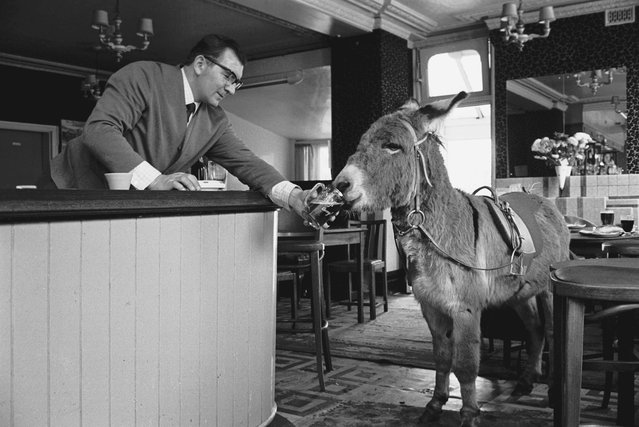
A publican serves a glass of stout to a donkey in the East End of London, 1960s. (Photo by Steve Lewis/Getty Images)

A publican serves a glass of stout to a donkey in the East End of London, 1960s. (Photo by Steve Lewis/Getty Images)
Details
12 Apr 2017 09:55:00
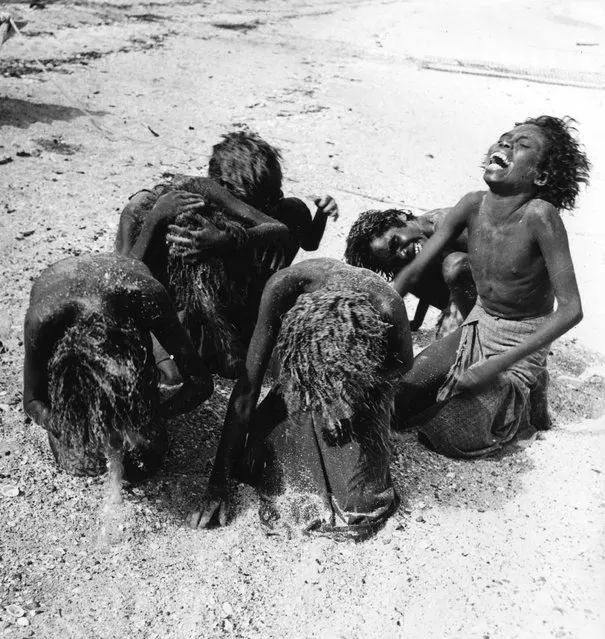
1st January 1950:  Aboriginal women washing their hair with sand at Arnhem land in the Northern Territory of Australia.  (Photo by Three Lions/Getty Images)

“Australian Aborigines are those people regarded as indigenous to the Australian continent. In the High Court of Australia, Australian Aborigines have been specifically identified as a group of people who share, in common, biological ancestry back to the original occupants of the continent”. – Wikipedia

Photo: Aboriginal women washing their hair with sand at Arnhem land in the Northern Territory of Australia. 1st January 1950. (Photo by Three Lions)
Details
02 Feb 2014 07:29:00
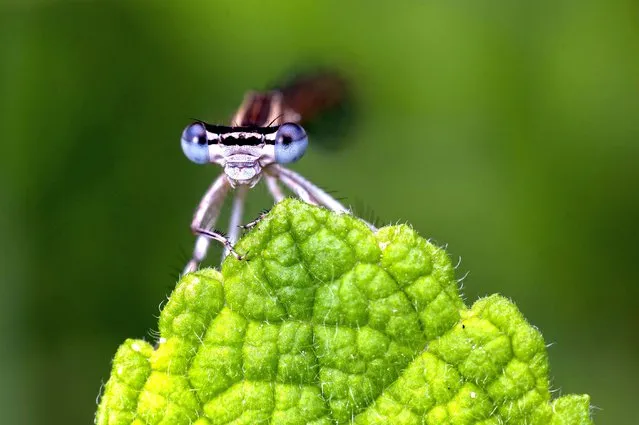
A dragonfly rests on a leaf in Hinojedo, Cantabria, northern Spain, 01 June 2023. (Photo by Pedro Puente Hoyos/EPA/EFE/Rex Features/Shutterstock)

A dragonfly rests on a leaf in Hinojedo, Cantabria, northern Spain, 01 June 2023. (Photo by Pedro Puente Hoyos/EPA/EFE/Rex Features/Shutterstock)
Details
26 Jul 2023 04:23:00
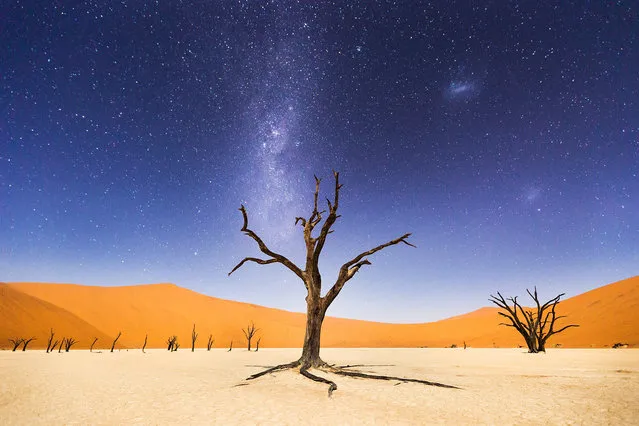
Merit: A Night at Deadvlei. The night before returning to Windhoek, we spent several hours at Deadveli. The moon was bright enough to illuminate the sand dunes in the distance, but the skies were still dark enough to clearly see the milky way and magellanic clouds. Deadveli means “dead marsh. (Photo and caption by Beth McCarley/National Geographic Traveler Photo Contest)

Merit: A Night at Deadvlei. The night before returning to Windhoek, we spent several hours at Deadveli. The moon was bright enough to illuminate the sand dunes in the distance, but the skies were still dark enough to clearly see the milky way and magellanic clouds. Deadveli means “dead marsh. The camelthorn trees are believed to be about 900 years old, but have not decomposed because the environment is so dry. (Photo and caption by Beth McCarley/National Geographic Traveler Photo Contest)
Details
04 Aug 2015 11:50:00
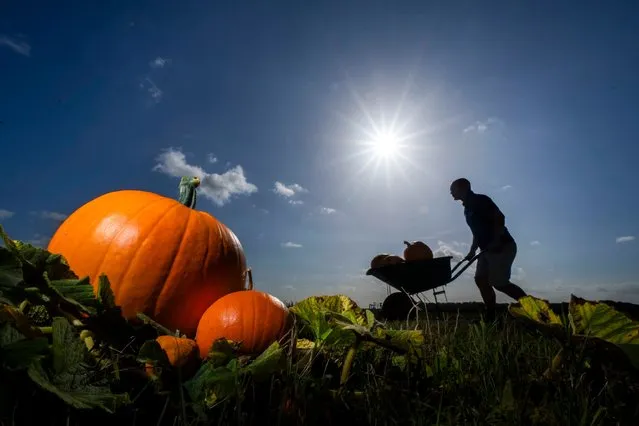
Farmer Tom Spilman harvests some of the 125,000 pumpkins at Spilman's Pumpkin Farm in Sessay, near Thirsk, North Yorkshire, UK on Monday, September 25, 2023, ahead of the opening of Pumpkin Fest 2023 on Saturday. (Photo by Danny Lawson/PA Images via Getty Images)

Farmer Tom Spilman harvests some of the 125,000 pumpkins at Spilman's Pumpkin Farm in Sessay, near Thirsk, North Yorkshire, UK on Monday, September 25, 2023, ahead of the opening of Pumpkin Fest 2023 on Saturday. (Photo by Danny Lawson/PA Images via Getty Images)
Details
06 Nov 2023 05:06:00
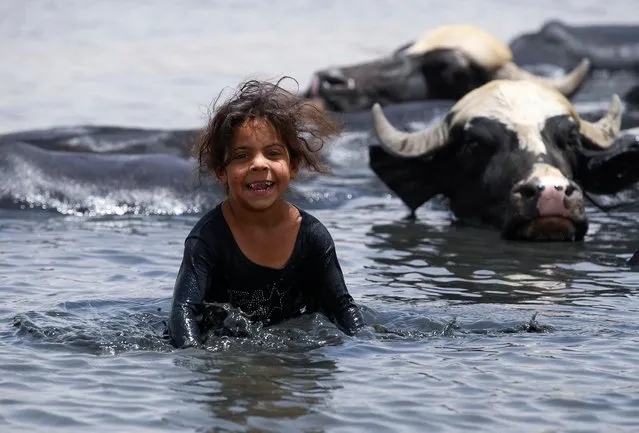
A young Iraqi shepherdess cools down buffaloes in wastewater filling the dried-up Diyala river which was a tributary of the Tigris, in the Al-Fadiliyah district east of Baghdad, on June 26, 2022. (Photo by Ahmad Al-Rubaye/AFP Photo)

A young Iraqi shepherdess cools down buffaloes in wastewater filling the dried-up Diyala river which was a tributary of the Tigris, in the Al-Fadiliyah district east of Baghdad, on June 26, 2022. (Photo by Ahmad Al-Rubaye/AFP Photo)
Details
10 Apr 2023 03:55:00
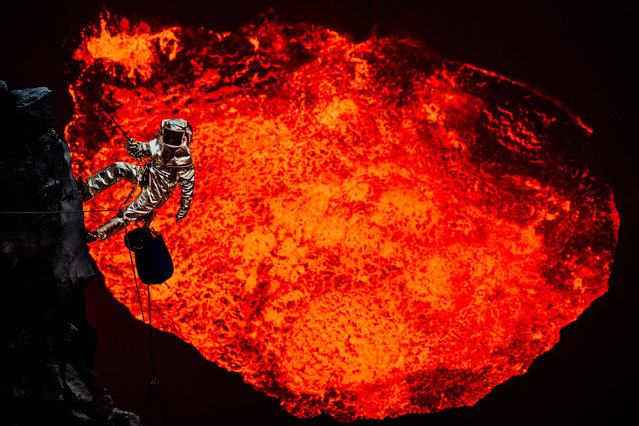
Adventurer Sam Cossman movies towards the huge lava lake wearing a custom built industrial proximity heat suit on December 20, 2014 in Ambrym, Vanuatu. (Photo by Conor Toumarkine/Barcroft Media)

Adventurer Sam Cossman movies towards the huge lava lake wearing a custom built industrial proximity heat suit on December 20, 2014 in Ambrym, Vanuatu. (Photo by Conor Toumarkine/Barcroft Media)
Details
13 Jun 2016 11:21:00
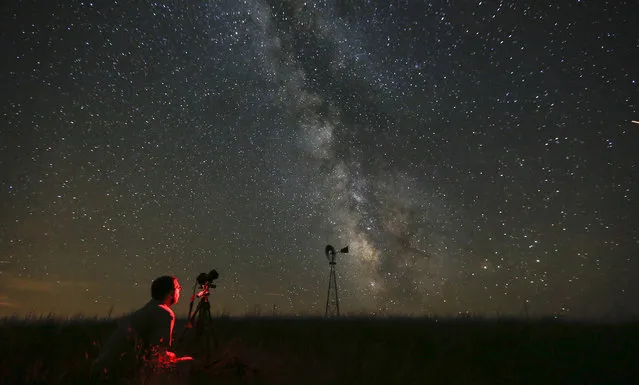
In this Wednesday, July 23, 2014 file photo, Omaha photographer Lane Hickenbottom photographs the night sky in a pasture near Callaway, Neb. With no moon in the sky, the Milky Way was visible to the naked eye. More than one-third of the world’s population can no longer see the Milky Way because of man-made lights, according to a scientific paper by Light Pollution Science and Technology Institute's Fabio Falchi and his team members, published on Friday, June 10, 2016. (Photo by Travis Heying/The Wichita Eagle via AP Photo)

In this Wednesday, July 23, 2014 file photo, Omaha photographer Lane Hickenbottom photographs the night sky in a pasture near Callaway, Neb. With no moon in the sky, the Milky Way was visible to the naked eye. More than one-third of the world’s population can no longer see the Milky Way because of man-made lights, according to a scientific paper by Light Pollution Science and Technology Institute's Fabio Falchi and his team members, published on Friday, June 10, 2016. (Photo by Travis Heying/The Wichita Eagle via AP Photo)
Details
11 Jun 2016 12:37:00