Loading...
Done
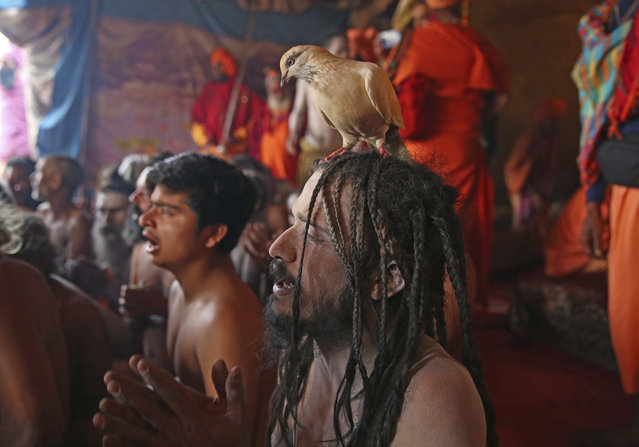
In this January 27, 2019, photo, Hindu holy men of monastic order Juna Akhara participate in a ritual before becoming Naga Sadhus or naked holy men at Sangam, the confluence of three holy rivers during the Kumbh Mela or pitcher festival in Prayagraj Uttar Pradesh state, India. At every Kumbh, including this year's, thousands of devotees were initiated into the reclusive sect of the Naga Sadhus, naked, ash-smeared cannabis-smoking Hindu warriors and onetime-armed defenders of the faith who for centuries have lived as ascetics in jungles and caves. (Photo by Rajesh Kumar Singh/AP Photo)

In this January 27, 2019, photo, Hindu holy men of monastic order Juna Akhara participate in a ritual before becoming Naga Sadhus or naked holy men at Sangam, the confluence of three holy rivers during the Kumbh Mela or pitcher festival in Prayagraj Uttar Pradesh state, India. At every Kumbh, including this year's, thousands of devotees were initiated into the reclusive sect of the Naga Sadhus, naked, ash-smeared cannabis-smoking Hindu warriors and onetime-armed defenders of the faith who for centuries have lived as ascetics in jungles and caves. (Photo by Rajesh Kumar Singh/AP Photo)
Details
18 Feb 2019 00:05:00
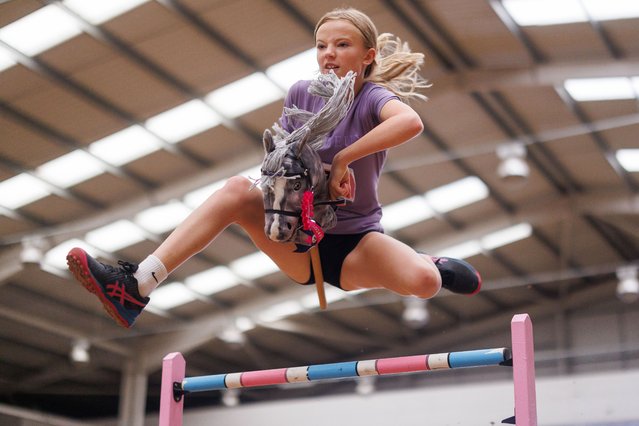
Competitors practice their moves before taking part in the UK Hobby Horse championship at Bury Farm Equestrian Centre on September 08, 2024 in Slapton, United Kingdom. While hobby horsing as a form of play has been around for centuries, the modern-day interpretation of the sport originated in Finland. Hobby horse competitions feature young enthusiasts trotting, galloping, and cantering on toy horses in various disciplines such as jumping and dressage. Its popularity has surged in recent years, especially during covid, and is growing in appeal. Young equine enthusiasts take advantage of its inclusivity, and enjoy the physical activity required, creativity and freedom of expression. The sport has also been found to help young people suffering with autism and ADHD, giving them a chance to connect with other young people with a love of horses. (Photo by Dan Kitwood/Getty Images)

Competitors practice their moves before taking part in the UK Hobby Horse championship at Bury Farm Equestrian Centre on September 08, 2024 in Slapton, United Kingdom. While hobby horsing as a form of play has been around for centuries, the modern-day interpretation of the sport originated in Finland.(Photo by Dan Kitwood/Getty Images)
Details
30 Sep 2024 04:38:00
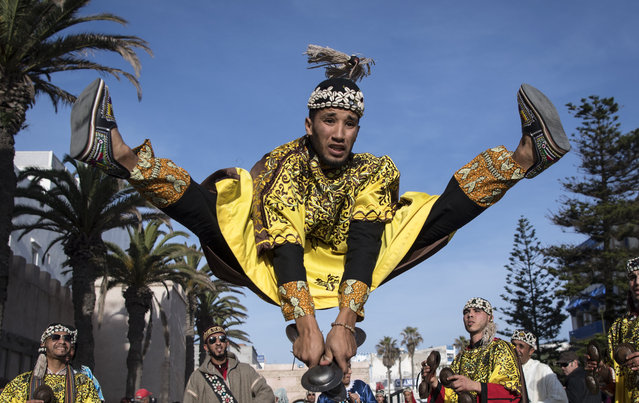
A Gnawa traditional group performs in the city of Essaouira on December 14, 2019, to celebrate the decision of adding the Gnawa culture to UNESCO's list of Intangible Cultural Heritage of Humanity. Gnawa culture, a centuries-old Moroccan practice rooted in music, African rituals and Sufi traditions, was added to UNESCO's list of Intangible Cultural Heritage of Humanity earlier in the week. Gnawa refers to a “set of musical productions, fraternal practices and therapeutic rituals where the secular mixes with the sacred”, according to the nomination submitted by Morocco. Often dressed in colourful outfits, Gnawa musicians play the guenbri, a type of lute with three strings, accompanied by steel castanets called krakebs. (Photo by Fadel Senna/AFP Photo)

A Gnawa traditional group performs in the city of Essaouira on December 14, 2019, to celebrate the decision of adding the Gnawa culture to UNESCO's list of Intangible Cultural Heritage of Humanity. Gnawa culture, a centuries-old Moroccan practice rooted in music, African rituals and Sufi traditions, was added to UNESCO's list of Intangible Cultural Heritage of Humanity earlier in the week. Gnawa refers to a “set of musical productions, fraternal practices and therapeutic rituals where the secular mixes with the sacred”, according to the nomination submitted by Morocco. Often dressed in colourful outfits, Gnawa musicians play the guenbri, a type of lute with three strings, accompanied by steel castanets called krakebs. (Photo by Fadel Senna/AFP Photo)
Details
18 Dec 2019 00:05:00
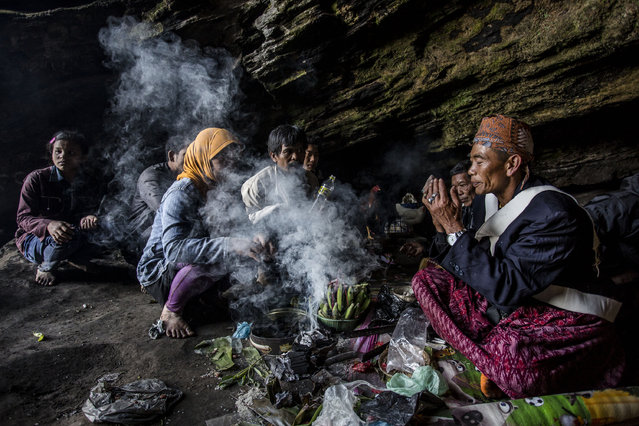
A Tenggerese shaman praying for worshippers at Widodaren cave during the Tenggerese Hindu Yadnya Kasada festival on July 31, 2015 in Probolinggo, East Java, Indonesia. The festival is the main festival of the Tenggerese people and lasts about a month. On the fourteenth day, the Tenggerese make the journey to Mount Bromo to make offerings of rice, fruits, vegetables, flowers and livestock to the mountain gods by throwing them into the volcano's caldera. (Photo by Ulet Ifansasti/Getty Images)

A Tenggerese shaman praying for worshippers at Widodaren cave during the Tenggerese Hindu Yadnya Kasada festival on July 31, 2015 in Probolinggo, East Java, Indonesia. The festival is the main festival of the Tenggerese people and lasts about a month. On the fourteenth day, the Tenggerese make the journey to Mount Bromo to make offerings of rice, fruits, vegetables, flowers and livestock to the mountain gods by throwing them into the volcano's caldera. The origin of the festival lies in the 15th century when a princess named Roro Anteng started the principality of Tengger with her husband Joko Seger, and the childless couple asked the mountain Gods for help in bearing children. The legend says the Gods granted them 24 children but on the provision that the 25th must be tossed into the volcano in sacrifice. The 25th child, Kesuma, was finally sacrificed in this way after initial refusal, and the tradition of throwing sacrifices into the caldera to appease the mountain Gods continues today. (Photo by Ulet Ifansasti/Getty Images)
Details
01 Aug 2015 12:07:00
Not many divers visit the Gunilda, due to its remote location, depths of 270 feet, and chilly (38 degrees F/3 degrees C) temperatures. (Photo by Becky Kagan Schott/Caters News Agency)

These stunning images reveal the remains of a more than century-old sunken ship that has been preserved beneath freezing Lake Superior. The ship looks almost exactly the same as it did the day it sunk beneath waves all those years ago. At 60 meters long (approximately 198 feet), the «Gunilda» sunk after it struck some rocks and was not saved. Now, these stunning images have been captured 107 years after the sinking when a small group of divers revisited the vessel. (Photo by Becky Kagan Schott/Caters News Agency)
Details
25 Apr 2018 00:01:00
Mohammad Ashgar, 65, an Indian rickshaw puller, poses for a photograph next to his rickshaw in Kolkata on April 21, 2018. A mainstay of 19 th century transportation options, the hand- pulled rickshaw survives in India only in Kolkata after being outlawed elsewhere. The local puller's union puts the number of pullers in the city at 3,000. The union has resisted all previous attempts to ban their livelihood, previously organising mass protests of their members against moves to stamp out the practice. (Photo by Dibyangshu Sarkar/AFP Photo)

Ahead of May Day, AFP' s video and photo teams spoke to men and women around the globe whose jobs are becoming increasingly rare, particularly as technology transforms societies. Here: Mohammad Ashgar, 65, an Indian rickshaw puller, poses for a photograph next to his rickshaw in Kolkata on April 21, 2018. (Photo by Dibyangshu Sarkar/AFP Photo)
Details
02 May 2018 00:01:00
Sheep walk as they are herded to summer pastures in Serra da Estrela, near Seia, Portugal June 27, 2015. (Photo by Rafael Marchante/Reuters)

Sheep walk as they are herded to summer pastures in Serra da Estrela, near Seia, Portugal June 27, 2015. In late June, shepherds young and old in the Seia region of central Portugal start guiding sheep, goats and cattle to the Serra da Estrela, the country’s highest mountains, in search of better pastures. There they stay until the end of September. Modern-day shepherds may have mobile phones to keep in touch with family and friends, but their lifestyle has changed little for centuries. The sound of cowbells and the bark of longhaired mastiffs starts early in the morning as the animals – often decorated with traditional woollen balls on their horns – are herded up steep, narrow paths. (Photo by Rafael Marchante/Reuters)
Details
14 Jul 2015 13:48:00
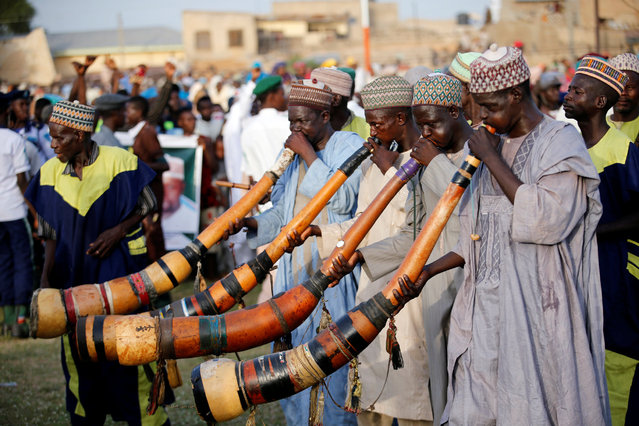
Traditional trumpeters perform during the durbar festival on the second day of Eid-al-Fitr celebrations in Nigeria's northern city of Kano, July 7, 2016. (Photo by Akintunde Akinleye/Reuters)

Traditional trumpeters perform during the durbar festival on the second day of Eid-al-Fitr celebrations in Nigeria's northern city of Kano, July 7, 2016. The Durbar festival begins with prayers, followed by a parade of the Emir and his entourage on horses, accompanied by music players, and ending at the Emir's palace. The Durbar festival had been in hausaland for more than 500 years. It was introduced by sarki muhammadu rumfa of kano in the late 14th century, as a way of demonstrating military power and skills before going to war. The festival is also an opportunity for local leaders to pay homage to emir throughout the jahi cheering. (Photo by Akintunde Akinleye/Reuters)
Details
09 Jul 2016 09:35:00