Loading...
Done
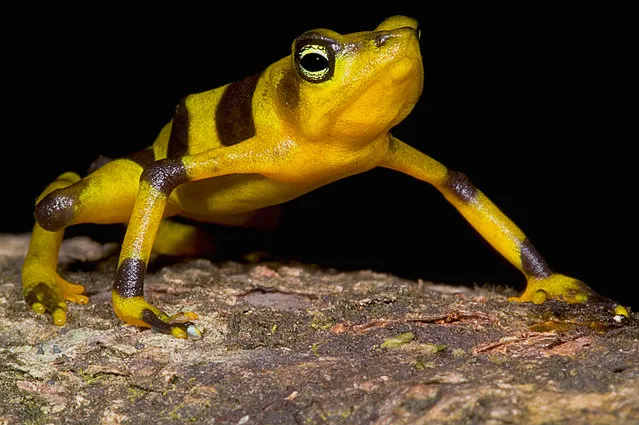
The golden harlequin toad has vanished from the wild, and only a small number live on in captivity. A fungus caused them, and many other amphibians, to die out in their home in Central America. (Photo by Danté Fenolio/The Guardian/Johns Hopkins University Press)

Wildlife photographer Danté Fenolio has headed into areas untouched by sunlight – deep seas, caves and underground – and found creatures that are exploding with colour. Here: The golden harlequin toad has vanished from the wild, and only a small number live on in captivity. A fungus caused them, and many other amphibians, to die out in their home in Central America. (Photo by Danté Fenolio/The Guardian/Johns Hopkins University Press)
Details
20 Jun 2016 12:19:00
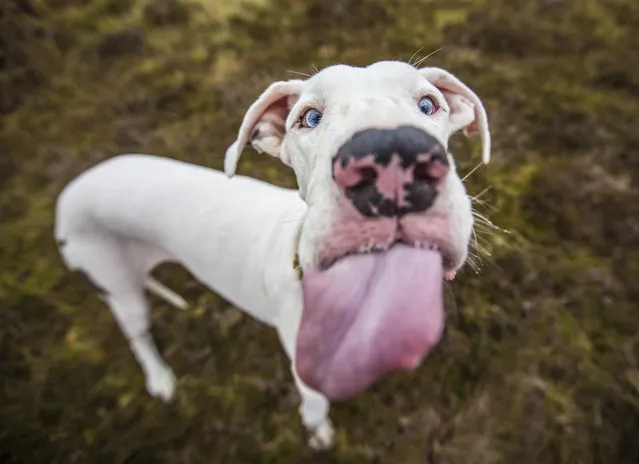
Tillie. (Photo by CatsDog Photography/Caters News Agency)

These photos were snapped at just the right moment – leading to some truly unusual images. Some of the pups are sticking out their tongue, while others are just looking at the camera – and the results are hilarious. Cat Race, 33, a dog photographer from Preston, Lancashire, in the U.K., captured the funny moments in the northwest of England over the past two years. Here: Tillie. (Photo by CatsDog Photography/Caters News Agency)
Details
30 Oct 2019 00:05:00
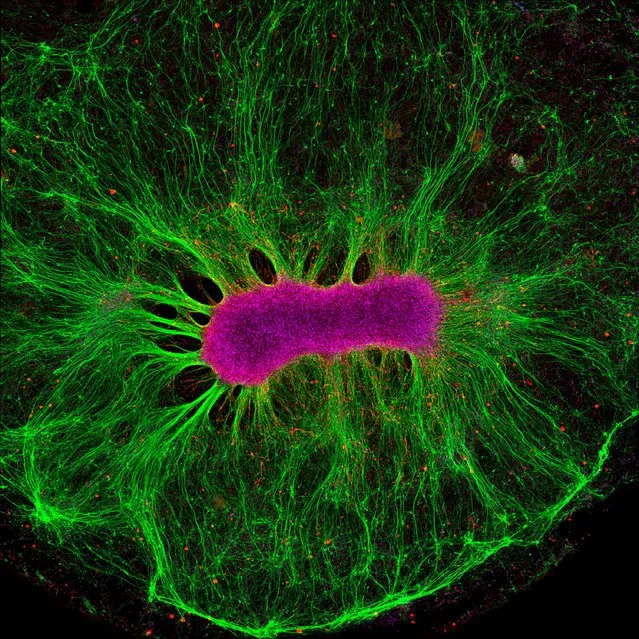
Brain-on-a-chip. Dazzling in green and magenta this image shows the nerve fibres (in green) produced by neural stem cells (in magenta) as they grow on a synthetic gel. Captured by a technique known as confocal microscopy, the image is part of research shedding light on how tinkering with the environment can affect the way in which nerve fibres grow. (Photo by Collin Edington and Iris Lee/Massachusetts Institute of Technology/Wellcome Images)

Brain-on-a-chip. Dazzling in green and magenta this image shows the nerve fibres (in green) produced by neural stem cells (in magenta) as they grow on a synthetic gel. Captured by a technique known as confocal microscopy, the image is part of research shedding light on how tinkering with the environment can affect the way in which nerve fibres grow. (Photo by Collin Edington and Iris Lee/Massachusetts Institute of Technology/Wellcome Images)
Details
17 Mar 2017 00:01:00
Dance floor atmosphere at the Daily Front Row's Fashion Media Awards – After Party at The Wooly on September 8, 2017 in New York City. (Photo by Paul Morigi/Getty Images)

Dance floor atmosphere at the Daily Front Row's Fashion Media Awards – After Party at The Wooly on September 8, 2017 in New York City. (Photo by Paul Morigi/Getty Images)
Details
10 Sep 2017 07:48:00
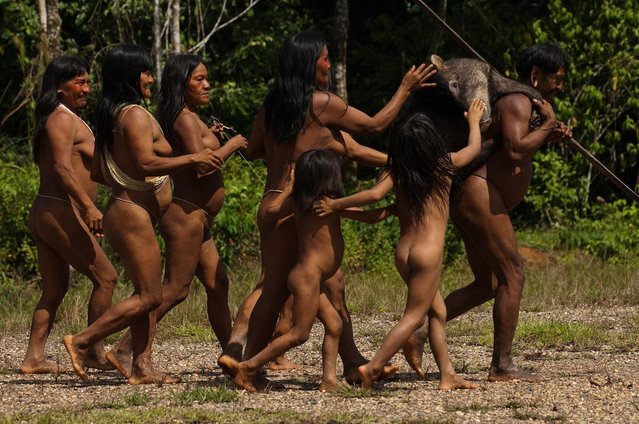
Spectacular images offering insight into the lives of the Huaorani people in the Ecuadorian Amazon have been revealed showing how they use traditional methods to hunt monkeys for food. The stunning pictures were taken by conservation photographer Pete Oxford from Torquay, Devon in the Ecuadorian Amazon. “The Huaorani Indians are a forest people highly in tune with their environment. Many are now totally acculturated since the 1950s by missionaries”, said Pete. “Today they face radical change to their culture to the proximity of oil exploration within their territory and the Yasuni National Park and Biosphere Reserve, they are vastly changed. Some still live very traditionally and for this shoot, through my Huaorani friend, a direct relative of those photographed he wanted to depict them as close to their original culture as possible. They still largely hunt with blow pipes and spears eating a lot of monkeys and peccaries”. The Huaorani are also known as the Waorani, Waodani or the Waos and are native Amerindians. Their lands are located between the Curaray and Napo rivers and speak the Huaorani language. Pete says that during his visit he was welcomed into the group and hopes that ancient cultures can be saved. Here: The tribe were seen celebrating after a hunter returned to camp with a wild pig. (Photo by Pete Oxford/Mediadrumworld.com)

Spectacular images offering insight into the lives of the Huaorani people in the Ecuadorian Amazon have been revealed showing how they use traditional methods to hunt monkeys for food. The stunning pictures were taken by conservation photographer Pete Oxford from Torquay, Devon in the Ecuadorian Amazon. Here: The tribe were seen celebrating after a hunter returned to camp with a wild pig. (Photo by Pete Oxford/Mediadrumworld.com)
Details
20 Jan 2017 07:58:00
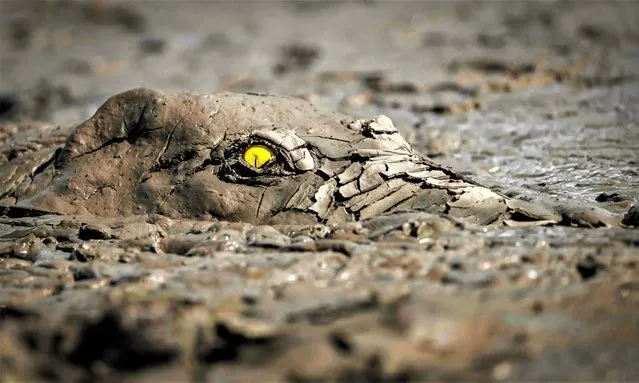
“Danger in the mud” – a crocodile at Mana Pools National Park, Zimbabwe. The grand prize winner. (Photo by Jens Cullmann/World Nature Photography Awards 2022)

“Danger in the mud” – a crocodile at Mana Pools National Park, Zimbabwe. The grand prize winner. (Photo by Jens Cullmann/World Nature Photography Awards 2022)
Details
08 Mar 2023 04:28:00


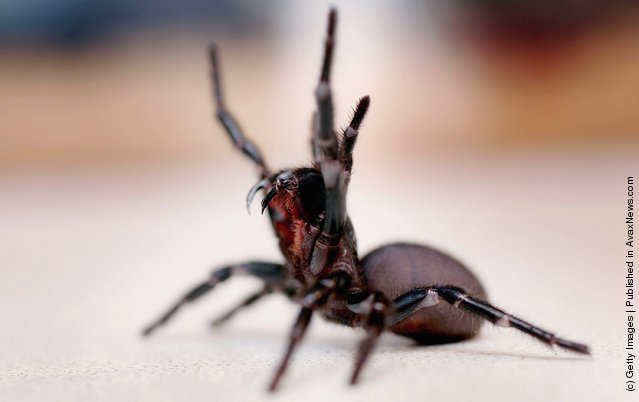
A Funnel Web spider is pictured at the Australian Reptile Park January 23, 2006 in Sydney, Australia. The Funnel Web is one of Australia's deadliest animals, with a venom that is packed with at least 40 different toxic proteins. A bite from a Funnel Web causes massive electrical over-load in the body's nervous system. Finally, fatalities occur from either heart attack or a pulmonary oedema, where the capillaries around the lungs begin to leak fluid and the patient effectively drowns. Death can come as quickly as two hours after a bite if no medical treatment is sought. Due to advances in anti-venom, there has been no death from a Funnel Web bite in Australia since 1980. Australia is home to some of the most deadly and poisonous animals on earth. (Photo by Ian Waldie/Getty Images)
Details
25 Apr 2011 07:49:00
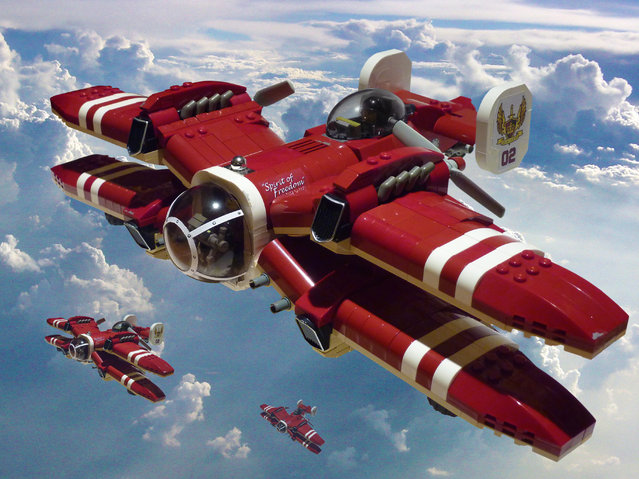
“The V-30 Warhawk was designed by Blackshaw Avionics as a long-range fighter and was primarily used by the Arcadian Air Force for escort duties. . (Jon Hall)

“The V-30 Warhawk was designed by Blackshaw Avionics as a long-range fighter and was primarily used by the Arcadian Air Force for escort duties. The plane pictured is the “Spirit of Freedom” and was one of the four planes that escorted the Arcadian Royal Airship during and after the Great War. The three other fighters were the “Spirit of Hope”, the “Spirit of Justice” and the “Spirit of Destiny”. All pilots were hand-picked by the Head of Airborne Forces and included some of the very finest pilots in the Kingdom. The crew consisted of one pilot and one gunner although both cabins were fitted so that if either crew member was killed the other could take over their duties. Each Warhawk was fitted with four Haverlock “Banshee” engines and four 24mm machine guns”. (Photo and comment by Jon Hall)


Details
11 Feb 2013 10:36:00