Loading...
Done
British singer and actress Lily Allen attends the CFDA (Council of Fashion Designers of America) Fashion Awards at the American Museum of Natural History in New York on November 3, 2025. (Photo by Charly Triballeau/AFP Photo)

British singer and actress Lily Allen attends the CFDA (Council of Fashion Designers of America) Fashion Awards at the American Museum of Natural History in New York on November 3, 2025. (Photo by Charly Triballeau/AFP Photo)
Details
18 Nov 2025 04:05:00
Giant's Causeway

Legend has it that the Irish warrior Fionn mac Cumhaill (Finn McCool) built the causeway to walk to Scotland to fight his Scottish counterpart Benandonner. One version of the legend tells that Fionn fell asleep before he got to Scotland. When he did not arrive, the much larger Benandonner crossed the bridge looking for him. To protect Fionn, his wife Oonagh laid a blanket over him so he could pretend that he was actually their baby son. In a variation, Fionn fled after seeing Benandonner's great bulk, and asked his wife to disguise him as the baby. In both versions, when Benandonner saw the size of the 'infant', he assumed the alleged father, Fionn, must be gigantic indeed. Therefore, Benandonner fled home in terror, ripping up the Causeway in case he was followed by Fionn.
Details
11 May 2015 10:45:00
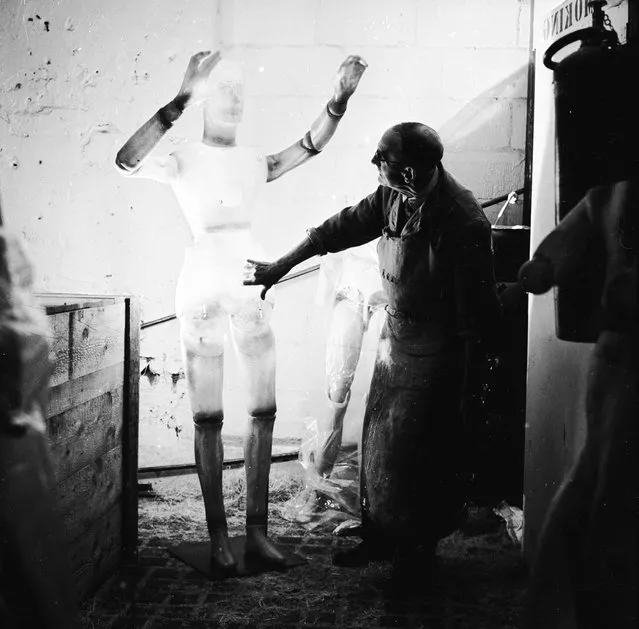
A model of a ghost made from translucent fibreglass is lit from inside at Gem's (Wax Models) Ltd, in the Portobello Road area of west London. The ghost is due to go to the Capistrano Mission Museum in California, where tourists are told the legend of how he frightened a young Indian girl novice to death. 1st May 1965. (Photo by Chris Ware/Keystone Features)

A model of a ghost made from translucent fibreglass is lit from inside at Gem's (Wax Models) Ltd, in the Portobello Road area of west London. The ghost is due to go to the Capistrano Mission Museum in California, where tourists are told the legend of how he frightened a young Indian girl novice to death. 1st May 1965. (Photo by Chris Ware/Keystone Features)
Details
24 Oct 2012 09:55:00
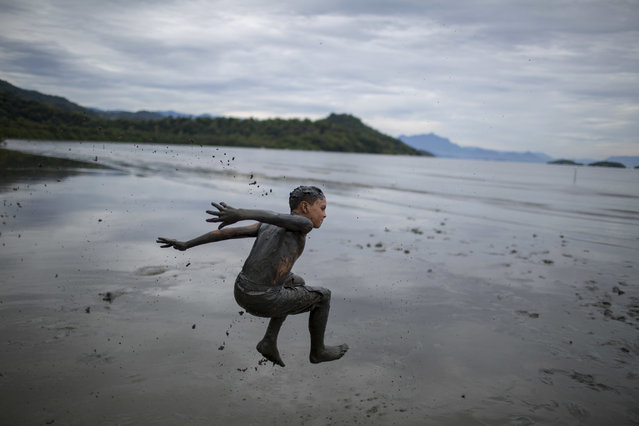
A boy jumps into a pool of mud during the traditional “Bloco da Lama” or “Mud Street” carnival party, in Paraty, Brazil, Saturday, February 25, 2017. Legend has it the “bloco” was born in 1986 after local teens hiking in a nearby mangrove forest smeared themselves with mud to discourage mosquitoes and then wandered through Paraty. The party grew year after year, but revelers eventually were banned from parading in the colonial downtown after shopkeepers complained pristine white walls were stained with the hard-to-remove mud. (Photo by Mauro Pimentel/AP Photo)


A boy jumps into a pool of mud during the traditional “Bloco da Lama” or “Mud Street” carnival party, in Paraty, Brazil, Saturday, February 25, 2017. Legend has it the “bloco” was born in 1986 after local teens hiking in a nearby mangrove forest smeared themselves with mud to discourage mosquitoes and then wandered through Paraty. The party grew year after year, but revelers eventually were banned from parading in the colonial downtown after shopkeepers complained pristine white walls were stained with the hard-to-remove mud. (Photo by Mauro Pimentel/AP Photo)

Details
28 Mar 2017 09:07:00
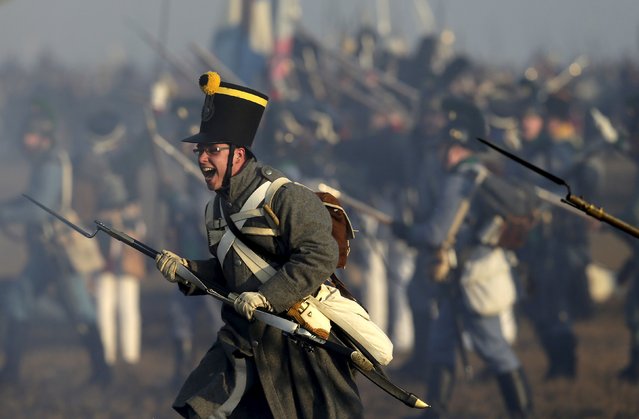
A history enthusiast, dressed as a soldier, fights during the re-enactment of Napoleon's famous battle of Austerlitz near the southern Moravian town of Slavkov u Brna December 5, 2015. (Photo by David W. Cerny/Reuters)

A history enthusiast, dressed as a soldier, fights during the re-enactment of Napoleon's famous battle of Austerlitz near the southern Moravian town of Slavkov u Brna December 5, 2015. Hundreds of history enthusiasts gathered near the city of Slavkov before a re-enactment of Napoleon's famous battle of Austerlitz on Saturday to mark its 210th anniversary. (Photo by David W. Cerny/Reuters)
Details
07 Dec 2015 08:00:00


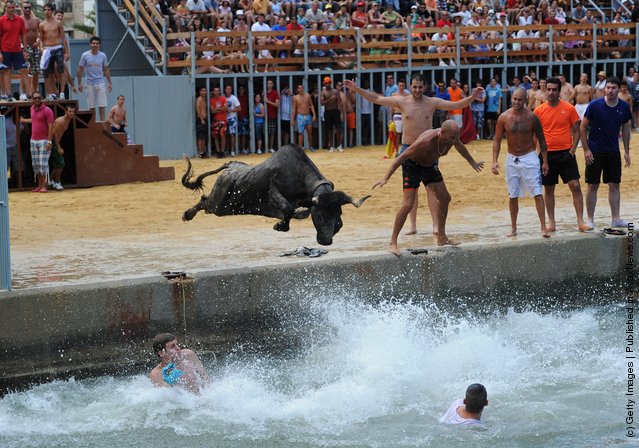
Revellers chase a bull into the sea during the “Bous a la Mar” festival on July 14, 2011 in Denia, Spain. The Spanish “Bous a la Mar” or “Bulls to the Sea” festival is held in honour of the Santisima Sangre and commemorate a monk named Pedro Esteve, who, as the legend has it, saved the coastal town of Denia from a plague in 1633. The bulls chased into the sea are later brought back to land by small boats. (Photo by Jasper Juinen/Getty Images)
Details
16 Jul 2011 12:47:00
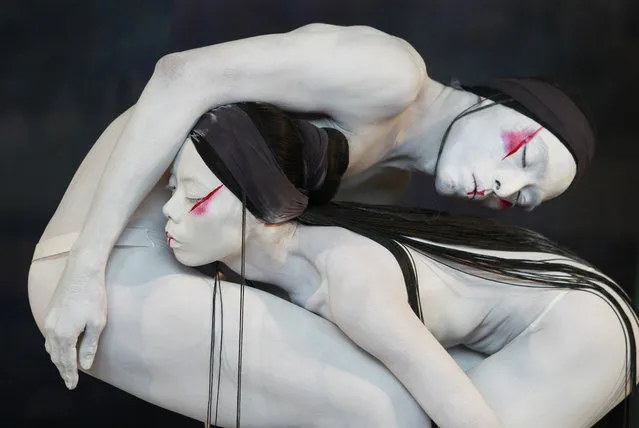
Dancers from the “Legend Lin Dance Theatre” perform the artistic director and choreographer Li-chen Lin's classic works “Hymne aux Fleurs qui Passent, Anthem to the Fading Flowers” during a rehearsal at the National Theater Concert Hall in Taipei, Taiwan, Tuesday, August 18, 2015. “Hymne aux Fleurs Qui Passent” pays tribute to the cycle of the year and the complementary principles of Yin and Yang whose eternal struggle provides the driving force behind the changing of the seasons. (Photo by Chiang Ying-ying/AP Photo)

Dancers from the “Legend Lin Dance Theatre” perform the artistic director and choreographer Li-chen Lin's classic works “Hymne aux Fleurs qui Passent, Anthem to the Fading Flowers” during a rehearsal at the National Theater Concert Hall in Taipei, Taiwan, Tuesday, August 18, 2015. “Hymne aux Fleurs Qui Passent” pays tribute to the cycle of the year and the complementary principles of Yin and Yang whose eternal struggle provides the driving force behind the changing of the seasons. (Photo by Chiang Ying-ying/AP Photo)
Details
19 Aug 2015 12:59:00
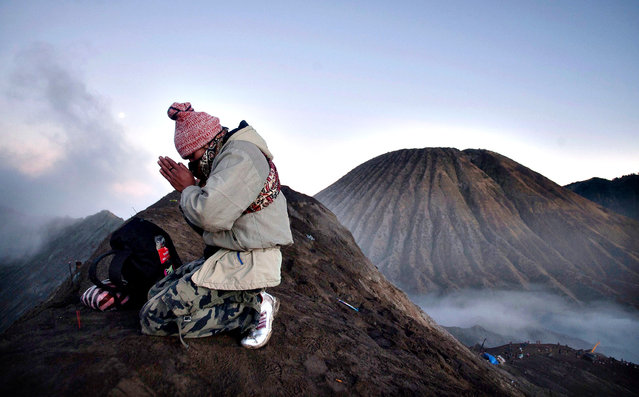
A Tengger tribesman prays at Mount Bromo during the annual Kasada ceremony in East Java on August 12, 2014. The Kasada ceremony is a festival held every 14th day of the Kasada month in the traditional Hindu lunar calender to honour Sang Hyang Widhi (God Almighty) and is based on the legend of Roro Anteng and Joko Seger from the Majapahit Kingdom, from which their Tengger tribe name originates. (Photo by Juni Kriswanto/AFP Photo)

A Tengger tribesman prays at Mount Bromo during the annual Kasada ceremony in East Java on August 12, 2014. The Kasada ceremony is a festival held every 14th day of the Kasada month in the traditional Hindu lunar calender to honour Sang Hyang Widhi (God Almighty) and is based on the legend of Roro Anteng and Joko Seger from the Majapahit Kingdom, from which their Tengger tribe name originates. Hundreds of worshippers from the Tengger tribe offer food and livestock as a symbolic sacrifice which they throw into the crater for the blessings of safety and prosperity to their familyies and community. (Photo by Juni Kriswanto/AFP Photo)
Details
16 Aug 2014 11:19:00