Loading...
Done
Dancers attend a dress rehearsal. (Photo by Hannibal Hanschke/Reuters)

Dancers attend a dress rehearsal for the new grand show “THE WYLD” at Friedrichstadt-Palast in Berlin October 2, 2014. Ten choreographers are working with 60 dancers from the world's largest show ballet company to create the flamboyant stage spectacle. The show's name, “THE WYLD”, represents human nature in its diversity and the wilderness of the big city – in this case, Berlin. The premiere of the 10.6 million euro ($13.5 million) show, the largest production budget in the 95-year history of Friedrichstadt-Palast, is on October 23, 2014. (Photo by Hannibal Hanschke/Reuters)
Details
24 Oct 2014 12:03:00
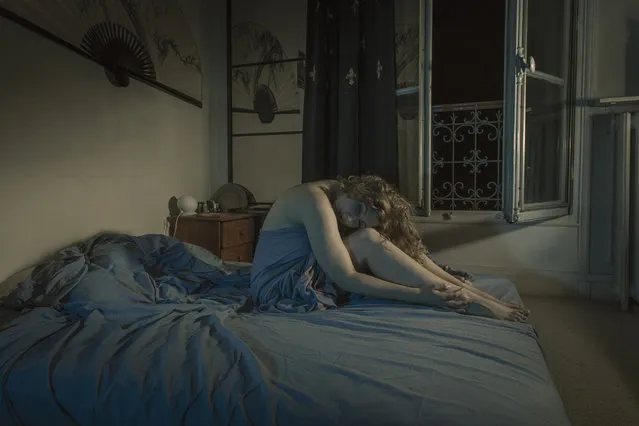
“Jessica” is photographed at her Paris home in this scene staged by photographer Laura Stevens. (Photo by Laura Stevens)

At the end of a six-year relationship, photographer Laura Stevens needed to find a creative, external outlet for all the complicated feelings she was processing internally. “Another November” is the end product, a photo series that aims to mirror those agonizing emotions that Stevens felt at the time of the breakup – and the subsequent healing process. Here: “Jessica” is photographed at her Paris home in this scene staged by photographer Laura Stevens. (Photo by Laura Stevens)
Details
11 Nov 2014 11:55:00
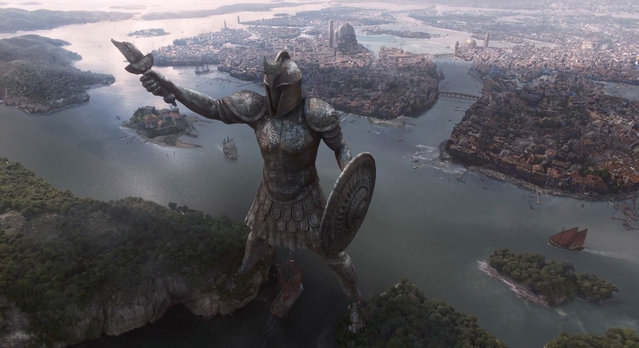
Game Of Thrones: Season 4 Visual Effects

The characters fighting for Westeros in Game of Thrones are fighting mostly for CGI backdrops. Like many others TV series and movies, visual effects is a huge part of the production process as it handles details both great and small. A great credit to Game of Thrones is that the story is so good that we forget about the effects, and another great credit goes to the VFX team because their work is seamless. If you want to see the seams, you have to get a visual breakdown of how the shots are put together.
Details
30 Jul 2014 18:47:00
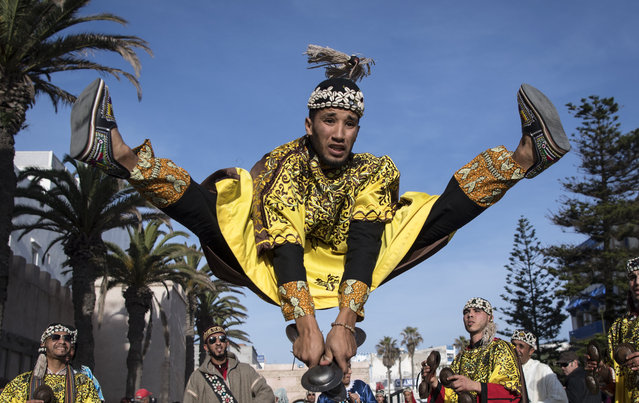
A Gnawa traditional group performs in the city of Essaouira on December 14, 2019, to celebrate the decision of adding the Gnawa culture to UNESCO's list of Intangible Cultural Heritage of Humanity. Gnawa culture, a centuries-old Moroccan practice rooted in music, African rituals and Sufi traditions, was added to UNESCO's list of Intangible Cultural Heritage of Humanity earlier in the week. Gnawa refers to a “set of musical productions, fraternal practices and therapeutic rituals where the secular mixes with the sacred”, according to the nomination submitted by Morocco. Often dressed in colourful outfits, Gnawa musicians play the guenbri, a type of lute with three strings, accompanied by steel castanets called krakebs. (Photo by Fadel Senna/AFP Photo)

A Gnawa traditional group performs in the city of Essaouira on December 14, 2019, to celebrate the decision of adding the Gnawa culture to UNESCO's list of Intangible Cultural Heritage of Humanity. Gnawa culture, a centuries-old Moroccan practice rooted in music, African rituals and Sufi traditions, was added to UNESCO's list of Intangible Cultural Heritage of Humanity earlier in the week. Gnawa refers to a “set of musical productions, fraternal practices and therapeutic rituals where the secular mixes with the sacred”, according to the nomination submitted by Morocco. Often dressed in colourful outfits, Gnawa musicians play the guenbri, a type of lute with three strings, accompanied by steel castanets called krakebs. (Photo by Fadel Senna/AFP Photo)
Details
18 Dec 2019 00:05:00
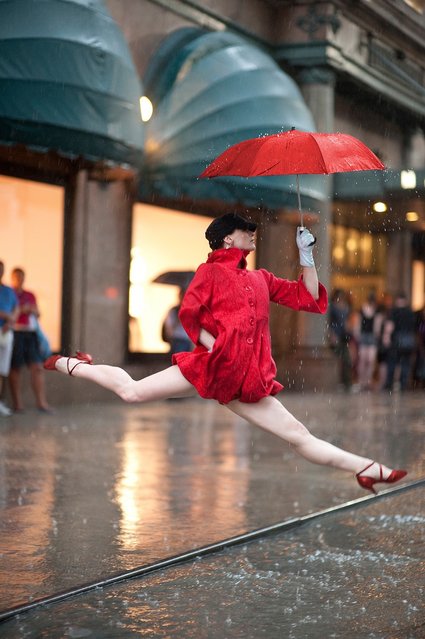
“Dancers Among Us”: Macys, NYC – Annmaria Mazzini. (Photo by Jordan Matter)

“The inspiration for this book came to me one afternoon as I watched my son, Hudson, playing with his toy bus. I was trying to keep pace with his three-year-old mind as he got deeper and deeper into a fantasy involving nothing more than a yellow plastic box and armless figurines. At least that’s what I saw. He saw frantic commuters rushing to catch the 77 local bus to Australia. He jumped in place, mouth open and slapping his knees, joyously reacting to a world I couldn’t see, but one powerfully present for him...”. – Jordan Matter

Photo: “Dancers Among Us”: Macys, NYC – Annmaria Mazzini. (Photo by Jordan Matter)
Details
12 Nov 2012 11:17:00
Art by Christian Faur

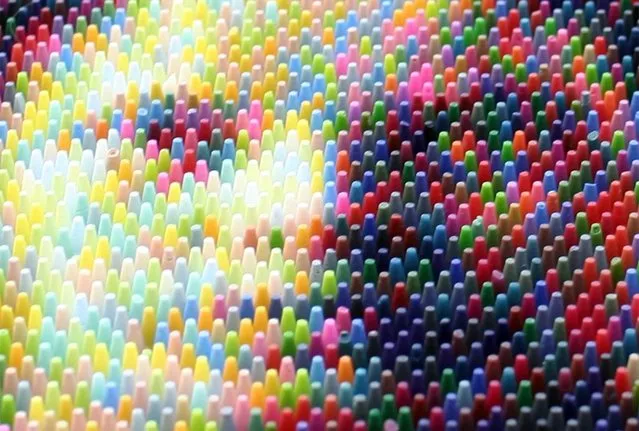
Christian Faur is an artist based in Granville, Ohio. Looking for a new technique, he experimented with painting with wax, but he didn’t feel the results were satisfactory.Then, at Christmas in 2005, his young daughter opened a box of 120 Crayola crayons he’d bought her, and everything clicked into place. Faur decided he would create pictures out of the crayons themselves, packing thousands of them together so they become like the colored pixels on a TV screen. He starts each work by scanning a photo into a computer and breaking the image down into colored blocks He then draws a grid that shows him exactly where to place each crayon The finished artworks are packed tightly into wooden frames. He actually makes the crayons himself, hand-casting each one in a mould.
Details
28 Jul 2012 10:03:00
Russian-born Zlata is pictured in Fifties style glam while still managing to bend herself in half. (Photo by Barcroft Media)

For many of us, simply bending over to touch our toes can be a difficult. But it's not a problem for the world's bendiest woman Julia Günthel aka Zlata (27). Russian-born Zlata can twist herself like a snake into the most extreme poses imaginable – and has broken numerous world records for her flexibility. The former gymnast, who is 5ft 8in, is so flexible she can cram herself into a 50cm squared box. Photo: Russian-born Zlata is pictured in Fifties style glam while still managing to bend herself in half. (Photo by Barcroft Media)
Details
25 Oct 2013 08:21:00
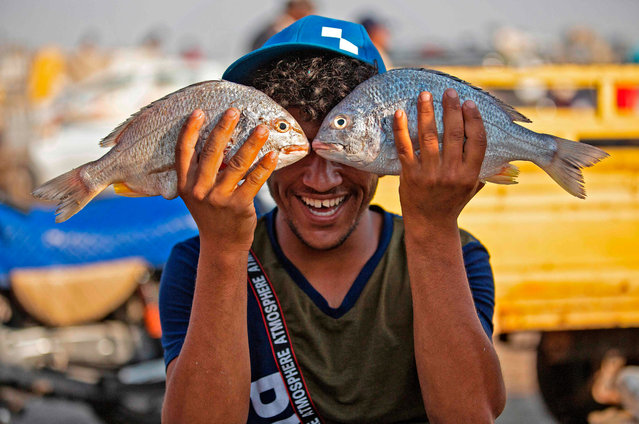
A youth poses while holding two fishes before his face in Iraq's southern port city of al-Faw, 90 kilometres south of Basra near the Shatt al-Arab and the Gulf, on May 18, 2020. In Iraq, a national lockdown to halt the COVID-19 coronavirus pandemic has found some unexpected fans: local businesses who no longer have to compete with Turkish, Iranian or Chinese imports. Those countries, as well as Saudi Arabia, Jordan and Kuwait, typically flood Iraqi markets with inexpensive products at prices local producers can't compete with. (Photo by Hussein Faleh/AFP Photo)

A youth poses while holding two fishes before his face in Iraq's southern port city of al-Faw, 90 kilometres south of Basra near the Shatt al-Arab and the Gulf, on May 18, 2020. In Iraq, a national lockdown to halt the COVID-19 coronavirus pandemic has found some unexpected fans: local businesses who no longer have to compete with Turkish, Iranian or Chinese imports. Those countries, as well as Saudi Arabia, Jordan and Kuwait, typically flood Iraqi markets with inexpensive products at prices local producers can't compete with. (Photo by Hussein Faleh/AFP Photo)
Details
02 Jul 2020 00:01:00