Loading...
Done


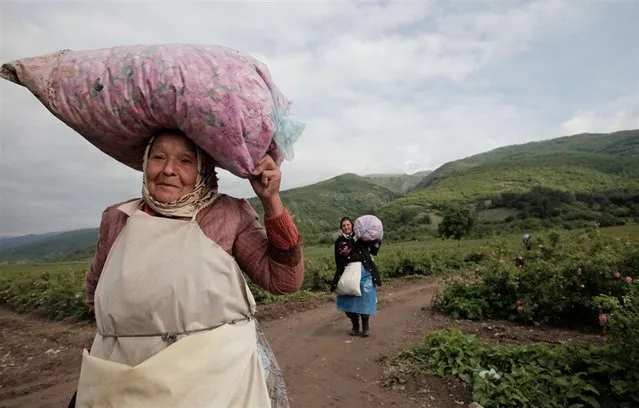
Rose oil production in Bulgaria's famous Rose Valley is set to increase by 25 percent according to a mid-season estimate by experts in spite of the climate changes and economy crisis. Bulgaria is traditionally one of the biggest world exporters of high-grade rose oil along with Morocco and neighboring Turkey, with clients mostly from the United States, France, Germany, United Kingdom and Japan. Rose oil is the most commonly used essential oil in the perfume industry.
Details
07 Sep 2013 10:31:00
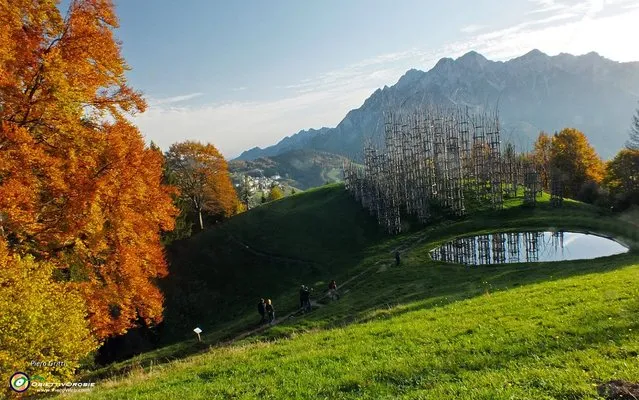
Cathedral Made From Trees By Giuliano Mauri

Italian artist Guiliano Mauri is the father of this spectacular Cattedrale Vegetale (Tree Cathedral), a unique building created out of rows of real living trees. Located at the foot of Mount Arera on the outskirts of Bergamo in Northern Italy, the cathedral is an ever-changing building that will be fully formed over the course of decades – when the trees outgrow their supporting columns and become a piece of natural architecture.
Details
02 Mar 2015 15:31:00
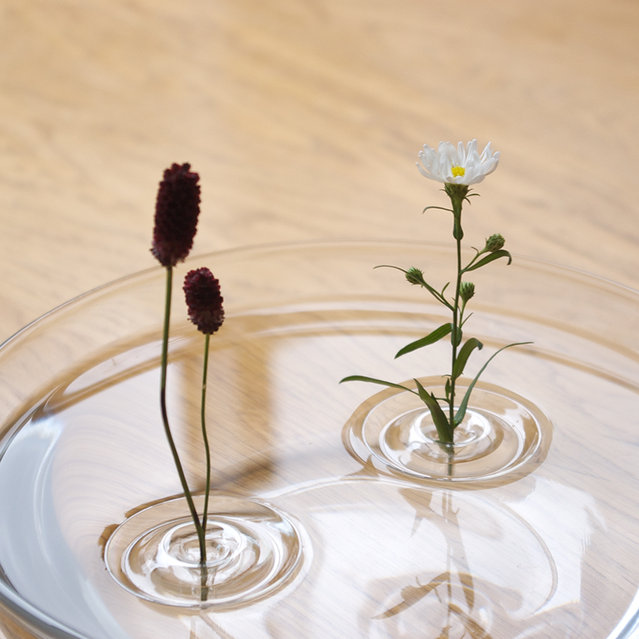
Floating Vases By ooDesign

This vase is simple as a piece of cake but it’s so special at the same time – it’s Floating Ripple vase by ooDesign. It’s a piece manufactured in glass that allows any transparent vase to look like ripples in water.
Long-stemmed flowers float vertically in the water and according to the movement of the air, they change their position within the container – so, what can I say? Japanese designers continue to create genially simple and natural-looking philosophic pieces that inspire everybody.
Details
14 Jun 2015 08:58:00
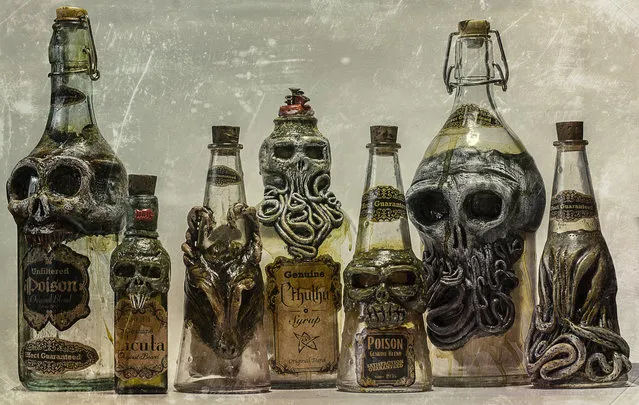
Creepy Bottles By FraterOrion

Andrea Falaschi, the artist who made these creepy Lovecraftian bottles comes from Italy and as he states in his short bio he was born in ’86, during the months of the Chernobyl radiation accident – that changed forever his genes, turning him into a monstrous creature who still lives in a shell of human flesh. Andrea Falaschi is a self-taught sculpturer and painter.
Details
14 Jul 2015 09:30:00
Kenyan photographer and art director Barbara Minishi (L) takes pictures of her room mate and fashion stylist Wambui Thimba (R) wearing a creation by a Kenyan fashion designer on the rooftop of their apartment in Nairobi, Kenya, on June 1, 2020. After their scheduled works was cancelled due to the spread of the COVID-19 coronavirus, Minishi and Thimba have started their own project called “the Kenya Fashion & Style Diary in 21 days” to showcase a Kenyan fashion brand everyday for 3 weeks on social networking services since May 22, 2020 by only shooting at their apartment. (Photo by Yasuyoshi Chiba/AFP Photo)

Kenyan photographer and art director Barbara Minishi (L) takes pictures of her room mate and fashion stylist Wambui Thimba (R) wearing a creation by a Kenyan fashion designer on the rooftop of their apartment in Nairobi, Kenya, on June 1, 2020. After their scheduled works was cancelled due to the spread of the COVID-19 coronavirus, Minishi and Thimba have started their own project called “the Kenya Fashion & Style Diary in 21 days” to showcase a Kenyan fashion brand everyday for 3 weeks on social networking services since May 22, 2020 by only shooting at their apartment. (Photo by Yasuyoshi Chiba/AFP Photo)
Details
03 Jul 2020 00:05:00
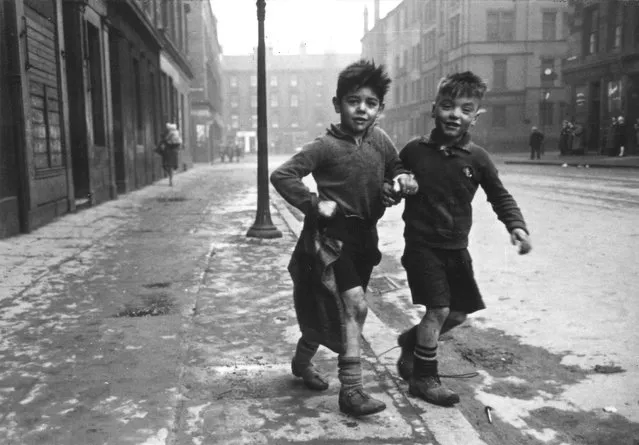
Two boys in the Gorbals area of Glasgow, UK on January 31, 1948. The Gorbals tenements were built quickly and cheaply in the 1840s, providing housing for Glasgow's burgeoning population of industrial workers. Conditions were appalling; overcrowding was standard and sewage and water facilities inadequate. The tenements housed about 40,000 people with up to eight family members sharing a single room, 30 residents sharing a toilet and 40 sharing a tap. By the time this photograph was taken 850 tenements had been demolished since 1920. Redevelopment of the area began in the late 1950s and the tenements were replaced with a modern tower block complex in the sixties. (Photo by Bert Hardy/Getty Images)

Two boys in the Gorbals area of Glasgow, UK on January 31, 1948. The Gorbals tenements were built quickly and cheaply in the 1840s, providing housing for Glasgow's burgeoning population of industrial workers. Conditions were appalling; overcrowding was standard and sewage and water facilities inadequate. The tenements housed about 40,000 people with up to eight family members sharing a single room, 30 residents sharing a toilet and 40 sharing a tap. By the time this photograph was taken 850 tenements had been demolished since 1920. Redevelopment of the area began in the late 1950s and the tenements were replaced with a modern tower block complex in the sixties. (Photo by Bert Hardy/Getty Images)
Details
09 Mar 2017 00:03:00
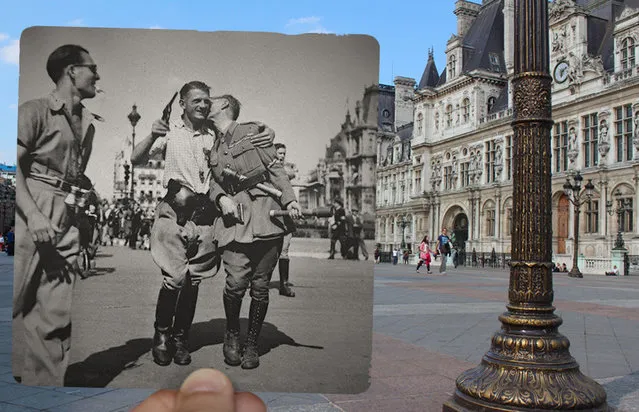
Soldiers outside the Hotel De Ville in the 1940s. (Photo by Julien Knez/Caters News)

It is already one of the world’s most iconic cities, but this incredible collection shows how much Paris has changed over the course of the past century. The collection, by French photographer Julien Knez, shows Paris in the 1940s against a backdrop of how the same places look today. Knez says he put the striking collection together to celebrate the 71st anniversary of the city’s liberation from Nazi control in August 1944. Here: Soldiers outside the Hotel De Ville in the 1940s. (Photo by Julien Knez/Caters News)
Details
07 May 2015 13:16:00
Gecko. (Photo by Mickael Leger/Caters News)

Most probably wouldnt think of snakes, spiders and lizards as beautiful animals – but these photographs could change some minds. The images show the reptiles seemingly playful sides, from a gleeful looking Budgetts frog, a cheeky leopard sticking out its tongue at the camera and a stack of four colourful iguanas. Contrasted against a white background and shot with a Canon EOS 5D Mark 2 and macro lens, photographer Mickael Leger really made sure they could be seen in all their glory. Here: Gecko. (Photo by Mickael Leger/Caters News)
Details
22 Apr 2015 09:59:00