Loading...
Done
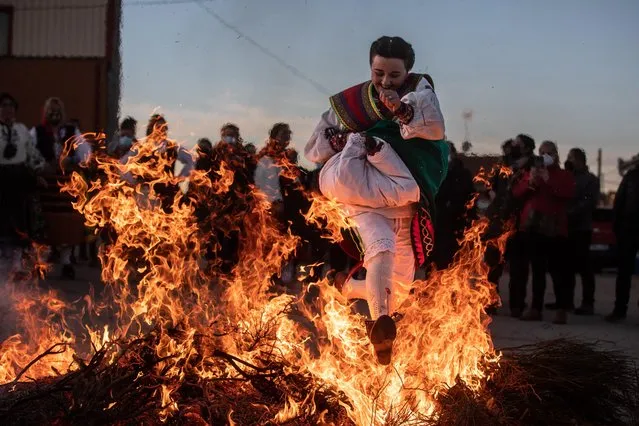
People celebrate the traditional Fiesta de las Aguedas on February 6, 2022 in Andavias, Zamora, Castilla y Leon, Spain. This celebration, also known as “El dia de las mujeres”, is a deep-rooted tradition in Castilla y Leon, especially in rural areas. The day of the Aguedas has its origin in the cult of Santa Agueda, and is celebrated every February 5. During this day, women are the protagonists and take over the city. For their part, the town councils give them the baton as a sign of authority. Around seven days of festivities are celebrated where the attendees dance, eat, sing, and even jump over a bonfire. (Photo By Emilio Fraile/Europa Press via Getty Images)

People celebrate the traditional Fiesta de las Aguedas on February 6, 2022 in Andavias, Zamora, Castilla y Leon, Spain. This celebration, also known as “El dia de las mujeres”, is a deep-rooted tradition in Castilla y Leon, especially in rural areas. The day of the Aguedas has its origin in the cult of Santa Agueda, and is celebrated every February 5. (Photo By Emilio Fraile/Europa Press via Getty Images)
Details
31 Mar 2022 06:18:00


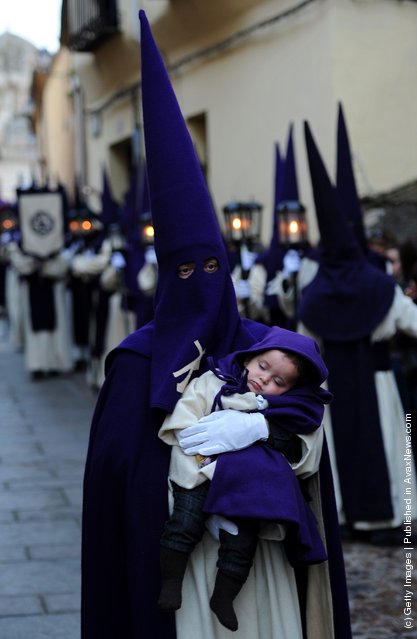
A young and sleepy penitent of the Cofradia de Jesus del Via crucis is carried by another as they walk the streets during a Holy Week procession on April 19, 2011 in Zamora, Spain. Easter week is traditionally celebrated with processions in most Spanish towns. (Photo by Jasper Juinen/Getty Images)
Details
20 Apr 2011 07:47:00
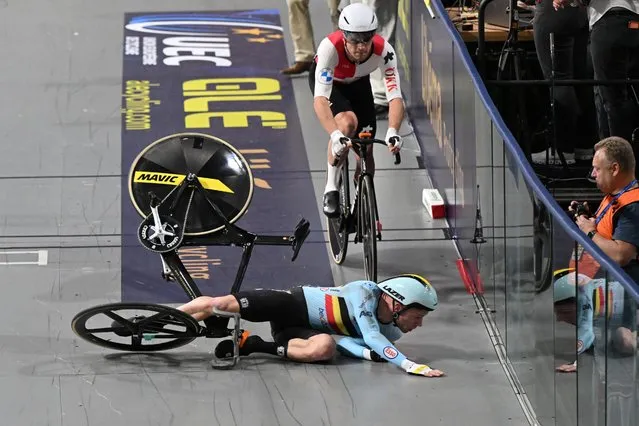
Belgium's Jules Hesters (L) falls as he competes in the Men's Elimination race during the first day of the UEC European Track Cycling Championships at the Omnisport indoor arena in Apeldoorn, on January 10, 2024. (Photo by John Thys/AFP Photo)

Belgium's Jules Hesters (L) falls as he competes in the Men's Elimination race during the first day of the UEC European Track Cycling Championships at the Omnisport indoor arena in Apeldoorn, on January 10, 2024. (Photo by John Thys/AFP Photo)
Details
18 Jan 2024 10:58:00
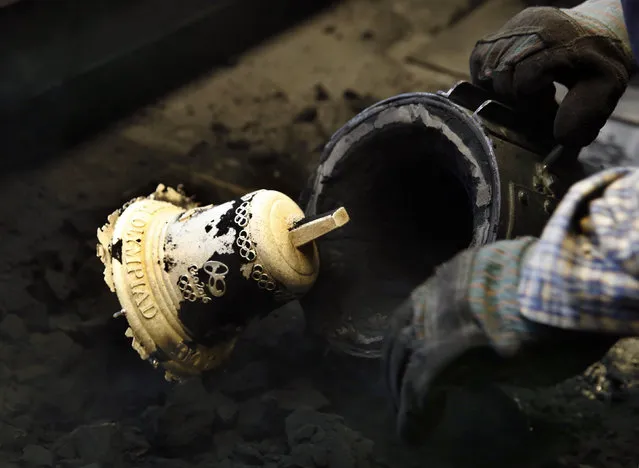
Serge Huguenin of the Blondeau foundry takes the newly melted bell out of the mould in La Chaux-de-Fonds, Switzerland January 21, 2016. At this year's Summer Olympics in Rio de Janeiro, no matter how elaborate the opening ceremony or how sophisticated the live broadcasts, the final lap of athletics races will be announced the traditional way by ringing an old-fashioned bell. (Photo by Denis Balibouse/Reuters)

Serge Huguenin of the Blondeau foundry takes the newly melted bell out of the mould in La Chaux-de-Fonds, Switzerland January 21, 2016. At this year's Summer Olympics in Rio de Janeiro, no matter how elaborate the opening ceremony or how sophisticated the live broadcasts, the final lap of athletics races will be announced the traditional way by ringing an old-fashioned bell. Omega, the official timekeeper of the event, has ordered 21 bells, forged almost entirely by hand by Blondeau's Bell Foundry in the Jura Mountains in Switzerland. Each last-lap bell is branded with the RIO 2016 logo and circled with the words “2016 GAMES OF THE XXXI OLYMPIAD”. (Photo by Denis Balibouse/Reuters)
Details
02 Feb 2016 13:51:00
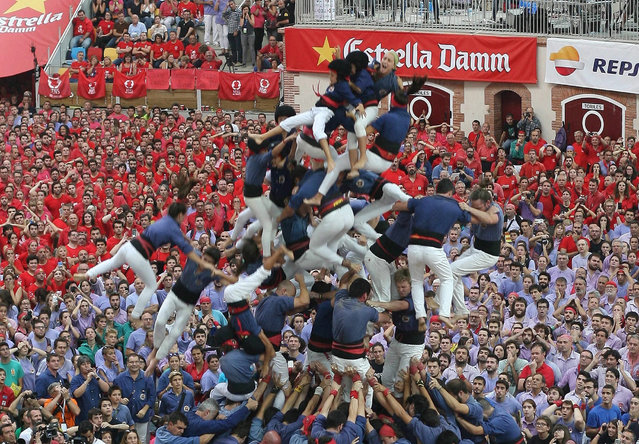
Capgrossos de Mataro team members fall during the 25th Castells' contest at the Tarraco Arena in Tarragona, Catalonia, northeastern Spain, 02 October 2016. The “Castells” is a popular event in which people create human towers up to a height of between six and ten levels. (Photo by Jaume Sellart/EPA)

Capgrossos de Mataro team members fall during the 25th Castells' contest at the Tarraco Arena in Tarragona, Catalonia, northeastern Spain, 02 October 2016. The “Castells” is a popular event in which people create human towers up to a height of between six and ten levels. (Photo by Jaume Sellart/EPA)
Details
03 Oct 2016 09:55:00
People take part in the “The Burial of the Sardine” funeral procession, which marks the end of carnival festivities, in Madrid, Spain, February 10, 2016. (Photo by Juan Medina/Reuters)

People take part in the “The Burial of the Sardine” funeral procession, which marks the end of carnival festivities, in Madrid, Spain, February 10, 2016. “Mourners” carry a coffin with a mock sardine through the streets to celebrate the countdown to Lent. Spanish painter Francisco de Goya's painting “El entierro de la sardina” (The Burial of the Sardine) was inspired by this tradition, which started in Madrid in the 18th century, around the time of Spanish King Carlos III. (Photo by Juan Medina/Reuters)
Details
11 Feb 2016 12:29:00
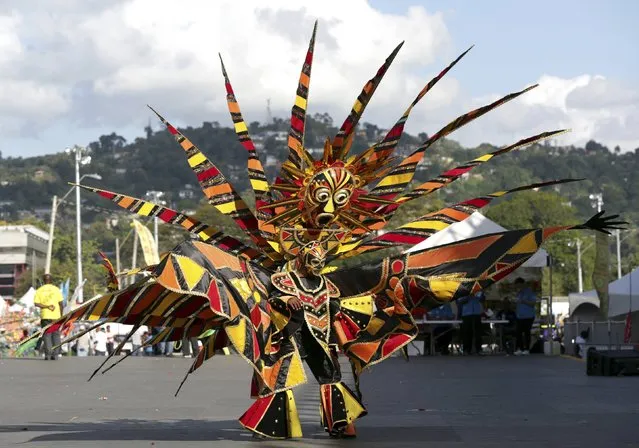
A reveller parades on stage at the annual Trinidad and Tobago Red Cross Society's Children's Carnival Competition at the Queen's Park Savannah in Port-Of-Spain February 7, 2015. (Photo by Andrea De Silva/Reuters)

A reveller parades on stage at the annual Trinidad and Tobago Red Cross Society's Children's Carnival Competition at the Queen's Park Savannah in Port-Of-Spain February 7, 2015. (Photo by Andrea De Silva/Reuters)
Details
09 Feb 2015 12:13:00
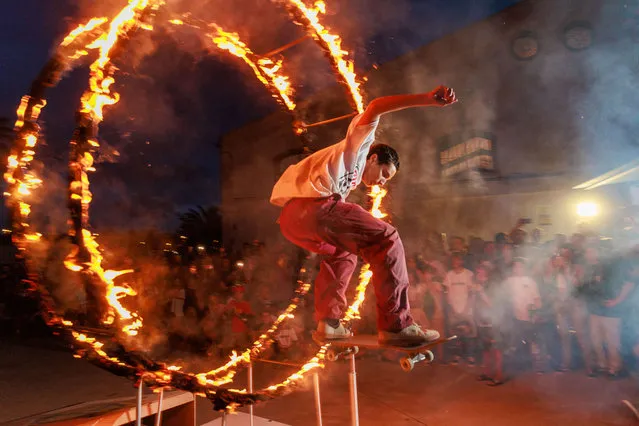
A skater jumps through a ring of fire at the La Bodega Skate facilities as part of one of the Vans contests to showcase the top street skaters in Europe on September 16, 2023 in Jerez de la Frontera, Spain. (Photo by Juan Carlos Toro/Getty Images)

A skater jumps through a ring of fire at the La Bodega Skate facilities as part of one of the Vans contests to showcase the top street skaters in Europe on September 16, 2023 in Jerez de la Frontera, Spain. (Photo by Juan Carlos Toro/Getty Images)
Details
08 Oct 2023 03:57:00