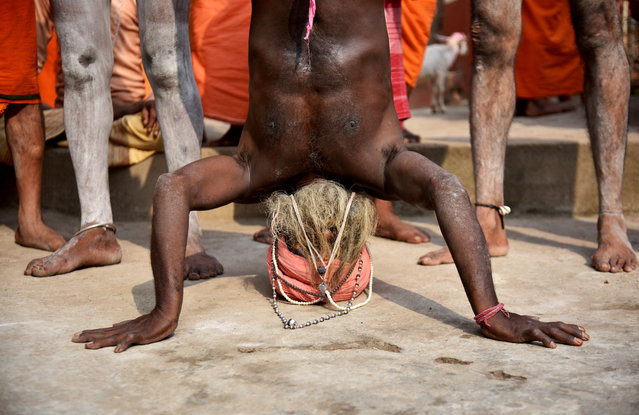
A Sadhu, or a Hindu holy man, performs yoga on International Yoga Day at Kamakhya temple in Guwahati, India on June 21, 2018. (Photo by Anuwar Hazarika/Reuters)
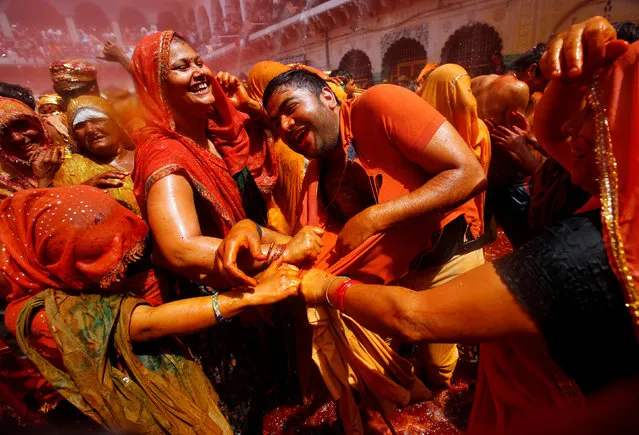
Women tear the shirt off a man during “Huranga”, a game played between men and women a day after Holi, at Dauji temple near Mathura, March 14, 2017. (Photo by Adnan Abidi/Reuters)
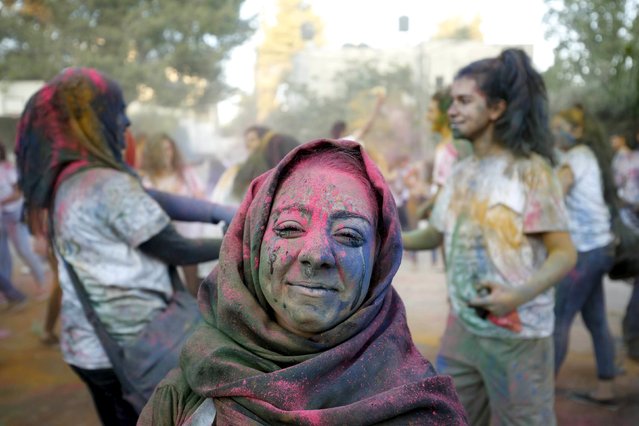
A Palestinian reveller takes part in a colours festival organized by Palestinian activists in the West Bank city of Ramallah August 20, 2015. The festival is inspired by the Hindu spring festival of Holi. (Photo by Mohamad Torokman/Reuters)
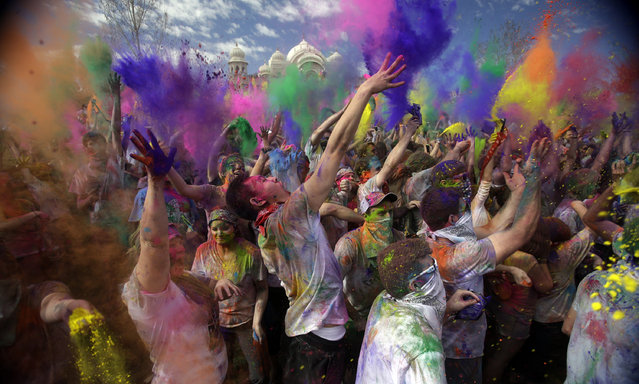
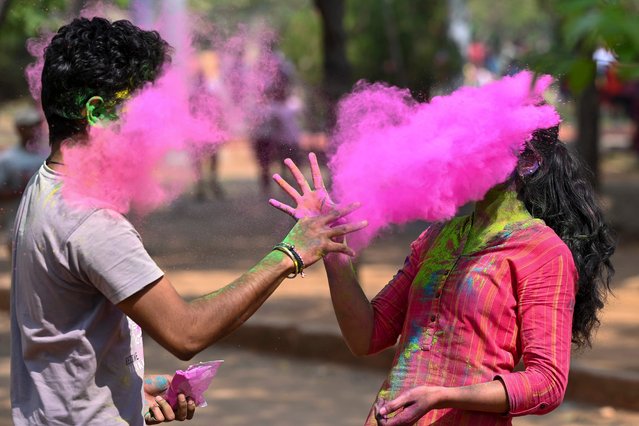
Revelers throw colored corn starch into the air as they celebrate the 2015 Holi (Festival of Colors) at the Krishna Temple in Spanish Fork, Utah on Saturday, March 28, 2015. (Photo by Rick Bowmer/AP Photo)
People smeared with “Gulal” or coloured powder during celebrations of Hindu spring festival “Holi” in Hyderabad, India on March 7, 2023. (Photo by Noah Seelam/AFP Phoot)
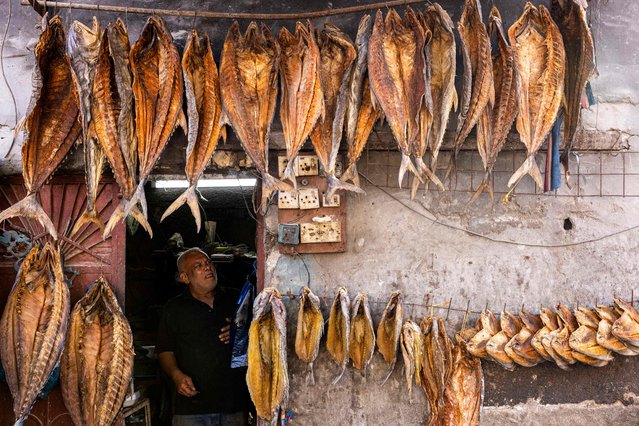
An Iraqi man sells dried fish ahead of Eid al-Fitr, which marks the end of the Muslim holy fasting month of Ramadan, in Basra on April 8, 2024. (Photo by Hussein Faleh/AFP Photo)
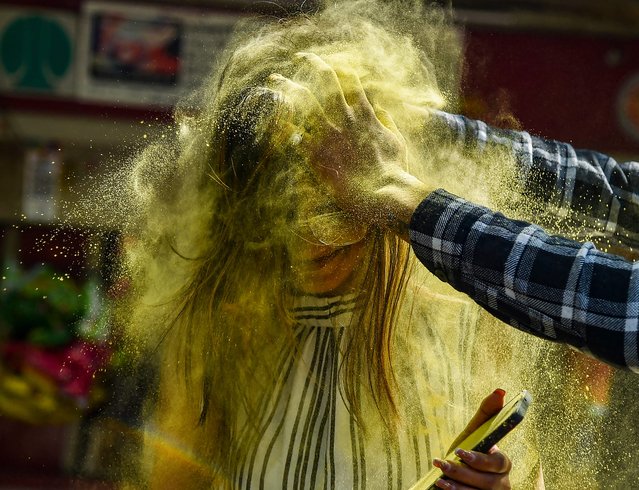
College students play with coloured powder to celebrate the festival of Holi, near Jantar Mantar in New Delhi on March 7, 2023 (Photo by Press Trust of India)
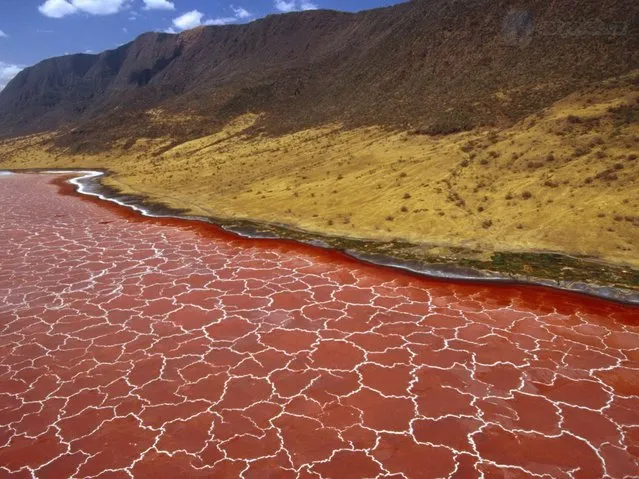
Lake Natron is a salt lake located in northern Tanzania, close to the Kenyan border, in the eastern branch of the East African Rift. The lake is fed by the Southern Ewaso Ng'iro River and also by mineral-rich hot springs. It is quite shallow, less than three meters (10 feet) deep, and varies in width depending on its water level, which changes due to high levels of evaporation, leaving concentrations of salt and other minerals, notably sodium carbonate (natron).