Loading...
Done
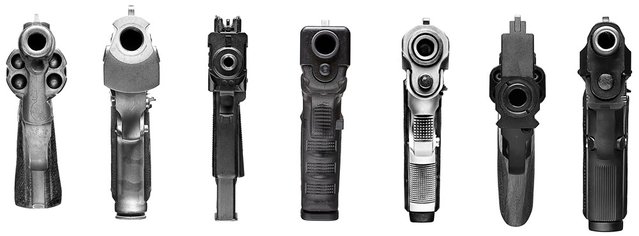
“Point Blank” – Gun Series by Peter Andrew. (Photo by Peter Andrew)

“Guns have a massive amount of power associated with them. They are designed to kill. We decided to photograph portraits of them in a similar way you might photograph a powerful person. Like powerful people, pistols have this “perfect” quality that we wanted to explore. As we started shooting them, we could see flaws in their design. Metal burring around the barrels, scratches in the metal. This imperfection and detail were very interesting to us; connecting us back to these images as portraits”. – Peter Andrew. (Photo by Peter Andrew/Simon Duffy/Derek Blais)
Details
26 Aug 2013 10:03:00
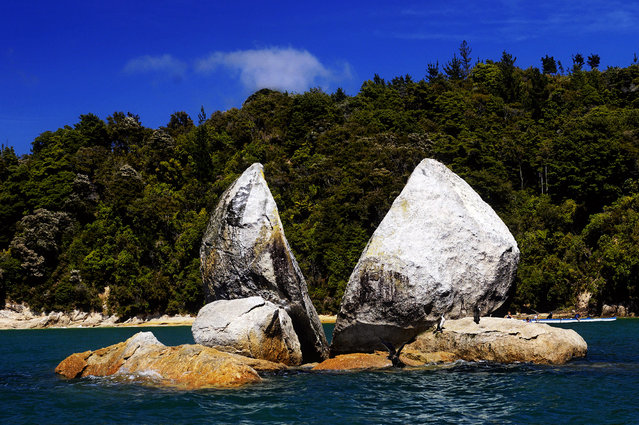
Split Apple Rock

Split Apple Rock is a geological rock formation in The Tasman Bay off the northern coast of the South Island of New Zealand. Made of granite, it is in the shape of an apple which has been cut in half. It is a popular tourist attraction in the waters of the Tasman Sea approximately 50 metres off the coast between Kaiteriteri and Marahau. The rock sits in shallow water at low tide and is accessible by wading. It is also a point of interest for the many tourist boats and pleasure craft which operate along the shores of the Abel Tasman National Park. The cleft to produce two sides of the 'apple' was a natural occurrence. It is unknown when this happened and therefore the cleaving of the rock has attracted mythological explanations.
Details
19 Oct 2013 10:58:00
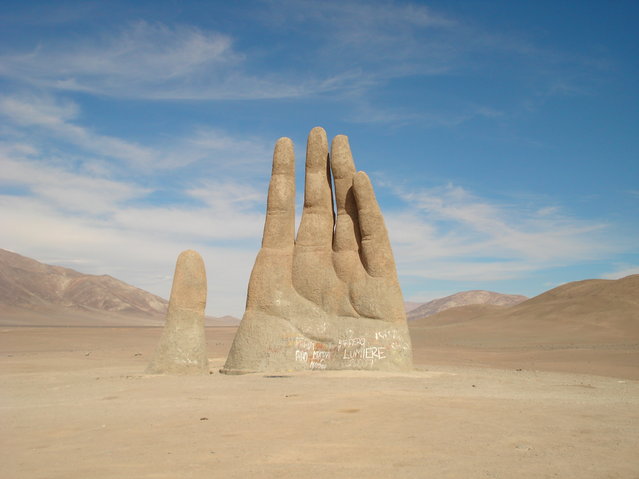
The Giant Hand of Atacama

The Mano de Desierto is a large-scale sculpture of a hand located in the Atacama Desert in Chile, 75 km to the south of the city of Antofagasta, on the Panamerican Highway. The nearest point of reference is the “Ciudad Empresarial La Negra” (La Negra Business City). The sculpture was constructed by the Chilean sculptor Mario Irarrázabal at an altitude of 1,100 meters above sea level. Irarrázabal used the human figure to express emotions like injustice, loneliness, sorrow and torture. Its exaggerated size is said to emphasize human vulnerability and helplessness. The work has a base of iron and cement, and stands 11 metres (36 ft) tall. Funded by Corporación Pro Antofagasta, a local booster organization, the sculpture was inaugurated on March 28, 1992.
Details
21 Dec 2013 10:18:00
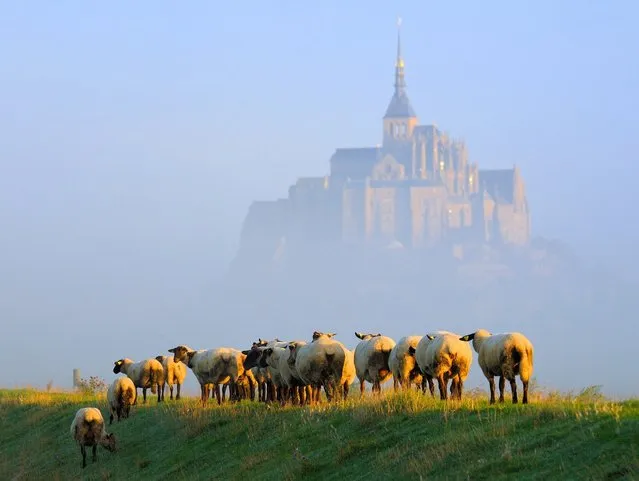
Mont St-Michel In Normandy, France

During the feudal times, the society was very structured where everyone knew their place. Fishermen knew that they would always have to bend their knee for highborn ladies and gentlemen, while the latter considered themselves to be far too superior to even look at the common folk. Mont Saint-Michel is a living memorial of those times. Its structural composition clearly reflects the structure of feudal society: The monastery and abbey were built on the highest point; housing and stores were built some distance below; finally, fishermen’s and farmer’s houses were constructed, not even being within the city walls, making them the most vulnerable to the possible attack.
Details
03 Mar 2015 10:20:00


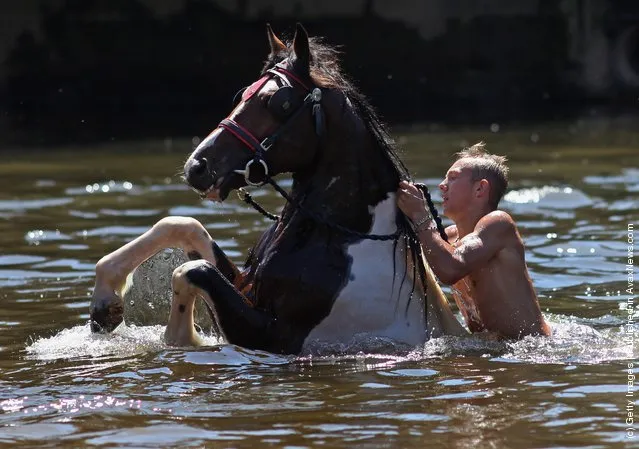
A traveller washes his horse in the River Eden in preparation for selling at the Appleby Horse Fair on June 3, 2011 in Appleby, England. Appleby Horse Fair has existed under the protection of a charter granted by James II since 1685. It is one of the key gathering points for the Romany, gypsy and traveling community. Appleby Horse Fair is attended by about 5,000 travelers who come to buy and sell horses. The animals are washed and groomed before being ridden at high speed along the “mad mile” for the viewing of potential buyers. (Photo by Christopher Furlong/Getty Images)
Details
04 Jun 2011 06:35:00
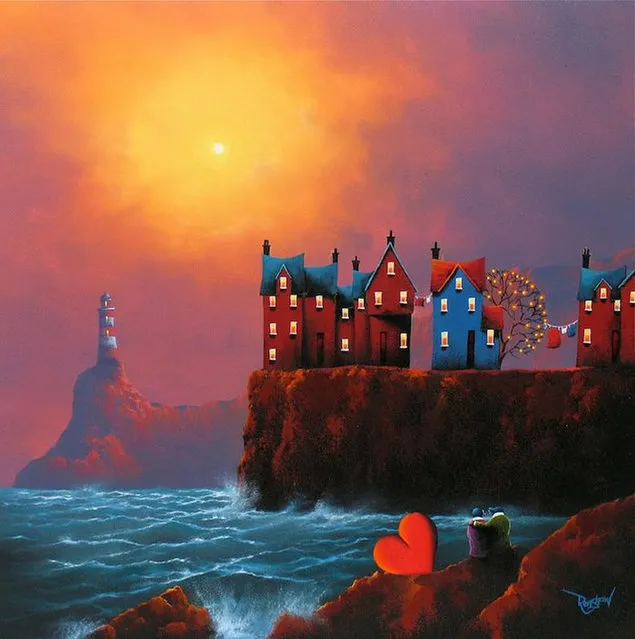
A Northern Romance Series By David Renshaw

Lovely is the correct work to describe this beautiful paintings series by David Renshaw from “Ted n’ Doris – A Northern Romance”. “Deep down I always knew what I wanted to do for a living and in my school years I remember my father teaching me some basic elements of drawing and I dreamed of one day becoming an artist. Being only really interested in art I left school and studied Graphic Design, after which I started work at a local art gallery as a picture framer. I continued to paint alongside my job, mainly developing techniques and ideas and in 2005 decided it was time to follow my dreams and dedicate myself to painting full time. I always try to make my work feel atmospheric, and I like to pay particular attention to sky and cloud formations as I consider this element of my work to be extremely important to the mood of the finished painting, whether it be a dramatic sunset or a misty moonlit night.”
Details
19 Oct 2013 11:48:00
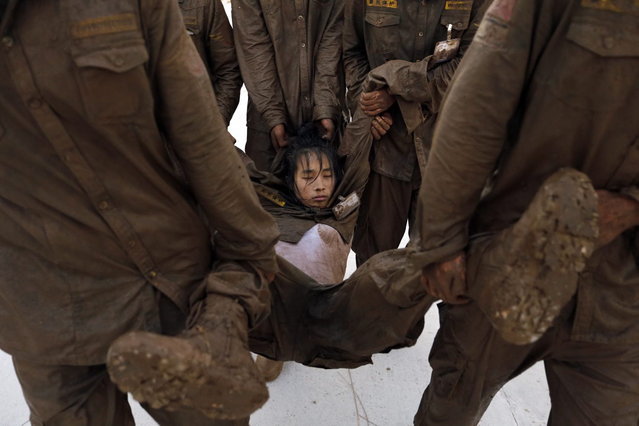
Students carry a female trainee who has fallen into a stupor during high intensity training at Tianjiao Special Guard/Security Consultant camp on the outskirts of Beijing December 1, 2013. (Photo by Jason Lee/Reuters)

Students carry a female trainee who has fallen into a stupor during high intensity training at Tianjiao Special Guard/Security Consultant camp on the outskirts of Beijing December 1, 2013. Former Chinese soldier Chen Yongqing has big ambitions for his bodyguard training school Tianjiao, which he says is China's first professional academy to train former soldiers and others as personal security guards. Chen charges 500,000 yuan ($82,400) a year for each protector as China's rich and famous look to bolster their safety and sense of importance. (Photo by Jason Lee/Reuters)
Details
19 Dec 2013 11:51:00
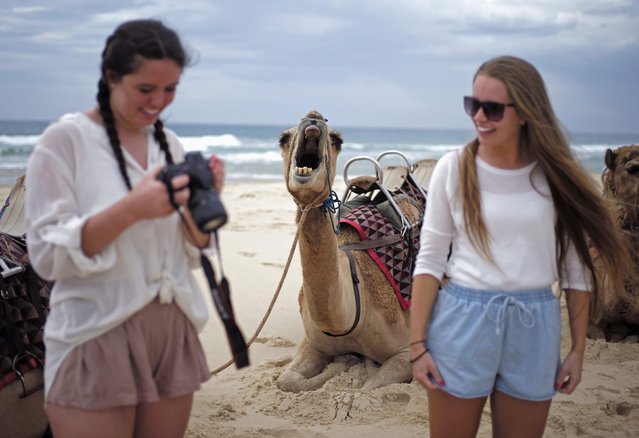
A camel yawns as a tourist checks images on her camera following a ride on a camel safari alongside the Pacific Ocean on Lighthouse Beach, north of Sydney, December 4, 2014. For 25 years camel rides on this beach have given visitors to Australia's holiday coast a rare experience available only in a handful of locations in the country. (Photo by Jason Reed/Reuters)

A camel yawns as a tourist checks images on her camera following a ride on a camel safari alongside the Pacific Ocean on Lighthouse Beach, north of Sydney, December 4, 2014. For 25 years camel rides on this beach have given visitors to Australia's holiday coast a rare experience available only in a handful of locations in the country. Australia's long history with the “ships of the desert” goes back to the 1800s when they were imported from Afghanistan and India for use as transportation across Australia's vast deserts before being released into the wild following their replacement by motorised transport. (Photo by Jason Reed/Reuters)
Details
06 Dec 2014 12:48:00