Loading...
Done
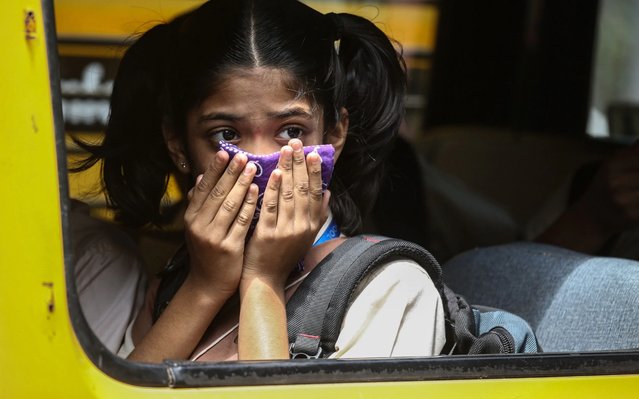
An Indian girl student covers her face as a precaution against the coronavirus outbreak, in Mumbai, India, 12 March 2020. According to media reports, more than 70 people in India have tested positive for COVID-19. The World Health Organisation declared the novel coronavirus or COVID-19 as global pandemic. (Photo by Divyakant Solanki/EPA/EFE/Rex Features/Shutterstock)

An Indian girl student covers her face as a precaution against the coronavirus outbreak, in Mumbai, India, 12 March 2020. According to media reports, more than 70 people in India have tested positive for COVID-19. The World Health Organisation declared the novel coronavirus or COVID-19 as global pandemic. (Photo by Divyakant Solanki/EPA/EFE/Rex Features/Shutterstock)
Details
14 Mar 2020 00:07:00
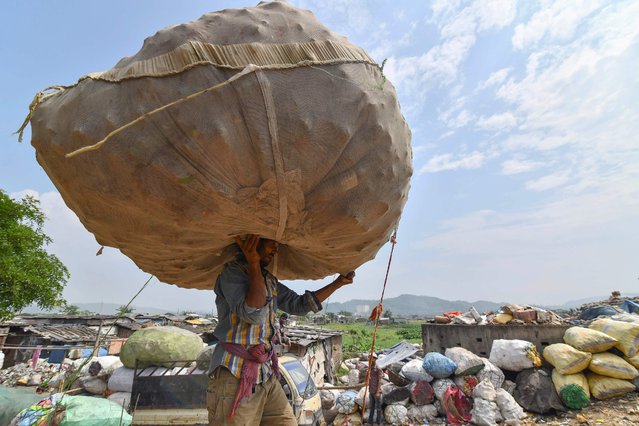
An Indian labourer carries a sack of plastic bottles on his head near one of the largest disposal sites in north-east India, ahead of the “World Environment Day” in Boragaon area of Guwahati on June 4, 2018. World Environment Day is marked annually on June 5, and aims at promoting awareness and action to protect the environment. (Photo by Biju Boro/AFP Photo)

An Indian labourer carries a sack of plastic bottles on his head near one of the largest disposal sites in north-east India, ahead of the “World Environment Day” in Boragaon area of Guwahati on June 4, 2018. World Environment Day is marked annually on June 5, and aims at promoting awareness and action to protect the environment. (Photo by Biju Boro/AFP Photo)
Details
12 Jun 2018 00:03:00
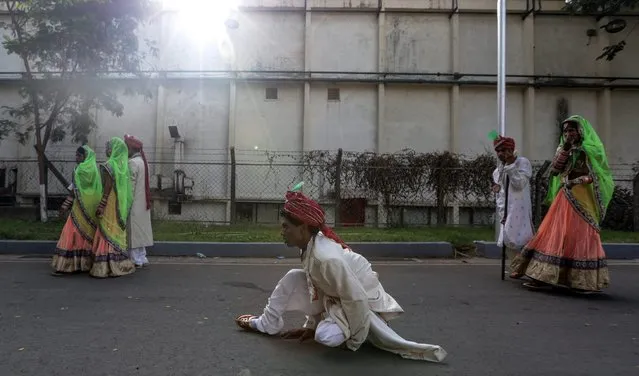
Indian underprivileged and specially abled grooms and brides in traditional marriage attire arrives to take part in a mass marriage ceremony in Mumbai, India, 29 May 2016. Around 51 couples got married during the ceremony which was organized by Narayan Seva Sansthan, for the underprivileged and specially abled people. From this 51 couples, both the partners are physically disabled in 22 couples, one partner is physically disabled in seven couples and 22 couples are from underprivileged circumstances. (Photo by Divyakant Solanki/EPA)

Indian underprivileged and specially abled grooms and brides in traditional marriage attire arrives to take part in a mass marriage ceremony in Mumbai, India, 29 May 2016. Around 51 couples got married during the ceremony which was organized by Narayan Seva Sansthan, for the underprivileged and specially abled people. From this 51 couples, both the partners are physically disabled in 22 couples, one partner is physically disabled in seven couples and 22 couples are from underprivileged circumstances. (Photo by Divyakant Solanki/EPA)
Details
31 May 2016 11:48:00
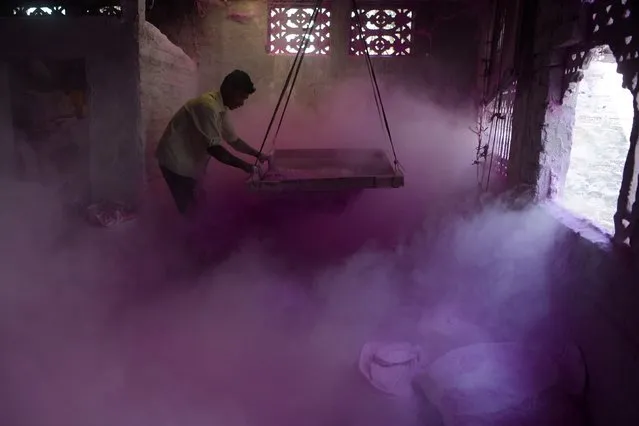
An Indian labourer sifts coloured powder, known as “gulal”, to be used during the forthcoming spring festival of Holi, inside a factory at Fulbari village on the outskirts of Siliguri on March 6, 2017. Holi, the popular Hindu spring festival of colours is observed in India at the end of the winter season on the last full moon of the lunar month, and will be celebrated on March 13 this year. (Photo by Diptendu Dutta/AFP Photo)

An Indian labourer sifts coloured powder, known as “gulal”, to be used during the forthcoming spring festival of Holi, inside a factory at Fulbari village on the outskirts of Siliguri on March 6, 2017. Holi, the popular Hindu spring festival of colours is observed in India at the end of the winter season on the last full moon of the lunar month, and will be celebrated on March 13 this year. (Photo by Diptendu Dutta/AFP Photo)
Details
08 Mar 2017 00:04:00
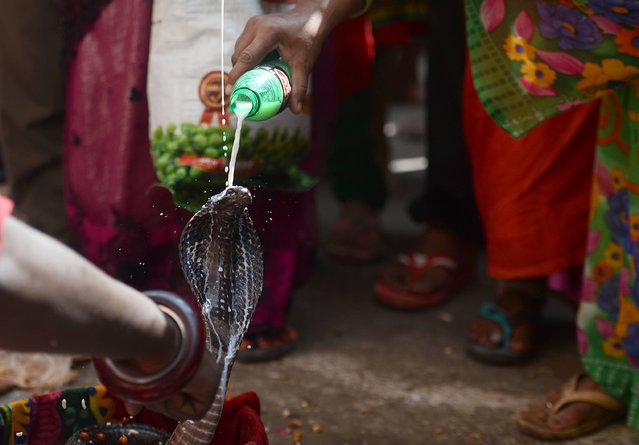
An Indian Hindu devotee pours milk on a snake as an offering during the annual Nag Panchami festival, dedicated to the worship of snakes outside the Nagvasuki temple, in Allahabad, on July 28, 2017. (Photo by Sanjay Kanojia/AFP Photo)

An Indian Hindu devotee pours milk on a snake as an offering during the annual Nag Panchami festival, dedicated to the worship of snakes outside the Nagvasuki temple, in Allahabad, on July 28, 2017. Officially the snake charmers' profession is banned in India, but many in the country offered prayers and milk blessings to cobras and other deadly serpents on July 28 in an annual tribute. The 800,000 charmers and their young apprentices come to the fore for the Nag Panchami festival which dates back several centuries. (Photo by Sanjay Kanojia/AFP Photo)
Details
31 Jul 2017 09:17:00
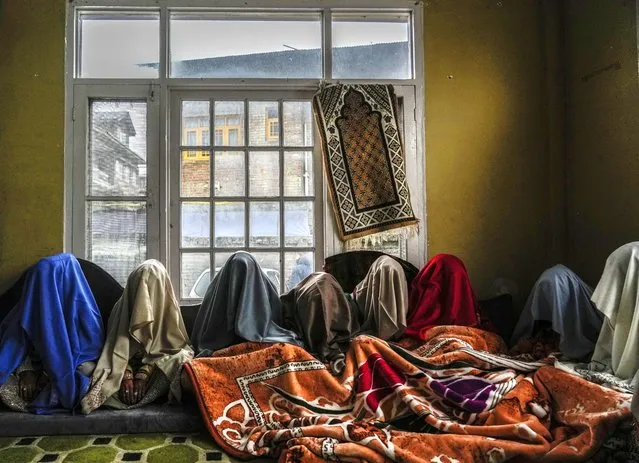
Kashmiri Muslim brides sit during a mass marriage of 30 couples in Srinagar, Indian controlled Kashmir, Wednesday, February 21, 2024. Mass weddings in India are organized by social organizations primarily to help economically weaker families who cannot afford the high ceremony costs as well as the customary dowry and expensive gifts that are still prevalent in many communities. (Photo by Mukhtar Khan/AP Photo)

Kashmiri Muslim brides sit during a mass marriage of 30 couples in Srinagar, Indian controlled Kashmir, Wednesday, February 21, 2024. Mass weddings in India are organized by social organizations primarily to help economically weaker families who cannot afford the high ceremony costs as well as the customary dowry and expensive gifts that are still prevalent in many communities. (Photo by Mukhtar Khan/AP Photo)
Details
27 Feb 2024 07:08:00
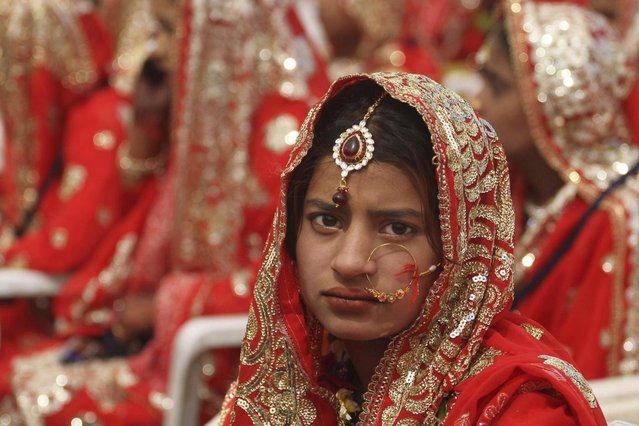
An Indian bride, sits during a mass marriage of 162 Muslim couples in Ahmadabad, India, Sunday, March 3, 2013. Mass marriages in India are organized by social organizations primarily to help the economically backward families who cannot afford the high ceremony costs as well as the customary dowry and expensive gifts that are still prevalent in many communities. (Photo by Ajit Solanki/AP Photo/LaPresse)

An Indian bride, sits during a mass marriage of 162 Muslim couples in Ahmadabad, India, Sunday, March 3, 2013. Mass marriages in India are organized by social organizations primarily to help the economically backward families who cannot afford the high ceremony costs as well as the customary dowry and expensive gifts that are still prevalent in many communities. (Photo by Ajit Solanki/AP Photo/LaPresse)
Details
04 Mar 2013 12:07:00
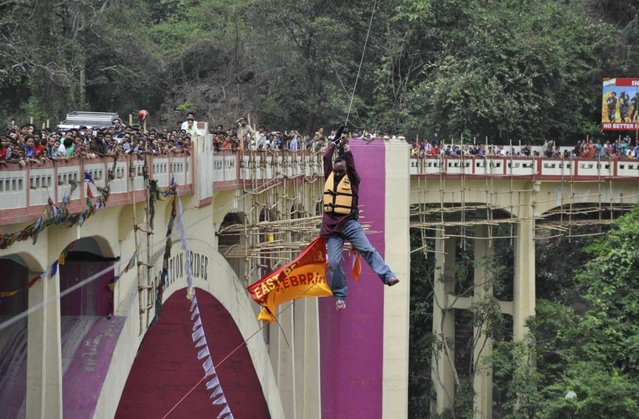
In this Sunday, April 28, 2013 photograph, people watch as Indian Sailendra Nath Roy attempts to cross Teesta river suspended from a zip wire attached to his ponytail moments before his death in Siliguri, West Bengal state, India. Roy who was named a Guinness World Record holder in 2011 for travelling the farthest distance on a zip wire using hair died during the stunt Sunday when he suffered a heart attack. (Photo by AP Photo)

In this Sunday, April 28, 2013 photograph, people watch as Indian Sailendra Nath Roy attempts to cross Teesta river suspended from a zip wire attached to his ponytail moments before his death in Siliguri, West Bengal state, India. Roy who was named a Guinness World Record holder in 2011 for travelling the farthest distance on a zip wire using hair died during the stunt Sunday when he suffered a heart attack. (Photo by AP Photo)
Details
30 Apr 2013 08:21:00