Loading...
Done
A dancer poses for her own photographer in front of pink cherry tree blossoms during a sunny spring morning at the Parc de Sceaux gardens near Paris, France, April 12, 2019. (Photo by Christian Hartmann/Reuters)

A dancer poses for her own photographer in front of pink cherry tree blossoms during a sunny spring morning at the Parc de Sceaux gardens near Paris, France, April 12, 2019. (Photo by Christian Hartmann/Reuters)
Details
14 Apr 2019 00:07:00
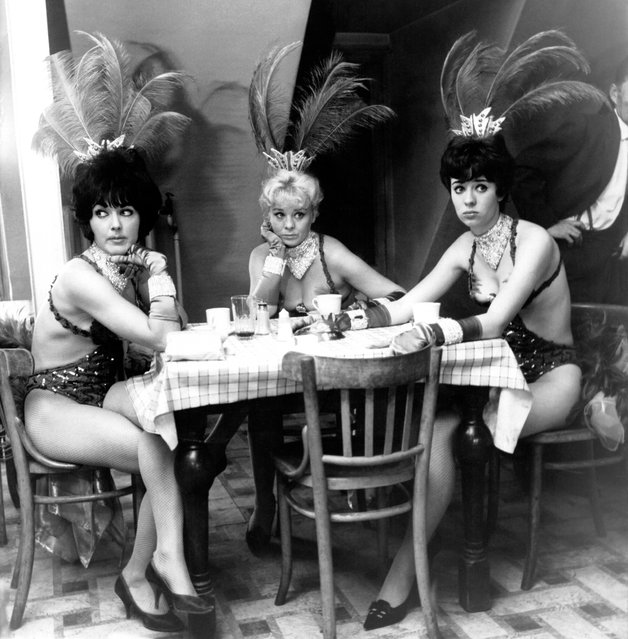
Three cabaret dancers sit glum-faced in the Windmill Theatre's canteen upon hearing the news that the theatre's owners have sold out to a cinema company, on October 02, 1964. The theatre, which was the first to include nudity in its shows, has been able to cope with competition from a growing number of West End strip clubs. (Photo by Hulton-Deutsch Collection/CORBIS/Corbis via Getty Images)

Three cabaret dancers sit glum-faced in the Windmill Theatre's canteen upon hearing the news that the theatre's owners have sold out to a cinema company, on October 02, 1964. The theatre, which was the first to include nudity in its shows, has been able to cope with competition from a growing number of West End strip clubs. (Photo by Hulton-Deutsch Collection/CORBIS/Corbis via Getty Images)
Details
26 Jan 2018 06:51:00
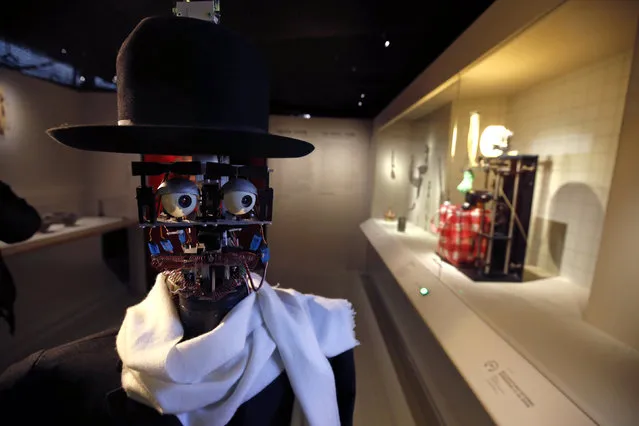
The Berenson robot strolls among visitors during the exhibition “Persona : Oddly Human” at the Quai Branly museum in Paris, France, February 23, 2016. The Berenson robot, developed in France in 2011, is the brainchild of anthropologist Denis Vidal and robotics engineer Philippe Gaussier. Its programming allows it to record reactions of museum visitors to certain pieces of art and then use the data to develop its own unique taste, which allows “Berenson” to judge whether or not it likes a certain work of art within an exhibition. (Photo by Philippe Wojazer/Reuters)


The Berenson robot strolls among visitors during the exhibition “Persona : Oddly Human” at the Quai Branly museum in Paris, France, February 23, 2016. The Berenson robot, developed in France in 2011, is the brainchild of anthropologist Denis Vidal and robotics engineer Philippe Gaussier. Its programming allows it to record reactions of museum visitors to certain pieces of art and then use the data to develop its own unique taste, which allows “Berenson” to judge whether or not it likes a certain work of art within an exhibition. (Photo by Philippe Wojazer/Reuters)
Details
25 Feb 2016 12:26:00


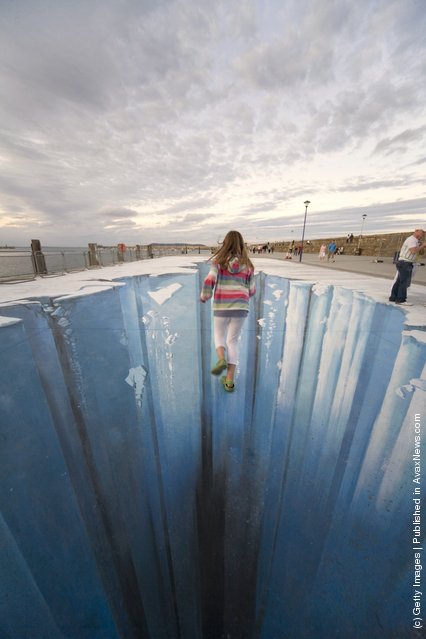
The 3D street painting “Crevasse” by artist Edgar Mueller is seen in this undated picture during the “Festival of culture”, 2008 in Dun Laoghaire, Irland. Edgar Mueller put a part of the eastern Pier into the ice age. This project has been supported by the Goethe Institution Germany. (Photo by Edgar Mueller/Getty Images)
Details
19 Jul 2011 10:50:00
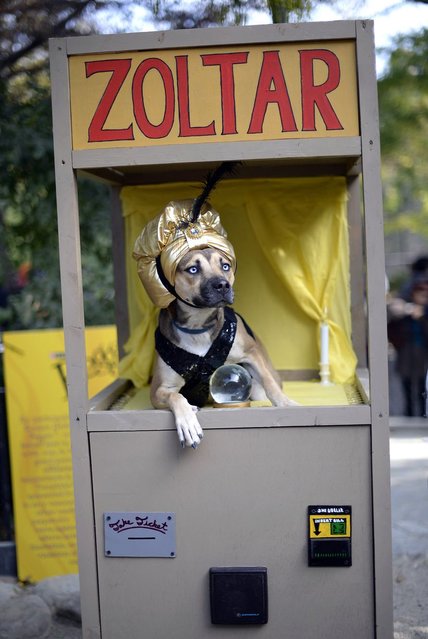
A dog dressed as a Zoltar fortune telling machine participates in the Halloween Dog Parade in New York. (Photo by Timothy Clary/Getty Images)

A dog dressed as a Zoltar fortune telling machine participates in the Halloween Dog Parade in New York. (Photo by Timothy Clary/Getty Images)
Details
28 Oct 2013 08:36:00
A vampire poses for a photograph as she arrives at Whitby Abbey ahead of a Guinness world record attempt to gather the largest number of vampires together in one place, in Whitby, north-east England on May 26, 2022. (Photo by Christopher Thomond/The Guardian)

A vampire poses for a photograph as she arrives at Whitby Abbey ahead of a Guinness world record attempt to gather the largest number of vampires together in one place, in Whitby, north-east England on May 26, 2022. (Photo by Christopher Thomond/The Guardian)
Details
27 May 2022 04:57:00
A child dressed as a cat takes part in the Children's Halloween day parade at Washington Square Park in the Manhattan borough of New York October 31, 2015. (Photo by Carlo Allegri/Reuters)

A child dressed as a cat takes part in the Children's Halloween day parade at Washington Square Park in the Manhattan borough of New York October 31, 2015. (Photo by Carlo Allegri/Reuters)
Details
03 Nov 2015 08:01:00
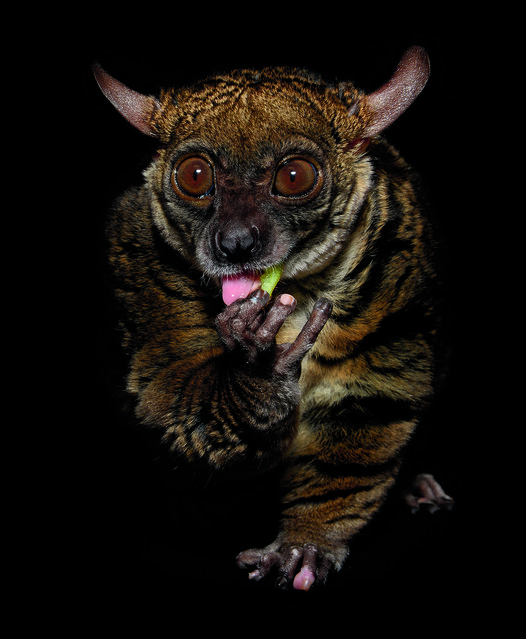
Galagos, more commonly known as bush babies, are tiny African primates with remarkable jumping abilities. Thanks to the elastic energy stored in the tendons of their lower legs, small-eared galagos can jump 6 feet straight up in the air. (Photo by Traer Scott/Chronicle Books)

Galagos, more commonly known as bush babies, are tiny African primates with remarkable jumping abilities. Thanks to the elastic energy stored in the tendons of their lower legs, small-eared galagos can jump 6 feet straight up in the air. (Photo by Traer Scott/Chronicle Books)
Details
07 Sep 2014 12:38:00