Loading...
Done
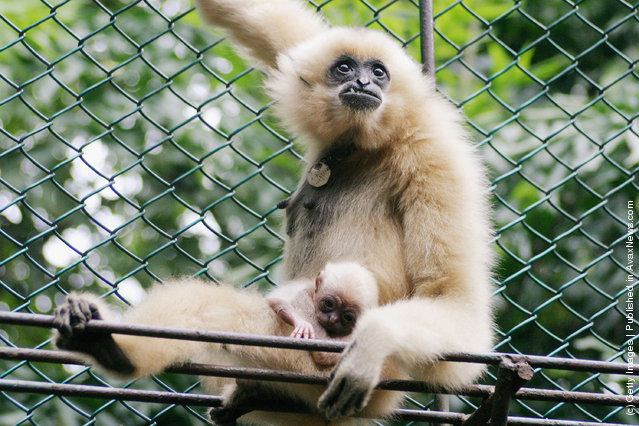
Newborn White-Cheeked Gibbon Nomascus

“Nomascus is the second most speciose genus of gibbons (family Hylobatidae). Originally this genus was a subgenus of Hylobates, and all individuals were considered one species, Hylobates concolor. Species within Nomascus are characterized by 52 chromosomes. Some species are all black, some light with a distinct black tuft of crown fur, and some by distinct, light-colored cheek patches. Nomascus is found from southern China (Yunnan) to southern Vietnam, and also on Hainan Island. One of the genus' species, Nomascus nasutus, has been deemed “the most critically endangered ape species in the world”. All of the species in this genus are endangered or critically endangered”. – Wikipedia

Photo: A newborn White-Cheeked Gibbon clings to its mother in the Nanning Zoo on April 12, 2004 in Nanning, Guangxi province, China. The White-Cheeked Gibbon's natural habitat is Southern China as well as Vietnam and Laos. They are classified as highly endangered and are on the brink of extinction due to poaching and reduction of natural rainforests. (Photo by Getty Images)
Details
12 Aug 2011 11:51:00
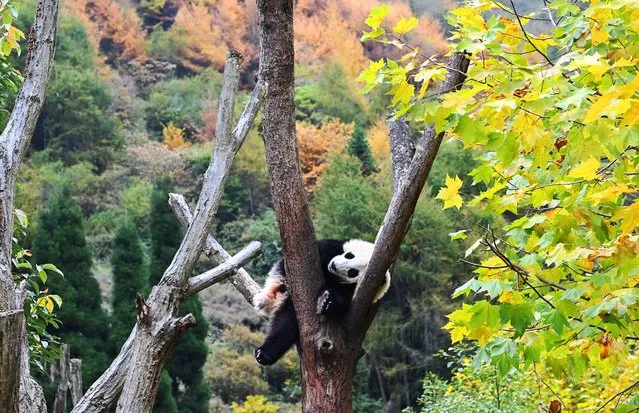
Giant pandas are playing and foraging inside the Shenshuping base of China Conservation and Research Center for the Giant Panda in Wolong National Nature Reserve on November 3, 2021 in Aba Tibetan and Qiang Autonomous Prefecture, Sichuan Province of China. Shenshuping base sits in Aba Tibetan and Qiang Autonomous Prefecture and is committed to the panda's breeding and reproduction. It is the largest conservation and research center for giant pandas along with the bases in Dujiangyan and Ya'an cities in Sichuan. (Photo by An Yuan/China News Service via Getty Images)

Giant pandas are playing and foraging inside the Shenshuping base of China Conservation and Research Center for the Giant Panda in Wolong National Nature Reserve on November 3, 2021 in Aba Tibetan and Qiang Autonomous Prefecture, Sichuan Province of China. (Photo by An Yuan/China News Service via Getty Images)
Details
09 Nov 2021 07:23:00
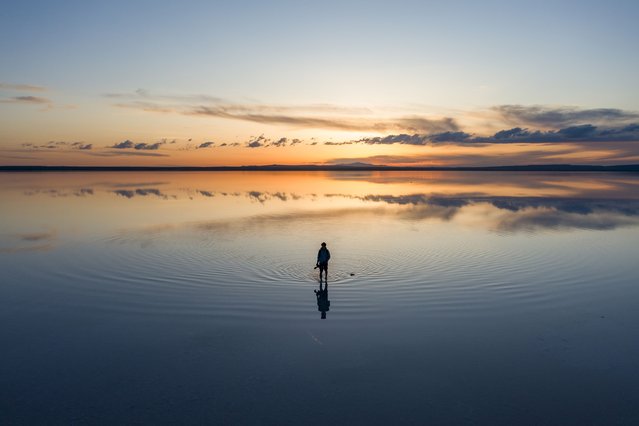
An aerial view of a man standing on Lake Tuz, Turkiye's second largest lake, during sunset in Ankara, Turkiye on April 22, 2024. The lake, which is on the UNESCO World Heritage Tentative List with its unique natural structure, welcomes many local and foreign tourists every year as it provides 70 per cent of the country's salt needs. (Photo by Hakan Nural/Anadolu via Getty Images)

An aerial view of a man standing on Lake Tuz, Turkiye's second largest lake, during sunset in Ankara, Turkiye on April 22, 2024. The lake, which is on the UNESCO World Heritage Tentative List with its unique natural structure, welcomes many local and foreign tourists every year as it provides 70 per cent of the country's salt needs. (Photo by Hakan Nural/Anadolu via Getty Images)
Details
01 Jul 2024 04:27:00
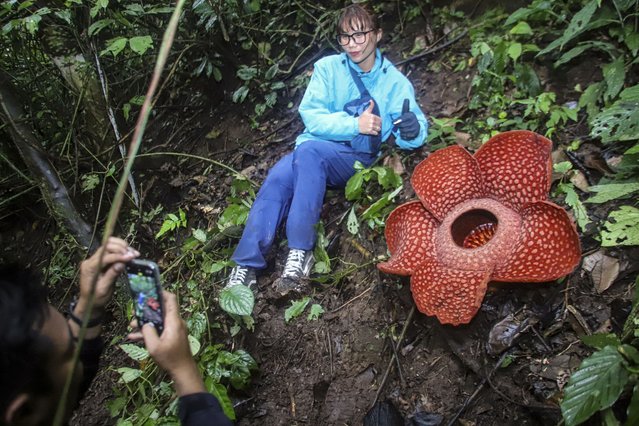
A woman poses for a photo with the Rafflesia Arnoldii flower at Palupuah Forest, Agam District, West Sumatra, Indonesia on September 16, 2024. Palupuh forest is located at an altitude of 975 meters above sea level, with temperatures reaching 18-20 degrees Celsius. According to The West Sumatera Nature Conservation Agency (BKSDA), in the province of West Sumatra there are 36 points where this endangered flower grows. (Photo by Adi Prima/Anadolu via Getty Images)

A woman poses for a photo with the Rafflesia Arnoldii flower at Palupuah Forest, Agam District, West Sumatra, Indonesia on September 16, 2024. Palupuh forest is located at an altitude of 975 meters above sea level, with temperatures reaching 18-20 degrees Celsius. According to The West Sumatera Nature Conservation Agency (BKSDA), in the province of West Sumatra there are 36 points where this endangered flower grows. (Photo by Adi Prima/Anadolu via Getty Images)
Details
07 Oct 2024 02:44:00
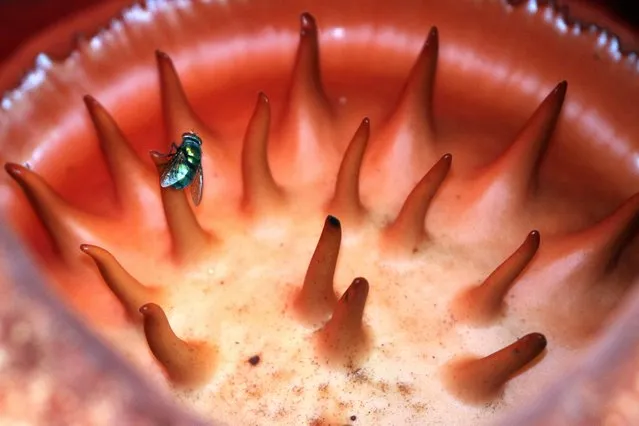
The Rafflesia Arnoldi flower (Amarphophallus titanum) which has been cultivated is seen in Palupuah Village, Agam District, West Sumatra, Indonesia, on April 13, 2022. The West Sumatera Nature Conservation Agency (BKSDA) estimates around seven Rafflesia Arnoldi flowers will bloom in Palupuah Village this year. (Photo by Adi Prima/Anadolu Agency via Getty Images)

The Rafflesia Arnoldi flower (Amarphophallus titanum) which has been cultivated is seen in Palupuah Village, Agam District, West Sumatra, Indonesia, on April 13, 2022. The West Sumatera Nature Conservation Agency (BKSDA) estimates around seven Rafflesia Arnoldi flowers will bloom in Palupuah Village this year. (Photo by Adi Prima/Anadolu Agency via Getty Images)
Details
11 Mar 2023 03:36:00
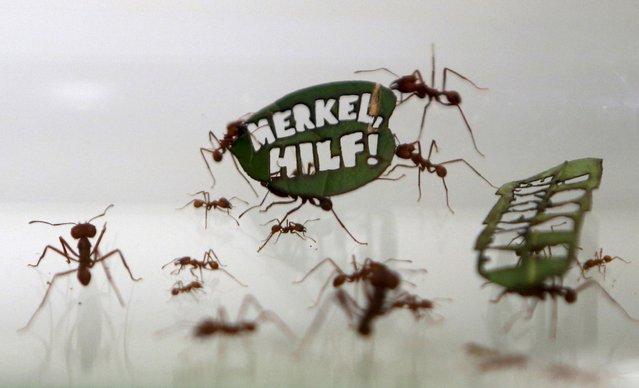
Ants carry a leaf with a slogan reading “Merkel, Help!”, a reference of German Chancellor Angela Merkel, at the zoo in Cologne, Germany August 18, 2015. Some of the zoo's 500,000 leaf-cutting ants carry laser-cut leaves with slogans during a campaign to protect the Amazon rain forest, organised by the German branch of World Wild Fund for Nature (WWF) and Cologne Zoo. Picture taken through the glass of the display case. (Photo by Ina Fassbender/Reuters)

Ants carry a leaf with a slogan reading “Merkel, Help!”, a reference of German Chancellor Angela Merkel, at the zoo in Cologne, Germany August 18, 2015. Some of the zoo's 500,000 leaf-cutting ants carry laser-cut leaves with slogans during a campaign to protect the Amazon rain forest, organised by the German branch of World Wild Fund for Nature (WWF) and Cologne Zoo. Picture taken through the glass of the display case. (Photo by Ina Fassbender/Reuters)
Details
19 Aug 2015 12:14:00
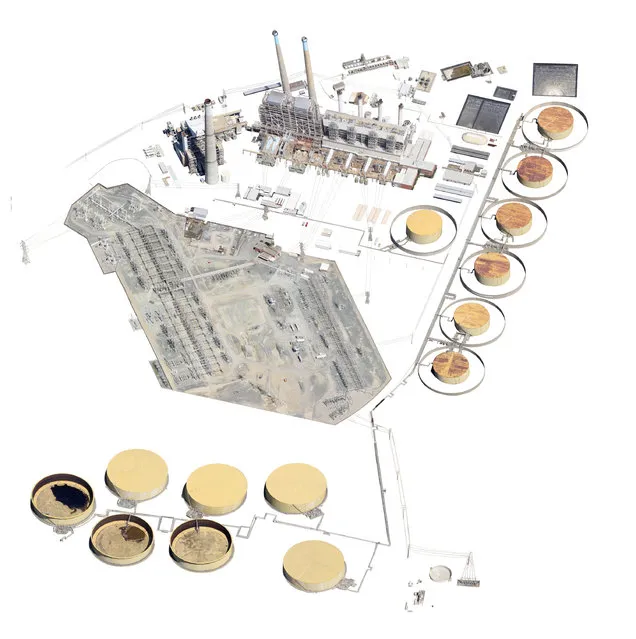
Natural gas plant in Pittsburg, CA (detail of Power Landscape), 2013. (Photo by Jenny Odell)

Jenny Odell repurposes online imagery mostly from Google Maps, but also from YouTube, Craigslist, and other sites. In her “Satellite Collections”, for example, she incorporated aerial views of swimming pools, basketball courts, parking lots, and other recognizable structures, seen from space. Her more recent series, “Satellite Landscapes”, includes painstakingly isolated Google Maps imagery of oil refineries, wastewater treatment plants, solar farms, etc. This work is meant as a reminder of our physically determined and vulnerable existence, since we depend on many of these things for survival and maintenance of our way of life. Photo: Natural gas plant in Pittsburg, CA (detail of Power Landscape), 2013. (Photo by Jenny Odell)
Details
19 Mar 2014 07:28:00
Amazon Amanda and Sergio on a day out in Central Park on May 25, 2014 in New York City. (Photo by Ruaridh Connellan/Barcroft Media)

Amazon Amanda and Sergio on a day out in Central Park on May 25, 2014 in New York City. Meet Amazon Amanda – the 6ft 3 ins, 20 stone model who is paid to dwarf men. Amanda, 38, is a big hit with guys who like being squashed, crushed, wrestled or simply seen out in pubic with super-sized women. After growing too big to be a mainstream model, Amanda discovered a subculture where she could put her natural assets to good use. With 63 inch hips and a 44DD bust Amanda is worshipped by amazon fans all over the world. And shockingly she was once asked to crush a terminally ill client to death – so he could die doing what he loves. Despite the suggestive nature of her work Amanda insists nothing sexual ever takes place between her and her clients. (Photo by Ruaridh Connellan/Barcroft Media)
Details
30 Jul 2014 10:52:00