Loading...
Done
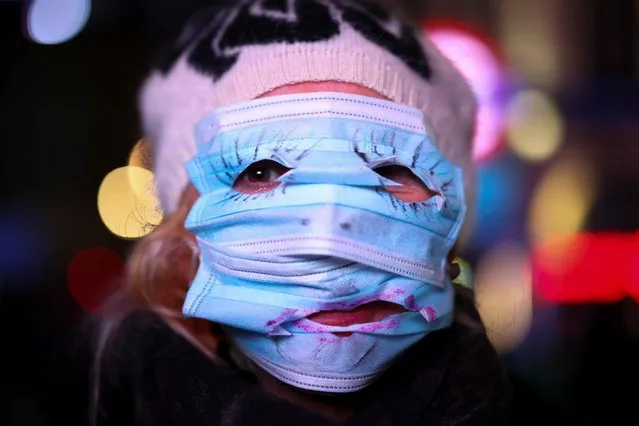
A woman uses protection masks to cover her face as protestors from the Million Mask March and anti lockdown protesters demonstrate, amid the coronavirus (COVID-19) outbreak in London, Britain on November 5, 2020. (Photo by Henry Nicholls/Reuters)

A woman uses protection masks to cover her face as protestors from the Million Mask March and anti lockdown protesters demonstrate, amid the coronavirus (COVID-19) outbreak in London, Britain on November 5, 2020. (Photo by Henry Nicholls/Reuters)
Details
08 Nov 2020 00:07:00
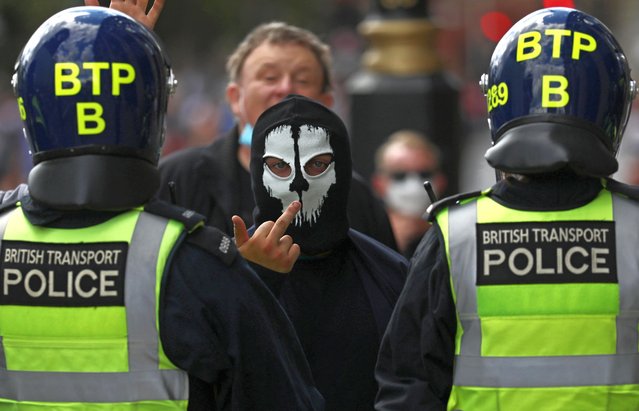
A counter-protester gestures during a Black Lives Matter protest following the death of George Floyd in Minneapolis police custody, in London, Britain, June 13, 2020. (Photo by Simon Dawson/Reuters)

A counter-protester gestures during a Black Lives Matter protest following the death of George Floyd in Minneapolis police custody, in London, Britain, June 13, 2020. (Photo by Simon Dawson/Reuters)
Details
15 Jun 2020 00:03:00
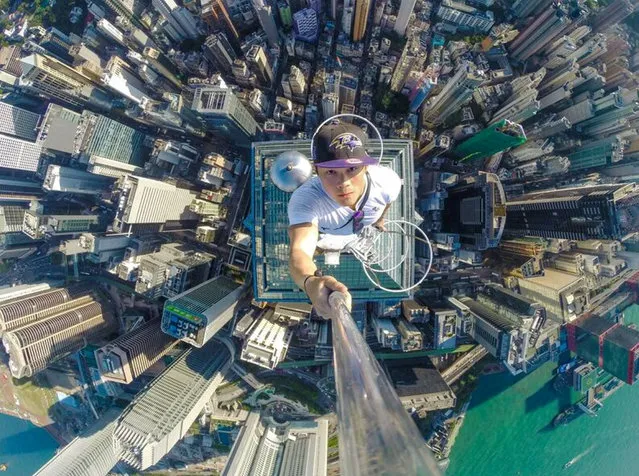
Roof-topping enthusiast Daniel Lau takes a selfie with high-rise buildings down below as he stands on the top of a skyscraper in Hong Kong, China on August 15, 2017. Welcome to “roof-topping”, where daredevils take pictures of themselves standing on the tops of tall buildings, or in some cases even dangling from them, without any safety equipment. A craze that began in Russia has now taken hold in Hong Kong, one of the world's most vertical cities, with dramatic results. “I'm an explorer”, said Daniel Lau, one of the three who climbed to the top of The Center. A student, he said roof-topping was “a getaway from my structured life”. “Before doing this, I lived like an ordinary person, having a boring life”, he said. “I wanted to do something special, something memorable. I want to let people see Hong Kong, the place they are living, from a new perspective”. Mr Lau said he had been inspired by Russian climbers and that he was unafraid of the vertiginous heights he scales. (Photo by ImagineChina/Rex Features/Shutterstock)

Roof-topping enthusiast Daniel Lau takes a selfie with high-rise buildings down below as he stands on the top of a skyscraper in Hong Kong, China on August 15, 2017. A craze that began in Russia has now taken hold in Hong Kong, one of the world's most vertical cities. Mr Lau said he had been inspired by Russian climbers and that he was unafraid of the vertiginous heights he scales. (Photo by ImagineChina/Rex Features/Shutterstock)
Details
16 Aug 2017 07:23:00
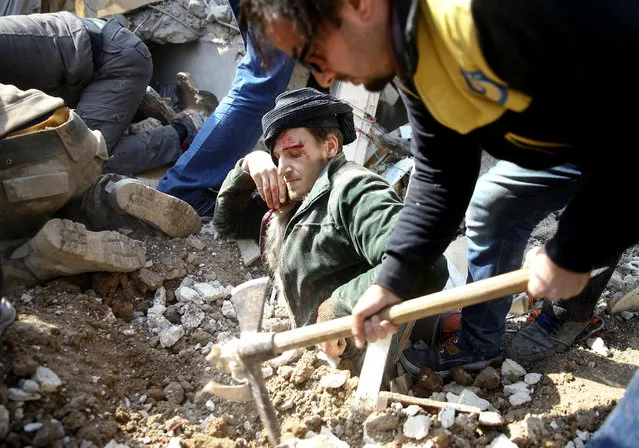
A man gets stuck under debris at a damaged site after an airstrike in the Saqba area, in the eastern Damascus suburb of Ghouta, Syria, January 9, 2018. (Photo by Bassam Khabieh/Reuters)

A man gets stuck under debris at a damaged site after an airstrike in the Saqba area, in the eastern Damascus suburb of Ghouta, Syria, January 9, 2018. (Photo by Bassam Khabieh/Reuters)
Details
29 Dec 2018 00:03:00
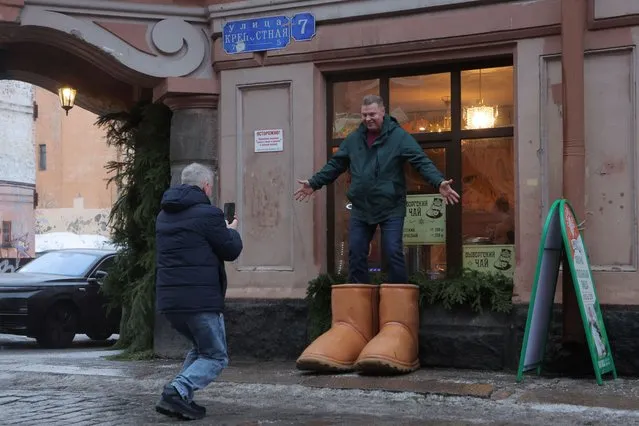
A man poses as his acquaintance takes pictures on a street in the town of Vyborg, Russia on January 28, 2024. (Photo by Anton Vaganov/Reuters)

A man poses as his acquaintance takes pictures on a street in the town of Vyborg, Russia on January 28, 2024. (Photo by Anton Vaganov/Reuters)
Details
14 Feb 2024 14:33:00
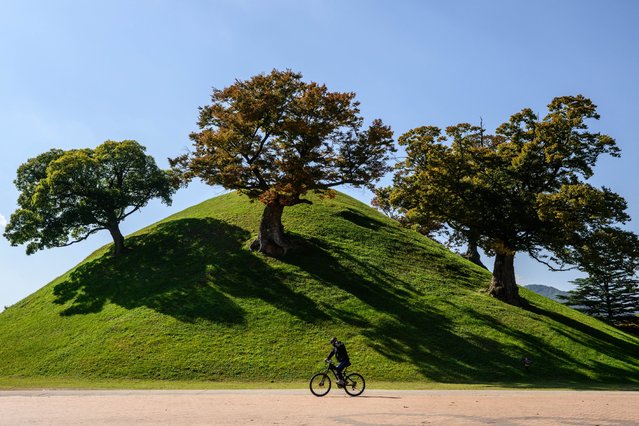
A cyclist rides past a tumulus tomb in Gyeongju, South Korea on November 1, 2025. (Photo by Anthony Wallace/AFP Photo)

A cyclist rides past a tumulus tomb in Gyeongju, South Korea on November 1, 2025. (Photo by Anthony Wallace/AFP Photo)
Details
04 Dec 2025 02:56:00
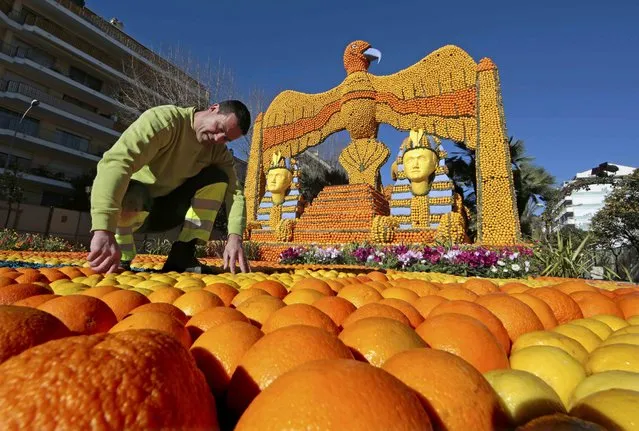
A worker puts the final touch to a replica of a giant eagle and pharaons made with lemons and oranges which shows a scene of the movie “Cleopatra” during the Lemon festival in Menton, southern France, February 10, 2016. (Photo by Eric Gaillard/Reuters)

A worker puts the final touch to a replica of a giant eagle and pharaons made with lemons and oranges which shows a scene of the movie “Cleopatra” during the Lemon festival in Menton, southern France, February 10, 2016. Some 140 metric tons of lemons and oranges are used to make displays during the 83rd festival, which is themed “Cinecitta”, and runs from February 13 through March 2. (Photo by Eric Gaillard/Reuters)
Details
11 Feb 2016 12:41:00
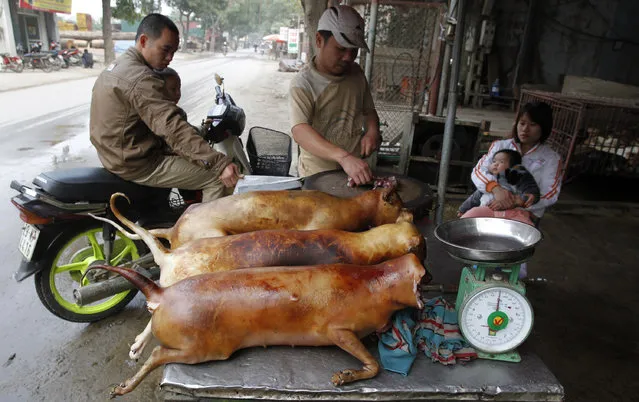
A vendor (C) cuts slaughtered dogs for sale at his roadside stall in Duong Noi village, outside Hanoi December 16, 2011. While animal rights activists have condemned eating dog meat as cruel treatment of the animals, it is still an accepted popular delicacy for some Vietnamese, as well in some other Asian countries. (Photo by Reuters/Kham)

A vendor (C) cuts slaughtered dogs for sale at his roadside stall in Duong Noi village, outside Hanoi December 16, 2011. While animal rights activists have condemned eating dog meat as cruel treatment of the animals, it is still an accepted popular delicacy for some Vietnamese, as well in some other Asian countries. Duong Noi is well-known as a dog-meat village, where hundreds of dogs are killed each day for sale as popular traditional food. Dog-eating as a custom is rooted in Vietnam and was developed as a result of poverty. One kilogram of dog meat costs about 130,000 dongs ($6.2). (Photo by Reuters/Kham)

Details
16 Jul 2013 11:40:00