Loading...
Done
Giant Crystal Cave in Naica, Mexico

Cave of the Crystals or Giant Crystal Cave is a cave connected to the Naica Mine 300 metres (980 ft) below the surface in Naica, Chihuahua, Mexico. The main chamber contains giant selenite crystals (gypsum, CaSO4·2 H2O), some of the largest natural crystals ever found. The cave's largest crystal found to date is 12 m (39 ft) in length, 4 m (13 ft) in diameter and 55 tons in weight. The cave is extremely hot with air temperatures reaching up to 58 °C (136 °F) with 90 to 99 percent humidity. The cave is relatively unexplored due to these factors. Without proper protection people can only endure approximately ten minutes of exposure at a time.
Details
20 May 2014 07:56:00
Supporters and opponents of Russian opposition activist and anti-corruption crusader Alexei Navalny clash during unsanctioned protest in Manezhnaya Square in Moscow, Russia, Tuesday, December 30, 2014. The unsanctioned protest came hours after Alexei Navalny was found guilty of fraud and given a suspended sentence. Navalny, who has been under house arrest since February. (Photo by Ivan Sekretarev/AP Photo)

Supporters and opponents of Russian opposition activist and anti-corruption crusader Alexei Navalny clash during unsanctioned protest in Manezhnaya Square in Moscow, Russia, Tuesday, December 30, 2014. The unsanctioned protest came hours after Alexei Navalny was found guilty of fraud and given a suspended sentence. Navalny, who has been under house arrest since February, is accused of breaking the terms of his house arrest to attend the rally and was detained by police as he approached the site of the protest. (Photo by Ivan Sekretarev/AP Photo)
Details
31 Dec 2014 14:38:00
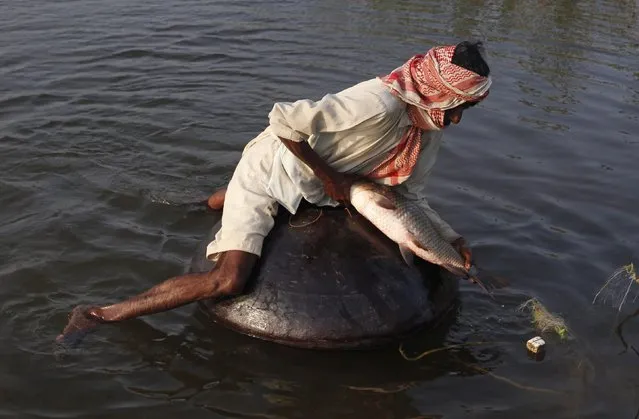
A man uses a floating pitcher to catch a fish after removing it from a net at Keenjhar Lake, near Thatta, February 22, 2015. This technique of fishing using floating pitchers is a unique and traditional one for this community, found only on Keenjhar Lake, one of the largest freshwater lakes in Pakistan, which is famous for its variety of breeding and wintering waterbirds. (Photo by Akhtar Soomro/Reuters)

A man uses a floating pitcher to catch a fish after removing it from a net at Keenjhar Lake, near Thatta, February 22, 2015. This technique of fishing using floating pitchers is a unique and traditional one for this community, found only on Keenjhar Lake, one of the largest freshwater lakes in Pakistan, which is famous for its variety of breeding and wintering waterbirds. (Photo by Akhtar Soomro/Reuters)
Details
23 Feb 2015 13:27:00
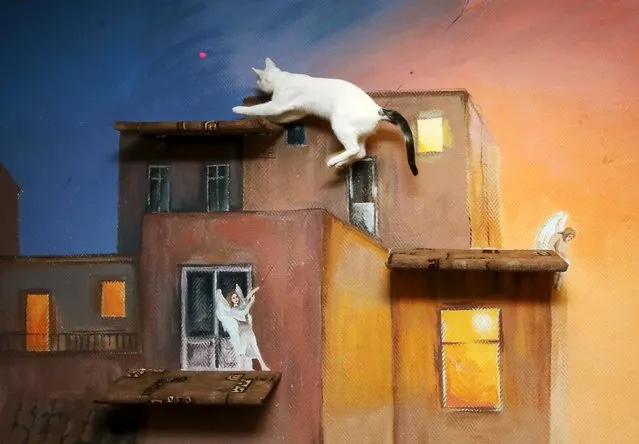
A cat jumps from a shelf to catch a light beam at the “Kis-Kis” Cat Cafe in the Siberian city of Krasnoyarsk, Russia, July 6, 2015. A local animals rights group founded the shelter for dozen of homeless cats and combined it with the cafe, where visitors can communicate with animals for hourly fee in addition to drinks, table games, books and WI-FI. (Photo by Ilya Naymushin/Reuters)

A cat jumps from a shelf to catch a light beam at the “Kis-Kis” Cat Cafe in the Siberian city of Krasnoyarsk, Russia, July 6, 2015. A local animals rights group founded the shelter for dozen of homeless cats and combined it with the cafe, where visitors can communicate with animals for hourly fee in addition to drinks, table games, books and WI-FI. (Photo by Ilya Naymushin/Reuters)
Details
07 Jul 2015 11:35:00
In this June 23, 2015 photo, Ashaninka Indian beauty contestants pose for a photo with members of a visiting music group, hired to perform during the annual founding anniversary festivities, in Otari Nativo, Pichari, Peru. The contestants wear the simple brown dresses of the Ashaninka woman, their faces dotted in a traditional design with a red dye extracted from a spice called achiote. (Photo by Rodrigo Abd/AP Photo)

In this June 23, 2015 photo, Ashaninka Indian beauty contestants pose for a photo with members of a visiting music group, hired to perform during the annual founding anniversary festivities, in Otari Nativo, Pichari, Peru. The contestants wear the simple brown dresses of the Ashaninka woman, their faces dotted in a traditional design with a red dye extracted from a spice called achiote. (Photo by Rodrigo Abd/AP Photo)
Details
16 Jul 2015 11:12:00
Hong Kong Shop Cats #17. Marcel Heijnen returned to Hong Kong in 2015 and found himself living without a cat for the first time in decades. Soon, though, he was indulging in what he calls “re-tail therapy” and found himself on a first-name basis with a number of cats in his neighbourhood, Sai Ying Pun. (Photo by Marcel Heijnen/Blue Lotus)

When Dutch photographer Marcel Heijnen moved to Hong Kong, the territory’s shop cats instantly caught his eye. While the “feline emperors” are the stars, his shots also offer insights into Hong Kong’s wares, from dried fish to paper. Here: Hong Kong Shop Cats #17. (Photo by Marcel Heijnen/Blue Lotus)
Details
03 Jan 2017 11:04:00
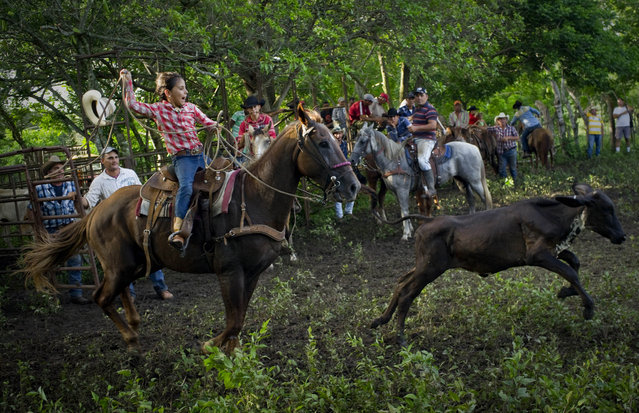
In this July 29, 2016 photo, cowgirl Dariadna Corujo winds up to lasso a calf during an improvised rodeo event at a farm in Sancti Spiritus, central Cuba. At the tender age of 6, Dariadna is already an expert barrel racer and calf roper. In the flat grasslands of Sancti Spiritus, a group of neighboring cattle ranchers founded a non-governmental organization called Future Ranchers more than a decade ago to revive Cuba’s rodeo culture, which dates back centuries to Spanish colonial times. (Photo by Ramon Espinosa/AP Photo)

In this July 29, 2016 photo, cowgirl Dariadna Corujo winds up to lasso a calf during an improvised rodeo event at a farm in Sancti Spiritus, central Cuba. At the tender age of 6, Dariadna is already an expert barrel racer and calf roper. In the flat grasslands of Sancti Spiritus, a group of neighboring cattle ranchers founded a non-governmental organization called Future Ranchers more than a decade ago to revive Cuba’s rodeo culture, which dates back centuries to Spanish colonial times. (Photo by Ramon Espinosa/AP Photo)
Details
03 Aug 2016 11:39:00
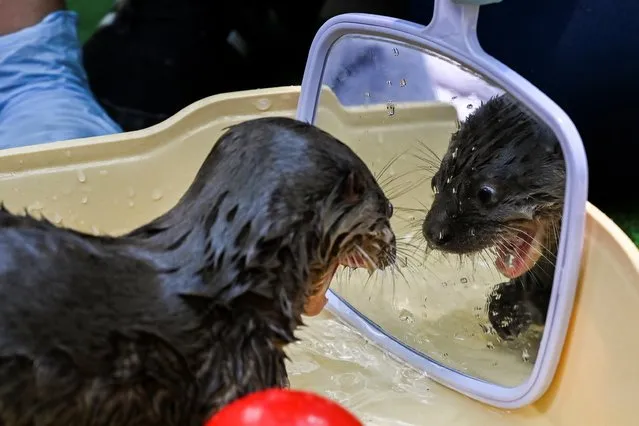
A river otter (lontra longicaudis) of 6-weeks-old looks in the mirror during a bath in the Animal Welfare Unit of the Zoo in Cali, Colombia, on October 22, 2019. The baby otter was found abandoned brought to the Cali Zoo for breeding, for its extensive experience in raising these species. According to the International Union for Conservation of Nature the river otter (lontra longicaudis) are in danger of extinction, because of mining, agriculture, pollution of rivers and housing construction in their habitat. (Photo by Luis Robayo/AFP Photo)

A river otter (lontra longicaudis) of 6-weeks-old looks in the mirror during a bath in the Animal Welfare Unit of the Zoo in Cali, Colombia, on October 22, 2019. The baby otter was found abandoned brought to the Cali Zoo for breeding, for its extensive experience in raising these species. According to the International Union for Conservation of Nature the river otter (lontra longicaudis) are in danger of extinction, because of mining, agriculture, pollution of rivers and housing construction in their habitat. (Photo by Luis Robayo/AFP Photo)
Details
27 Oct 2019 00:03:00