Loading...
Done
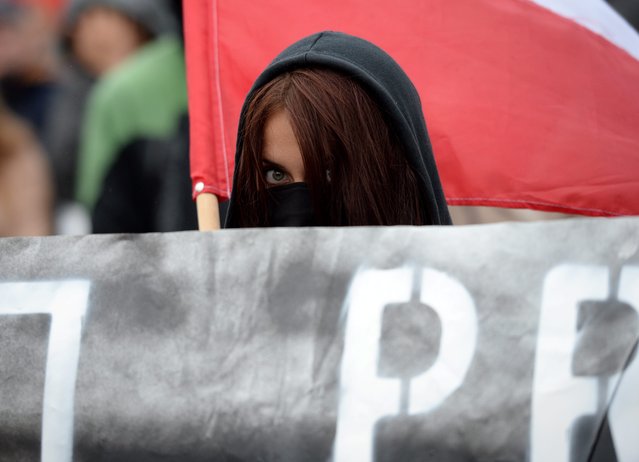
A protester peeks out from behind of a banner as supporters of anti-immigrant activists and nationalists march to protest against the Polish governments decision to accept migrants from Syria and North Africa, in Warsaw, Poland, September12, 2015. (Photo by Jacek Turczyk/EPA)

A protester peeks out from behind of a banner as supporters of anti-immigrant activists and nationalists march to protest against the Polish governments decision to accept migrants from Syria and North Africa, in Warsaw, Poland, September12, 2015. EU President Donald Tusk said he would call a special summit on the migration crisis if the bloc's interior ministers do not display “solidarity and unity” at emergency talks on 14 September about the thousands of migrants streaming into Europe. (Photo by Jacek Turczyk/EPA)
Details
14 Sep 2015 13:26:00
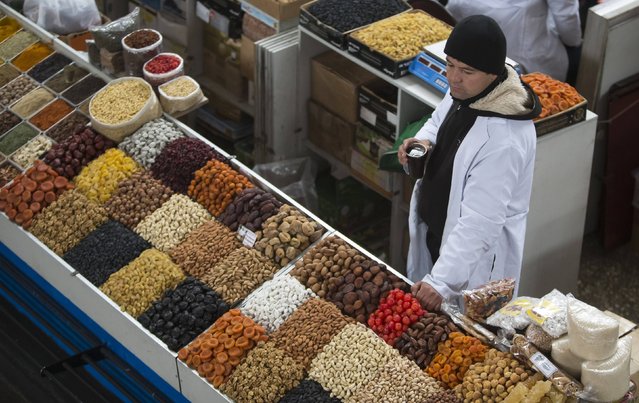
A vendor sells fruits and nuts at the Green Bazaar in Almaty January 23, 2015. Kazakhstan is spending billions of dollars of its reserves to keep devaluation of its currency gradual and reduce inflationary risks of the sort thrown up in Russia by the rouble's slide, analysts and former central bank officials say. (Photo by Shamil Zhumatov/Reuters)

A vendor sells fruits and nuts at the Green Bazaar in Almaty January 23, 2015. Kazakhstan is spending billions of dollars of its reserves to keep devaluation of its currency gradual and reduce inflationary risks of the sort thrown up in Russia by the rouble's slide, analysts and former central bank officials say. Kazakhstan, Central Asia's largest economy, is closely tied to Russia through trade and, like other ex-Soviet states, has been feeling the pain of the crisis which has driven the rouble down 50 percent against the dollar since the start of 2014. (Photo by Shamil Zhumatov/Reuters)
Details
28 Jan 2015 11:57:00
A masked man in military fatigues brings a blindfolded Irma Krat, arrested and held by pro-Russian protestors before her meeting with journalists near of occupied police station in Slaviansk, Ukraine, 21 April 2014. Pro-Russian activists are demanding broader autonomy from Kiev and closer ties to Russia. (Photo by Roman Pilipey/EPA)

A masked man in military fatigues brings a blindfolded Irma Krat, arrested and held by pro-Russian protestors before her meeting with journalists near of occupied police station in Slaviansk, Ukraine, 21 April 2014. Pro-Russian activists are demanding broader autonomy from Kiev and closer ties to Russia. Pro-Russian activists continued occupying government, police and other administrative buildings in eastern Ukrainian cities, in defiance of an ultimatum by the Ukrainian government to lay down their weapons. Russia, the United States, the European Union and Ukraine on 17 April had agreed on steps to de-escalate the crisis in Ukraine during talks in Geneva, Switzerland. (Photo by Roman Pilipey/EPA)
Details
26 Apr 2014 12:00:00
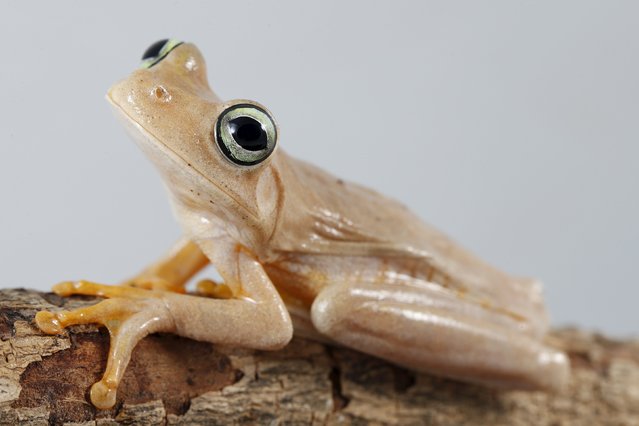
A Hypsiboas crepitans frog is pictured at a terrarium in Caracas November 30, 2015. Venezuelan frogs and toads are in critical danger due to climate change as rising temperatures complicate reproduction and spread a deadly fungus, say scientists, who liken the species to canaries in a coalmine warning of imminent danger. (Photo by Carlos Garcia Rawlins/Reuters)

A Hypsiboas crepitans frog is pictured at a terrarium in Caracas November 30, 2015. Venezuelan frogs and toads are in critical danger due to climate change as rising temperatures complicate reproduction and spread a deadly fungus, say scientists, who liken the species to canaries in a coalmine warning of imminent danger. The survival of a group of nearly 20 frog and toad species, which top Venezuela's list of endangered species, may rest on a small group of academics in a Caracas laboratory attempting to recreate the amphibians' natural reproductive conditions. (Photo by Carlos Garcia Rawlins/Reuters)
Details
17 Dec 2015 08:04:00
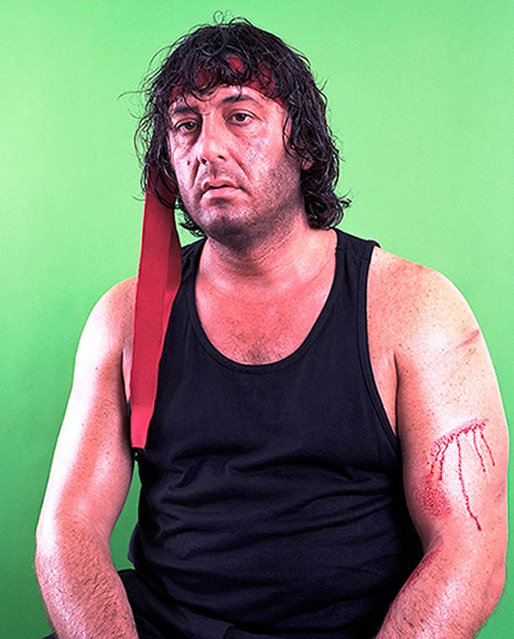
Nicolas Silberfaden: Superheroes

Due to the current economic, social and cultural crisis in The United States of America today, I have decided to do a photographic project consisting of a series of studio portraits of superhero and celebrity impersonators that live and work in the city of Los Angeles. Most of them unemployed Americans, they decided to suit up with their costumes and hit the streets, animate parties and events in efforts to make ends meet. Making them pose in their costumes against a colorful backdrop, I ask them to manifest feelings of genuine sadness – honest emotions that are a consequence of our current times. The result is a somber, striking visual image that contradicts the iconic nature of strength and moral righteousness typical in American superhero and celebrity imagery. Creating the illusion that Superman does exist – that he too was fallible and affected by America’s downturn.

Nicolas Silberfaden
Details
06 Dec 2012 12:13:00
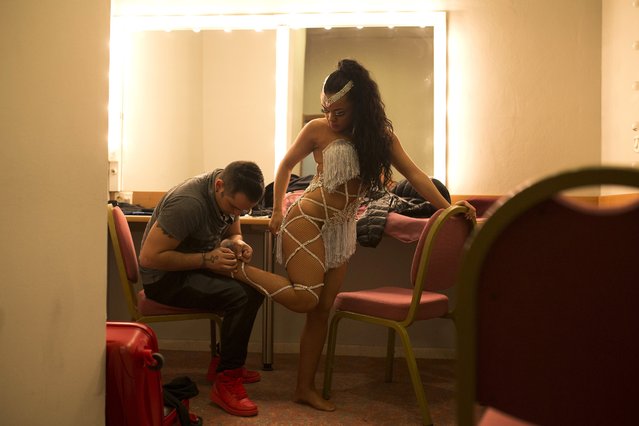
In this Friday, November 6, 2015 photo dancers Alba Ibanez, right, and Luis Chavez, both from Spain, dress up backstage before taking part in the World Salsa Master dance competition in Madrid. (Photo by Francisco Seco/AP Photo)

In this Friday, November 6, 2015 photo dancers Alba Ibanez, right, and Luis Chavez, both from Spain, dress up backstage before taking part in the World Salsa Master dance competition in Madrid. Ten dance couples from different countries around the world performed in front of an audience of around 2,000 people. Participants – who wore bright, colorful outfits – came from the United States, Italy, Spain, Portugal, Mexico, Chile, Uruguay, Czech Republic and Venezuela. (Photo by Francisco Seco/AP Photo)
Details
14 Nov 2015 08:01:00
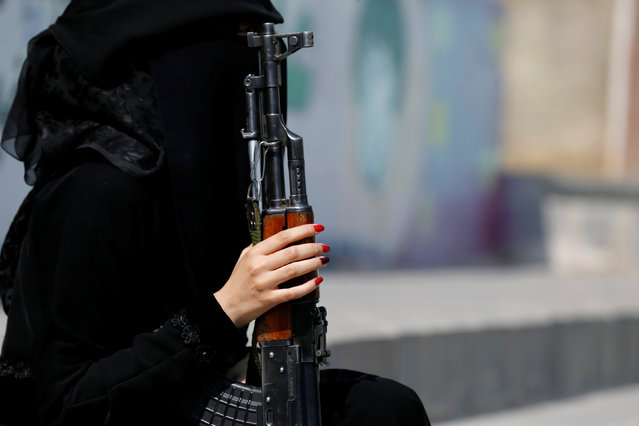
A woman loyal to the Houthi movement holds a rifle as she takes part in a parade to show support to the movement in Sanaa, Yemen September 6, 2016. Dressed in the head to toe garments which obscured their faces, the female fighters brandished machine guns, rocket launchers and grenades. The women also wore hats as they showed support for the Shiite Houthi rebels. The Saudi-led Arab coalition launched a military campaign against the Houthis and their allies in March 2015. It was after the rebels closed in on Gulf-backed President Abedrabbo Mansour Hadi in his southern refuge of Aden, forcing him into exile. The female protesters have pledged to remain supportive and do whatever they can to back the ongoing resistance against the kingdom. Yemen is in the grip of its most severe crisis in years, and is on the brink of civil war. (Photo by Khaled Abdullah/Reuters)

A woman loyal to the Houthi movement holds a rifle as she takes part in a parade to show support to the movement in Sanaa, Yemen September 6, 2016. The Saudi-led Arab coalition launched a military campaign against the Huthis and their allies in March 2015, after the rebels closed in on Gulf-backed President Abedrabbo Mansour Hadi in his southern refuge of Aden, forcing him into exile. (Photo by Khaled Abdullah/Reuters)
Details
07 Sep 2016 10:24:00
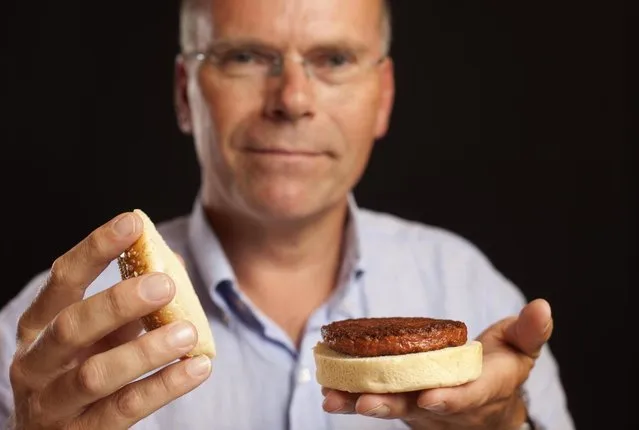
In this handout image provided by Ogilvy, a burger made from cultured beef, which has been developed by Professor Mark Post of Maastricht University in the Netherlands (pictured) is shown to the media during a press conference on August 5, 2013 in London, England. Cultured Beef could help solve the coming food crisis and combat climate change with commercial production of Cultured Beef beginning within ten to twenty years. (Photo by David Parry via Getty Images)

In this handout image provided by Ogilvy, a burger made from cultured beef, which has been developed by Professor Mark Post of Maastricht University in the Netherlands (pictured) is shown to the media during a press conference on August 5, 2013 in London, England. The in-vitro burger, cultured from cattle stem cells, the first example of what its creator says could provide an answer to global food shortages and help combat climate change, was fried in a pan and tasted by two volunteers. The burger is the result of years of research by Dutch scientist Mark Post, a vascular biologist at the University of Maastricht, who is working to show how meat grown in petri dishes might one day be a true alternative to meat from livestock.The meat in the burger has been made by knitting together around 20,000 strands of protein that has been cultured from cattle stem cells in Post's lab. (Photo by David Parry)
Details
06 Aug 2013 08:48:00