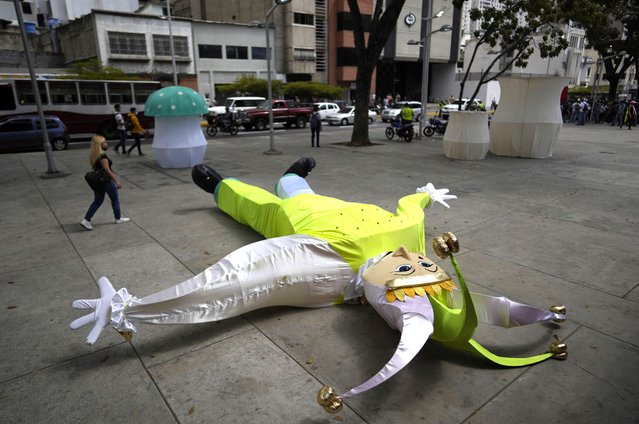
A harlequin inflatable doll, part of decorations for the upcoming carnival celebrations, lays in a plaza in Caracas, Venezuela, Tuesday, February 22, 2022. (Photo by Ariana Cubillos/AP Photo)
A woman takes part in a carnival parade as part of New Year's Eve festivities in San Jose, Costa Rica, 27 December 2023. (Photo by Jeffrey Arguedas/EPA/EFE)
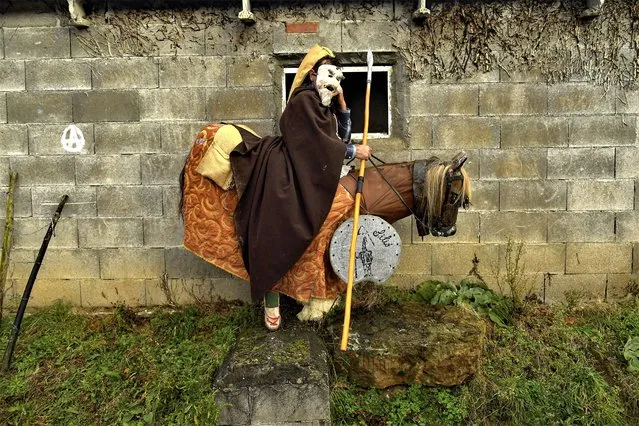
A member of the carnival group “La Vijanera de Silio” poses during the traditional ancient festival in the town of Silio, northern Spain, Saturday, January 7, 2023. (Photo by Alvaro Barrientos/AP Photo)
Members of the Funky Uptown Krewe parade as Twelfth Night kicks off Carnival season, in New Orleans, Louisiana, U.S. January 6, 2025. (Photo by Eduardo Munoz/Reuters)
Brazilian model and TV presenter Sabrina Sato from the Gavioes da Fiel samba school performs during a Carnival parade in Sao Paulo, Brazil, Sunday, February 11, 2024. (Photo by Andre Penner/AP Photo)
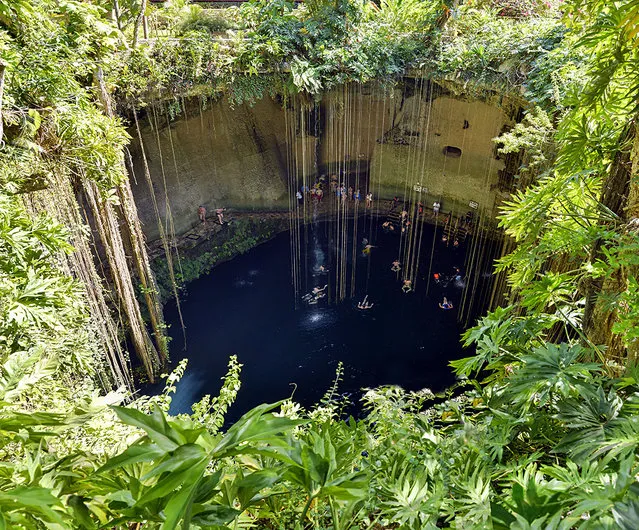
A cenote is a natural phenomenon, a sinkhole in the Earth’s surface. The Yucatan Peninsula in Mexico has an estimated 7,000 cenotes because it is primarily made up of porous limestone. For millions of years, rainfall slowly ate away at the limestone and a huge system of underground caves and caverns was formed. Many filled with water from rain or from the underground water table. When the roof of a water filled cave collapses, a cenote is born. The water found in a cenote may be fresh water, salt water, or both. Structurally it may be completely open, like a lake, almost completely closed with just a small opening at the top, or somewhere in between.
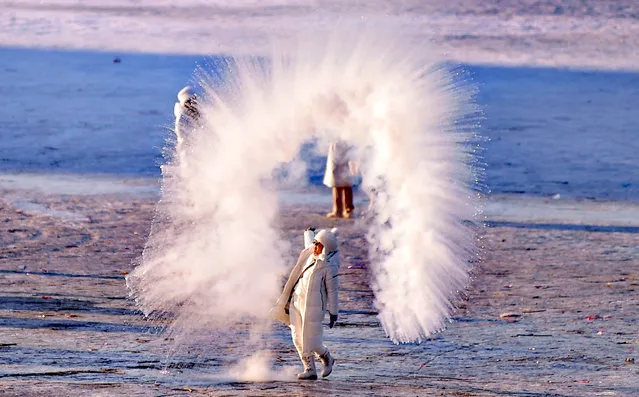
A tourist splashes water on the frozen Songhua River on December 18, 2023 in Harbin, Heilongjiang Province of China. The water immediately freezes into ice in the frigid air. (Photo by VCG/VCG via Getty Images)
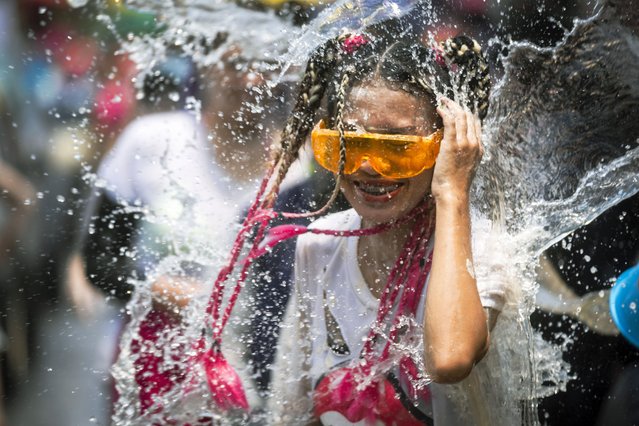
A bucket of water is splashed on a woman during the Songkran water festival to celebrate the Thai New Year, in Prachinburi Province, Thailand, April 13, 2024. (Photo by Wason Wanichakorn/AP Photo)