Loading...
Done
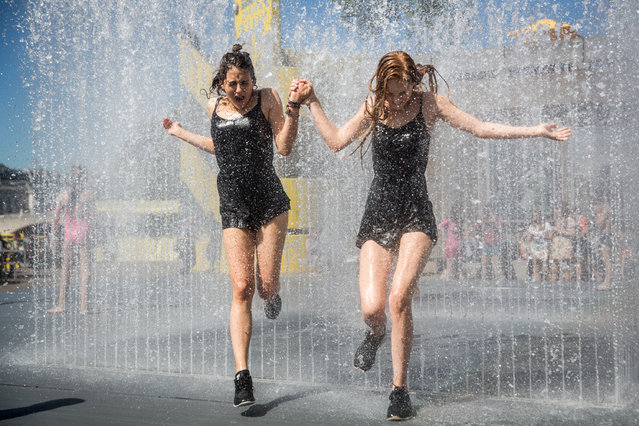
People cool off in a fountain outside the Southbank Centre on June 30, 2015 in London, England. The UK is currently experiencing a heatwave, with temperatures of 35 degree celsius forecast tomorrow in some parts of the country. The extreme heat has already seen train cancellations and a health warning has been issued. (Photo by Rob Stothard/Getty Images)

People cool off in a fountain outside the Southbank Centre on June 30, 2015 in London, England. The UK is currently experiencing a heatwave, with temperatures of 35 degree celsius forecast tomorrow in some parts of the country. The extreme heat has already seen train cancellations and a health warning has been issued. (Photo by Rob Stothard/Getty Images)
Details
02 Jul 2015 14:43:00
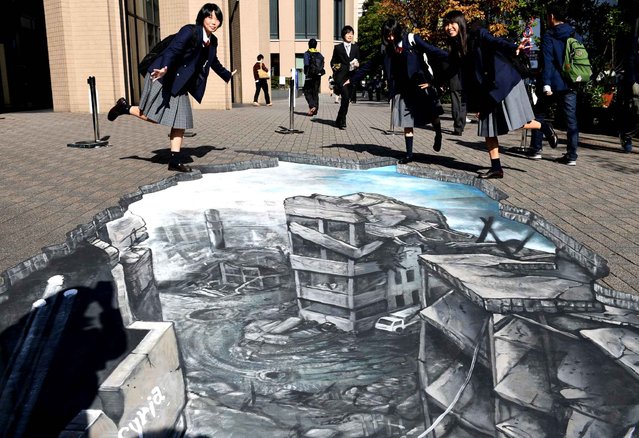
Students pose for a picture with a 3- D optical illusion artwork of a devastated cityscape in Aleppo, Syria at the campus of the Meiji University in Tokyo on November 18, 2016. The Japanese branch of the human rights organisation Amnesty International displayed the artwork to encourage people to think about the Syrian civil war. (Photo by Toshifumi Kitamura/AFP Photo)

Students pose for a picture with a 3- D optical illusion artwork of a devastated cityscape in Aleppo, Syria at the campus of the Meiji University in Tokyo on November 18, 2016. The Japanese branch of the human rights organisation Amnesty International displayed the artwork to encourage people to think about the Syrian civil war. (Photo by Toshifumi Kitamura/AFP Photo)
Details
19 Nov 2016 11:36:00
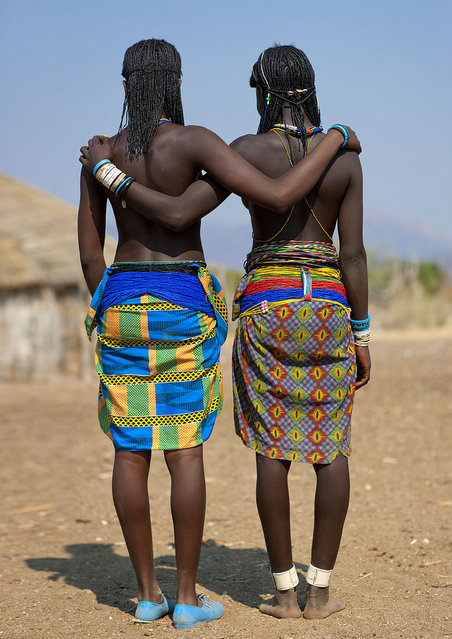
“Show us our butts! Mucawana tribe – Angola. In Soba village, the Muhacaona (Mucawana) tribe, perhaps the best place i have visited. They use cow dung and fat to make this so nice haircut, and love the beads. They asked me to make pictures of their backs... and butts to see on the camera screen if everything was perfect!”. (Eric Lafforgue)

“Show us our butts! Mucawana tribe – Angola. In Soba village, the Muhacaona (Mucawana) tribe, perhaps the best place i have visited. They use cow dung and fat to make this so nice haircut, and love the beads. They asked me to make pictures of their backs... and butts to see on the camera screen if everything was perfect!”. (Photo and comments by Eric Lafforgue)
Details
09 Nov 2012 15:04:00
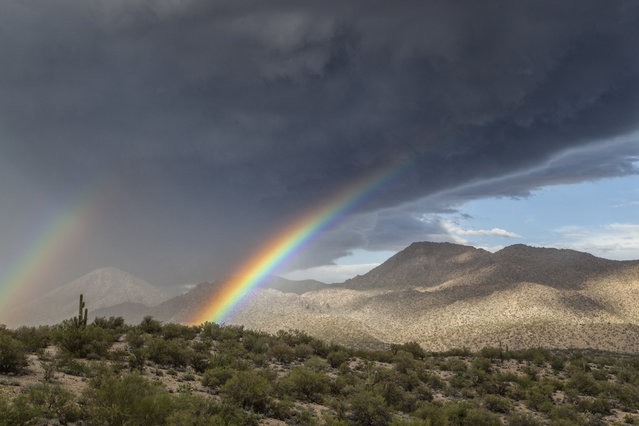
Two rainbows emerge from a black storm above the mountains, on August 19, 2014, in Kingman, Arizona.  Double tornadoes, lightning storms and rotating supercells – this is what it's like to chase storms for a year.(Photo by Roger Hill/Barcroft Media)

Two rainbows emerge from a black storm above the mountains, on August 19, 2014, in Kingman, Arizona. Double tornadoes, lightning storms and rotating supercells – this is what it's like to chase storms for a year. These dramatic images show apocalyptic weather throughout 2014 from a lightning storm to a pair of rainbows. Roger Hill, 57, has been chasing storms in the United States for thirty years and runs a tour operation with his wife Caryn. His favourite photograph of the year was also one of the most difficult to get – as two violent tornadoes tore through Pilger, Nebraska on June 16. The spiraling winds killed a five-year-old girl and injured at least 19 others, and as Roger tried to get the perfect shot debris began to rain down on his car. (Photo by Roger Hill/Barcroft Media)
Details
25 Feb 2015 09:27:00
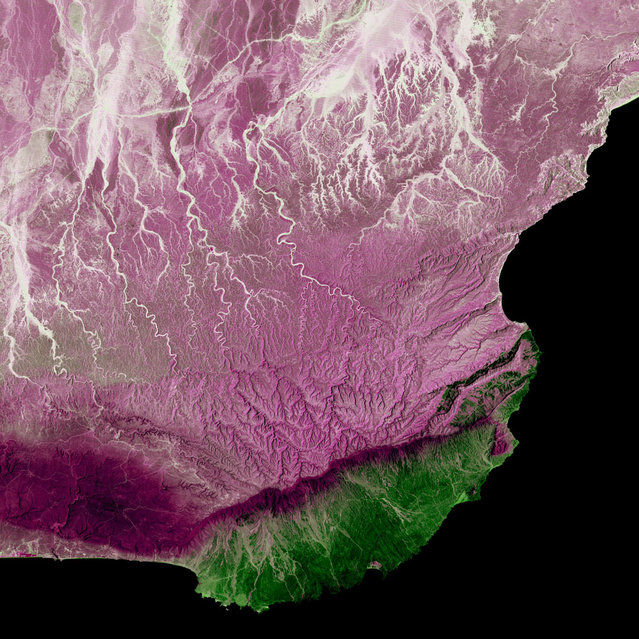
Dhofar Region, Oman. Much of Oman is desert, but the Arabian Sea coast in the Dhofar region represents a startling difference in climate. This coastal region catches the monsoon rains, or khareef, during the summer months. Drenching rains fall primarily on the mountainous ridge that separates the lush, fertile areas along the coast from the arid interior, recharging streams, waterfalls and springs that provide plentiful water supplies in the fertile lowlands for the remainder of the year. Image taken by Landsat 5 on April 2, 2005. (Photo by USGS/NASA)

Dhofar Region, Oman. Much of Oman is desert, but the Arabian Sea coast in the Dhofar region represents a startling difference in climate. This coastal region catches the monsoon rains, or khareef, during the summer months. Drenching rains fall primarily on the mountainous ridge that separates the lush, fertile areas along the coast from the arid interior, recharging streams, waterfalls and springs that provide plentiful water supplies in the fertile lowlands for the remainder of the year. Image taken by Landsat 5 on April 2, 2005. (Photo by USGS/NASA)
Details
25 Dec 2012 11:13:00
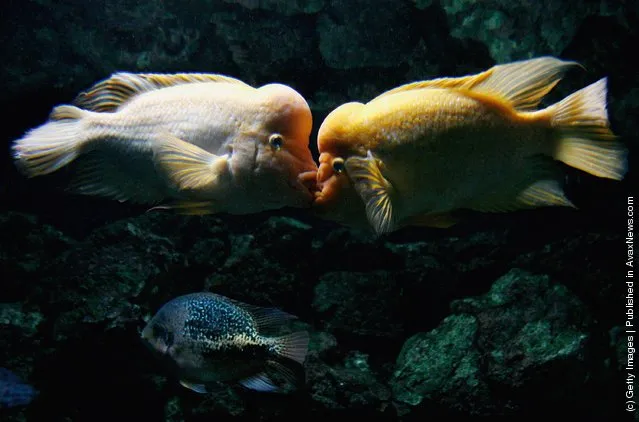
Midas Cichlid a.k.a. Amphilophus Citrinellus

“Amphilophus citrinellus is a large cichlid fish endemic to the San Juan River and adjacent watersheds in Costa Rica and Nicaragua. In the aquarium trade A. citrinellus is often sold under the trade name of Midas cichlid. A. citrinellus are omnivorous and their diet consists of plant material, molluscs and smaller fish”. – Wikipedia

Photo: Two Midas Cichlid (lat: amphilophus citrinellus) fish are seen in an aquarium at Hellabrunn zoo on December 23, 2009 in Munich, Germany. (Photo by Alexandra Beier/Getty Images)
Details
17 Aug 2011 11:29:00
Saira Liaqat, 22, a victim of acid violence who was burned 4 years ago

Saira Liaqat, 22, a victim of acid violence who was burned 4 years ago, poses in Islamabad, June 11, 2007. Saira is from Lahore and was attacked with acid thrown on her over an argument relating to an arranged marriage. (Photo by Paula Bronstein/Getty Images)
Details
14 Feb 2012 10:25:00
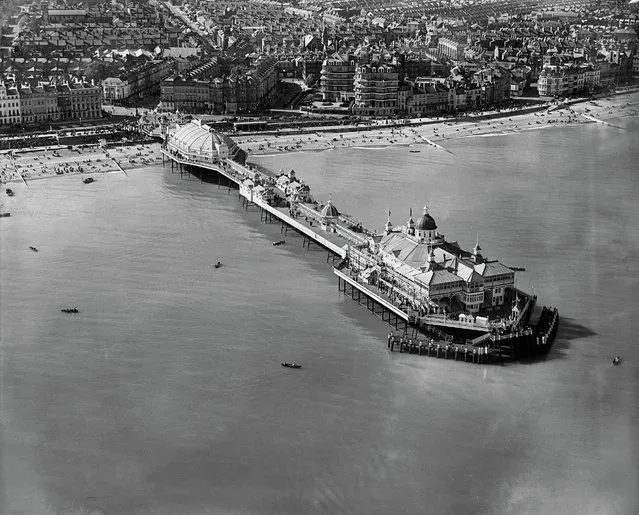
While the lido was described as bringing “modernism to the masses” on the British coast it was just the latest example of a trend that had been developing since Victorian times – transforming seaside towns into resorts for leisure and entertainment. In the latter half of the nineteenth century, the fashion was for local authorities to build great piers stretching from the promenade out into the sea

While the lido was described as bringing “modernism to the masses” on the British coast it was just the latest example of a trend that had been developing since Victorian times – transforming seaside towns into resorts for leisure and entertainment. In the latter half of the nineteenth century, the fashion was for local authorities to build great piers stretching from the promenade out into the sea. The Eastbourne Pier, pictured here in May 1931, was erected between 1866 and 1870 to an ingenious design by Eugenius Birch, which saw the structure sitting on special cups allowing the supporting struts to “move” in bad weather. Arranged on the pier's 1,000-foot length were kiosks, a theatre, a ballroom and a camera obscura. 1931. (Photo by Aerofilms Collection via “A History of Britain From Above”)
Details
25 Feb 2014 12:59:00