Loading...
Done
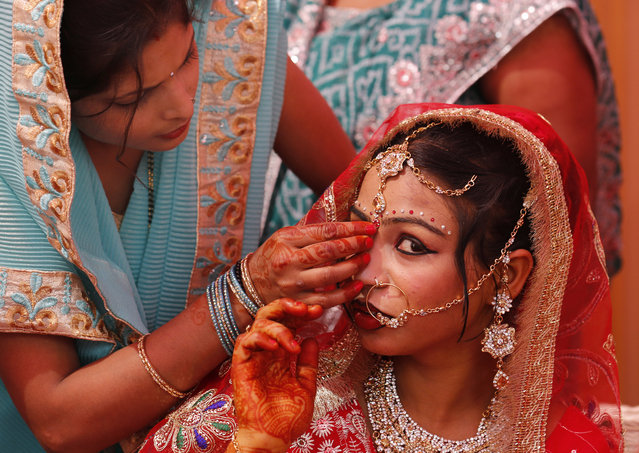
An Indian underprivileged bride gets her jewellery adjusted by a relative during a mass marriage ceremony in New Delhi, India, March 10, 2016. Fourteen  underprivileged couples tied up the nuptial knot in the mass marriage ceremony organised by various social organisations. (Photo by Rajat Gupta/EPA)

An Indian underprivileged bride gets her jewellery adjusted by a relative during a mass marriage ceremony in New Delhi, India, March 10, 2016. Fourteen underprivileged couples tied up the nuptial knot in the mass marriage ceremony organised by various social organisations. (Photo by Rajat Gupta/EPA)
Details
22 Mar 2016 11:01:00
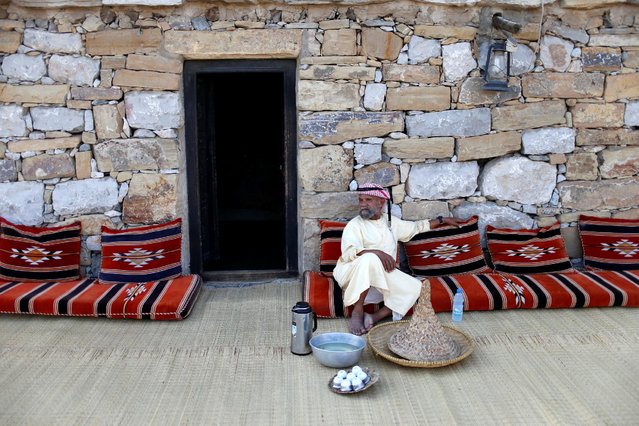
An Emirati man sits outside an old house at the Heritage Village in Dubai, UAE March 13, 2016. (Photo by Ahmed Jadallah/Reuters)

An Emirati man sits outside an old house at the Heritage Village in Dubai, UAE March 13, 2016. The Heritage Village was created in 1997 in Al Shindagha Historical Neighborhood in Dubai, close to the Diving Village, to embrace the heritage events and to display a live image of the old traditional life in UAE. It represents the components of wild, marine, and mountain life, where the visitor can identify closely the old traditional customs of the country and the special characteristics of old houses, handicrafts, patterns, and forms of living. It is owned and managed by Dubai Culture & Arts Authority. (Photo by Ahmed Jadallah/Reuters)
Details
29 Apr 2016 11:26:00
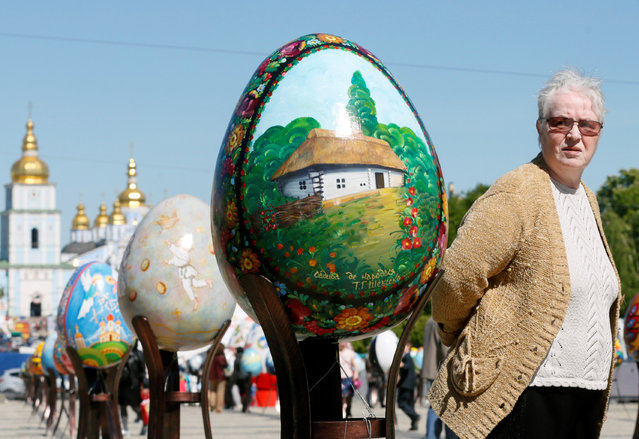
A woman looks at traditional Ukrainian Easter eggs “Pysanka”, installed as part of the upcoming celebrations of Easter, in central Kiev, Ukraine, April 29, 2016. A pysanka is a Ukrainian Easter egg, decorated with traditional Ukrainian folk designs using a wax-resist (batik) method. The word pysanka comes from the verb pysaty, “to write”, as the designs are not painted on, but written with beeswax. Many other eastern European ethnic groups decorate eggs using wax resist for Easter. These include the Belarusians, Bulgarians, Croats, Czechs, Hungarians, Lithuanians, Poles, Romanians, Serbs, Slovaks, Slovenes and Sorbs. (Photo by Valentyn Ogirenko/Reuters)

A woman looks at traditional Ukrainian Easter eggs “Pysanka”, installed as part of the upcoming celebrations of Easter, in central Kiev, Ukraine, April 29, 2016. A pysanka is a Ukrainian Easter egg, decorated with traditional Ukrainian folk designs using a wax-resist (batik) method. The word pysanka comes from the verb pysaty, “to write”, as the designs are not painted on, but written with beeswax. Many other eastern European ethnic groups decorate eggs using wax resist for Easter. These include the Belarusians, Bulgarians, Croats, Czechs, Hungarians, Lithuanians, Poles, Romanians, Serbs, Slovaks, Slovenes and Sorbs. (Photo by Valentyn Ogirenko/Reuters)
Details
30 Apr 2016 09:00:00
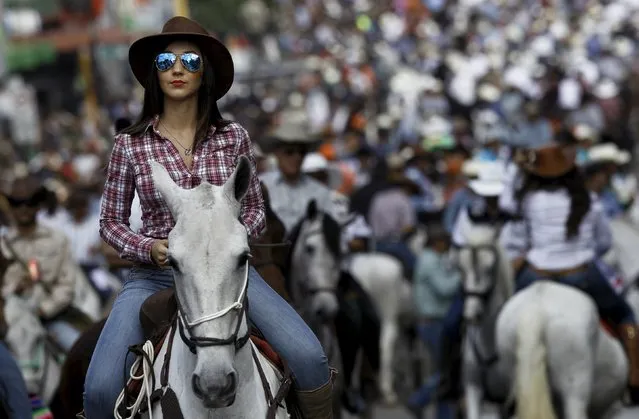
A woman takes part in a traditional horse parade through the streets of San Jose, Costa Rica December 26, 2015. (Photo by Juan Carlos Ulate/Reuters)

A woman takes part in a traditional horse parade through the streets of San Jose, Costa Rica December 26, 2015. Thousands of riders participated in the parade, which is part of annual year-end festivities. (Photo by Juan Carlos Ulate/Reuters)
Details
29 Dec 2015 08:05:00
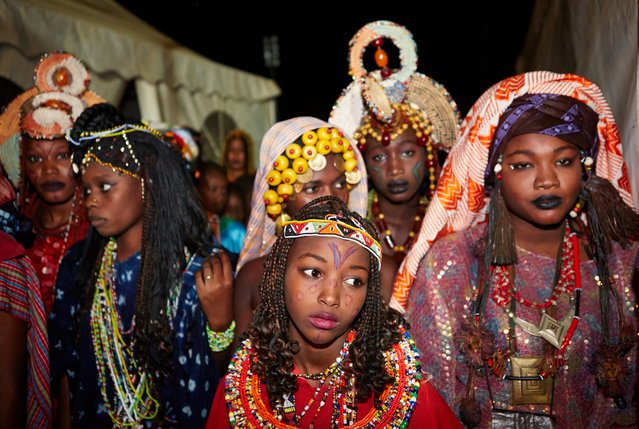
Dancers wait to perform on stage. (Photo by Andy Hall/The Observer)

Photographer Andy Hall joins the thousands of fans from west Africa who have gathered for Baaba Maal's annual Blues du Fleuve festival in Senegal. Here: Dancers wait to perform on stage. (Photo by Andy Hall/The Observer)
Details
04 Jan 2016 08:03:00
This photo of an elephant seal and Gentoo penguin shot by Andrew James in Yankee Harbour, Antarctica. (Photo by Andrew James/Travel Photographer of the Year)

This photo of an elephant seal and Gentoo penguin shot by Andrew James in Yankee Harbour, Antarctica. (Photo by Andrew James/Travel Photographer of the Year)
Details
12 Apr 2019 00:05:00
A storm is seen in Sarasota, Florida, June 24, 2018. (Courtesy of Val Vasilescu/Facebook.com/Kingofsunsets via Reuters)

A storm is seen in Sarasota, Florida, June 24, 2018. (Courtesy of Val Vasilescu/Facebook.com/Kingofsunsets via Reuters)
Details
01 Aug 2018 00:05:00
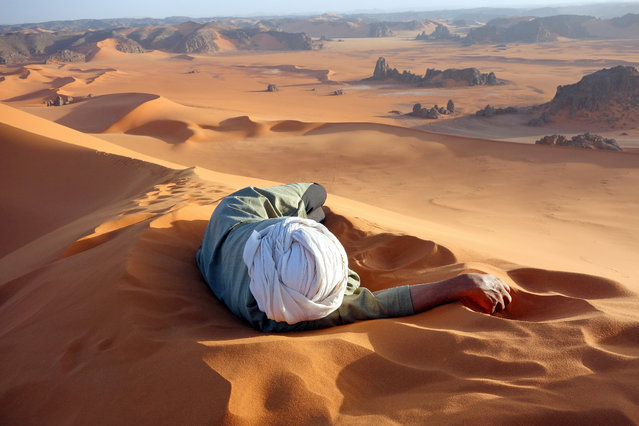
“A Well Earned Rest in the Sahara”. This photo of Moussa Macher, our Tuareg guide, was taken at the summit of Tin-Merzouga, the largest dune (or erg) in the Tadrat region of the Sahara desert in southern Algeria. Moussa rested while waiting for us to finish our 45-minute struggle to the top. Photo location: Summit of Tin-Merzouga, Tadrat, Tassili N'Ajjer National Park, Algeria. (Photo and caption by Evan Cole/National Geographic Photo Contest)

Merit Prize Winner: “A Well Earned Rest in the Sahara”. This photo of Moussa Macher, our Tuareg guide, was taken at the summit of Tin-Merzouga, the largest dune (or erg) in the Tadrat region of the Sahara desert in southern Algeria. Moussa rested while waiting for us to finish our 45-minute struggle to the top. It only took ten minutes of rolling, running, and jumping to get back down. The Tadrat is part of the Tassili N'Ajjer National Park World Heritage area, famous for its red sand and engravings and rock paintings of cattle, elephants, giraffes, and rhinos that lived there when the climate was milder. Photo location: Summit of Tin-Merzouga, Tadrat, Tassili N'Ajjer National Park, Algeria. (Photo and caption by Evan Cole/National Geographic Photo Contest)
Details
01 Aug 2014 11:38:00