Loading...
Done
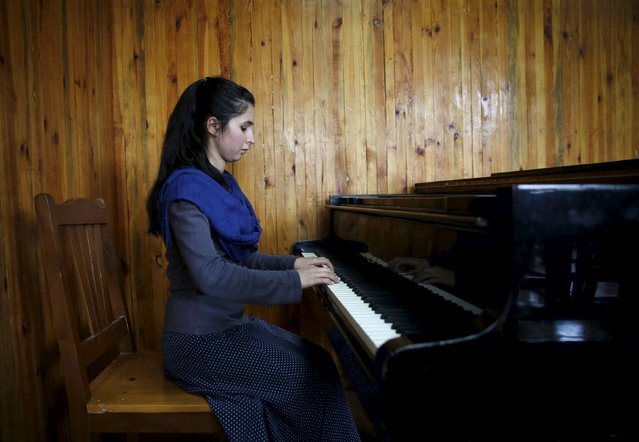
Negin Ekhpulwak, leader of the Zohra orchestra, an ensemble of 35 women, practises on a piano at Afghanistan's National Institute of Music, in Kabul, Afghanistan April 9, 2016. (Photo by Ahmad Masood/Reuters)

Negin Ekhpulwak, leader of the Zohra orchestra, an ensemble of 35 women, practises on a piano at Afghanistan's National Institute of Music, in Kabul, Afghanistan April 9, 2016. Playing instruments was banned under Taliban rule in Afghanistan, and even today, many conservative Muslims frown on most forms of music. Living in an orphanage in the capital, Kabul, 19-year-old Negin Ikhpolwak leads an ensemble of 35 women that plays both Western and Afghan musical instruments. In a country notorious internationally for harsh restrictions on women in most areas of life, Negin's story highlights a double challenge. (Photo by Ahmad Masood/Reuters)
Details
19 Apr 2016 13:47:00
Sunrise over the fields of stemmy grassland in Burscough, Lancashire, UK on September 14, 2020 with wrapped bales of hay prepared for silage, haylage for animal winter feed. (Photo by MediaWorldImages/Alamy Live News)

Sunrise over the fields of stemmy grassland in Burscough, Lancashire, UK on September 14, 2020 with wrapped bales of hay prepared for silage, haylage for animal winter feed. (Photo by MediaWorldImages/Alamy Live News)
Details
21 Oct 2020 00:05:00
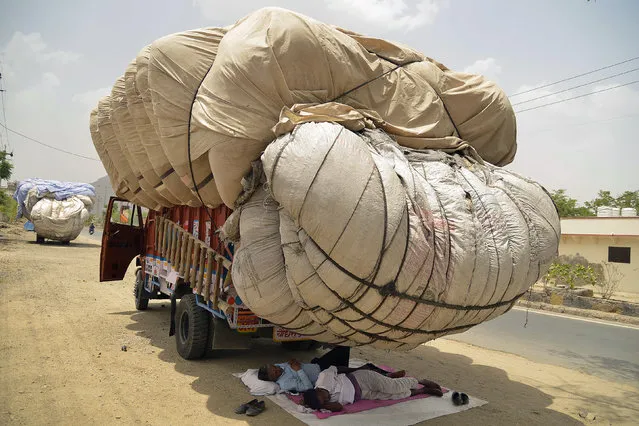
Indian men sleep in the shadow of an overflowing cloth container of hay, to be used as animal fodder, on a truck on a hot summer day in Ajmer in the western state of Rajasthan on May 30, 2018. (Photo by Shaukat Ahmed/AFP Photo)

Indian men sleep in the shadow of an overflowing cloth container of hay, to be used as animal fodder, on a truck on a hot summer day in Ajmer in the western state of Rajasthan on May 30, 2018. (Photo by Shaukat Ahmed/AFP Photo)
Details
05 Jun 2018 10:36:00
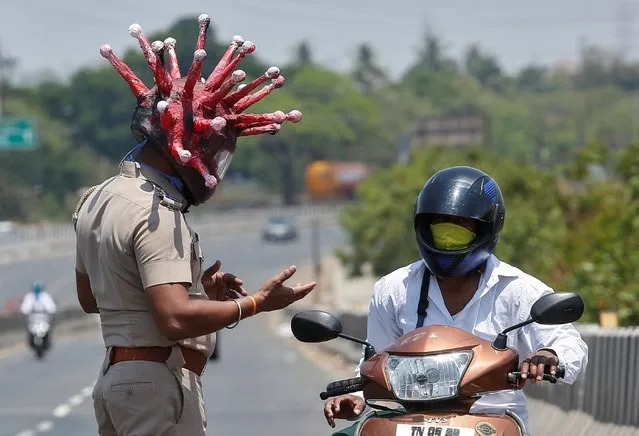
Rajesh Babu, a police officer, wearing a helmet depicting coronavirus, requests a commuter to stay at home during a 21-day nationwide lockdown to limit the spreading of coronavirus disease (COVID-19), in Chennai, India, March 28, 2020. (Photo by P. Ravikumar/Reuters)

Rajesh Babu, a police officer, wearing a helmet depicting coronavirus, requests a commuter to stay at home during a 21-day nationwide lockdown to limit the spreading of coronavirus disease (COVID-19), in Chennai, India, March 28, 2020. (Photo by P. Ravikumar/Reuters)
Details
30 Mar 2020 00:03:00
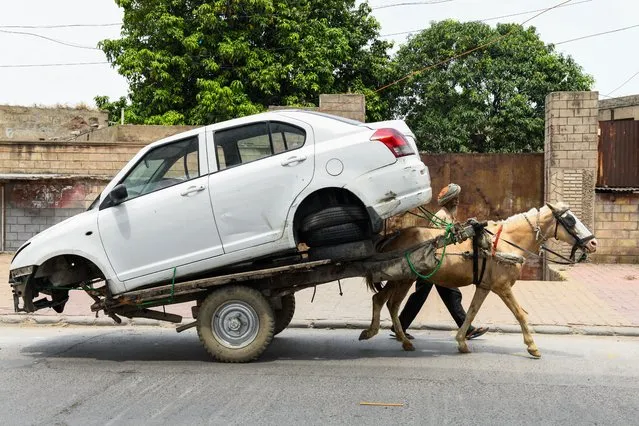
A man transports a car on a horse cart to a repair shop along a street in Amritsar on May 6, 2021. (Photo by Narinder Nanu/AFP Photo)

A man transports a car on a horse cart to a repair shop along a street in Amritsar on May 6, 2021. (Photo by Narinder Nanu/AFP Photo)
Details
11 May 2021 08:46:00
Afghans pass a clothing storein Kabul, Afghanistan, Tuesday, October 12, 2021. (Photo by Ahmad Halabisaz/AP Photo)

Afghans pass a clothing storein Kabul, Afghanistan, Tuesday, October 12, 2021. (Photo by Ahmad Halabisaz/AP Photo)
Details
09 Mar 2022 05:59:00
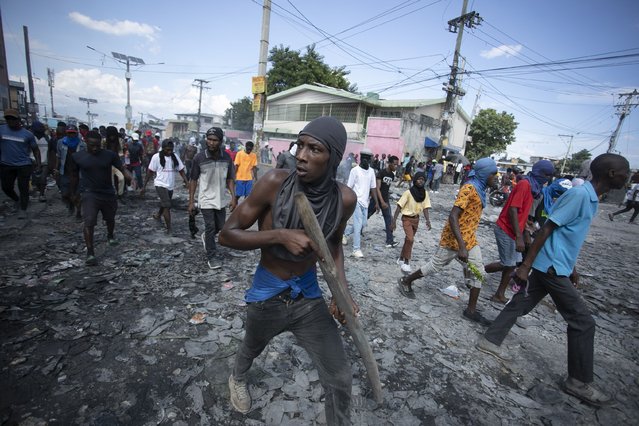
A protester carries a piece of wood simulating a weapon during a protest demanding the resignation of Prime Minister Ariel Henry, in the Petion-Ville area of Port-au-Prince, Haiti, Monday, October 3, 2022. (Photo by Joseph Odelyn/AP Photo)

A protester carries a piece of wood simulating a weapon during a protest demanding the resignation of Prime Minister Ariel Henry, in the Petion-Ville area of Port-au-Prince, Haiti, Monday, October 3, 2022. (Photo by Joseph Odelyn/AP Photo)
Details
07 Oct 2022 04:18:00
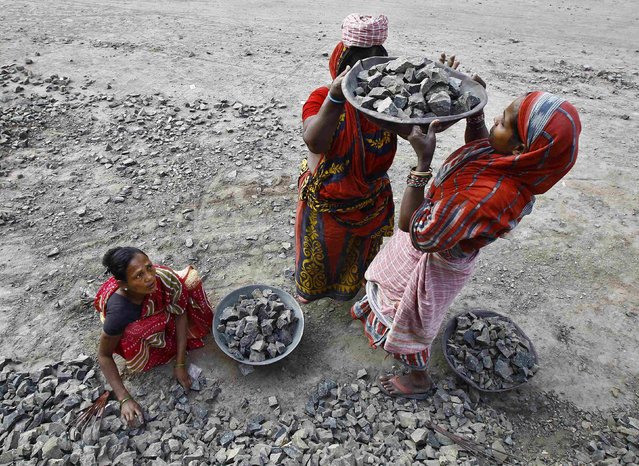
Women labourers work at the construction site of a road in Kolkata January 8, 2015. Across towns and cities in India, it is not uncommon to see women cleaning building sites, carrying bricks and or shoveling gravel - helping construct the infrastructure necessary for the country's economic and social development. (Photo by Rupak De Chowdhuri/Reuters)

Women labourers work at the construction site of a road in Kolkata January 8, 2015. Across towns and cities in India, it is not uncommon to see women cleaning building sites, carrying bricks and or shoveling gravel – helping construct the infrastructure necessary for the country's economic and social development. They help build roads, railway tracks, airports, and offices. They lay pipes for clean water supplies, cables for telecommunications, and dig the drains for sewage systems. But although women make up at least 20 percent of India's 40 million construction workers, they are less recognized than male workers with lower pay and often prone to safety hazards and sexual harassment. They are often unaware of their rights or scared to complain, say activists now trying to campaign for better treatment of women in the construction industry. (Photo by Rupak De Chowdhuri/Reuters)
Details
15 Jan 2015 13:47:00