Loading...
Done
A motorcyclist performs the superman stunt on a highway in Kuala Lumpur, Malaysia, September 14, 2014. Crowds of small motorbikes ridden by racers – or “Mat Rempit”, as they are known in Malaysian slang – face off in impromptu races in the Malaysian capital after dark. The decades-old culture is widely frowned upon by largely conservative Malaysians, who fear its potential to encourage gambling, drug abuse, snatch thefts and sexual promiscuity. (Photo by Olivia Harris/Reuters)

A motorcyclist performs the superman stunt on a highway in Kuala Lumpur, Malaysia, September 14, 2014. Crowds of small motorbikes ridden by racers – or “Mat Rempit”, as they are known in Malaysian slang – face off in impromptu races in the Malaysian capital after dark. The decades-old culture is widely frowned upon by largely conservative Malaysians, who fear its potential to encourage gambling, drug abuse, snatch thefts and sexual promiscuity. (Photo by Olivia Harris/Reuters)
Details
09 Apr 2016 13:39:00
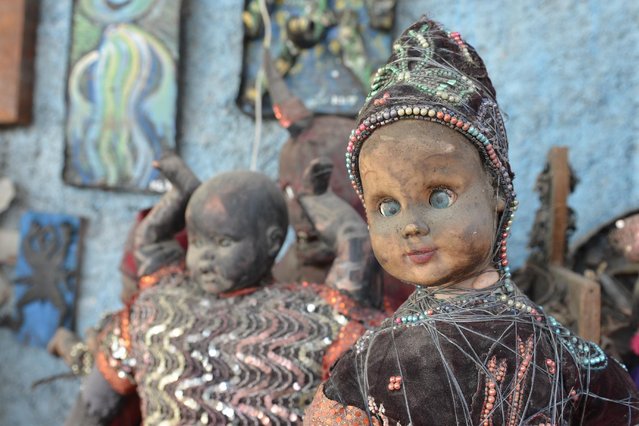
In this April 2, 2016 photo, dusty sculptures made of cast-off baby dolls sit in an open-air museum and art workshop off a trash-strewn street cutting through some of the poorest neighborhoods in Port-au-Prince, Haiti. They were created by Haitian artists called Atis Rezistans who have become celebrated in the international art world by creating sculptures out of scrapped car parts, old wood, discarded toys and even human skulls found scattered outside crumbling mausoleums. (Photo by David McFadden/AP Photo)

In this April 2, 2016 photo, dusty sculptures made of cast-off baby dolls sit in an open-air museum and art workshop off a trash-strewn street cutting through some of the poorest neighborhoods in Port-au-Prince, Haiti. They were created by Haitian artists called Atis Rezistans who have become celebrated in the international art world by creating sculptures out of scrapped car parts, old wood, discarded toys and even human skulls found scattered outside crumbling mausoleums. (Photo by David McFadden/AP Photo)
Details
12 Apr 2016 11:10:00
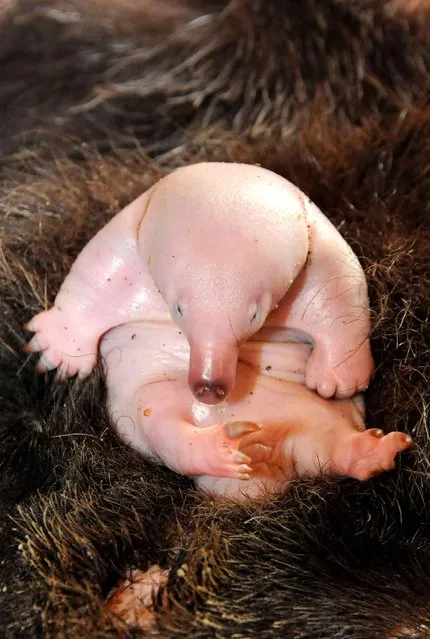
It's a 30-day-old Echidna baby, known as a “puggle” – one of only 24 ever bred in captivity. The proud parents are Tippy and Pickle of Australia Zoo. The tiny baby, whose s*x has not yet been identified, hatched from a soft egg and will continue to develop and nurse inside Tippy's warm pouch. (Photo by Australia Zoo/Rex/Sipa Press)

It's a 30-day-old Echidna baby, known as a “puggle” – one of only 24 ever bred in captivity. The proud parents are Tippy and Pickle of Australia Zoo. The tiny baby, whose s*x has not yet been identified, hatched from a soft egg and will continue to develop and nurse inside Tippy's warm pouch. (Photo by Australia Zoo/Rex/Sipa Press)
Details
21 Sep 2013 10:30:00
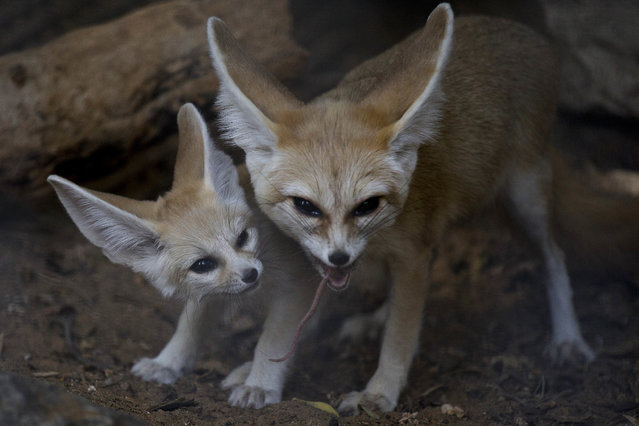
A 6-week old Fennec fox, the smallest species of foxes, and a native to the Sahara desert in Africa, looks as its mother eats in the Ramat Gan Safari Park near Tel Aviv, Israel, Sunday, November 6, 2016. Sagit Horowitz, the safari spokeswoman said four Fennec foxes were born about six weeks ago. (Photo by Ariel Schalit/AP Photo)

A 6-week old Fennec fox, the smallest species of foxes, and a native to the Sahara desert in Africa, looks as its mother eats in the Ramat Gan Safari Park near Tel Aviv, Israel, Sunday, November 6, 2016. Sagit Horowitz, the safari spokeswoman said four Fennec foxes were born about six weeks ago. (Photo by Ariel Schalit/AP Photo)
Details
13 Nov 2016 10:00:00
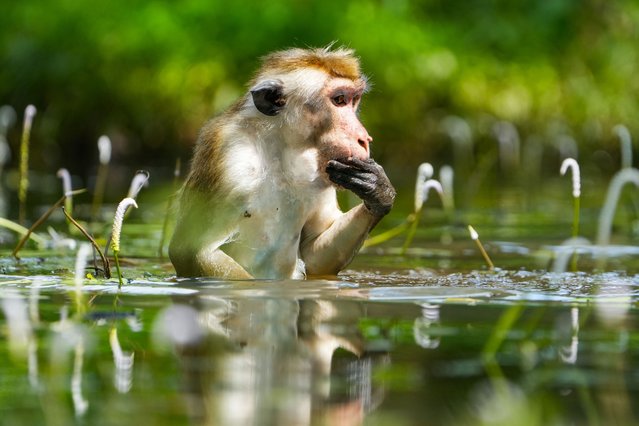
A toque macaque is eating flowers in the water at the pilgrimage site in Polonnaruwa, Sri Lanka, on January 13, 2024. The toque macaque (Macaca sinica), a reddish-brown-colored Old World monkey, is endemic to Sri Lanka, where it is known as the rilewa or rilawa. It is named for the whorl of hair at the crown of its head, which resembles a brimless toque cap. (Photo by Thilina Kaluthotage/NurPhoto/Rex Features/Shutterstock)

A toque macaque is eating flowers in the water at the pilgrimage site in Polonnaruwa, Sri Lanka, on January 13, 2024. The toque macaque (Macaca sinica), a reddish-brown-colored Old World monkey, is endemic to Sri Lanka, where it is known as the rilewa or rilawa. It is named for the whorl of hair at the crown of its head, which resembles a brimless toque cap. (Photo by Thilina Kaluthotage/NurPhoto/Rex Features/Shutterstock)
Details
10 Feb 2024 09:30:00
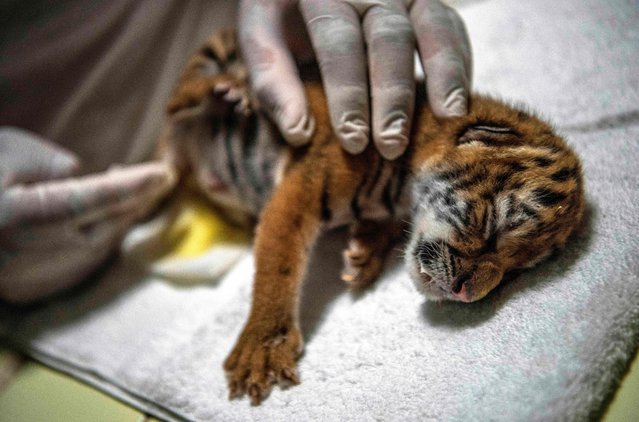
A three-day-old Bengal tiger calf is cared for after being fed at the National Zoo in Masaya on August 30, 2021. A female Bengal tiger calf was born in the National Zoo of Nicaragua, the fourth of this species in risk of extinction born in captivity in the country, and is under special care due to a limited breastfeeding capacity of the mother. (Photo by Inti Ocon/AFP Photo)

A three-day-old Bengal tiger calf is cared for after being fed at the National Zoo in Masaya on August 30, 2021. A female Bengal tiger calf was born in the National Zoo of Nicaragua, the fourth of this species in risk of extinction born in captivity in the country, and is under special care due to a limited breastfeeding capacity of the mother. (Photo by Inti Ocon/AFP Photo)
Details
05 Sep 2021 05:48:00
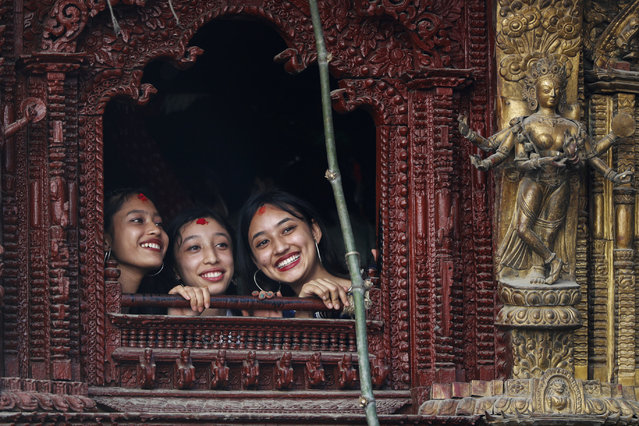
A former living goddess Kumari, center, watches Indra Jatra festival in Kathmandu, Nepal, Sunday, September 19, 2021.Tens of thousands of devotees packed the old palace courtyard in the heart of Nepal's capital to celebrate Indra Jatra festival Sunday which marks the start of the festival season in the Himalayan nation. (Photo by Niranjan Shrestha/AP Photo)

A former living goddess Kumari, center, watches Indra Jatra festival in Kathmandu, Nepal, Sunday, September 19, 2021.Tens of thousands of devotees packed the old palace courtyard in the heart of Nepal's capital to celebrate Indra Jatra festival Sunday which marks the start of the festival season in the Himalayan nation. (Photo by Niranjan Shrestha/AP Photo)
Details
25 Oct 2021 05:45:00
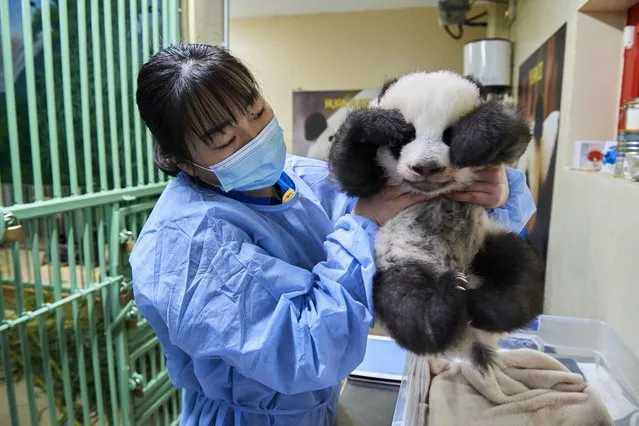
Yuandudu, a camera-shy panda cub, covers her eyes in Beauval ZooParc in France in November 2021. The three-month-old and her twin are fed once each by their mother every day, taking 150-200g of milk per feed. In between they have one bottle feed per day from the specially trained keepers who were sent from China to supervise their birth and early care. (Photo by Eric Baccega/Naturepl.com/LDY Agency)

Yuandudu, a camera-shy panda cub, covers her eyes in Beauval ZooParc in France in November 2021. The three-month-old and her twin are fed once each by their mother every day, taking 150-200g of milk per feed. In between they have one bottle feed per day from the specially trained keepers who were sent from China to supervise their birth and early care. (Photo by Eric Baccega/Naturepl.com/LDY Agency)
Details
05 Dec 2021 06:25:00