Loading...
Done
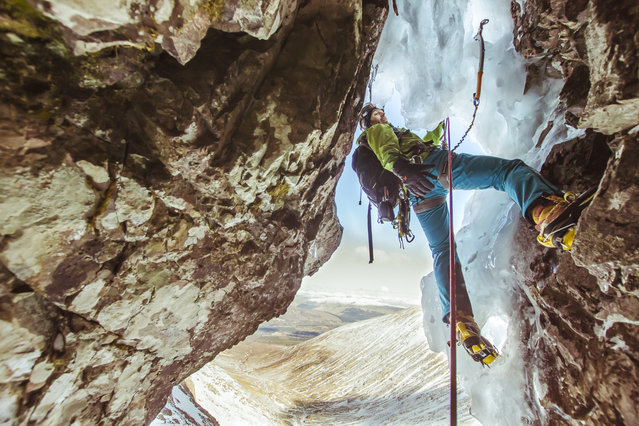
“Winter Climbing from inside Ben Nevis”. The view from inside the mountain, as a winter climber passes through the cave on Minus Three gully. Photo location: Ben Nevis, Fort William, Scotland. (Photo and caption by Daniel Wildey/National Geographic Photo Contest)

“Winter Climbing from inside Ben Nevis”. The view from inside the mountain, as a winter climber passes through the cave on Minus Three gully. Photo location: Ben Nevis, Fort William, Scotland. (Photo and caption by Daniel Wildey/National Geographic Photo Contest)
Details
24 Jun 2014 12:18:00
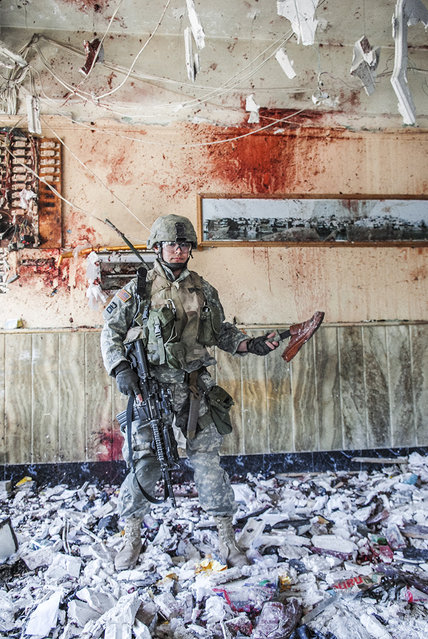
Shortly after he arrived, Van Agtmael witnessed the aftermath of this suicide bombing at a cafe that soldiers frequented in Mosul. Nine people died and 23 were wounded. (Photo and caption by Van Agtmael/Harrison Jacobs/Magnum Photos)

“Shortly after he arrived, Van Agtmael witnessed the aftermath of this suicide bombing at a cafe that soldiers frequented in Mosul. Nine people died and 23 were wounded”. (Photo and caption by Van Agtmael/Harrison Jacobs/Magnum Photos)
Details
05 Aug 2014 12:26:00
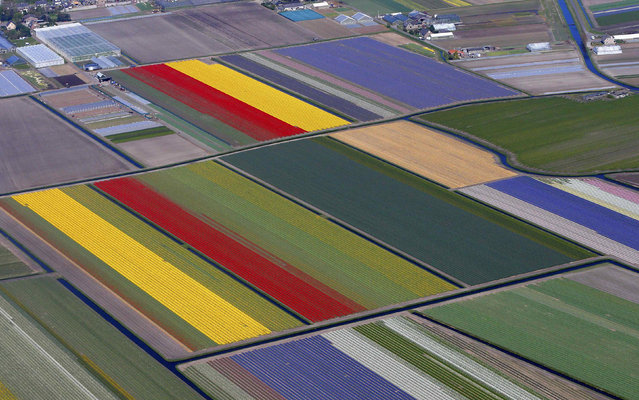
Aerial view of flower fields near the Keukenhof park, also known as the Garden of Europe, in Lisse April 9, 2014. Keukenhof, employing some 30 gardeners, is considered to be the world's largest flower garden displaying millions of flowers every year. (Photo by Yves Herman/Reuters)

Aerial view of flower fields near the Keukenhof park, also known as the Garden of Europe, in Lisse April 9, 2014. Keukenhof, employing some 30 gardeners, is considered to be the world's largest flower garden displaying millions of flowers every year. (Photo by Yves Herman/Reuters)
Details
11 Apr 2014 06:31:00
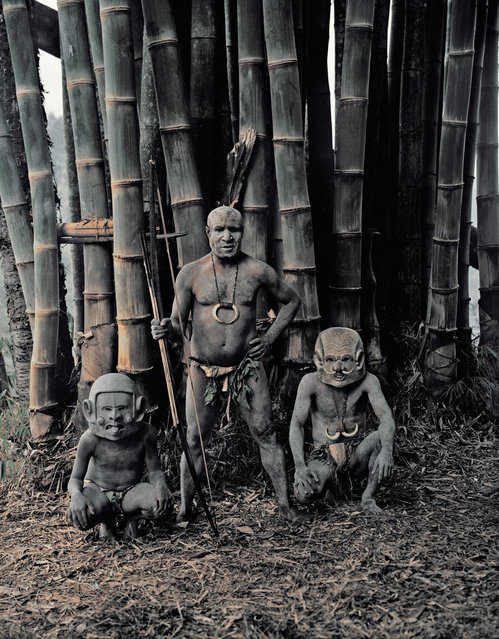
“Asaro from the Eastern Highlands”. The mudmen could not cover their faces with mud because the people of Papua New Guinea thought that the mud from the Asaro river was poisonous. So instead of covering their faces with this alleged poison, they made masks from pebbles that they heated and water from the waterfall, with unusual designs such as long or very short ears either going down to the chin or sticking up at the top, long joined eyebrows attached to the top of the ears, horns and sideways mouths. (Jimmy Nelson)

“Asaro from the Eastern Highlands”. The mudmen could not cover their faces with mud because the people of Papua New Guinea thought that the mud from the Asaro river was poisonous. So instead of covering their faces with this alleged poison, they made masks from pebbles that they heated and water from the waterfall, with unusual designs such as long or very short ears either going down to the chin or sticking up at the top, long joined eyebrows attached to the top of the ears, horns and sideways mouths. (Photo and caption by Jimmy Nelson)
Details
20 Oct 2013 08:54:00
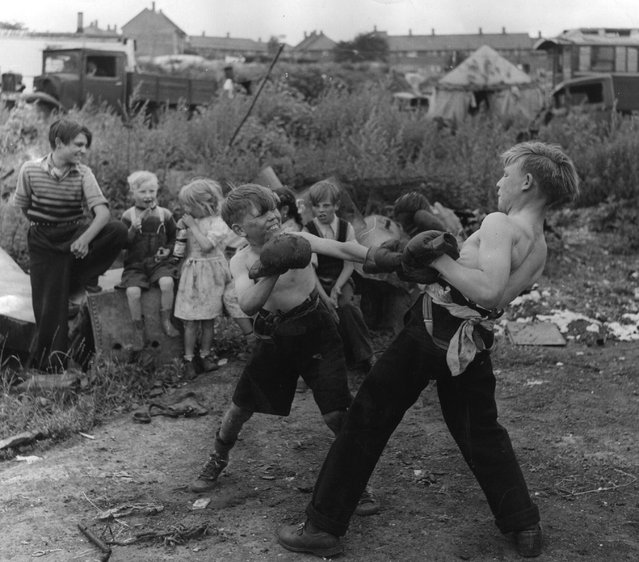
The unromantic gypsies. Children boxing in a gypsy camp in Kent, England on July 1, 1951. Like all boys these gypsy lads like to try their hand at boxing. Encouraged by their friends they fight it out on Corke's Meadow. Few Romanies now live a life of wandering romance. Most are like the three hundred squatters of Corke's Meadow, Kent, which is part of a “gypsy problem” that involves about 100,000 today. Of those about 25,000 can be rightly called gypsies, the rest are Mumpers and Posh-rats and Hobos. Corke's Meadow has both kinds. “Picture Post” cameraman Bert Hardy photographs the Corke's Meadow gypsies in their encampment. (Photo by Hulton-Deutsch Collection/Corbis via Getty Images)

The unromantic gypsies. Children boxing in a gypsy camp in Kent, England on July 1, 1951. Like all boys these gypsy lads like to try their hand at boxing. Encouraged by their friends they fight it out on Corke's Meadow. Few Romanies now live a life of wandering romance. Most are like the three hundred squatters of Corke's Meadow, Kent, which is part of a “gypsy problem” that involves about 100,000 today. Of those about 25,000 can be rightly called gypsies, the rest are Mumpers and Posh-rats and Hobos. Corke's Meadow has both kinds. “Picture Post” cameraman Bert Hardy photographs the Corke's Meadow gypsies in their encampment. (Photo by Hulton-Deutsch Collection/Corbis via Getty Images)
Details
12 Mar 2017 00:01:00
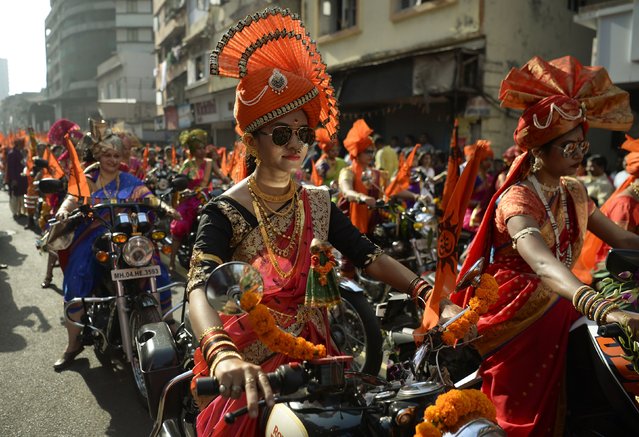
Indian women dressed in traditional attire drive motorcycles as they take part in a procession celebrating “Gudhi Padwa” or the Maharashtrian New Year in Mumbai on March 28, 2017. Gudhi Padwa is the Hindu New Year for people in India's Maharashtra state and marks the end of a harvest and the beginning of a new one. (Photo by Punit Paranjpe/AFP Photo)

Indian women dressed in traditional attire drive motorcycles as they take part in a procession celebrating “Gudhi Padwa” or the Maharashtrian New Year in Mumbai on March 28, 2017. Gudhi Padwa is the Hindu New Year for people in India's Maharashtra state and marks the end of a harvest and the beginning of a new one. (Photo by Punit Paranjpe/AFP Photo)
Details
29 Mar 2017 09:39:00
The Pink Floyd inflatable pig floats next to Broadcasting House to promote their new exhibition at the V&A museum, in London, Britain May 10, 2017. (Photo by Neil Hall/Reuters)

The Pink Floyd inflatable pig floats next to Broadcasting House to promote their new exhibition at the V&A museum, in London, Britain May 10, 2017. (Photo by Neil Hall/Reuters)
Details
11 May 2017 07:33:00
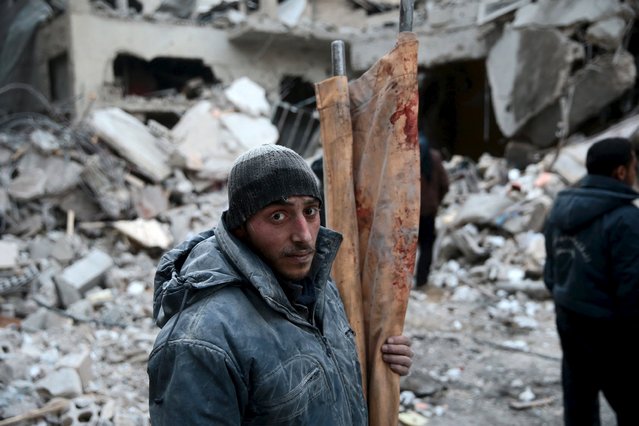
A man carries a blood stained stretcher in a site hit by what activists said were airstrikes carried out by the Russian air force in the town of Douma, eastern Ghouta in Damascus, Syria January 10, 2016. (Photo by Bassam Khabieh/Reuters)

A man carries a blood stained stretcher in a site hit by what activists said were airstrikes carried out by the Russian air force in the town of Douma, eastern Ghouta in Damascus, Syria January 10, 2016. (Photo by Bassam Khabieh/Reuters)
Details
12 Jan 2016 08:01:00