Loading...
Done
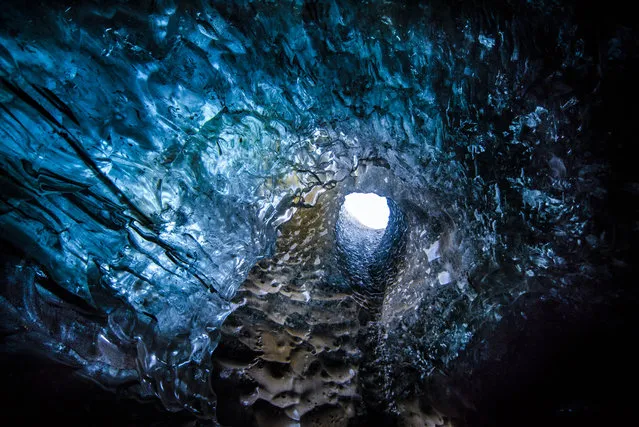
The ice caves, taken in the Vatnajokull National Park in Iceland, on November 11, 2017. (Photo by Matej Kriz/Caters News Agency)

These frozen caves seem almost otherworldly as they daylight illuminates them. Matej Kriz’s shots reveal the beauty of the brilliant caves, but he’s also very aware of how deadly they can be. The photographer captured the amazing shots in the Vatnajokull National Park on the Breidamerkurjokull glacier tongue. Here: The ice caves, taken in the Vatnajokull National Park in Iceland, on November 11, 2017. (Photo by Matej Kriz/Caters News Agency)
Details
17 Jan 2018 07:45:00
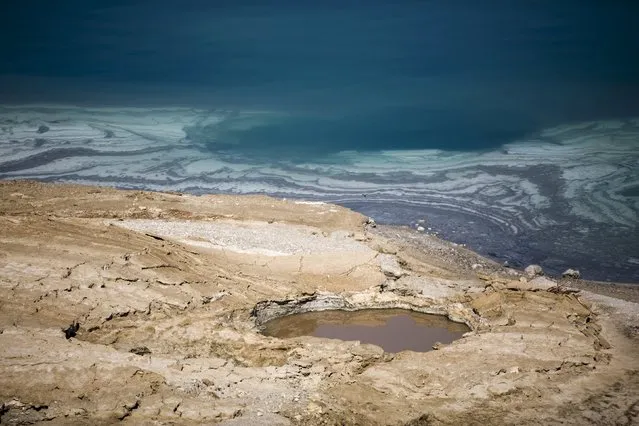
A sinkhole is seen on the shore of the Dead Sea near Kibbutz Ein Gedi, Israel July 27, 2015. The Dead Sea is shrinking, and as its waters vanish at a rate of more than one meter a year, hundreds of sinkholes, some the size of a basketball court, some two storeys deep, are devouring land where the shoreline once stood. (Photo by Amir Cohen/Reuters)

A sinkhole is seen on the shore of the Dead Sea near Kibbutz Ein Gedi, Israel July 27, 2015. The Dead Sea is shrinking, and as its waters vanish at a rate of more than one meter a year, hundreds of sinkholes, some the size of a basketball court, some two storeys deep, are devouring land where the shoreline once stood. (Photo by Amir Cohen/Reuters)
Details
30 Jul 2015 12:06:00
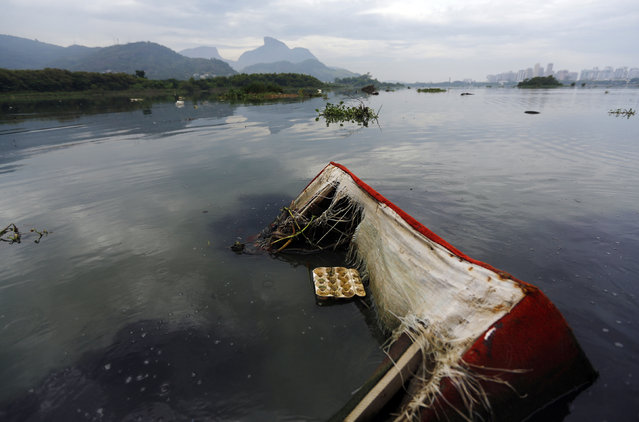
A sofa floats in the polluted waters of Jacarepagua Lagoon, during a press tour in Rio de Janeiro, March 9, 2015. A press tour was organised by biologist Mario Moscatelli, to call attention to pollution on the waters of the lagoons which surround the Rio 2016 Olympic Park. (Photo by Ricardo Moraes/Reuters)

A sofa floats in the polluted waters of Jacarepagua Lagoon, during a press tour in Rio de Janeiro, March 9, 2015. A press tour was organised by biologist Mario Moscatelli, to call attention to pollution on the waters of the lagoons which surround the Rio 2016 Olympic Park. (Photo by Ricardo Moraes/Reuters)
Details
09 Aug 2015 11:04:00
British troops arriving in England on June 6, 1940 after fleeing Flanders received all kinds of fruit and food from women who passed it out to them as they halted in railroad stations. A soldier holds aloft a banana he received from the woman. (Photo by AP Photo)

British troops arriving in England on June 6, 1940 after fleeing Flanders received all kinds of fruit and food from women who passed it out to them as they halted in railroad stations. A soldier holds aloft a banana he received from the woman. (Photo by AP Photo)
Details
05 Aug 2017 08:29:00
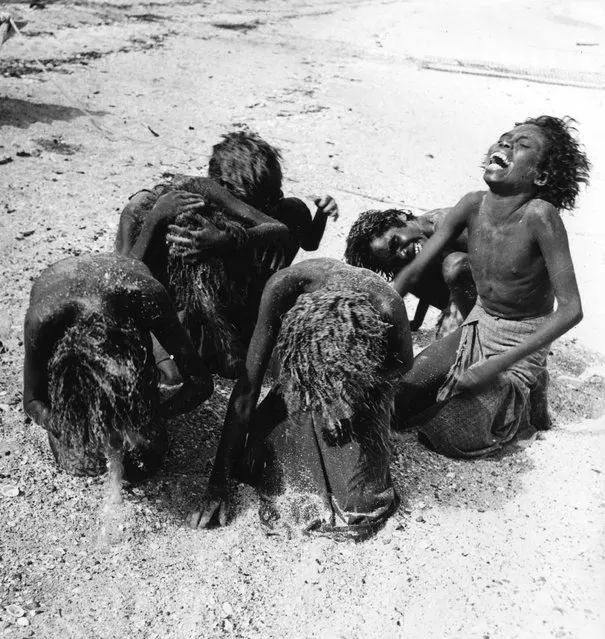
1st January 1950:  Aboriginal women washing their hair with sand at Arnhem land in the Northern Territory of Australia.  (Photo by Three Lions/Getty Images)

“Australian Aborigines are those people regarded as indigenous to the Australian continent. In the High Court of Australia, Australian Aborigines have been specifically identified as a group of people who share, in common, biological ancestry back to the original occupants of the continent”. – Wikipedia

Photo: Aboriginal women washing their hair with sand at Arnhem land in the Northern Territory of Australia. 1st January 1950. (Photo by Three Lions)
Details
02 Feb 2014 07:29:00
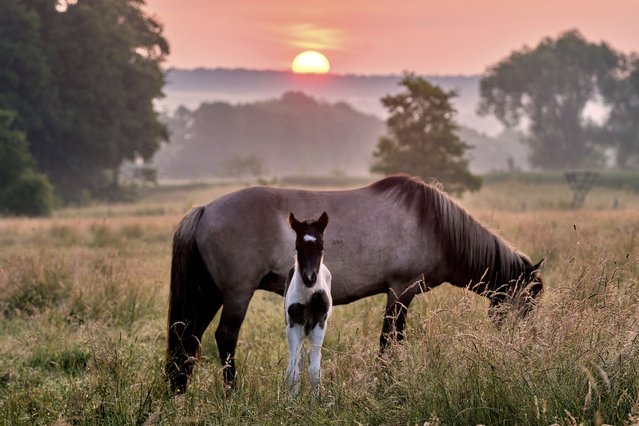
An Icelandic mare and her foal stand on a meadow at a stud farm in Wehrheim near Frankfurt, Germany, Tuesday, June 17, 2025. (Photo by Michael Probst/AP Photo)

An Icelandic mare and her foal stand on a meadow at a stud farm in Wehrheim near Frankfurt, Germany, Tuesday, June 17, 2025. (Photo by Michael Probst/AP Photo)
Details
11 Aug 2025 02:11:00
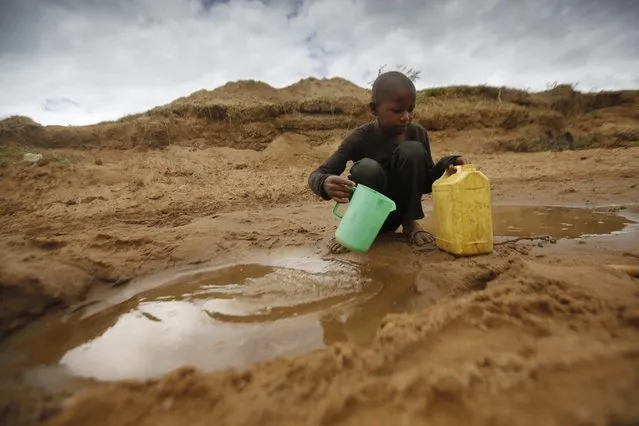
A young boy scoops water from a hand-dug well in the dry riverbed near Matinyani, in the semi-arid Kitui County in southeastern Kenya, 22 March 2015, the World Water Day. Residents of Kitui County and other arid and semi-arid areas of the country have been hard-hit by extremely poor rainfall this year while the government said in previous month that some 1.6 million people countrywide are facing acute starvation due to the drought and will need relief food over the next six months. (Photo by Dai Kurokawa/EPA)

A young boy scoops water from a hand-dug well in the dry riverbed near Matinyani, in the semi-arid Kitui County in southeastern Kenya, 22 March 2015, the World Water Day. Residents of Kitui County and other arid and semi-arid areas of the country have been hard-hit by extremely poor rainfall this year while the government said in previous month that some 1.6 million people countrywide are facing acute starvation due to the drought and will need relief food over the next six months. Residents of Matinyani say they haven't seen a drop of rain in nearly four months. Thousands of Kenyans in rural areas walk tens of kilometers just to fetch water to drink and to be used in their homes. According to an estimate by UNESCO (United Nations Educational, Scientific and Cultural Organization), 17 million people lack access to safe water in Kenya, where the drought is a perennial problem. (Photo by Dai Kurokawa/EPA)
Details
23 Mar 2015 11:01:00
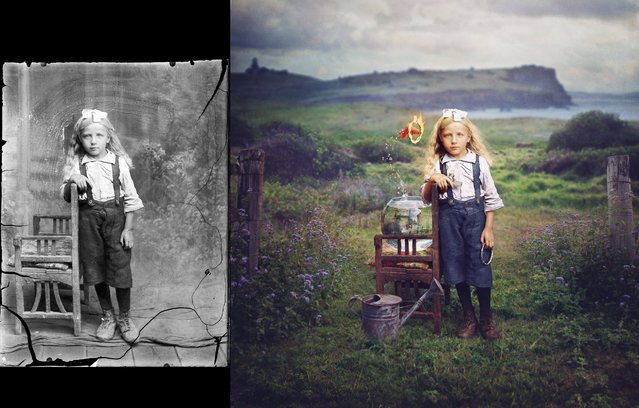
The Costica photo on the left inspired Australia-based photographer Jane Long to create her version, titled “Innocence”. (Photo by Costica Acsinte Archive/Jane Long)

The “Dancing With Costica” series began when Australia-based photographer Jane Long decided to brush up on her retouching skills. After finding the Costica Acsinte Archive on Flickr, she became fascinated with the images and their subjects, wanting to bring them to life and give them a story. Here: the Costica photo on the left inspired Jane Long to create her version, titled “Innocence”. (Photo by Costica Acsinte Archive/Jane Long)
Details
01 Sep 2014 09:48:00