Loading...
Done
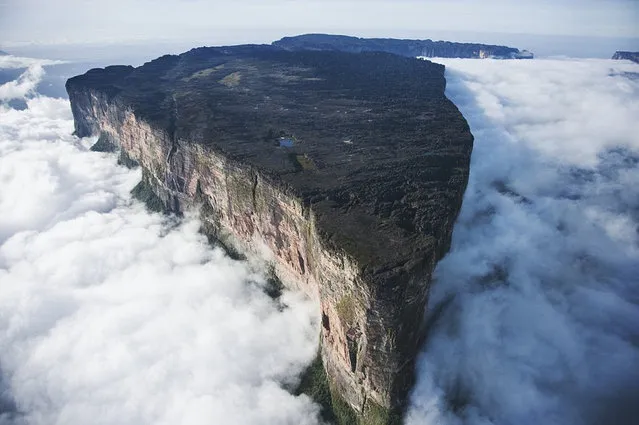
Mount Roraima

Mount Roraima (Spanish: Monte Roraima, also known as Tepuy Roraima and Cerro Roraima; Portuguese: Monte Roraima [ˈmõtʃi ʁoˈɾajmɐ]) is the highest of the Pakaraima chain of tepui plateau in South America. First described by the English explorer Sir Walter Raleigh in 1596, its 31 km2 summit area is defended by 400-metre-tall cliffs on all sides. The mountain includes the triple border point of Venezuela, Brazil and Guyana.
Details
11 Sep 2012 08:04:00
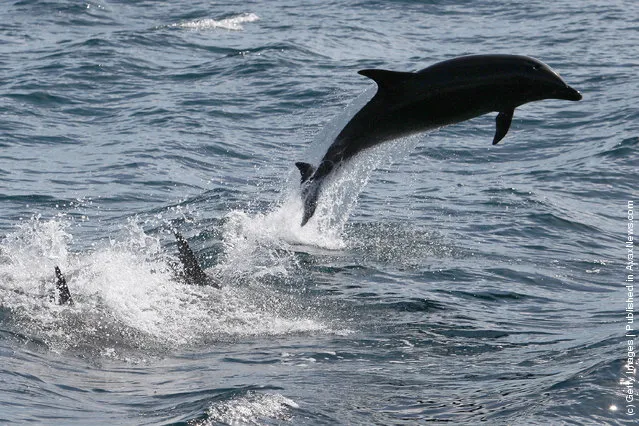
Bottlenose dolphins

Bottlenose dolphins leap off the Southern California coast on January 30, 2012 near Dana Point, California. A coalition that includes Native American tribes, Earthjustice and the Natural Resources Defense Council is on the National Marine Fisheries Service for more protection for dolphins, whales, and other migrating marine animals from the use of sonar in training by the US Navy on the West Coast. (Photo by David McNew/Getty Images)
Details
31 Jan 2012 10:23:00
Clouded Skies By Seb Janiak

The French graphic designer and photographer uses a method he calls “digital matte painting”, layering several photos on top of each other to create an incandescent composition that seems eerily familiar yet ultimately impossible. Filled with tumbling clouds and glowing focal points, the images possess a depth that stretches the two-dimensional canvases backward as violent skies seem to undulate before the viewers' eyes.
Details
08 Jul 2014 11:45:00
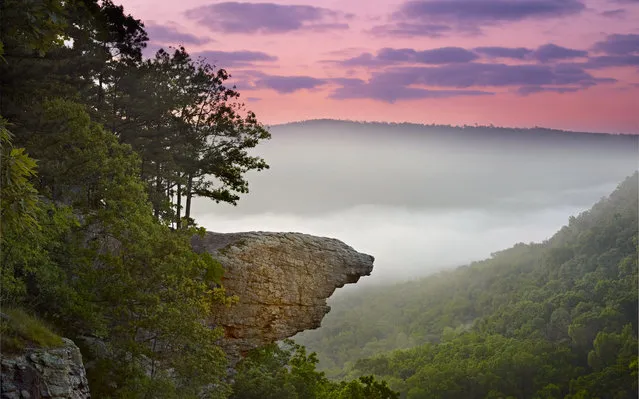
Hawksbill Crag In The Ozark National Forest

The Hawksbill Crag, also known as Whitaker Point, is located along the northern edge of the Upper Buffalo Wilderness in the Ozark National Forest, just south of the Buffalo National River. It is easily one of the most photograped and recognizable features in Arkansas, and is often seen on publications depicting the outdoors in Arkansas. The hike to it is an easy 3.0 mile round trip, and offers scenic vistas, huge boulders, beautiful waterfalls and colorful wildflowers.
Details
21 Jun 2013 11:43:00
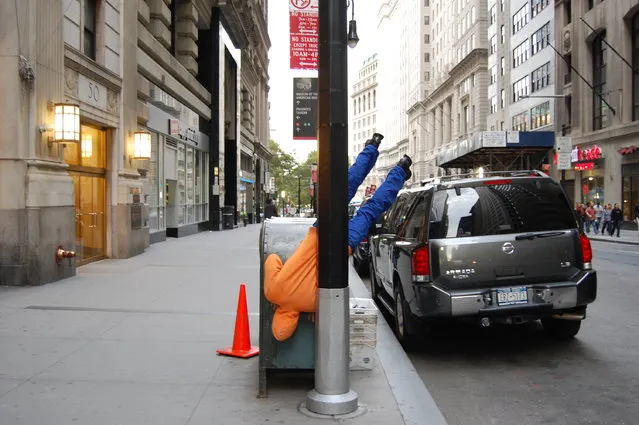
Willi Dorner, Bodies in Urban Spaces, September 26, 2010

“Bodies in urban spaces” is a temporarily intervention in diversified urban architectonical environment. The intention of “bodies in urban spaces” is to point out the urban functional structure and to uncover the restricted movement possibilities and behavior as well as rules and limitations. Photo: “Bodies in Urban Spaces”, September 26, 2010. (Photos by Andrew Russeth)
Details
16 Sep 2013 09:32:00
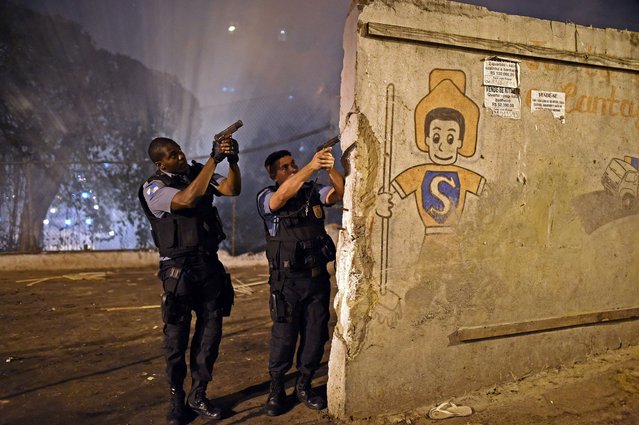
Rio de Janeiro's state military policemen aim their guns during a violent protest in a favela next to Copacabana, Rio de Janeiro on April 22, 2014. Violent protests broke out in Rio's landmark beachfront district, Copacabana, following the death of a resident last weekend during clashes with the Army in a nearby favela. (Photo by Christophe Simon/AFP Photo)

Rio de Janeiro's state military policemen aim their guns during a violent protest in a favela next to Copacabana, Rio de Janeiro on April 22, 2014. Violent protests broke out in Rio's landmark beachfront district, Copacabana, following the death of a resident last weekend during clashes with the Army in a nearby favela. (Photo by Christophe Simon/AFP Photo)
Details
24 Apr 2014 09:03:00
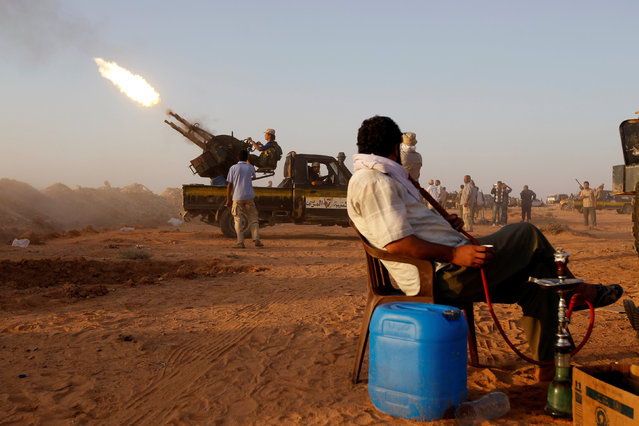
An anti-Gaddafi fighter tests an anti-aircraft gun southwest of Sirte, Libya one of Muammar Gaddafi's last remaining strongholds, September 16, 2011. (Photo by Goran Tomasevic/Reuters)

An anti-Gaddafi fighter tests an anti-aircraft gun southwest of Sirte, Libya one of Muammar Gaddafi's last remaining strongholds, September 16, 2011. A timeline of images dating from 2010 from Sirte, Libya, the home town of deposed Libyan leader Muammar Gaddafi. Libyan forces battling Islamic State in the city of Sirte say they have defeated the militant group after months of street to street fighting backed by U.S. air strikes. Islamic State took control of the city more than a year ago and set up its main base outside Syria and Iraq. (Photo by Goran Tomasevic/Reuters)
Details
06 Dec 2016 10:43:00
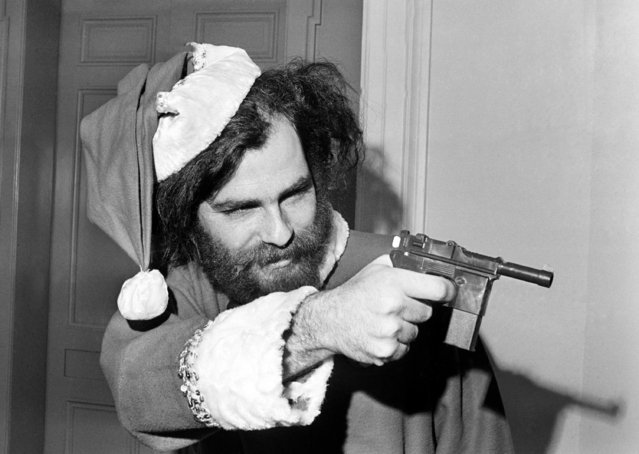
Yippie leader Jerry Rubin, barred on December 4, from House Un-American Activities subcommittee hearing, aims a toy gun in “self defense” outside the Washington hearing room on December 5, 1969. Rubin showed up in his Santa Clause suit because he believed it was typical of the committee which, he said, “is a total circus”. (Photo by Bob Daugherty/AP Photo)

Yippie leader Jerry Rubin, barred on December 4, from House Un-American Activities subcommittee hearing, aims a toy gun in “self defense” outside the Washington hearing room on December 5, 1969. Rubin showed up in his Santa Clause suit because he believed it was typical of the committee which, he said, “is a total circus”. (Photo by Bob Daugherty/AP Photo)
Details
18 Dec 2017 08:08:00