Loading...
Done
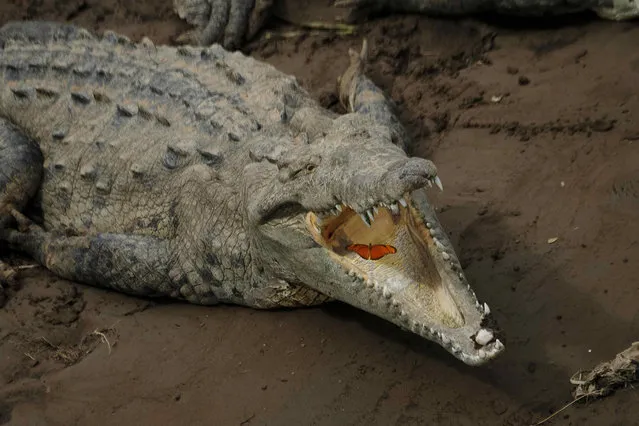
A butterfly flies into the jaws of a crocodile inhabiting the Tarcoles River, the most polluted basin in Central America and one of the most polluted in Latin America, in the place of Tarcoles, province of Puntarenas, Costa Rica, 05 June 2018. Costa Rica, a country recognized worldwide for its environmental policies, seeks to be a leader in the replacement of single-use plastic with renewable and compostable alternatives, despite its lag in terms of recycling and integrated waste management. (Photo by Jeffrey Arguedas/EPA/EFE)

A butterfly flies into the jaws of a crocodile inhabiting the Tarcoles River, the most polluted basin in Central America and one of the most polluted in Latin America, in the place of Tarcoles, province of Puntarenas, Costa Rica, 05 June 2018. Costa Rica, a country recognized worldwide for its environmental policies, seeks to be a leader in the replacement of single-use plastic with renewable and compostable alternatives, despite its lag in terms of recycling and integrated waste management. (Photo by Jeffrey Arguedas/EPA/EFE)
Details
17 Jun 2018 00:03:00
The Dubai Miracle Garden

The Dubai Miracle Garden is unique in that it was essentially built on a desert. Head landscaper Akar says that the grounds are a great example of how it is possible to “green the desert” by reusing waste water. Designers took additional precautions to protect the beautiful garden arrangements from the environment. For instance, the garden’s perimeter is lined with trees that are used as windbreakers. Unlike most of the gardens around the world, the Dubai Miracle Garden closes during the summer due to severe weather conditions.
Details
17 May 2015 09:00:00
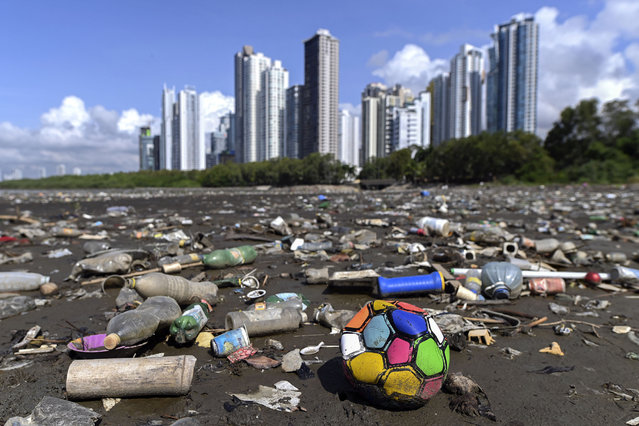
Garbage, including plastic waste, is seen at the beach of Costa del Este, in Panama City, on April 19, 2021. Every two weeks, Marine Biology students descend about five meters in the sea to take care of a coral nursery of the staghorn species (Acropora cervicornis) in Portobelo, Panama, with which they aim to restore reefs damaged by climate change and pollution, as part of the Reef2Reef project. (Photo by Luis Acosta/AFP Photo)

Garbage, including plastic waste, is seen at the beach of Costa del Este, in Panama City, on April 19, 2021. Every two weeks, Marine Biology students descend about five meters in the sea to take care of a coral nursery of the staghorn species (Acropora cervicornis) in Portobelo, Panama, with which they aim to restore reefs damaged by climate change and pollution, as part of the Reef2Reef project. (Photo by Luis Acosta/AFP Photo)
Details
21 Jun 2021 07:30:00
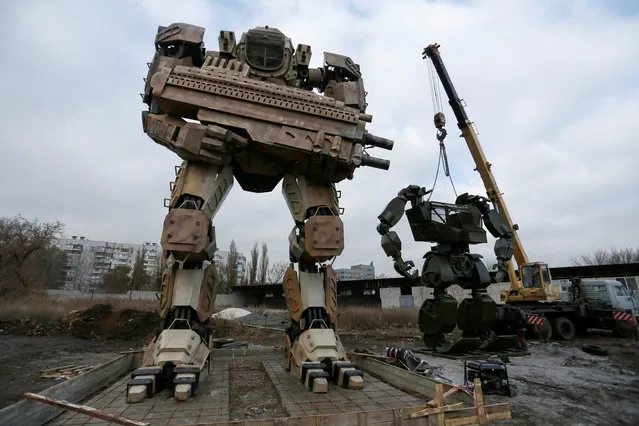
Robots made by local enthusiasts and employees of an automobile repair workshop are seen during installation works on the outskirts of the rebel-controlled city of Donetsk, Ukraine, November 26, 2020. According to creators, who plan to open a robotics engineering park, 13-metre and 6-metre-high sculptures featuring transformer robots were made of waste metal including car components and weigh about 4 and 2 tonnes respectively. (Photo by Alexander Ermochenko/Reuters)

Robots made by local enthusiasts and employees of an automobile repair workshop are seen during installation works on the outskirts of the rebel-controlled city of Donetsk, Ukraine, November 26, 2020. According to creators, who plan to open a robotics engineering park, 13-metre and 6-metre-high sculptures featuring transformer robots were made of waste metal including car components and weigh about 4 and 2 tonnes respectively. (Photo by Alexander Ermochenko/Reuters)
Details
28 Nov 2020 00:07:00
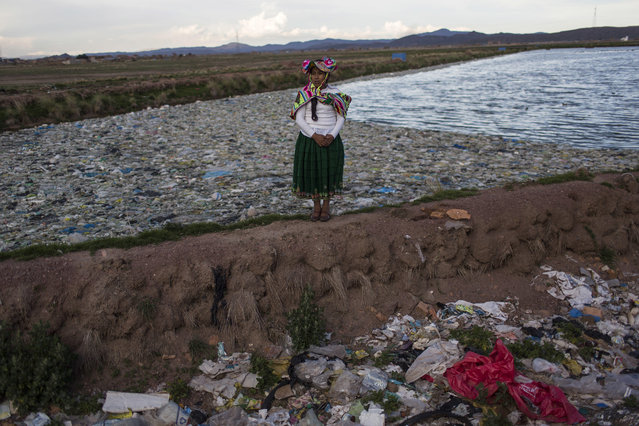
In this February 1, 2017 photo, environmental activist Maruja Inquilla poses for a photo next to a Municipal waste treatment plant with water that flows into Lake Titicaca, in Juliaca, in the Puno region of Peru. “If the frogs could talk they would say, This is killing me”," said Inquilla, who recently showed up at the Puno governor's house carrying plastic bags filled with hundreds of dead frogs in protest. (Photo by Rodrigo Abd/AP Photo)

In this February 1, 2017 photo, environmental activist Maruja Inquilla poses for a photo next to a Municipal waste treatment plant with water that flows into Lake Titicaca, in Juliaca, in the Puno region of Peru. “If the frogs could talk they would say, This is killing me”," said Inquilla, who recently showed up at the Puno governor's house carrying plastic bags filled with hundreds of dead frogs in protest. (Photo by Rodrigo Abd/AP Photo)
Details
04 Mar 2017 00:02:00
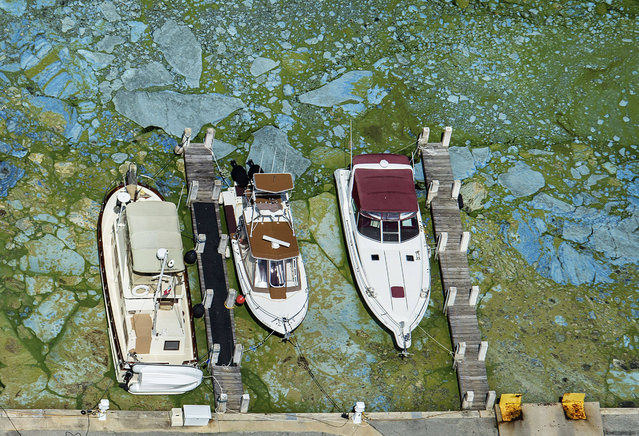
In this June 29, 2016 file photo, boats docked at Central Marine in Stuart, Fla., are surrounded by blue green algae. The 153-mile-long Indian River Lagoon has been plagued by harmful algae blooms. Water quality testing data analyzed by the AP showed the average phosphorous level – a byproduct of fertilizers and human waste that algae thrive on, rose nearly 75 percent between 2000 and 2016. (Photo by Greg Lovett/The Palm Beach Post via AP Photo)

In this June 29, 2016 file photo, boats docked at Central Marine in Stuart, Fla., are surrounded by blue green algae. The 153-mile-long Indian River Lagoon has been plagued by harmful algae blooms. Water quality testing data analyzed by the AP showed the average phosphorous level – a byproduct of fertilizers and human waste that algae thrive on, rose nearly 75 percent between 2000 and 2016. (Photo by Greg Lovett/The Palm Beach Post via AP Photo)
Details
11 May 2017 07:26:00
These images of young children training were taken at a gymnastics summer camp in Bozhou, Anhui province, China on July 28, 2015. Children with promise are selected to attend, and their families hope training will not only benefit their children physically but also increase ‘willpower’, according to China News Service. (Photo by ChinaFotoPress/ChinaFotoPress via Getty Images)

These images of young children training were taken at a gymnastics summer camp in Bozhou, Anhui province, China on July 28, 2015. Children with promise are selected to attend, and their families hope training will not only benefit their children physically but also increase ‘willpower’, according to China News Service. (Photo by ChinaFotoPress/ChinaFotoPress via Getty Images)
Details
16 Nov 2015 08:11:00
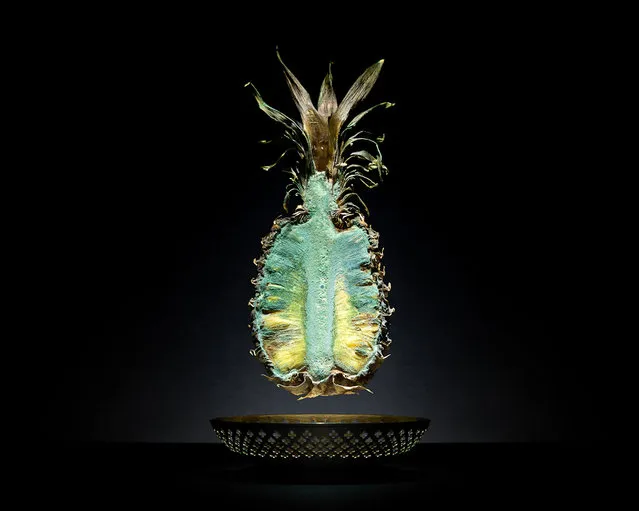
Pineapple

“One Third” – a project on food waste by an Austrian photography Klaus Pichler. According to a UN study one third of the world's food goes to waste – the largest part thereof in the industrialized nations of the global north. Equally, 925 million people around the world are threatened by starvation. The series “One Third” describes the connection between individual wastage of food and globalized food production.

Photo: Pineapple. Place of production: Guayaquil, Ecuador. Cultivation method: Outdoor plantation • Time of harvest: All- season. Transporting distance: 10.666 km (linear distance) • Means of transportation: Aircraft, truck. Carbon footprint (total) per kg: 11,94 kg • Water requirement (total) per kg: 360 l. Price: 2,10 € / kg. (Photo by Klaus Picher)
Details
02 May 2012 11:01:00