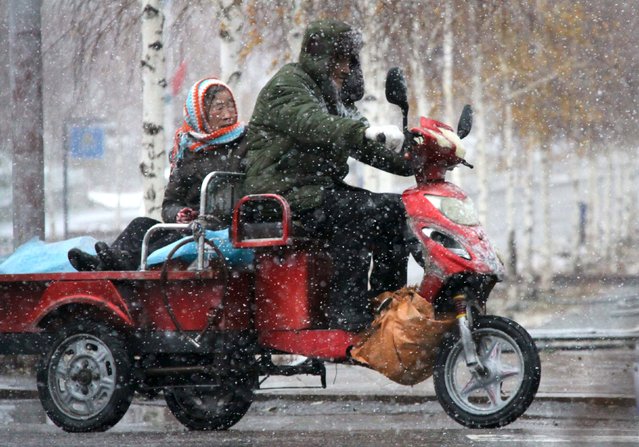
A couple ride a motorcycle along a street during snow in Altay, Xinjiang Uighur Autonomous Region, China, November 8, 2015. Picture taken November 8, 2015. (Photo by Reuters/Stringer)
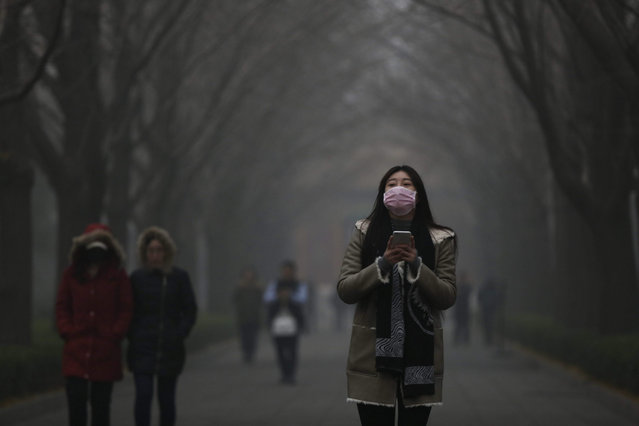
A woman wearing a mask walk in a street in a Yonghegong Lama temple compound seen shrouded in smog in Beijing, China, 30 November 2015. Beijing issued an orange alert for heavy smog 30 November, the highest level this year. Authorities in the Chinese capital warned of 'severe pollution' and advised the capital's 20 million inhabitants to stay indoors. (Photo by How Hwee Young/EPA)
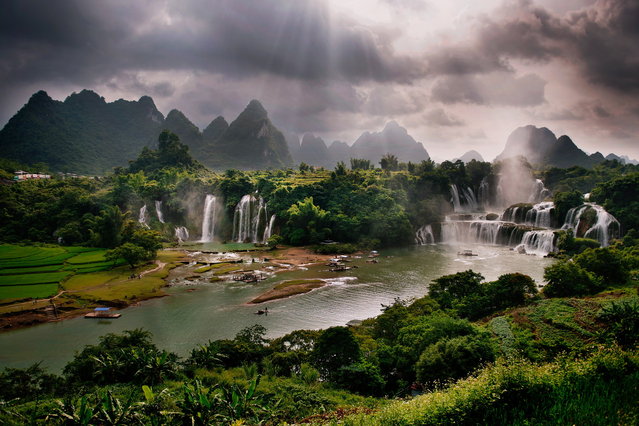
Ban Gioc – Detian Falls are two waterfalls on the Quây Sơn River, in Chinese Guichun River, straddling the Sino-Vietnamese border, located in the Karst hills of Daxin County, Guangxi (Chinese side), and in Trùng Khánh District, Cao Bằng province on the Vietnamese side, 272 km (169 mi) north of Hanoi. In Vietnamese, the two falls are considered as two parts of one waterfall with the sole name Bản Giốc. The two parts are called as: thác chính (Main waterfall) and thác phụ (Subordinate waterfall). Chinese texts sometimes name both falls from the Détiān falls on the Chinese side. During the summer rains the two waterfalls may join together.
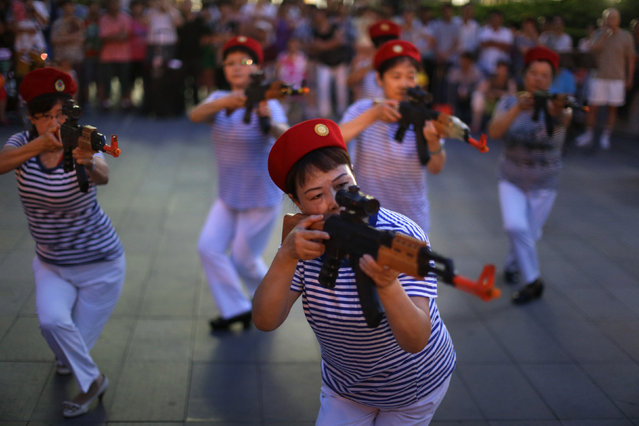
Chinese women holding toy guns dance for a revolutionary song during their daily exercise at a square outside a shopping mall in Beijing, June 29, 2014. About 30 local residents formed this “Nanguan” art group that enjoys performing to revolutionary songs and dance performances as part of their daily fitness activities at night. (Photo by Jason Lee/Reuters)
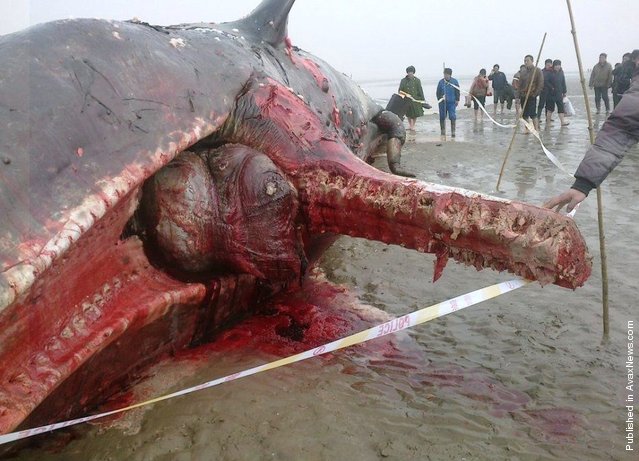
A dead sperm whale is seen on the beach on March 18, 2012 in Yancheng, Jiangsu Province of China. Four giant sperm whales, which were found beached on the beach of Xintan Salt Field on Friday, died on Saturday despite rescue efforts. (Photo by ChinaFotoPress)
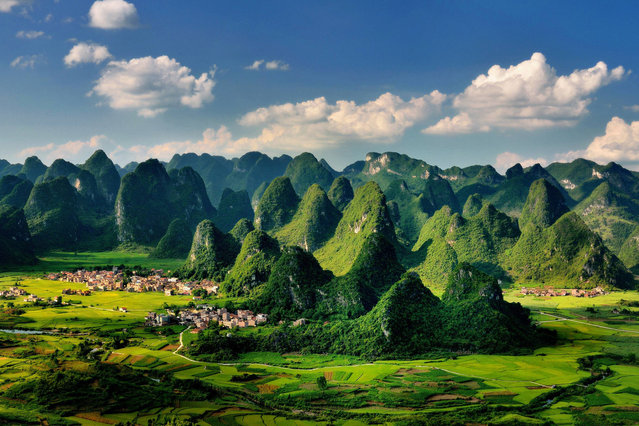
File photo taken on July 24, 2011 shows the scenery of karst landform in Dacai Township under Maonan Autonomous County of Huaijiang, south China's Guangxi Zhuang Autonomous Region. The World Heritage Committee on Monday inscribed an extension of South China Karst, a natural World Heritage Site since 2007, into the UNESCO's World Heritage List. (Photo by Wang Xiufa/Xinhua)