Loading...
Done
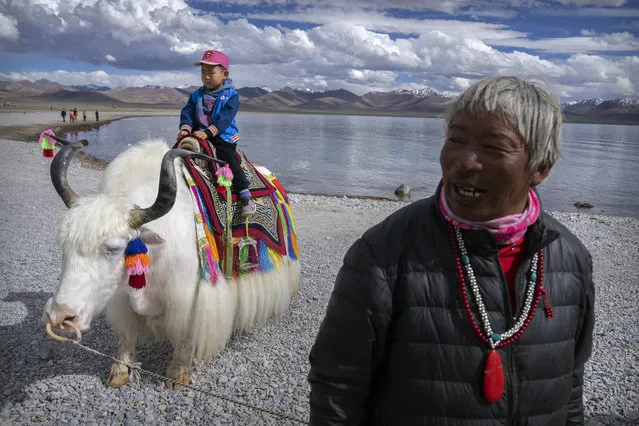
A Tibetan man stands nearby as a young tourist poses for photos on a white yak at the shore of the lake in Namtso in western China’s Tibet Autonomous Region, as seen during a government organized visit for foreign journalists, Wednesday, June 2, 2021. (Photo by Mark Schiefelbein/AP Photo)

A Tibetan man stands nearby as a young tourist poses for photos on a white yak at the shore of the lake in Namtso in western China’s Tibet Autonomous Region, as seen during a government organized visit for foreign journalists, Wednesday, June 2, 2021. (Photo by Mark Schiefelbein/AP Photo)
Details
16 Jun 2021 10:25:00
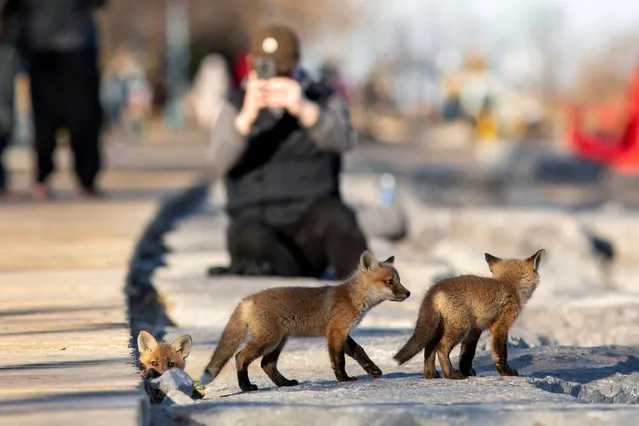
Fox cubs venture out from their den under a popular boardwalk alongside Lake Ontario during the global outbreak of the coronavirus disease (COVID-19), in Toronto, Ontario, Canada on April 22, 2020. (Photo by Carlos Osorio/Reuters)

Fox cubs venture out from their den under a popular boardwalk alongside Lake Ontario during the global outbreak of the coronavirus disease (COVID-19), in Toronto, Ontario, Canada on April 22, 2020. (Photo by Carlos Osorio/Reuters)
Details
26 Apr 2020 00:05:00
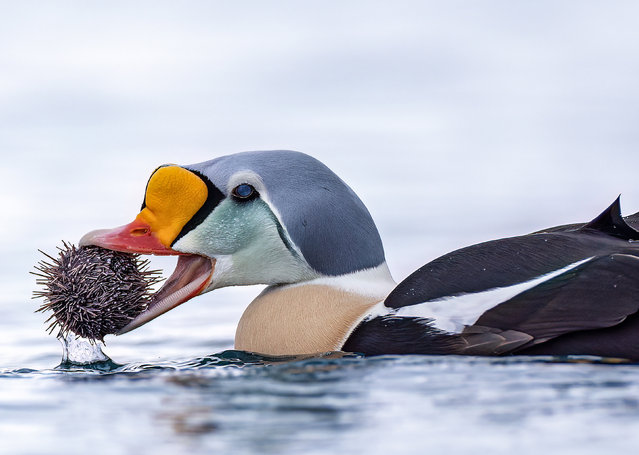
A king eider sea duck tackles a prickly dinner of sea urchin on a lake in Batsfjord, Norway in the last decade of August 2024. The drake’s breeding plumage consists of a distinctive powder-blue head and neck, orange frontal lobe and a red bill. (Photo by Mia Surakka/Solent News)

A king eider sea duck tackles a prickly dinner of sea urchin on a lake in Batsfjord, Norway in the last decade of August 2024. The drake’s breeding plumage consists of a distinctive powder-blue head and neck, orange frontal lobe and a red bill. (Photo by Mia Surakka/Solent News)
Details
01 Sep 2024 03:45:00
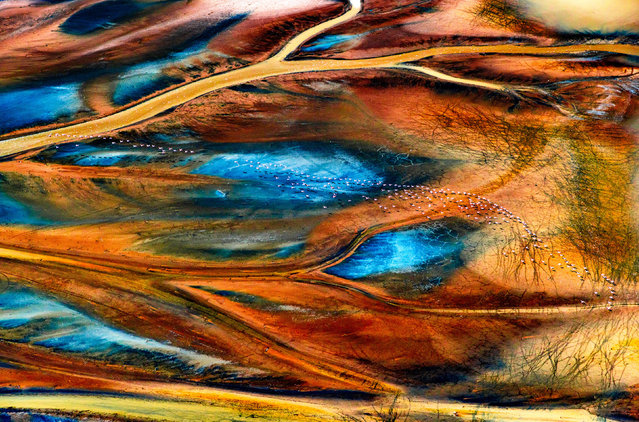
Hundreds of flamingos take flight in the Rift Valley in East Africa early September 2024. The birds gather in the region’s saline lakes to eat the blue-green algae that grows in abundance. The red-orange pigment in the algae is what gives them their distinctive pink plumage. They also use the site to breed. (Photo by Alexandre and Chloe Bes/Naturagency/Solent News)

Hundreds of flamingos take flight in the Rift Valley in East Africa early September 2024. The birds gather in the region’s saline lakes to eat the blue-green algae that grows in abundance. The red-orange pigment in the algae is what gives them their distinctive pink plumage. They also use the site to breed. (Photo by Alexandre and Chloe Bes/Naturagency/Solent News)
Details
23 Sep 2024 02:54:00
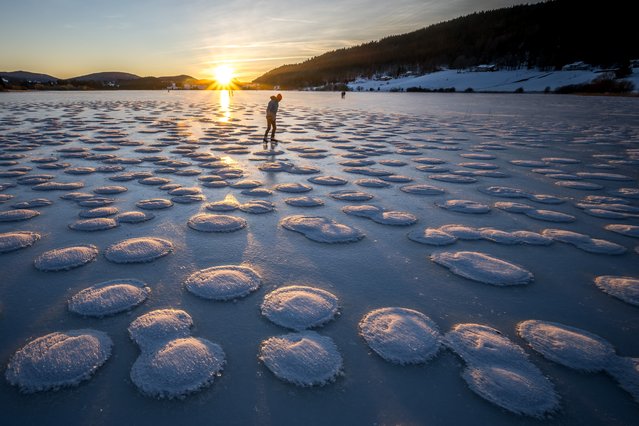
A skater observes pancakes snow on the frozen Lake des Rousses in Les Rousses, central-eastern France, on January 1, 2025. This phenomenon forms when slushy ice in water clumps into round, pancake-like shapes due to waves or currents. (Photo by Fabrice Coffrini/AFP Photo)

A skater observes pancakes snow on the frozen Lake des Rousses in Les Rousses, central-eastern France, on January 1, 2025. This phenomenon forms when slushy ice in water clumps into round, pancake-like shapes due to waves or currents. (Photo by Fabrice Coffrini/AFP Photo)
Details
17 Apr 2025 00:08:00
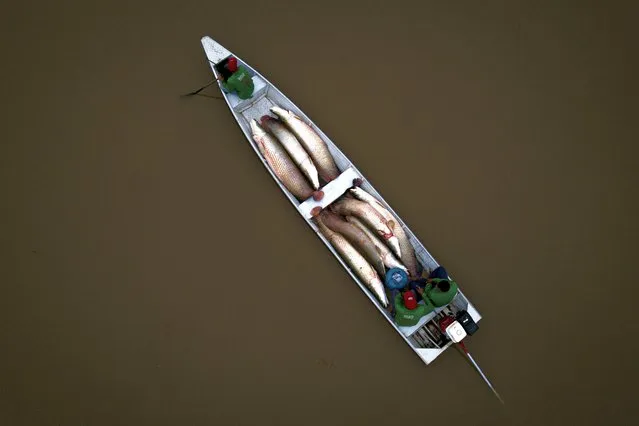
A boat transports Pirarucu fish to a processing ship, in the San Raimundo settlement lake, in Carauari, Brazil, Tuesday, September 6, 2022, published November 3. The giant fish not so long ago nearly vanished. The illegal and unsustainable fishing left river and Indigenous communities struggling to catch their staple food. (Photo by Jorge Saenz/AP Photo)

A boat transports Pirarucu fish to a processing ship, in the San Raimundo settlement lake, in Carauari, Brazil, Tuesday, September 6, 2022, published November 3. The giant fish not so long ago nearly vanished. The illegal and unsustainable fishing left river and Indigenous communities struggling to catch their staple food. (Photo by Jorge Saenz/AP Photo)
Details
21 Dec 2022 03:26:00
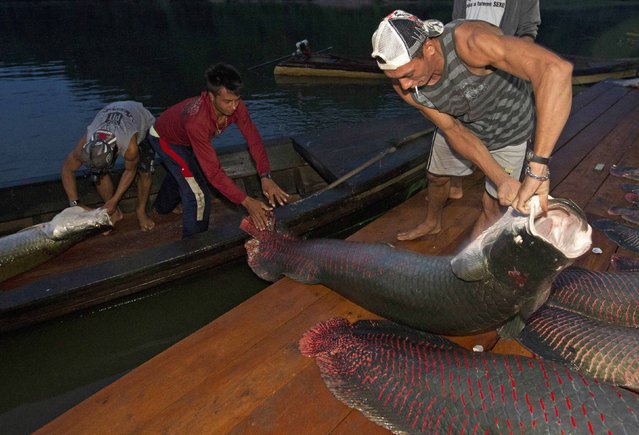
Villagers from the Medio Jurua nature reserve of Brazil's Amazon rainforest arrive with their catch of pirarucus, the largest freshwater fish in South America, after a night of fishing in Manaria Lake, Carauari municipality, September 3, 2012. Catching the pirarucu, a fish that is sought after for its meat and is considered by biologists to be a living fossil, is only allowed once a year by Brazil's environmental protection agency. (Photo by Bruno Kelly/Reuters)

Villagers from the Medio Jurua nature reserve of Brazil's Amazon rainforest arrive with their catch of pirarucus, the largest freshwater fish in South America, after a night of fishing in Manaria Lake, Carauari municipality, September 3, 2012. Catching the pirarucu, a fish that is sought after for its meat and is considered by biologists to be a living fossil, is only allowed once a year by Brazil's environmental protection agency. (Photo by Bruno Kelly/Reuters)
Details
19 Jul 2013 08:53:00
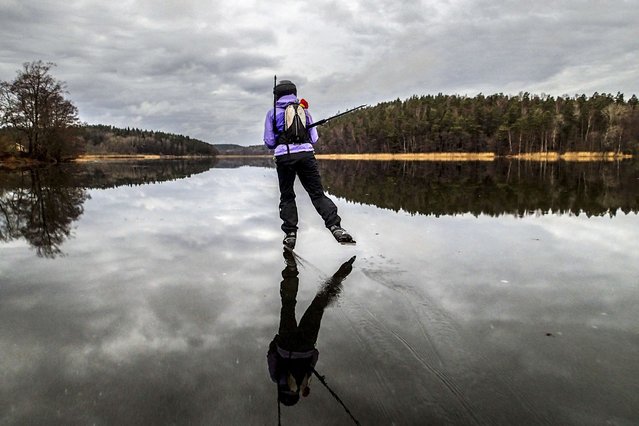
A long skater speeds away on the rain-wet ice on lake Orlangen, South of Stockholm on December 15, 2013. Meteorologists forecast temperatures around 5 degrees for southern Sweden. (Photo by Tobias Rostlund/AFP Photo)

A long skater speeds away on the rain-wet ice on lake Orlangen, South of Stockholm on December 15, 2013. Meteorologists forecast temperatures around 5 degrees for southern Sweden. (Photo by Tobias Rostlund/AFP Photo)

P.S. All pictures, as usual, are presented in high resolution. To see Hi-Res images – just TWICE click on any picture. In other words, click small picture – opens the BIG picture. Click BIG picture – opens VERY BIG picture (if available; this principle works anywhere on the site AvaxNews).
Details
21 Dec 2013 13:26:00