Loading...
Done
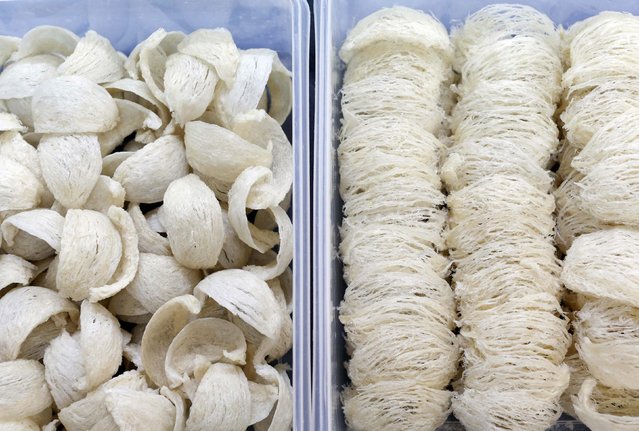
Two styles of cleaned bird's nest, Yan Zhan (L) and Su Zhan (R) await repacking at a processing plant in Kuala Lumpur, February 17, 2015. Prized in China for is alleged health benefits for hundreds of years, nests made from swiftlets' saliva are being mixed into coffee and cereal as the Southeast Asian producers of the delicacy seek to broaden its appeal, and their profit margins. (Photo by Olivia Harris/Reuters)

Two styles of cleaned bird's nest, Yan Zhan (L) and Su Zhan (R) await repacking at a processing plant in Kuala Lumpur, February 17, 2015. Prized in China for is alleged health benefits for hundreds of years, nests made from swiftlets' saliva are being mixed into coffee and cereal as the Southeast Asian producers of the delicacy seek to broaden its appeal, and their profit margins. The nests are among the world's most expensive foods, selling for up to $2,500 a kg and the swiftlets that weave them are indigenous to Indonesia, Malaysia, Thailand and Vietnam. (Photo by Olivia Harris/Reuters)
Details
24 Feb 2015 13:57:00
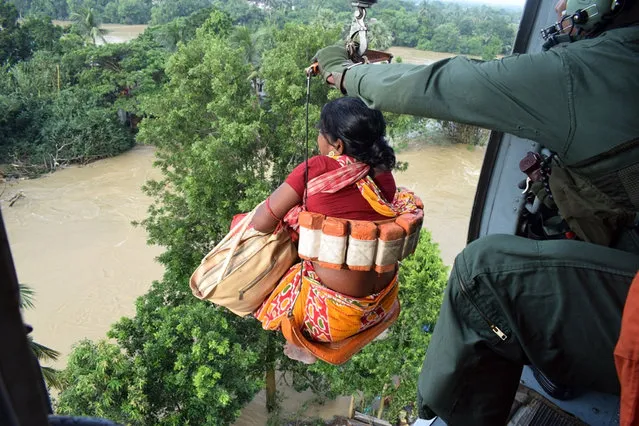
A handout photo made available by the Indian Air Force (IAF) showing an IAF helicopters during the rescue operation in flood affected areas of Dhanyaghari of Khanakul in West Bengal, India, 02 August 2021. According to the IAF, helicopters of Indian Air Force rescued 31 people from rooftops and brought them to safety to Arambaug. The helicopters also dropped emergency food supplies in the affected areas after the torrential rain in the state has thrown life out of gear and created flood like situation in many districts. (Photo by Indian Air Force/Handout via EPA/EFE)

A handout photo made available by the Indian Air Force (IAF) showing an IAF helicopters during the rescue operation in flood affected areas of Dhanyaghari of Khanakul in West Bengal, India, 02 August 2021. According to the IAF, helicopters of Indian Air Force rescued 31 people from rooftops and brought them to safety to Arambaug. The helicopters also dropped emergency food supplies in the affected areas after the torrential rain in the state has thrown life out of gear and created flood like situation in many districts. (Photo by Indian Air Force/Handout via EPA/EFE)
Details
10 Aug 2021 09:44:00
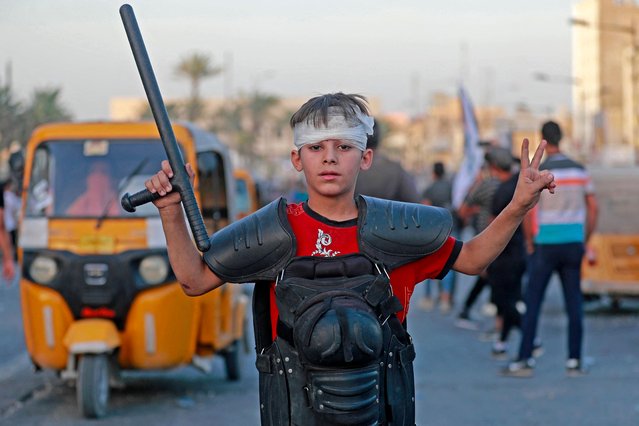
A boy poses for a picture amid clashes between supporters of Shiite Muslim cleric Moqtada and Iraqi security forces in Tahrir Square in the centre of Iraq's capital Baghdad on September 28, 2022, during a parliament session in the nearby high-security Green Zone across the Tigris river. Three rockets were fired at Baghdad's Green Zone, wounding seven security force personnel as parliament was holding its first session in two months, Iraq's security forces said. The parliament, at the centre of a months-long political paralysis, met for the first since deadly unrest in August to vote on the resignation of its speaker. (Photo by Ahmad Al-Rubaye/AFP Photo)

A boy poses for a picture amid clashes between supporters of Shiite Muslim cleric Moqtada and Iraqi security forces in Tahrir Square in the centre of Iraq's capital Baghdad on September 28, 2022, during a parliament session in the nearby high-security Green Zone across the Tigris river. Three rockets were fired at Baghdad's Green Zone, wounding seven security force personnel as parliament was holding its first session in two months, Iraq's security forces said. The parliament, at the centre of a months-long political paralysis, met for the first since deadly unrest in August to vote on the resignation of its speaker. (Photo by Ahmad Al-Rubaye/AFP Photo)
Details
09 Oct 2022 03:45:00
A Vietnamese artist acting as a medium, performs the "Hau Dong" ritual at Viet Theatre in Hanoi January 16, 2016. (Photo by Reuters/Kham)

A Vietnamese artist acting as a medium, performs the “Hau Dong” ritual at Viet Theatre in Hanoi January 16, 2016. For the first time, Vietnamese drama director Viet Tu has brought the ritual from religious temples to the theatre partly to draw tourists. The “Hau Dong” is a ritual where a medium puts on special costumes and tells stories of gods and heroes while being accompanied by “Chau Van” music, as part of the act of Dao Mau – the worship of mother goddesses in Vietnam. It is believed that the medium is capable of having a direct contact with spirits during the ritual. (Photo by Reuters/Kham)
Details
18 Jan 2016 08:00:00


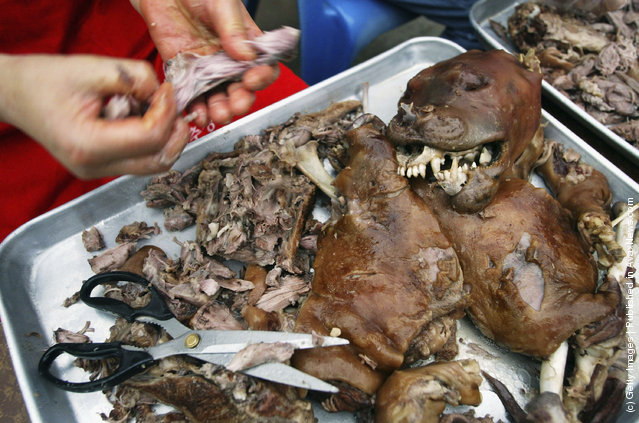
“Dog meat refers to edible parts and the flesh derived from (predominantly domestic) dogs. Human consumption of dog meat has been recorded in many parts of the world, including ancient China, ancient Mexico, and ancient Rome. According to contemporary reports, dog meat is consumed in a variety of countries such as Switzerland, China, Vietnam, the Philippines, and Korea. In addition, dog meat has also been used as survival food in times of war and/or other hardships”. – Wikipedia

Photo: A chef prepares dog meat at a restaurant on July 4, 2005 in Gwacheon, South Korea. Dog meat is a traditional dish in Korea dating back to the Samkuk period (period of the three kingdoms BC 57 – AD 668). Although many recipes existed historically for dog meat, now chefs only make soups, or dishes using boiled or roasted meat. Koreans traditionally eat dog meat on the hottest day of the summer, for it's reputed benefits of virility, invigoration and health. (Photo by Chung Sung-Jun/Getty Images)
Details
24 Jul 2011 13:21:00
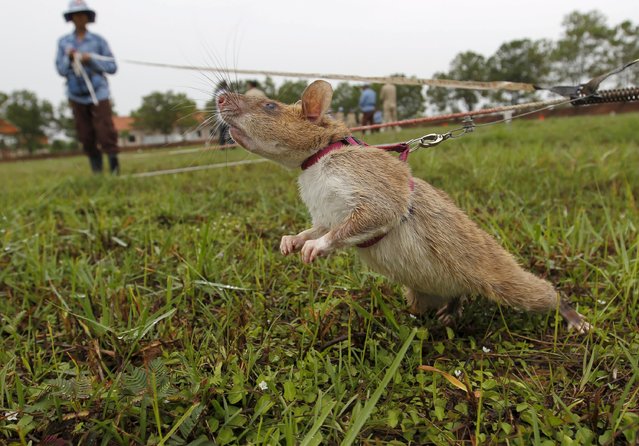
A rat being trained by the Cambodian Mine Action Centre (CMAC) is pictured on an inactive landmine field in Siem Reap province July 9, 2015. Gambian pouched rats were deployed to Cambodia from Tanzania in April by a Belgian non-profit organization, APOPO, to help clear mines. (Photo by Samrang Pring/Reuters)

A rat being trained by the Cambodian Mine Action Centre (CMAC) is pictured on an inactive landmine field in Siem Reap province July 9, 2015. Gambian pouched rats were deployed to Cambodia from Tanzania in April by a Belgian non-profit organization, APOPO, to help clear mines. They've been trained since they were 4 weeks old. Cambodia is still littered with landmines after emerging from decades of civil war, including the 1970s Khmer Rough “Killing Fields” genocide, leaving it with one of the world's highest disability rates. APOPO has used the rodents for mine-clearing projects in several countries, including Angola, Mozambique, Thailand, Laos, and Vietnam. (Photo by Samrang Pring/Reuters)
Details
14 Jul 2015 13:35:00
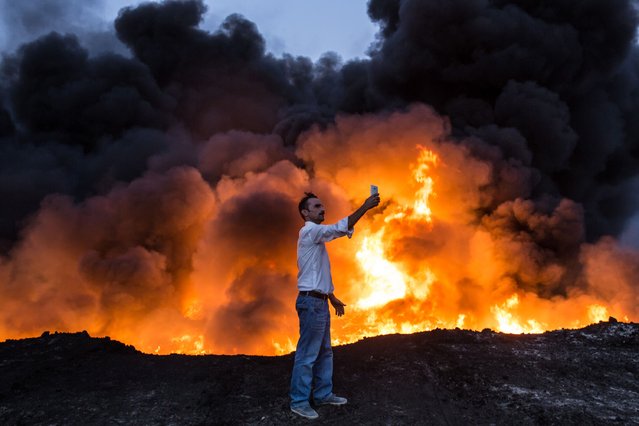
A man takes a selfie in front of a fire from oil that has been set ablaze in the Qayyarah area, some 60 kilometres (35 miles) south of Mosul, on October 19, 2016, during an operation by Iraqi forces against Islamic State (IS) group jihadists to retake the main hub city. In the biggest Iraqi military operation in years, forces have retaken dozens of villages, mostly south and east of Mosul, and are planning multiple assaults for October 20. (Photo by Yasin Akgul/AFP Photo)

A man takes a selfie in front of a fire from oil that has been set ablaze in the Qayyarah area, some 60 kilometres (35 miles) south of Mosul, on October 19, 2016, during an operation by Iraqi forces against Islamic State (IS) group jihadists to retake the main hub city. In the biggest Iraqi military operation in years, forces have retaken dozens of villages, mostly south and east of Mosul, and are planning multiple assaults for October 20. (Photo by Yasin Akgul/AFP Photo)
Details
21 Oct 2016 12:25:00
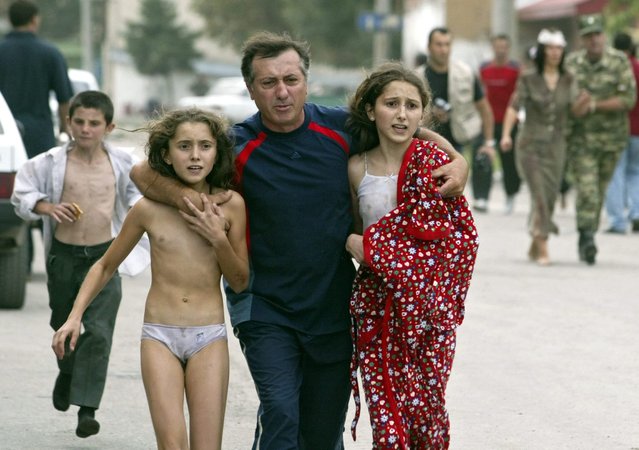
A man assists two young hostages who managed to escape from the school building after special forces entered the school in Beslan, North Ossetia, Friday 03 September 2004. Streams of hostages fled the besieged school in Beslan in southern Russia Friday amid intensive shooting and a series of powerful explosions that signalled a bloody end to the three-day stand-off with terrorists. (Photo by Yuri Kochetkov/EPA)

On September 1, 2004, Chechen militants stormed an elementary school in the town of Beslan in the Russian republic of North Ossetia. They took 1,100 teachers, children, and their relatives hostage, demanding the withdrawal of federal forces from Chechnya as a condition for their release. On September 3, 2004, Russian security forces stormed the building, resulting in a battle in which more than 330 hostages died, including 186 children. Here: A man assists two young hostages who managed to escape from the school building after special forces entered the school in Beslan, North Ossetia, Friday 03 September 2004. (Photo by Yuri Kochetkov/EPA)
Details
25 Sep 2017 06:41:00