Loading...
Done


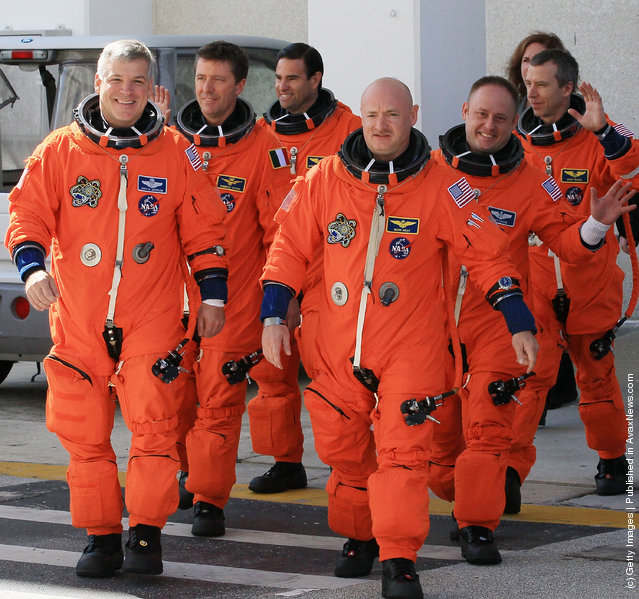
(L-R), Pilot Gregory H. Johnson, European Space Agency astronaut Roberto Vittori, Mission Specialist Greg Chamitoff, Commander Mark Kelly, Pilot Gregory H. Johnson, Mission Specialist Michael Fincke, and Mission Specialist Andrew Feustel, participate in a Terminal Countdown Demonstration Test (TCDT), at the Kennedy Space Center, on April 1, 2011 in Cape Canaveral, Florida. The TCDT will culminate in a full dress rehearsal for the planned April 19th launch of Space Shuttle Endeavour’s final scheduled flight to the International Space Station before being retired. (Photo by Mark Wilson/Getty Images)
Details
02 Apr 2011 12:17:00


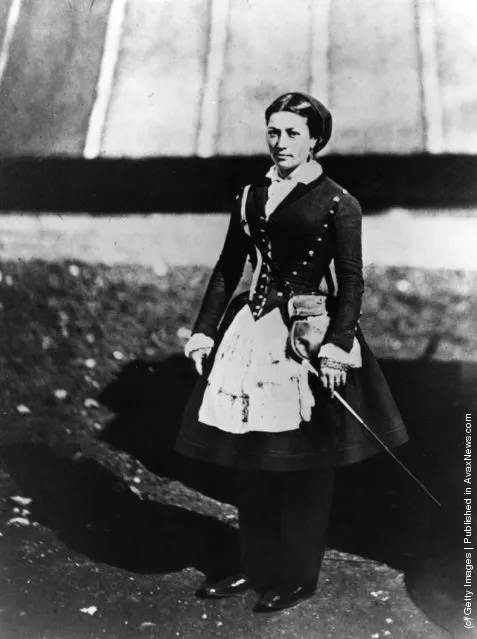
“The Crimean War (October 1853 – February 1856) was a conflict fought between the Russian Empire and an alliance of the French Empire, the British Empire, the Ottoman Empire, and the Kingdom of Sardinia. The war was part of a long-running contest between the major European powers for influence over territories of the declining Ottoman Empire. Most of the conflict took place on the Crimean Peninsula, but there were smaller campaigns in western Anatolia, Caucasus, the Baltic Sea, the Pacific Ocean and the White Sea”. – Wikipedia

Photo: A vivandiere, a female soldier selling provisions and spirits, with the Allied forces during the Crimean War. (Photo by Hulton Archive/Getty Images)
Details
18 Jul 2011 11:57:00
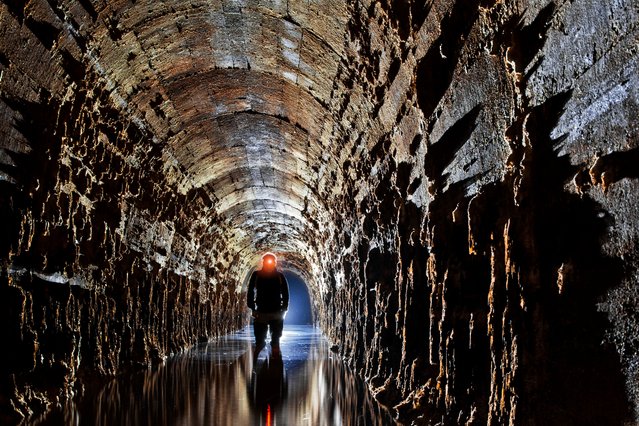
Regenwurmlager, Poland. The Regenwurmlager is an extensive underground fortification area constructed by Germany in 1920s-1940s, now in western Poland, near the city of Międzyrzecz. (Photo by Anna Arinova/Caters News)

Stunning silhouettes under European cities reveal the size and splendor of the continent’s urban foundations. Photographer and content-manager Anna Arinova, 28, from Moscow, captured the awe-inspiring labyrinths in Russia and Germany. Here: Regenwurmlager, Poland. The Regenwurmlager is an extensive underground fortification area constructed by Germany in 1920s-1940s, now in western Poland, near the city of Międzyrzecz. (Photo by Anna Arinova/Caters News)
Details
29 Dec 2016 07:53:00
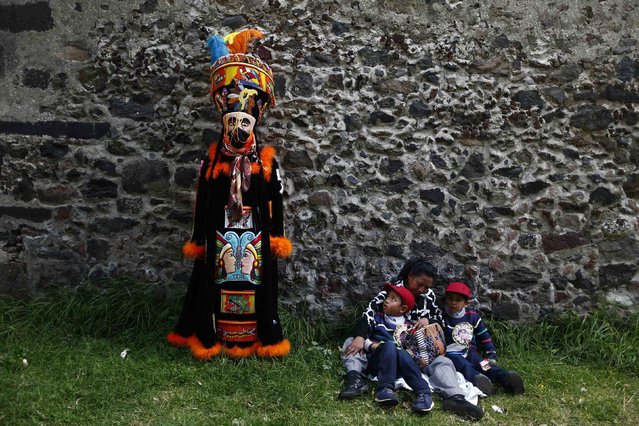
A boy sitting with his family looks up at a traditional Chinelo costumed dancer during a celebration 40 days after the birth of Jesus, in Xochimilco on the outskirts of Mexico City, February 2, 2015. (Photo by Edgard Garrido/Reuters)

A boy sitting with his family looks up at a traditional Chinelo costumed dancer during a celebration 40 days after the birth of Jesus, in Xochimilco on the outskirts of Mexico City, February 2, 2015. The tradition of the Chinelo dates back to colonial times and the outfits and masks, which are supposed to resemble the faces of the Europeans and always sport an uptilted beard, became more elaborate between the 1800s and 1900s to make fun of the upper social classes. (Photo by Edgard Garrido/Reuters)
Details
03 Feb 2015 13:09:00
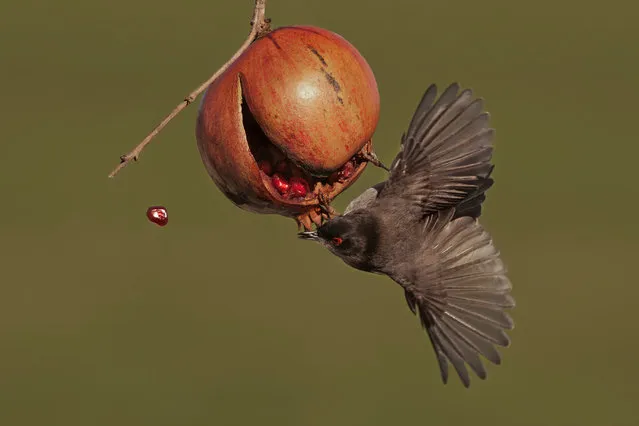
Nature on My Doorstep, finalist. I Want That Pomerade Grain by Biagio Alberto Scalia, taken in national park of Circeo, Latina, Italy. (Photo by Biagio Alberto Scalia/REDISCOVER Nature/EEA)

A praying mantis, a huddle of butterflies, Galician horses and an alpine sunset are the winners of this year’s European Environment Agency’s “Rediscover Nature” photo competition. Here: Nature on My Doorstep, finalist. I Want That Pomerade Grain by Biagio Alberto Scalia, taken in national park of Circeo, Latina, Italy. (Photo by Biagio Alberto Scalia/REDISCOVER Nature/EEA)
Details
20 Nov 2020 00:03:00
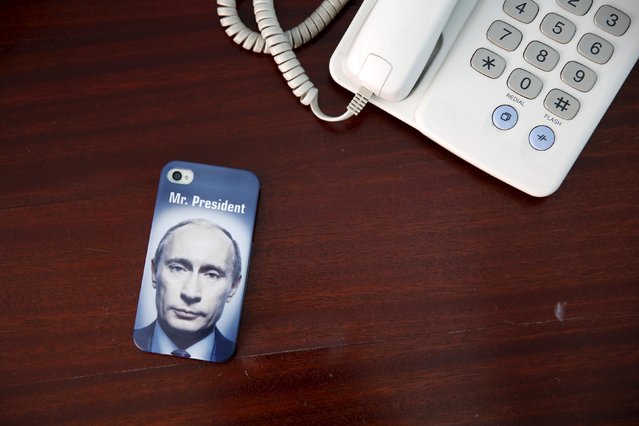
A mobile phone cover with a picture of Russian President Vladimir Putin and which reads “Mr President” is seen in this photo illustration taken a in hotel room in Kazan, Russia, July 30, 2015. (Photo by Stefan Wermuth/Reuters)

A mobile phone cover with a picture of Russian President Vladimir Putin and which reads “Mr President” is seen in this photo illustration taken a in hotel room in Kazan, Russia, July 30, 2015. He may be in charge of an economy in crisis, but if mobile phone covers and souvenir mugs are a barometer of popularity, Russian President Vladimir Putin need not fear for his political future. In fact, Moscow's annexation of Crimea from Ukraine last year has given the memorabilia makers even more material to glorify, sometimes wryly, a president whose image as a champion of Russian national interests in a hostile world is barely challenged in his own country. (Photo by Stefan Wermuth/Reuters)
Details
22 Aug 2015 12:02:00
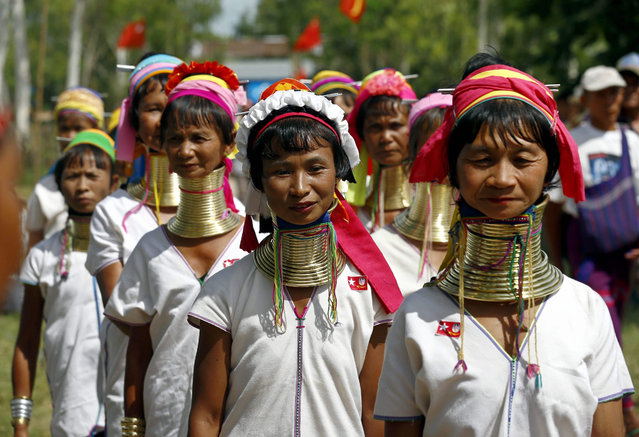
Padaung ethnic women arrive to listen to the speech of Myanmar opposition leader Aung San Suu Kyi (not in picture), Chairwoman of the National League for Democracy (NLD) party, during Suu Kyi's first official election campaign at Demoso township of Kayah State, eastern Myanmar, 10 September 2015. (Photo by Lynn Bo Bo/EPA)

Padaung ethnic women arrive to listen to the speech of Myanmar opposition leader Aung San Suu Kyi (not in picture), Chairwoman of the National League for Democracy (NLD) party, during Suu Kyi's first official election campaign at Demoso township of Kayah State, eastern Myanmar, 10 September 2015. Suu Kyi is on a three-day visit to Kayah State near the Thai-Myanmar border, as part of her first official election campaign. Myanmar political parties and candidates started their campaigns on 08 September ahead of the upcoming general election, which will be held on 08 November 2015. (Photo by Lynn Bo Bo/EPA)
Details
12 Sep 2015 13:44:00
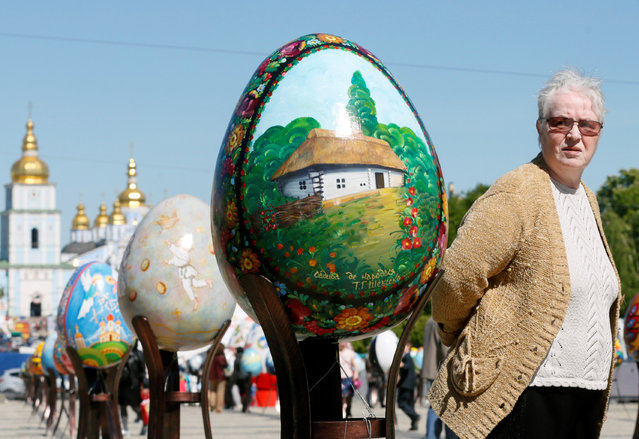
A woman looks at traditional Ukrainian Easter eggs “Pysanka”, installed as part of the upcoming celebrations of Easter, in central Kiev, Ukraine, April 29, 2016. A pysanka is a Ukrainian Easter egg, decorated with traditional Ukrainian folk designs using a wax-resist (batik) method. The word pysanka comes from the verb pysaty, “to write”, as the designs are not painted on, but written with beeswax. Many other eastern European ethnic groups decorate eggs using wax resist for Easter. These include the Belarusians, Bulgarians, Croats, Czechs, Hungarians, Lithuanians, Poles, Romanians, Serbs, Slovaks, Slovenes and Sorbs. (Photo by Valentyn Ogirenko/Reuters)

A woman looks at traditional Ukrainian Easter eggs “Pysanka”, installed as part of the upcoming celebrations of Easter, in central Kiev, Ukraine, April 29, 2016. A pysanka is a Ukrainian Easter egg, decorated with traditional Ukrainian folk designs using a wax-resist (batik) method. The word pysanka comes from the verb pysaty, “to write”, as the designs are not painted on, but written with beeswax. Many other eastern European ethnic groups decorate eggs using wax resist for Easter. These include the Belarusians, Bulgarians, Croats, Czechs, Hungarians, Lithuanians, Poles, Romanians, Serbs, Slovaks, Slovenes and Sorbs. (Photo by Valentyn Ogirenko/Reuters)
Details
30 Apr 2016 09:00:00