Loading...
Done
A Sadhu, Hindu holy person, prepares himself by smearing ashes on his body during the Maha Shivaratri festival at the Pashupati Temple in Kathmandu, Nepal, 11 March 2021. The Maha Shivratri festival, which is celebrated on 11 March, sees Hindu devotees, from across the country and neighboring India, gather to celebrate the birthday of Lord Shiva, the Hindu god of creation and destruction, by offering special prayers and fasting. (Photo by Narendra Shrestha/EPA/EFE)

A Sadhu, Hindu holy person, prepares himself by smearing ashes on his body during the Maha Shivaratri festival at the Pashupati Temple in Kathmandu, Nepal, 11 March 2021. The Maha Shivratri festival, which is celebrated on 11 March, sees Hindu devotees, from across the country and neighboring India, gather to celebrate the birthday of Lord Shiva, the Hindu god of creation and destruction, by offering special prayers and fasting. (Photo by Narendra Shrestha/EPA/EFE)
Details
24 Apr 2021 08:39:00
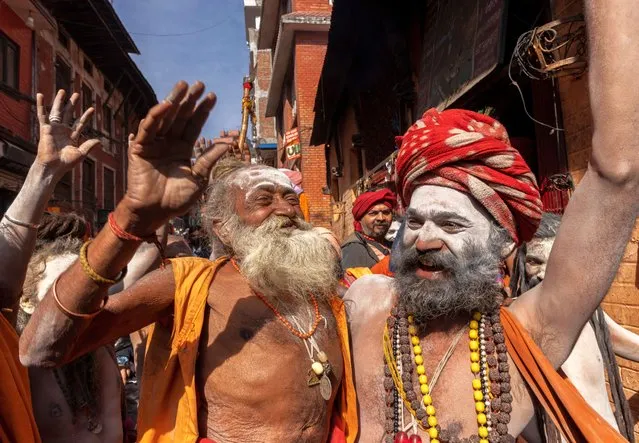
A group of sadhus (holy men) participate in a religious rally to mark the Mahashivaratri festival at Pashupati Temple in Kathmandu, Nepal, 06 March 2024. The festival celebrated on 08 March, sees Hindu devotees from across the country and neighboring India gather to fast and offer special prayers to celebrate the birthday of Lord Shiva, the Hindu god of creation and destruction. (Photo by Narendra Shrestha/EPA/EFE)

A group of sadhus (holy men) participate in a religious rally to mark the Mahashivaratri festival at Pashupati Temple in Kathmandu, Nepal, 06 March 2024. The festival celebrated on 08 March, sees Hindu devotees from across the country and neighboring India gather to fast and offer special prayers to celebrate the birthday of Lord Shiva, the Hindu god of creation and destruction. (Photo by Narendra Shrestha/EPA/EFE)
Details
21 Mar 2024 06:05:00
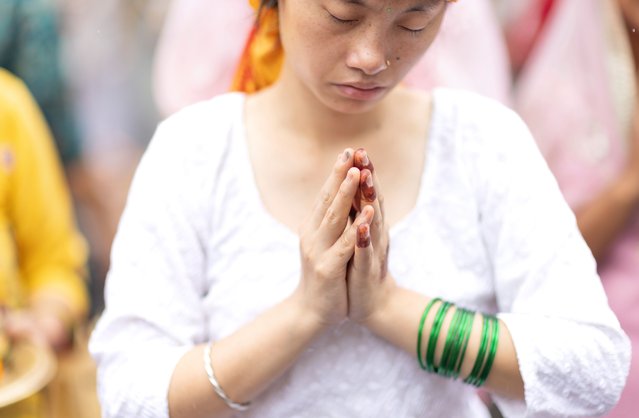
A woman prays during a Sarwan Brata (fast) offering to Lord Shiva, the Hindu god of creation and destruction, at the Pashupatinath Temple in Kathmandu, Nepal, 21 July 2025. Nepalese Hindu women wearing red, yellow and green attire, flock to temples during Sarwan month to pray for a long and prosperous life for their husbands, or to find a good husband. (Photo by Narendra Shrestha/EPA)

A woman prays during a Sarwan Brata (fast) offering to Lord Shiva, the Hindu god of creation and destruction, at the Pashupatinath Temple in Kathmandu, Nepal, 21 July 2025. Nepalese Hindu women wearing red, yellow and green attire, flock to temples during Sarwan month to pray for a long and prosperous life for their husbands, or to find a good husband. (Photo by Narendra Shrestha/EPA)
Details
01 Aug 2025 03:53:00
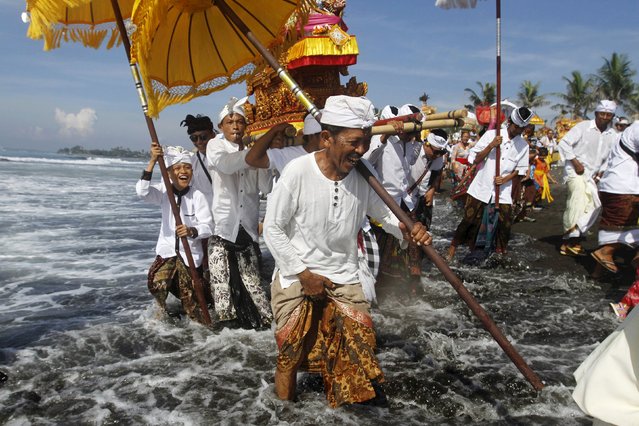
Balinese Hindus carry Pratimas, or symbols of God, on the beach during Melasti, a purification ceremony, ahead of the holy day of Nyepi, in Gianyar on the Indonesian resort island of Bali, March 6, 2016. Nyepi is a day of silence to celebrate the Balinese new year, reserved for self-reflection, where people are not allowed to use lights, light fires, work, travel or enjoy entertainment. (Photo by Roni Bintang/Reuters)

Balinese Hindus carry Pratimas, or symbols of God, on the beach during Melasti, a purification ceremony, ahead of the holy day of Nyepi, in Gianyar on the Indonesian resort island of Bali, March 6, 2016. Nyepi is a day of silence to celebrate the Balinese new year, reserved for self-reflection, where people are not allowed to use lights, light fires, work, travel or enjoy entertainment. (Photo by Roni Bintang/Reuters)
Details
07 Mar 2016 11:19:00
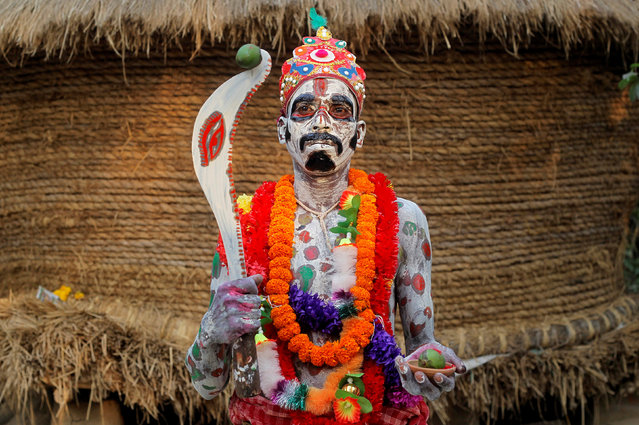
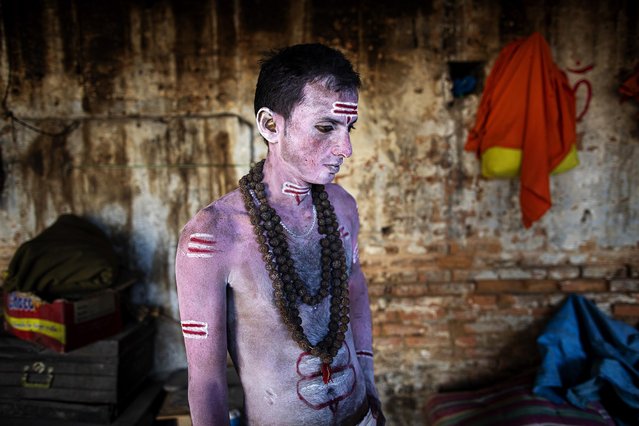
A devotee with his body painted poses as he waits to perform during a ritual as part of the annual Shiva Gajan religious festival at Sona Palasi village, in West Bengal, India, April 11, 2016. Devotees offer sacrifices and perform acts of devotion during the festival in the hopes of winning the favour of Hindu god Shiva and ensuring the fulfillment of their wishes, and also to mark the end of the Bengali calendar year. (Photo by Rupak De Chowdhuri/Reuters)

A devotee with his body painted poses as he waits to perform during a ritual as part of the annual Shiva Gajan religious festival at Sona Palasi village, in West Bengal, India, April 11, 2016. Devotees offer sacrifices and perform acts of devotion during the festival in the hopes of winning the favour of Hindu god Shiva and ensuring the fulfillment of their wishes, and also to mark the end of the Bengali calendar year. (Photo by Rupak De Chowdhuri/Reuters)
Details
13 Apr 2016 09:42:00
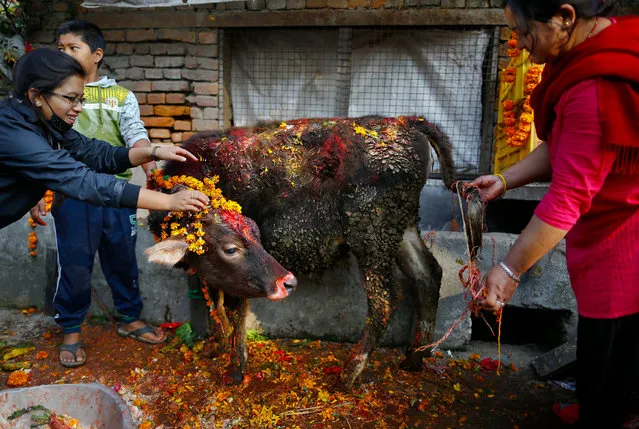
A Nepalese devotee bows in front of a cow during the 'Gai Puja', also known as the Cow Worship Day, as part of the Tihar festival in Kathmandu, Nepal, 11 November 2015. The Tihar festival is the second most important event for Nepalese Hindus. During the celebrations people worship cows, considered the incarnation of Lord Laxmi, the god of wealth. (Photo by Narendra Shrestha/EPA)

A Nepalese devotee bows in front of a cow during the 'Gai Puja', also known as the Cow Worship Day, as part of the Tihar festival in Kathmandu, Nepal, 11 November 2015. The Tihar festival is the second most important event for Nepalese Hindus. During the celebrations people worship cows, considered the incarnation of Lord Laxmi, the god of wealth. (Photo by Narendra Shrestha/EPA)
Details
14 Nov 2015 08:05:00
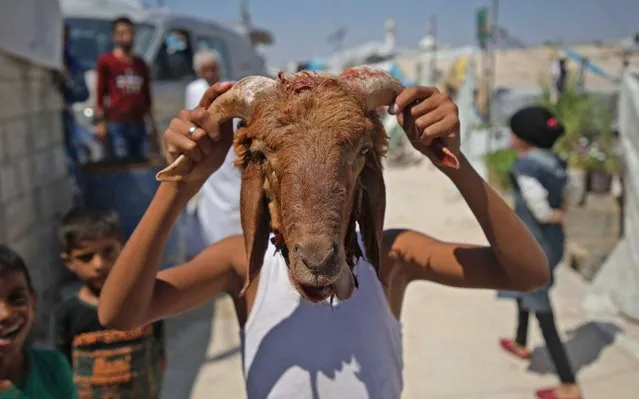
A Syrian boy plays with the head of a sacrificed sheep at a DIP camp for Interally Displaced Persons near the town of Aqrabat in Syria's northern Idlib province on August 12, 2019. Known as the “big” festival, Eid Al-Adha is celebrated each year by Muslims sacrificing various animals according to religious traditions, including cows, camels, goats and sheep. The festival marks the end of the Hajj pilgrimage to Mecca and commemorates Prophet Abraham's readiness to sacrifice his son to show obedience to God. (Photo by Aaref Watad/AFP Photo)

A Syrian boy plays with the head of a sacrificed sheep at a DIP camp for Interally Displaced Persons near the town of Aqrabat in Syria's northern Idlib province on August 12, 2019. Known as the “big” festival, Eid Al-Adha is celebrated each year by Muslims sacrificing various animals according to religious traditions, including cows, camels, goats and sheep. The festival marks the end of the Hajj pilgrimage to Mecca and commemorates Prophet Abraham's readiness to sacrifice his son to show obedience to God. (Photo by Aaref Watad/AFP Photo)
Details
15 Aug 2019 00:05:00
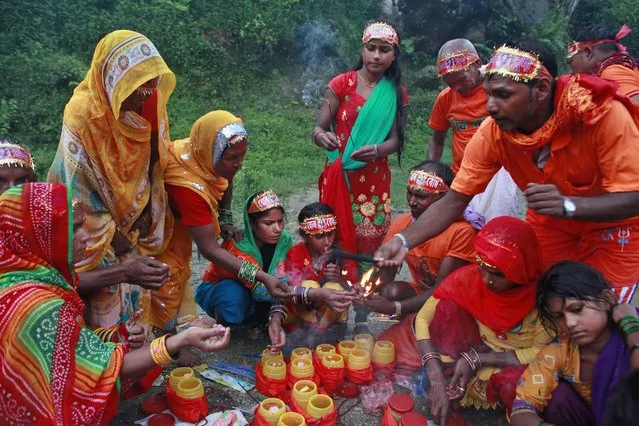
Hindu devotees perform rituals during the Bol Bom pilgrimage, on the outskirts of Kathmandu, Nepal, Monday, August 8, 2016. During this pilgrimage, devotees walk miles barefooted before offering water collected from Bagmati river, at the Pashupatinath temple in Katmandu. Shravan Somwar or Monday of Hindu calendar month of Shravan is considered auspicious for offering prayers to Lord Shiva, the god of destruction. (Photo by Niranjan Shrestha/AP Photo)

Hindu devotees perform rituals during the Bol Bom pilgrimage, on the outskirts of Kathmandu, Nepal, Monday, August 8, 2016. During this pilgrimage, devotees walk miles barefooted before offering water collected from Bagmati river, at the Pashupatinath temple in Katmandu. Shravan Somwar or Monday of Hindu calendar month of Shravan is considered auspicious for offering prayers to Lord Shiva, the god of destruction. (Photo by Niranjan Shrestha/AP Photo)
Details
09 Aug 2016 12:42:00