Loading...
Done
Buran

“The Buran program was a Soviet and later Russian reusable spacecraft project that began in 1974 at TsAGI and was formally suspended in 1993. It was a response to the United States Space Shuttle program”. – Wikipedia

Photo by: These Pictures are Entirely Bad ; Source: Flickr
Details
17 Sep 2011 12:00:00
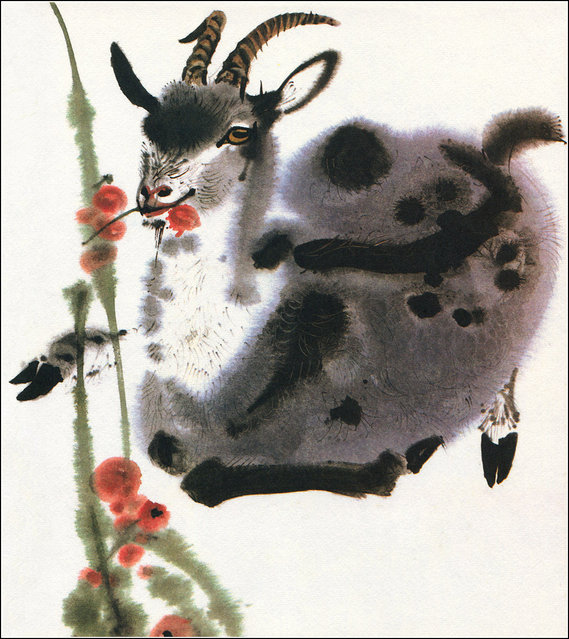
Alfred Könner, “Bilderzoo” by Illustrator Mirko Hanák

Mirko Hanák was born in 1921 in Prague, Czech Republic and worked as a painter, graphic designer and illustrator. His specialties were animals and human figures that were full of life and fun. He also had a firm grasp on composition as his paintings were so well balanced despite his casual fluid line. He was working on “Charlotte's Web” the movie when he tragically died at the height of his career from leukemia in 1971.
Details
18 Mar 2013 10:13:00
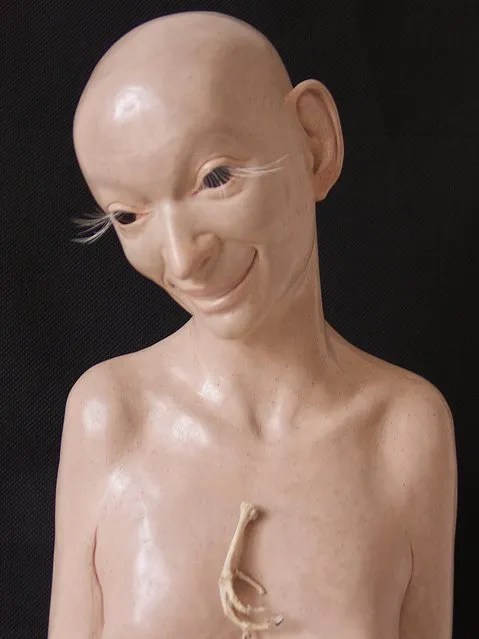
Chasseuse d'Oiseaux, 2011

Chasseuse d'Oiseaux, 2011

Artist Richard Stipl was born in Czechoslovakia in 1968 and now lives and works both in Canada and the Czech Republic.
Working initially as a painter, Richard Stipl has recently turned to making sculpture. Considered an exceptional talent in technical terms, Richard stands apart from his contemporaries through his uncanny ability to breathe a vital and invigorating “life force” into his art works, regardless of media.
Stipl is included in many important public and private collections worldwide.


Details
08 Jun 2012 11:38:00
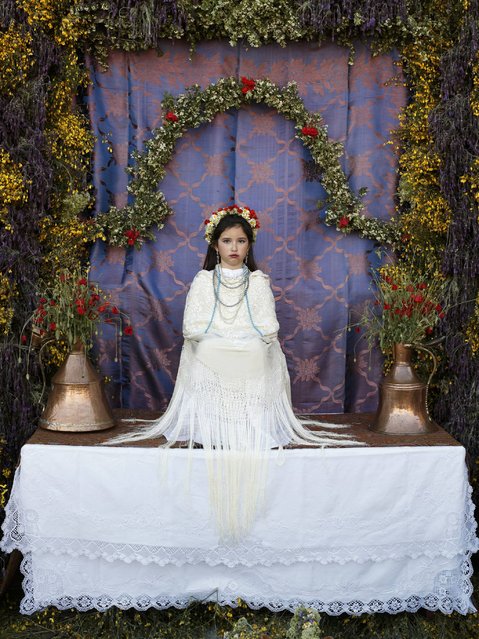
A “Maya” girl sits in an altar during the traditional celebration of “Las Mayas” on the streets in Colmenar Viejo, near Madrid, Spain, Friday, May 2, 2014. (Photo by Daniel Ochoa de Olza/AP Photo)

A “Maya” girl sits in an altar during the traditional celebration of “Las Mayas” on the streets in Colmenar Viejo, near Madrid, Spain, Friday, May 2, 2014. The festivity of the Maya comes from pagan rites and dates from the medieval age, appearing in ancient documents, it takes place every year in the beginning of May and celebrates the beginning off the spring. A girl between 7 and 11years is chosen as “Maya” and should sit still, serious, and quiet for a couple of hours in an altar on the street decorated with flowers and plants, afterwards they walk to the church with their family where they attend a ceremony. (Photo by Daniel Ochoa de Olza/AP Photo)
Details
13 May 2014 10:17:00


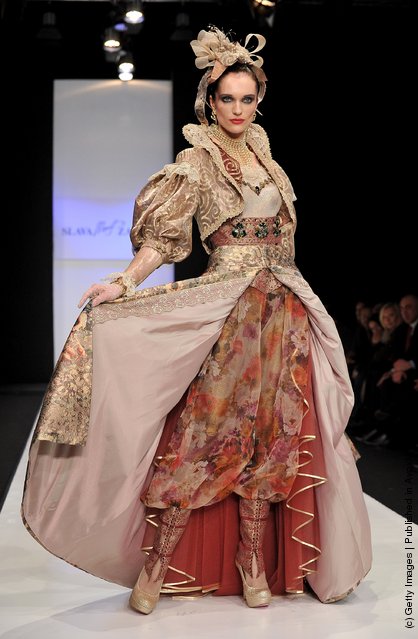
“Vyacheslav Mikhailovich Zaitsev (Russian: Вячеслав Михайлович Зайцев), more commonly known as Slava Zaitsev (Russian: Слава Зайцев), born 2 March 1938 in Ivanovo, Russian Soviet Federative Socialist Republic, is a Russian fashion designer, painter, graphic artist and theatrical costume designer”. – Wikipedia

Photo: A models wears a creation by designer Slava Zaitsev during his fashion show on Day 1 of the Mercedes-Benz Fashion Week Russia Fall/Winter 2011/2012 at the Congress Hall on March 31, 2011 in Moscow, Russia. (Photo by Pascal Le Segretain/Getty Images)
Details
03 Apr 2011 11:29:00
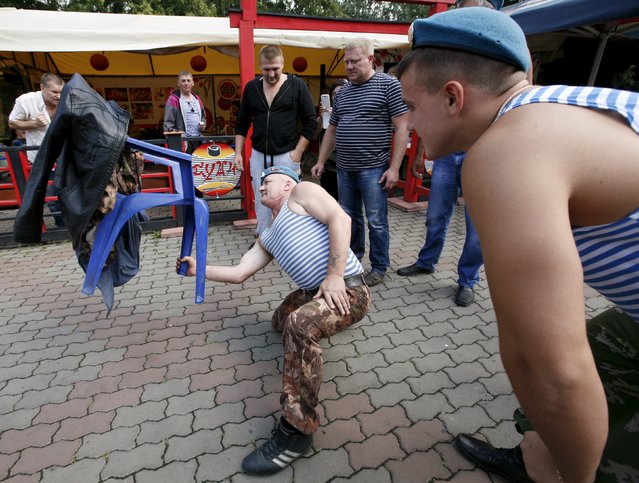
A former paratrooper demonstrates his strength and skills while lifting a chair during the celebrations for the Paratroopers Day at the Central park in the Siberian city of Krasnoyarsk, Russia, August 2, 2015. (Photo by Ilya Naymushin/Reuters)

A former paratrooper demonstrates his strength and skills while lifting a chair during the celebrations for the Paratroopers Day at the Central park in the Siberian city of Krasnoyarsk, Russia, August 2, 2015. Paratroopers are an elite unit of the Soviet Army, and everyone in the country recognize their blue berets. (Photo by Ilya Naymushin/Reuters)
Details
03 Aug 2015 12:13:00
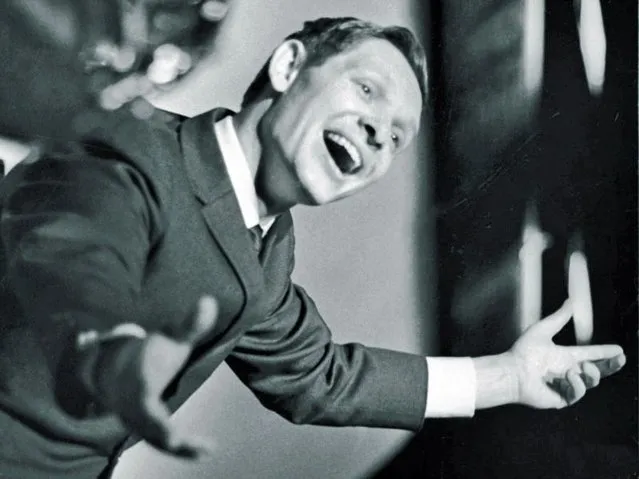
Eduard Khil

“Russian singer Eduard Khil has died at the age of 77, following a stroke. Khil is apparently well known in Russia, though attained belated fame outside of Russia when a musical number he performed on Soviet television in the 1970s, in which he sung nonsense lyrics in a rich baritone over luxuriantly loungy background music, but above all with an infectious sense of good cheer, ended up on YouTube and became a meme”. ... (Listen to songs of Eduard Khil)
Details
05 Jun 2012 10:25:00
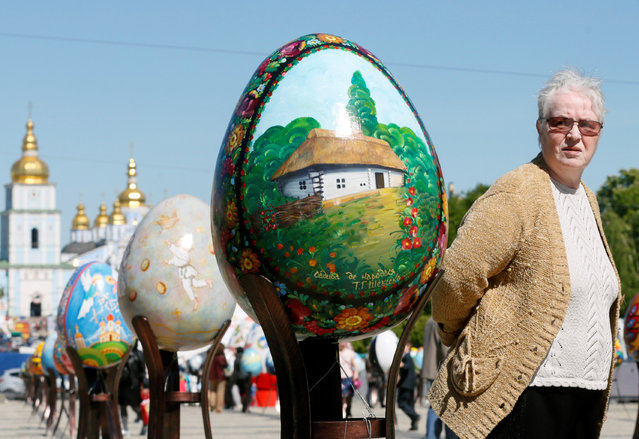
A woman looks at traditional Ukrainian Easter eggs “Pysanka”, installed as part of the upcoming celebrations of Easter, in central Kiev, Ukraine, April 29, 2016. A pysanka is a Ukrainian Easter egg, decorated with traditional Ukrainian folk designs using a wax-resist (batik) method. The word pysanka comes from the verb pysaty, “to write”, as the designs are not painted on, but written with beeswax. Many other eastern European ethnic groups decorate eggs using wax resist for Easter. These include the Belarusians, Bulgarians, Croats, Czechs, Hungarians, Lithuanians, Poles, Romanians, Serbs, Slovaks, Slovenes and Sorbs. (Photo by Valentyn Ogirenko/Reuters)

A woman looks at traditional Ukrainian Easter eggs “Pysanka”, installed as part of the upcoming celebrations of Easter, in central Kiev, Ukraine, April 29, 2016. A pysanka is a Ukrainian Easter egg, decorated with traditional Ukrainian folk designs using a wax-resist (batik) method. The word pysanka comes from the verb pysaty, “to write”, as the designs are not painted on, but written with beeswax. Many other eastern European ethnic groups decorate eggs using wax resist for Easter. These include the Belarusians, Bulgarians, Croats, Czechs, Hungarians, Lithuanians, Poles, Romanians, Serbs, Slovaks, Slovenes and Sorbs. (Photo by Valentyn Ogirenko/Reuters)
Details
30 Apr 2016 09:00:00