Loading...
Done
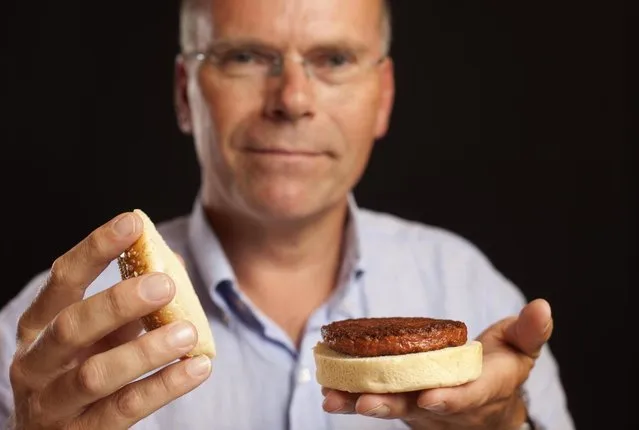
In this handout image provided by Ogilvy, a burger made from cultured beef, which has been developed by Professor Mark Post of Maastricht University in the Netherlands (pictured) is shown to the media during a press conference on August 5, 2013 in London, England. Cultured Beef could help solve the coming food crisis and combat climate change with commercial production of Cultured Beef beginning within ten to twenty years. (Photo by David Parry via Getty Images)

In this handout image provided by Ogilvy, a burger made from cultured beef, which has been developed by Professor Mark Post of Maastricht University in the Netherlands (pictured) is shown to the media during a press conference on August 5, 2013 in London, England. The in-vitro burger, cultured from cattle stem cells, the first example of what its creator says could provide an answer to global food shortages and help combat climate change, was fried in a pan and tasted by two volunteers. The burger is the result of years of research by Dutch scientist Mark Post, a vascular biologist at the University of Maastricht, who is working to show how meat grown in petri dishes might one day be a true alternative to meat from livestock.The meat in the burger has been made by knitting together around 20,000 strands of protein that has been cultured from cattle stem cells in Post's lab. (Photo by David Parry)
Details
06 Aug 2013 08:48:00
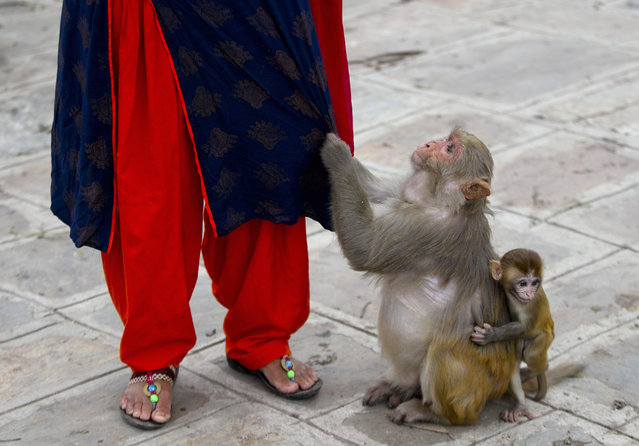
In this July 8, 2019, photo, a monkey pulls on the clothes of Saraswati Dangol as she arrives to feed monkeys in the forest near Pashupatinath temple in Kathmandu, Nepal. For the past four years, Dangol has been bringing the bread every day to feed the monkeys. As soon as they see her with her white sack, they gather around her, some patiently waiting for their turn while others less patiently snatching the bread from her hands. Many of Dangol's regulars are elderly, or are mother or baby monkeys who are unable to fight for their share of food in the wild. (Photo by Niranjan Shrestha/AP Photo)

In this July 8, 2019, photo, a monkey pulls on the clothes of Saraswati Dangol as she arrives to feed monkeys in the forest near Pashupatinath temple in Kathmandu, Nepal. For the past four years, Dangol has been bringing the bread every day to feed the monkeys. As soon as they see her with her white sack, they gather around her, some patiently waiting for their turn while others less patiently snatching the bread from her hands. Many of Dangol's regulars are elderly, or are mother or baby monkeys who are unable to fight for their share of food in the wild. (Photo by Niranjan Shrestha/AP Photo)
Details
26 Jul 2019 00:03:00
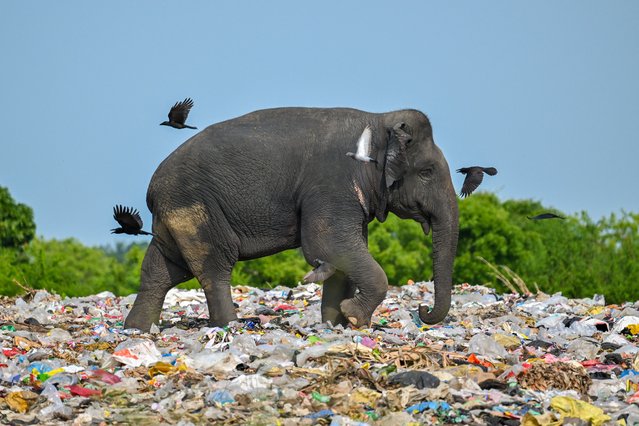
A wild elephant eats garbage containing plastic waste at a dump in Sri Lanka's eastern district of Ampara on June 3, 2023. Sri Lanka is set to launch a nation-wide clean up of plastic waste ahead of new laws banning the sale of single use plastics, the Environmental ministry said, after a spate of deaths of elephants and deer in the island's northeast after foraging at open garbage tips filled with plastic waste, whilst shrinking habitat has led to jumbos raiding villages looking for food. (Photo by Ishara S. Kodikara/AFP Photo)

A wild elephant eats garbage containing plastic waste at a dump in Sri Lanka's eastern district of Ampara on June 3, 2023. Sri Lanka is set to launch a nation-wide clean up of plastic waste ahead of new laws banning the sale of single use plastics, the Environmental ministry said, after a spate of deaths of elephants and deer in the island's northeast after foraging at open garbage tips filled with plastic waste, whilst shrinking habitat has led to jumbos raiding villages looking for food. (Photo by Ishara S. Kodikara/AFP Photo)
Details
30 Sep 2024 04:49:00
Art Toast Project By Ida Skivenes

Many parents know the stubborn reluctance of children to start breakfast, and adults themselves sometimes miss the morning meal. But the situation would look very different if they had the opportunity every day to enjoy the mouth-watering pictures on the plates, which are of conventional products creates by Ida Skivenes.


See Also: Food Artist Hong Yi
Details
29 Apr 2013 10:02:00
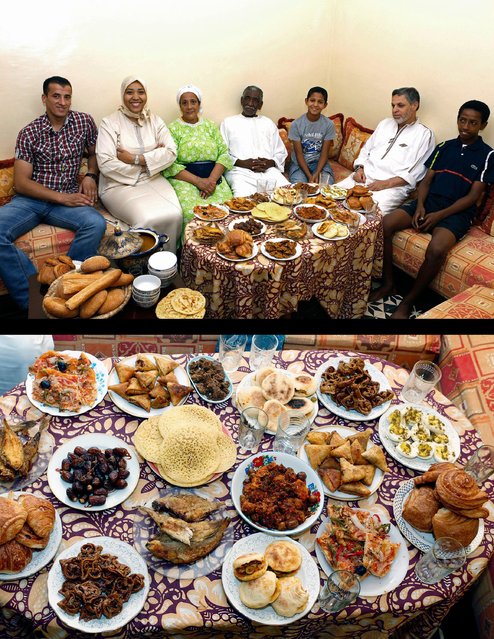
This combination of two photos taken on July 5, 2014, shows the Aazzab family waiting to break their fast, top, and their meal, bottom, during the holy month of Ramadan in Casablanca, Morocco. (Photo by Abdeljalil Bounhar/AP Photo)

This combination of two photos taken on July 5, 2014, shows the Aazzab family waiting to break their fast, top, and their meal, bottom, during the holy month of Ramadan in Casablanca, Morocco. For the millions of Muslims abstaining from food and drink from sunrise to sunset every day during Islam's holiest month of Ramadan, that first sip of water after a grueling fast is by far the most anticipated moment of the day. (Photo by Abdeljalil Bounhar/AP Photo)
Details
29 Jul 2014 11:37:00
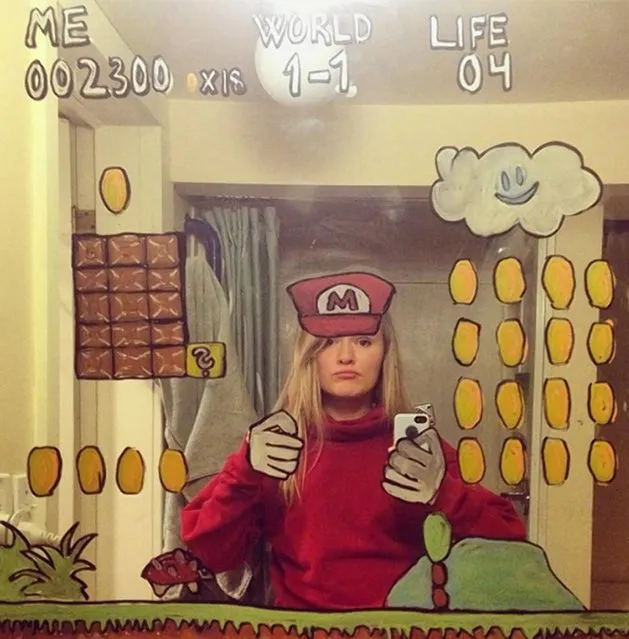
Funny Selfies By Helene Meldahl

The time of selfies with duck faces is long gone and ridiculed, though some persist in doing it. Helene Meldahl, however, didn’t want to give up the trend, but had to think of a creative way to keep doing it. So she decided to create comical pictures by drawing over the selfies that she has made. Some people just can’t stop taking pictures of themselves. It makes you wonder, what they would do in an era before the existence of cameras… Oh, poor souls, they would definitely suffer greatly without the possibility of sharing on instagram their “stunning looks” and the pictures of food that they eat every 2 seconds. (Photo by Helene Meldahl)
Details
07 Nov 2014 12:31:00
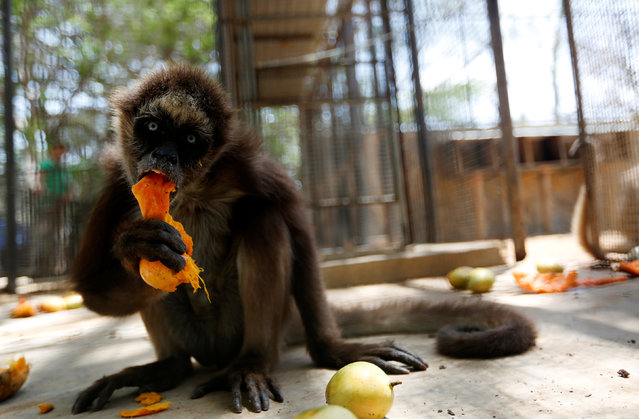
A spider monkey eats a mango at the Paraguana zoo in Punto Fijo, Venezuela July 22, 2016. (Photo by Carlos Jasso/Reuters)

A spider monkey eats a mango at the Paraguana zoo in Punto Fijo, Venezuela July 22, 2016. Some 50 animals have starved to death in the last six months at one of Venezuela's main zoos due to chronic food shortages that have plagued the crisis-stricken South American nation. (Photo by Carlos Jasso/Reuters)
Details
28 Jul 2016 13:48:00
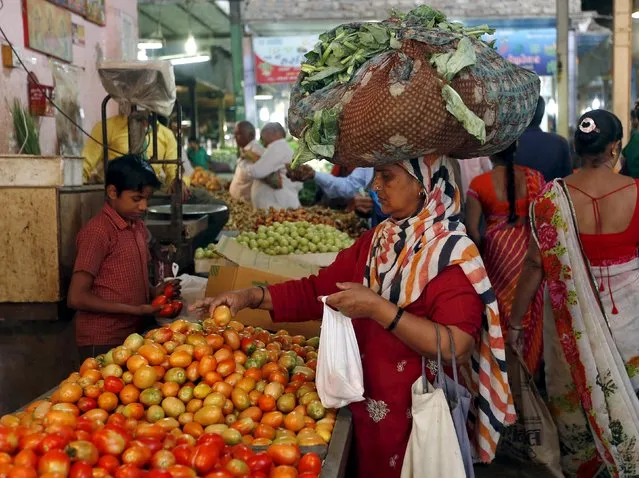
A woman carrying cabbage leaves on her head buys tomato at a market in Ahmedabad, India, November 9, 2015. (Photo by Amit Dave/Reuters)

A woman carrying cabbage leaves on her head buys tomato at a market in Ahmedabad, India, November 9, 2015. India's villages face a sharp spike in food prices in 2016, as a second year of drought drives up the cost of ingredients such as sugar and milk, and poor transport infrastructure stops falling global prices from reaching rural areas. (Photo by Amit Dave/Reuters)
Details
19 Nov 2015 08:02:00