Loading...
Done
Image from Camille Seamans new book, “Melting Away”. (Photo by Camille Seaman/Barcroft Media)

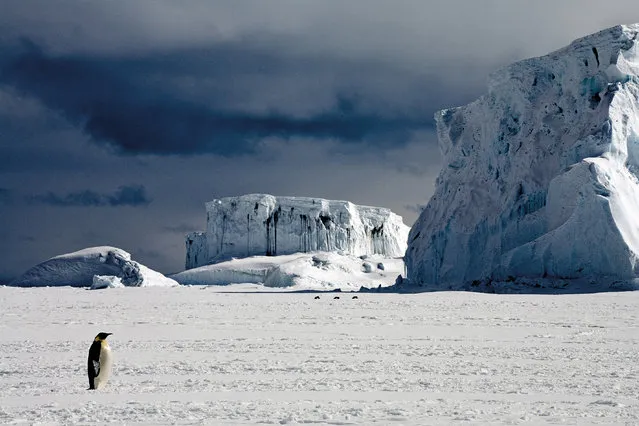
Documenting the effects of climate change first hand over the past eight years, Camille Seaman fears we may be on the road to the last iceberg. Photographing the enormous frozen floats at both poles for the past eight years, the Californian adventurer has seen the receding ice shelves and experienced the changing warmer weather. Feeling that her intimate and emotional work documents a snapshot of history, Camille presents her series “The Last Iceberg” as a study of what she sees as the personality of each huge iceberg. Drawing parallels with the famous novel, “The Last of the Mohicans”, Camille, 42, wonders whether these unique, almost alien natural features will become a thing of the past or part of nature's renewal process. (Photo by Camille Seaman/Barcroft Media)
Details
02 Dec 2014 12:10:00
These snaps capture true winter wonderlands – as Mother Nature's icy grip takes hold of America's National Parks. From snow-capped mountains in Yosemite to an icy still Glacier Bay, the incredible images show their beauty is year round. In other breath-taking shots crisp frost lines the paths through Great Smokey Mountains and Crater Lake has had more than a dusting of snow. (Photo by U.S. Department of the Interior/Cater News)

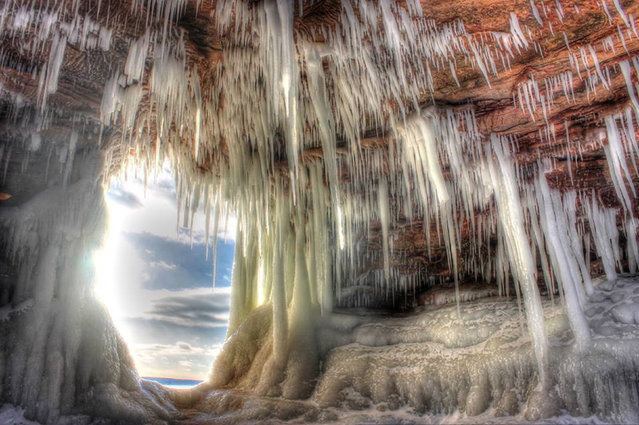
These snaps capture true winter wonderlands – as Mother Nature's icy grip takes hold of America's National Parks. From snow-capped mountains in Yosemite to an icy still Glacier Bay, the incredible images show their beauty is year round. In other breath-taking shots crisp frost lines the paths through Great Smokey Mountains and Crater Lake has had more than a dusting of snow. Here: Apostle Island National Lakeshore Park in Wisconsin. (Photo by U.S. Department of the Interior/Cater News)
Details
22 Dec 2014 13:20:00
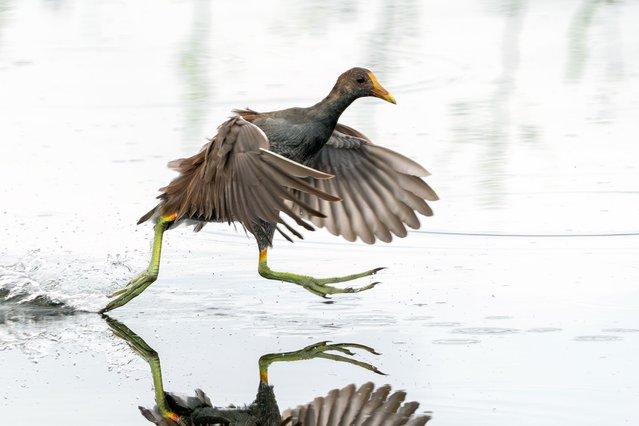
A common gallinule runs across the water to escape a nearby alligator at Green Cay Nature Center in Boynton Beach, Florida on September 4, 2025. Unlike most waterbirds, gallinules have long toes that allow them to walk on floating vegetation. The species is known for its loud, cackling calls that often echo through wetlands. (Photo by Ronen Tivony/NurPhoto/Rex Features/Shutterstock)

A common gallinule runs across the water to escape a nearby alligator at Green Cay Nature Center in Boynton Beach, Florida on September 4, 2025. Unlike most waterbirds, gallinules have long toes that allow them to walk on floating vegetation. The species is known for its loud, cackling calls that often echo through wetlands. (Photo by Ronen Tivony/NurPhoto/Rex Features/Shutterstock)
Details
21 Sep 2025 03:35:00
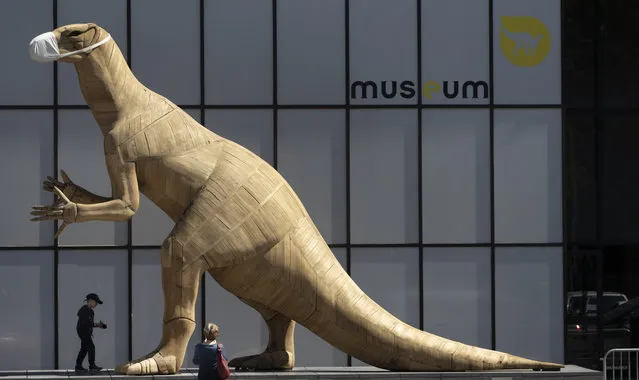
A boy walks by a model of a dinosaur wearing a face mask, during a partial lockdown to prevent the spread of the coronavirus, at the Museum of Natural History in Brussels, Tuesday, May 19, 2020. Museums are hesitantly starting to reopen as the coronavirus lockdown measures are relaxed, yet experts say that one in eight in the world could potentially face permanent closure because of the pandemic. (Photo by Virginia Mayo/AP Photo)

A boy walks by a model of a dinosaur wearing a face mask, during a partial lockdown to prevent the spread of the coronavirus, at the Museum of Natural History in Brussels, Tuesday, May 19, 2020. Museums are hesitantly starting to reopen as the coronavirus lockdown measures are relaxed, yet experts say that one in eight in the world could potentially face permanent closure because of the pandemic. (Photo by Virginia Mayo/AP Photo)
Details
21 May 2020 00:07:00
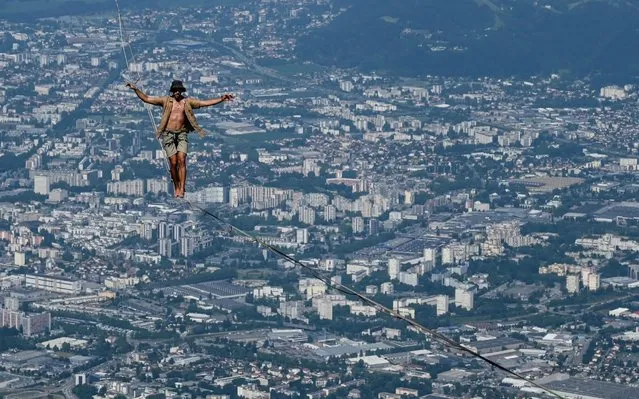
A man walks on a slackline during the 7th edition of the European “Marmotte Highline Project” (MHP) festival in Lans-en-Vercors, near Grenoble, eastern France, on July 4, 2019. The event, during which the participants will be able to evolve on the various highlines located in the Regional Natural Park of Vercors, takes place until July 7, 2019. (Photo by Philippe Desmazes/AFP Photo)

A man walks on a slackline during the 7th edition of the European “Marmotte Highline Project” (MHP) festival in Lans-en-Vercors, near Grenoble, eastern France, on July 4, 2019. The event, during which the participants will be able to evolve on the various highlines located in the Regional Natural Park of Vercors, takes place until July 7, 2019. (Photo by Philippe Desmazes/AFP Photo)
Details
06 Jul 2019 00:07:00
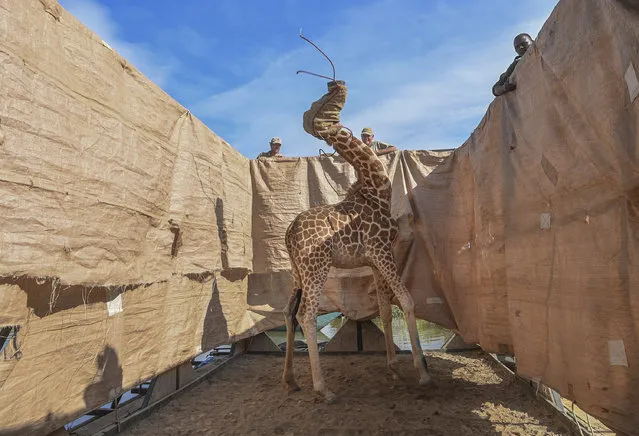
In this image released by World Press Photo, Thursday April 15, 2021, by Ami Vitale for CNN, titled Rescue of Giraffes from Flooding Island, which won the first prize in the Nature Singles category, shows A Rothschild's giraffe (Giraffa camelopardalis rothschildi) is transported to safety in a custom-built barge from a flooded Longicharo Island, Lake Baringo, in western Kenya, on Dec. 3, 2020. (Photo by Ami Vitale for CNN, World Press Photo via AP Photo)

In this image released by World Press Photo, Thursday April 15, 2021, by Ami Vitale for CNN, titled Rescue of Giraffes from Flooding Island, which won the first prize in the Nature Singles category, shows A Rothschild's giraffe (Giraffa camelopardalis rothschildi) is transported to safety in a custom-built barge from a flooded Longicharo Island, Lake Baringo, in western Kenya, on Dec. 3, 2020. (Photo by Ami Vitale for CNN, World Press Photo via AP Photo)
Details
16 Apr 2021 09:45:00
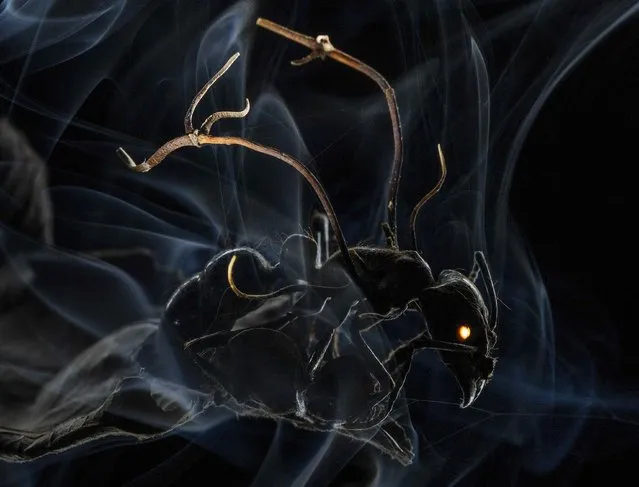
Anand Varma, a U.S. photographer working for the National Geographic, won the First Prize in the Nature Category, Stories, of the 2015 World Press Photo contest with his series of pictures, which includes this one of spores of a fungus landing on an ant, penetrating its exoskeleton and entering its brain, compelling the host to leave its normal habitat on the forest floor and scale a nearby tree, in this picture taken January 22, 2014 and released by the World Press Photo on February 12, 2015. (Photo by Anand Varma/Reuters/National Geographic/World Press Photo)

Anand Varma, a U.S. photographer working for the National Geographic, won the First Prize in the Nature Category, Stories, of the 2015 World Press Photo contest with his series of pictures, which includes this one of spores of a fungus landing on an ant, penetrating its exoskeleton and entering its brain, compelling the host to leave its normal habitat on the forest floor and scale a nearby tree, in this picture taken January 22, 2014 and released by the World Press Photo on February 12, 2015. (Photo by Anand Varma/Reuters/National Geographic/World Press Photo)
Details
15 Feb 2015 15:21:00
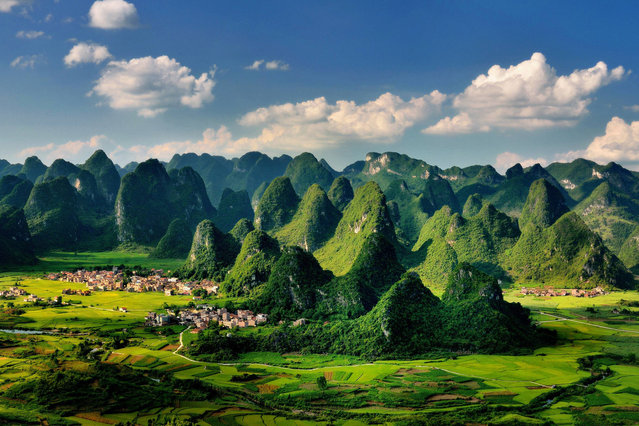
File photo taken on July 24, 2011 shows the scenery of karst landform in Dacai Township under Maonan Autonomous County of Huaijiang, south China's Guangxi Zhuang Autonomous Region. The World Heritage Committee on Monday inscribed an extension of South China Karst, a natural World Heritage Site since 2007, into the UNESCO's World Heritage List. (Photo by Wang Xiufa/Xinhua)

File photo taken on July 24, 2011 shows the scenery of karst landform in Dacai Township under Maonan Autonomous County of Huaijiang, south China's Guangxi Zhuang Autonomous Region. The World Heritage Committee on Monday inscribed an extension of South China Karst, a natural World Heritage Site since 2007, into the UNESCO's World Heritage List. (Photo by Wang Xiufa/Xinhua)
Details
07 Aug 2014 10:19:00