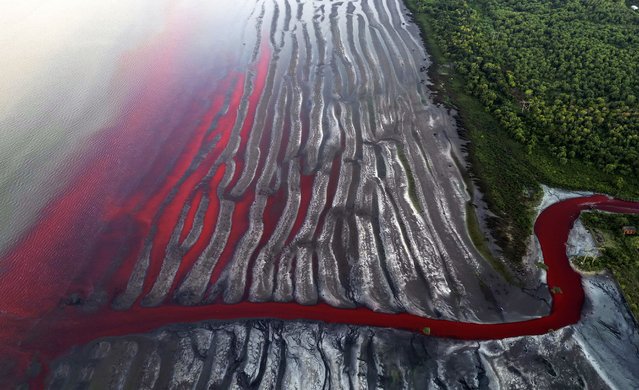
The “Sarandi” stream, dyed red due to unknown contaminants allege residents, flows into the Río de la Plata on the outskirts of Buenos Aires, Argentina, February 6, 2025. (Photo by Rodrigo Abd/AP Photo)
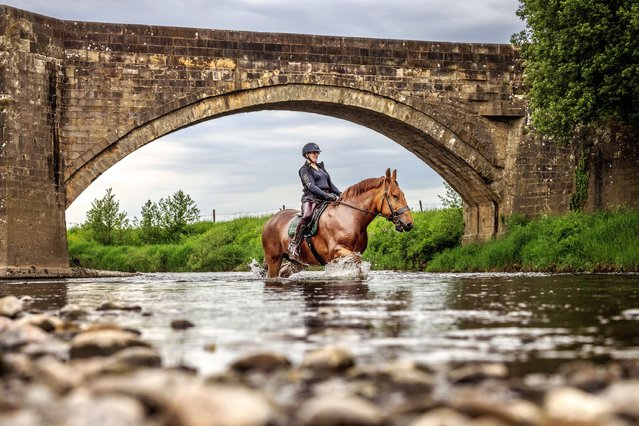
Broomfield Samson, a rare breed Suffolk punch, and his rider, Alison Carroll, cool off in the River Lune at Loyne Bridge near Gressingham in Lancashire, UK on May 21, 2024. (Photo by James Glossop/ The Times & Sunday Times)
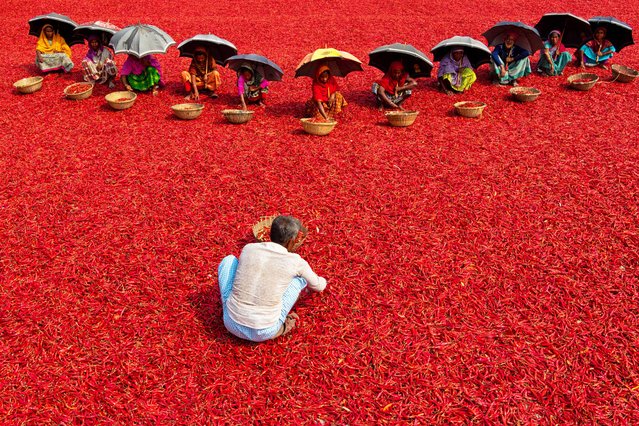
Rows of workers shelter under umbrellas from the scorching heat as they painstakingly sort through a red carpet of millions of chilli peppers in Bogra, Bangladesh on October 3, 2023. They sort the rotten and broken chilli peppers out to separate the poor quality ones which won't sell. In a line, the pickers who are paid less than £3 for a 10-hour shift slowly move forward with their baskets to separate the bad from the good after the chilies have been dried in the sun for a week. (Photo by Joy Saha/Rex Features/Shutterstock)
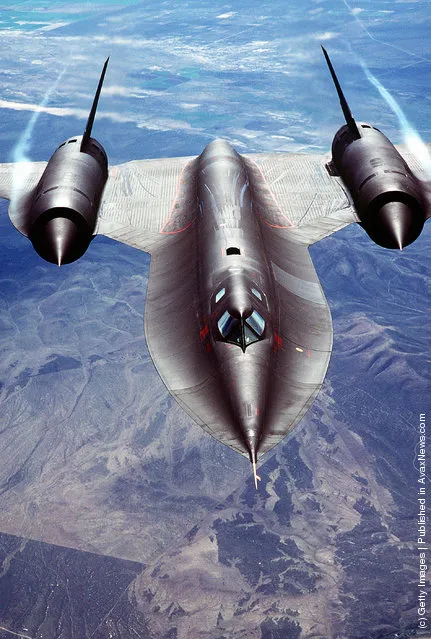
“The Lockheed SR-71 “Blackbird” was an advanced, long-range, Mach 3+ strategic reconnaissance aircraft. It was developed as a black project from the Lockheed A-12 reconnaissance aircraft in the 1960s by the Lockheed Skunk Works. Clarence “Kelly” Johnson was responsible for many of the design's innovative concepts. During reconnaissance missions the SR-71 operated at high speeds and altitudes to allow it to outrace threats. If a surface-to-air missile launch was detected, the standard evasive action was simply to accelerate and outrun the missile”. – Wikipedia
Photo: A U.S. Air Force SR-71A, also known as the “Blackbird”, is put through it's paces during a test flight over Beale Air Force Base in California. The aircraft is a strategic reconnaissance plane by Lockheed and is the world's fastest and highest flying operational aircraft. (Photo by Getty Images)
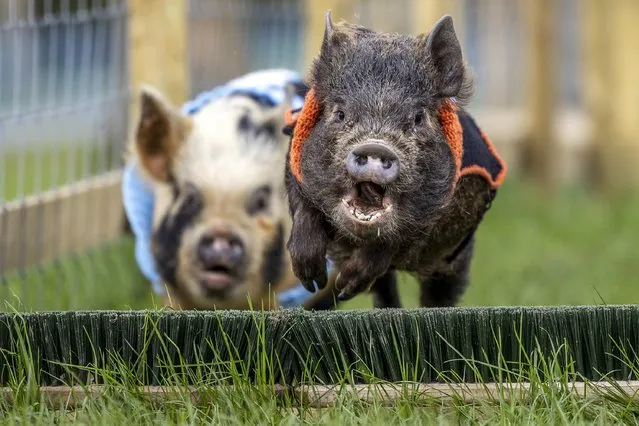
Costumed pigs jump over a brush head while training for a forthcoming race at Monk Park Farm, Thirsk, North Yorkshire, United Kingdom on April 24, 2023. (Photo by James Glossop/The Times)
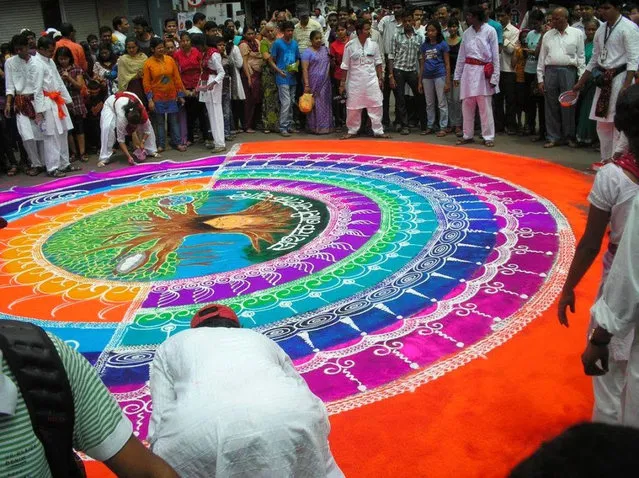
Rangoli, also known as kolam or Muggu, is a folk art from India in which patterns are created on the floor in living rooms or courtyards using materials such as colored rice, dry flour, colored sand or flower petals. It is usually made during Diwali, Onam, Pongal and other Indian festivals. They are meant to be sacred welcoming areas for the Hindu deities. The ancient symbols have been passed down through the ages, from each generation to the next, keeping both the art form and the tradition alive. Similar practices are followed in different Indian states: in Tamil Nadu, there is Kolam in Tamil Nadu; Mandana in Rajasthan; Chaookpurna in Chhattisgarh; Alpana in West Bengal; Aripana in Bihar; Chowk pujan in Uttar Pradesh; Muggu in Andhra Pradesh and others.
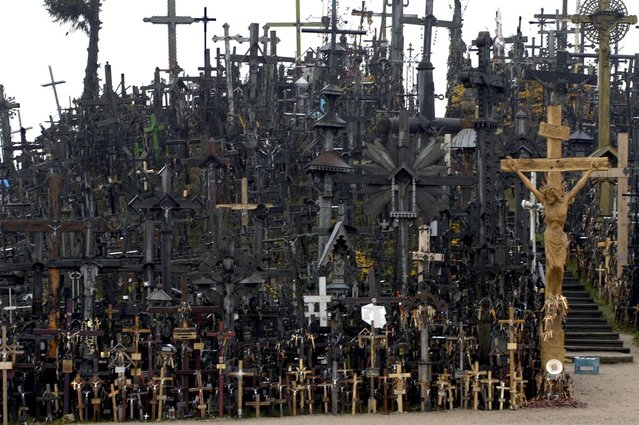
The phenomenon of the Hill of Crosses in northern Lithuania began when people started leaving crosses there hundreds of years ago – and continues to this day. These photos of a hill covered in crosses show the amazing sight it has become. Photo: In 1831 an unsuccessful uprising against the Russian czar left many rebels dead. Relatives of the dead rebels, with no bodies to bury, instead left crosses, according to the Daily Mail. (Photo by Richard Gardner/Rex USA)
A woman poses with a cut-out of Vladimir Putin in the “President Cafe” in Krasnoyarsk, Siberia, Russia, April 7, 2016. Dozens of photos of Vladimir Putin, from childhood to Russian President, hang on the walls of President Cafe in a working-class area of Krasnoyarsk, a city in eastern Siberia. A life-size cut-out of Putin stands by the bar. Images of U.S. President Barack Obama, as well as leaders of Germany and Britain, greet customers in the toilets. (Photo by Ilya Naymushin/Reuters)