Loading...
Done
Wooden Churches - Travelling In The Russian North By Richard Davies Part 1

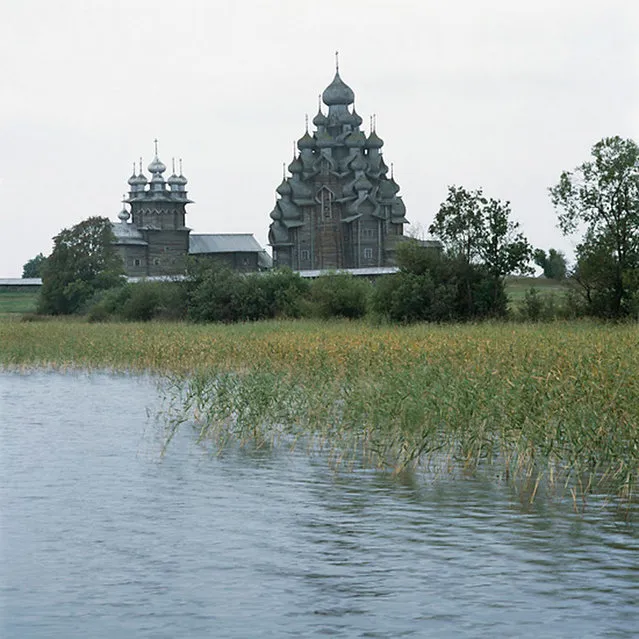
While communism, collectivism, worms, dry rot and casual looting failed to destroy the majestic wooden churches of Russia, it may be ordinary neglect that finally does them in. Dwindled now to several hundred remaining examples, these glories of vernacular architecture lie scattered amid the vastness of the world’s largest country. Just over a decade ago, Richard Davies, a British architectural photographer, struck out on a mission to record the fragile and poetic structures. Austerely beautiful and haunting, “Wooden Churches: Traveling in the Russian North” (White Sea Publishing; $132) is the result. Covering thousands of miles, Mr. Davies described how he and the writer Matilda Moreton tracked down the survivors from among the thousands of onion-domed structures built after Prince Vladimir converted to Christianity in 988.
Details
25 Nov 2013 12:47:00
Nicolas Silberfaden: Superheroes

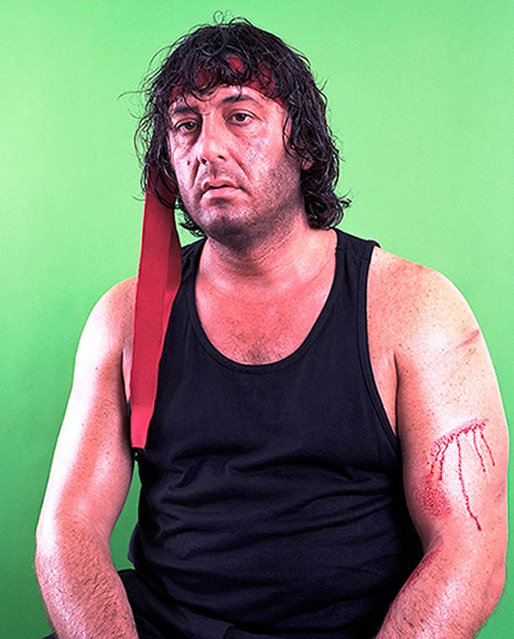
Due to the current economic, social and cultural crisis in The United States of America today, I have decided to do a photographic project consisting of a series of studio portraits of superhero and celebrity impersonators that live and work in the city of Los Angeles. Most of them unemployed Americans, they decided to suit up with their costumes and hit the streets, animate parties and events in efforts to make ends meet. Making them pose in their costumes against a colorful backdrop, I ask them to manifest feelings of genuine sadness – honest emotions that are a consequence of our current times. The result is a somber, striking visual image that contradicts the iconic nature of strength and moral righteousness typical in American superhero and celebrity imagery. Creating the illusion that Superman does exist – that he too was fallible and affected by America’s downturn.

Nicolas Silberfaden
Details
06 Dec 2012 12:13:00
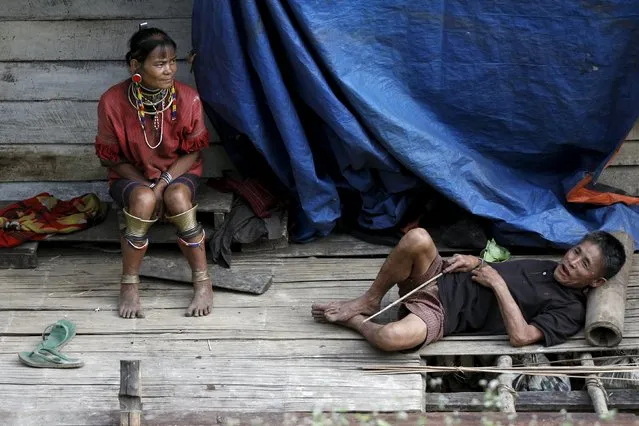
An ethnic Kayaw couple Mu Htoo and her husband Htaw Eili rest at their home at Htaykho village in the Kayah state, Myanmar September 12, 2015. (Photo by Soe Zeya Tun/Reuters)

An ethnic Kayaw couple Mu Htoo and her husband Htaw Eili rest at their home at Htaykho village in the Kayah state, Myanmar September 12, 2015. With about 30,000 members, the Kayaw are one of the smallest ethnic minorities among Myanmar's 135 groups. Their village has for decades been off-limits, as armed rebels fought the military before a recent ceasefire stopped the bloody conflict here. The rebels in the area have put down their guns and taken to the hills to grow rice and corn, but slash-and-burn cultivation methods mean they struggle to find new places to farm. (Photo by Soe Zeya Tun/Reuters)
Details
21 Oct 2015 08:03:00
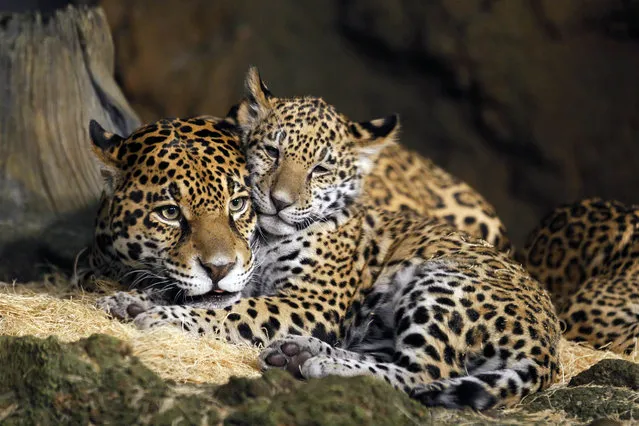
Stella the mother and her cub Zean rest together at The Milwaukee County Zoo  Zean and B'alam  are the two newest jaguar cubs with the mother Stella who are now on public exhibit, at four months old. B' alam (who has larger and darker spots as well as a square space on her forehead showing no spots) name means "Great and powerful king in Mayan.   Zean encompasses the Belize people living and working in Belize, with all cultures. She has smaller, almost greyish spots on her coat.  The names were revealaed at the Milwaukee County Zoo, Wednesday, March 13, 2013. Journal Sentinel photo by Rick Wood/RWOOD@JOURNALSENTINEL.COM

The first jaguar litter since 1975 was born at the Milwaukee County Zoo to Stella and Pat on November 13, 2013. The litter was on public display for the first time on March 13 when the jaguar baby's names were released. Belize schoolchildren named one Zean, which is the end of Belizean, and a public contest named the other B'alam, which means "great and powerful king" in Mayan. Photo: Stella the mother and her cub Zean rest together at The Milwaukee County Zoo. (Photo by Rick Wood)
Details
15 Mar 2013 07:51:00
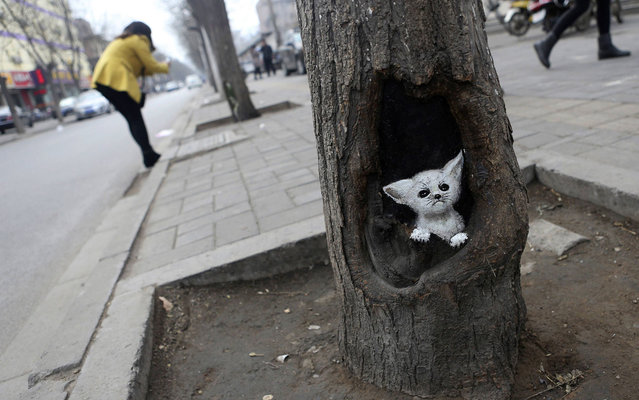
An image of a Fennec fox painted on a tree hole by Wang Yue is seen in Shijiazhuang, on March 13, 2013. Wang Yue, a senior at Dalian Industry University, uses her paintbrush to turn ugly tree holes into lovely views in Shijiazhuang, capital city of Hebei Province, China. Wang and her companions call the tree-hole paintings “meitu”, which means “beautiful journey”. The paintings on the trees have brightened the city during the dull, grey winter. (Photo by Pillar Lee/Reuters)

An image of a Fennec fox painted on a tree hole by Wang Yue is seen in Shijiazhuang, on March 13, 2013. Wang Yue, a senior at Dalian Industry University, uses her paintbrush to turn ugly tree holes into lovely views in Shijiazhuang, capital city of Hebei Province, China. Wang and her companions call the tree-hole paintings “meitu”, which means “beautiful journey”. The paintings on the trees have brightened the city during the dull, grey winter. (Photo by Pillar Lee/Reuters)

P.S. All pictures are presented in high resolution. To see Hi-Res images – just TWICE click on any picture. In other words, click small picture – opens the BIG picture. Click BIG picture – opens VERY BIG picture (if available; this principle works anywhere on the site AvaxNews).
Details
16 Mar 2013 11:27:00
Salar de Uyuni

Salar de Uyuni (or Salar de Tunupa) is the world's largest salt flat at 10,582 square kilometers (4,086 sq mi). It is located in the Potosí and Oruro departments in southwest Bolivia, near the crest of the Andes, and is elevated 3,656 meters (11,995 ft) above mean sea level. The Salar was formed as a result of transformations between several prehistoric lakes. It is covered by a few meters of salt crust, which has an extraordinary flatness with the average altitude variations within one meter over the entire area of the Salar.
Details
04 Aug 2012 08:42:00


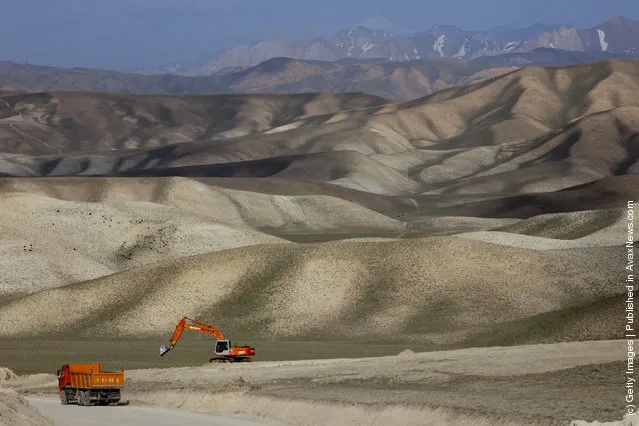
Heavy equipment works along the still under construction Bamiyan-Yakawlang road June 10, 2011 in Yakawlang, Afghanistan. The 69 Million US$ project is supported by the Government of Japan and World Bank. The 90K road project was started three years ago and is slated to be finished within another year. This new road means faster travel from Bamiyan to Afghanistan's only national park, Band-e-Amir. This is in of the safest parts of the country and the hope is to expand tourism in the region. (Photo by Paula Bronstein/Getty Images)
Details
11 Jun 2011 12:32:00
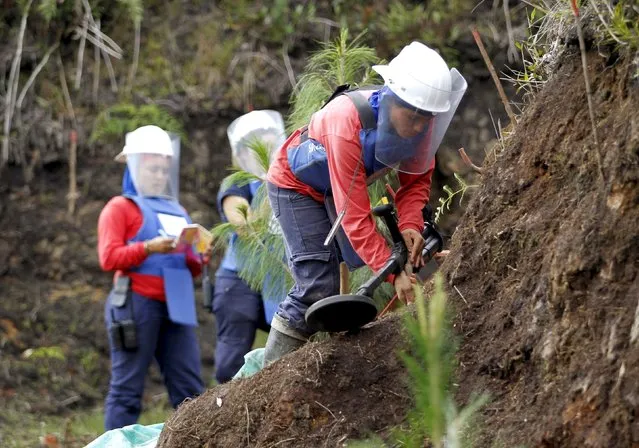
Natalia Arango works with her mine detector in a zone of landmines planted by rebels groups near Sonson in Antioquia province, November 19, 2015. (Photo by Fredy Builes/Reuters)

Natalia Arango works with her mine detector in a zone of landmines planted by rebels groups near Sonson in Antioquia province, November 19, 2015. Women's work takes on a nontraditional meaning for fifteen Colombian women who work to rid the Antioquia Mountains of deadly landmines as the country edges closer to a peace agreement with Marxist rebels to end over a decade of conflict which has claimed 220,000 lives. (Photo by Fredy Builes/Reuters)
Details
27 Nov 2015 04:44:00