Loading...
Done
A mahout watches the Thai animation movie Kan Kluay with his elephant in Ayuthaya province, about 80km (49 miles) north of Bangkok June 5, 2006. The movie tells the story of a young Thai wild elephant who, while looking for his father, becomes the war elephant of the Thai King fighting against Burma and restored Thailand's ancient Ayuthaya empire that existed about 400 years ago. (Photo by Sukree Sukplang/Reuters)

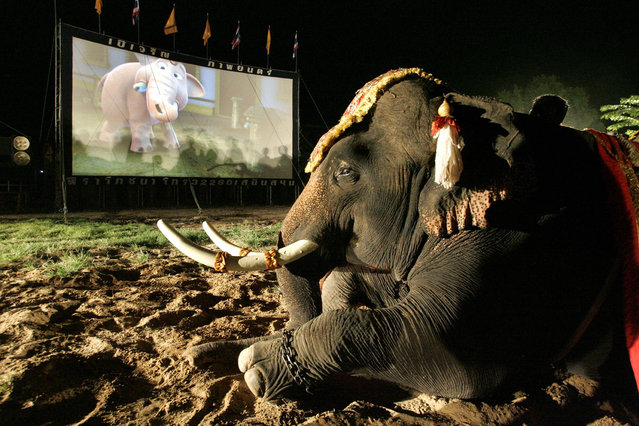
A mahout watches the Thai animation movie Kan Kluay with his elephant in Ayuthaya province, about 80km (49 miles) north of Bangkok June 5, 2006. The movie tells the story of a young Thai wild elephant who, while looking for his father, becomes the war elephant of the Thai King fighting against Burma and restored Thailand's ancient Ayuthaya empire that existed about 400 years ago. (Photo by Sukree Sukplang/Reuters)
Details
12 Aug 2015 13:33:00
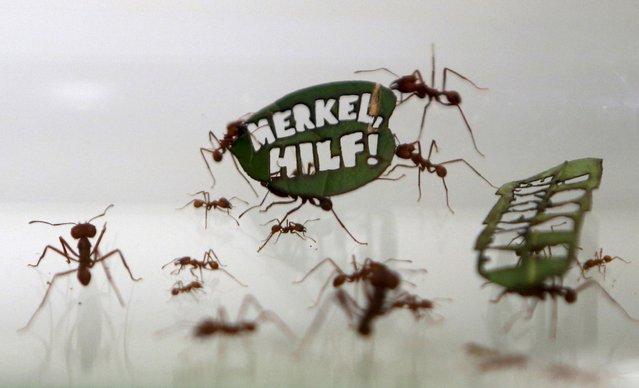
Ants carry a leaf with a slogan reading “Merkel, Help!”, a reference of German Chancellor Angela Merkel, at the zoo in Cologne, Germany August 18, 2015. Some of the zoo's 500,000 leaf-cutting ants carry laser-cut leaves with slogans during a campaign to protect the Amazon rain forest, organised by the German branch of World Wild Fund for Nature (WWF) and Cologne Zoo. Picture taken through the glass of the display case. (Photo by Ina Fassbender/Reuters)

Ants carry a leaf with a slogan reading “Merkel, Help!”, a reference of German Chancellor Angela Merkel, at the zoo in Cologne, Germany August 18, 2015. Some of the zoo's 500,000 leaf-cutting ants carry laser-cut leaves with slogans during a campaign to protect the Amazon rain forest, organised by the German branch of World Wild Fund for Nature (WWF) and Cologne Zoo. Picture taken through the glass of the display case. (Photo by Ina Fassbender/Reuters)
Details
19 Aug 2015 12:14:00
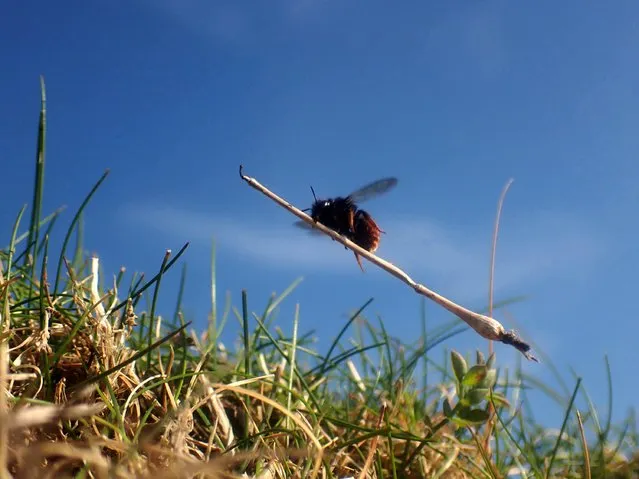
Undated BBC handout photo of a female two-coloured Mason Bee carrying a dried grass stalk back to her snail-shell nest on the British Isles in the latest episode of Sir David Attenborough's Wild Isles series. Issue date: Sunday March 26, 2023. (Photo by John Walters/Silverback Films/BBC/PA Wire)

Undated BBC handout photo of a female two-coloured Mason Bee carrying a dried grass stalk back to her snail-shell nest on the British Isles in the latest episode of Sir David Attenborough's Wild Isles series. Issue date: Sunday March 26, 2023. (Photo by John Walters/Silverback Films/BBC/PA Wire)
Details
31 Mar 2023 04:13:00
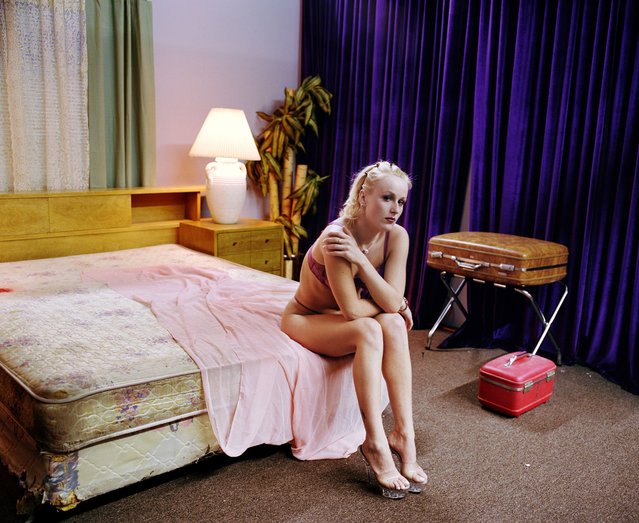
«Sharon Wild (from the series The Valley)», 2001. Larry Sultan grew up in California’s San Fernando Valley, which was a source of inspiration for a number of his projects. His series The Valley (2004) addresses the use of ordinary homes as sets for pornographic films, and asks why the ideal of middle-class domesticity lends itself to this most curious form of cultural appropriation. (Photo by Larry Sultan)

«Sharon Wild (from the series The Valley)», 2001. Larry Sultan grew up in California’s San Fernando Valley, which was a source of inspiration for a number of his projects. His series The Valley (2004) addresses the use of ordinary homes as sets for pornographic films, and asks why the ideal of middle-class domesticity lends itself to this most curious form of cultural appropriation. (Photo by Larry Sultan)
Details
03 Aug 2025 03:50:00
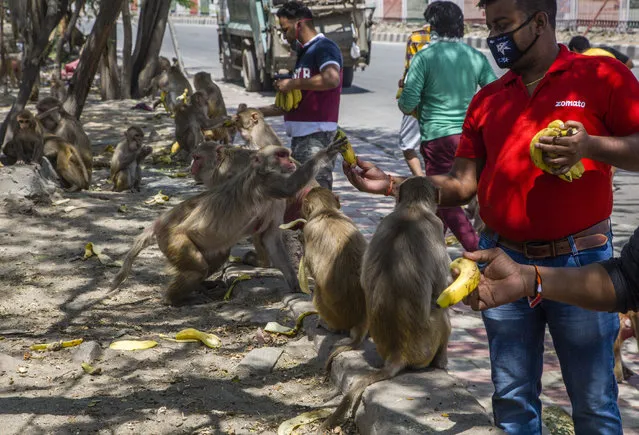
Men give bananas to monkeys gathered on the side of the road as India remains under an unprecedented lockdown over the highly contagious coronavirus (COVID-19) on April 08, 2020 in New Delhi, India. Wild animals, including monkeys, are roaming human settlements in India as people are staying indoors due to the 21-day lockdown. With India's 1.3 billion population and tens of millions of cars off the roads, wildlife is moving towards areas inhabited by humans. Wild animals in many countries have been seen roaming streets. A study says some 60 percent of the new diseases found around the globe every year are zoonotic, meaning they originate in animals and are passed on to humans. COVID-19 is a zoonotic disease that is suspected to have come from the wet markets of Wuhan, China. (Photo by Yawar Nazir/Getty Images)

Men give bananas to monkeys gathered on the side of the road as India remains under an unprecedented lockdown over the highly contagious coronavirus (COVID-19) on April 08, 2020 in New Delhi, India. Wild animals, including monkeys, are roaming human settlements in India as people are staying indoors due to the 21-day lockdown. (Photo by Yawar Nazir/Getty Images)
Details
12 Apr 2020 00:05:00
Young acutus crocodile are pictured at Panagator, a sustainable crocodile farm, on the outskirts of Panama City September 11, 2015. Gladys Vallarino, owner of the farm and of a specialty boutique shop selling items made from crocodiles, says the farm looks after more than 19,000 Acutus and Fuscus species of crocodiles and donates five percent of its crocodiles annually to the Panamanian authorities to be put into the wild. (Photo by Carlos Jasso/Reuters)

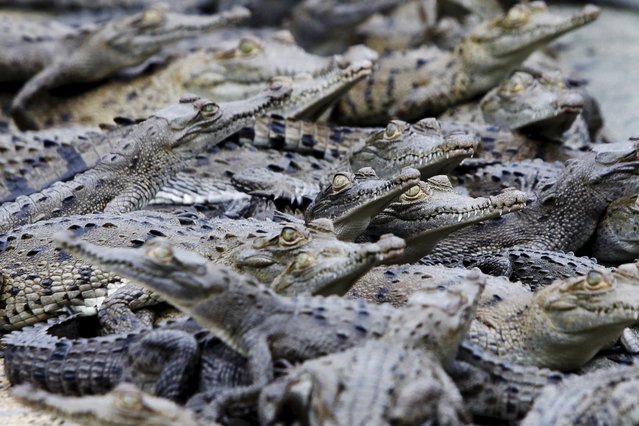
Young acutus crocodile are pictured at Panagator, a sustainable crocodile farm, on the outskirts of Panama City September 11, 2015. Gladys Vallarino, owner of the farm and of a specialty boutique shop selling items made from crocodiles, says the farm looks after more than 19,000 Acutus and Fuscus species of crocodiles and donates five percent of its crocodiles annually to the Panamanian authorities to be put into the wild, in accordance with the regulations of the CITES (Convention of International Trade in Endangered Species). The handmade fashion items sell for $200 to $3,000. (Photo by Carlos Jasso/Reuters)
Details
13 Sep 2015 13:00:00
An injured vulture is treated at the VulPro Vulture Rehabilitation Centre in Hartebeepoortdam in the Magalisburg region on September 15, 2015. Confined to southern Africa, just under 4,000 breeding pairs of Cape Vultures remain in the wild, mostly in South Africa, Lesotho and Botswana. Unless conservation efforts are successful, Africa's largest vulture species may be facing eventual extinction. (Photo by Mujahid Safodien/AFP Photo)

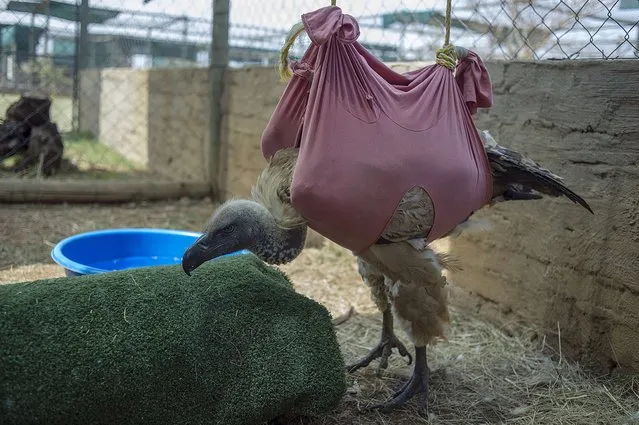
An injured vulture is treated at the VulPro Vulture Rehabilitation Centre in Hartebeepoortdam in the Magalisburg region on September 15, 2015. Confined to southern Africa, just under 4,000 breeding pairs of Cape Vultures remain in the wild, mostly in South Africa, Lesotho and Botswana. Unless conservation efforts are successful, Africa's largest vulture species may be facing eventual extinction. (Photo by Mujahid Safodien/AFP Photo)
Details
19 Sep 2015 12:27:00
In this Tuesday, February 11, 2014, photo, a trained monkey, that makes a living for her Pakistani owner by performing to a crowd in public and private places, sits held by a leash, in Rawalpindi, Pakistan. For Pakistanis who raise and train the monkeys they are an important source of income in an impoverished country, and they form a strong bond with the animals. The monkeys are usually captured in the wild when they are babies and then trained. A trained monkey can fetch 20,000 to 30,000 rupees ($190 to $285). (Photo by Muhammed Muheisen/Associated Press)

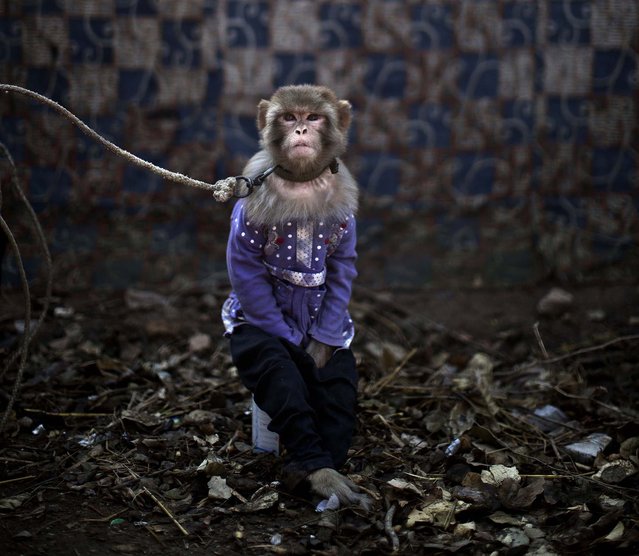
In this Tuesday, February 11, 2014, photo, a trained monkey, that makes a living for her Pakistani owner by performing to a crowd in public and private places, sits held by a leash, in Rawalpindi, Pakistan. For Pakistanis who raise and train the monkeys they are an important source of income in an impoverished country, and they form a strong bond with the animals. The monkeys are usually captured in the wild when they are babies and then trained. A trained monkey can fetch 20,000 to 30,000 rupees ($190 to $285). (Photo by Muhammed Muheisen/Associated Press)
Details
23 Feb 2014 09:50:00