Loading...
Done
A Baby sumatran orangutan (Pongo abelii) plays around in a tree as they train at Sumatran Orangutan Conservation Programme's rehabilitation center on November 12, 2016 in Kuta Mbelin, North Sumatra, Indonesia. The Orangutans in Indonesia have been known to be on the verge of extinction as a result of deforestation and poaching. Found mostly in South-East Asia, where they live on the islands of Sumatra and Borneo, the endangered species continue to lose their habitat as a result of corporate expansion in a developing economy. Indonesia approved palm oil concessions on nearly 15 million acres of peatlands over the past years and thousands of square miles have been cleared for plantations, including the lowland areas that are the prime habitat for orangutans. (Photo by Ulet Ifansasti/Getty Images)

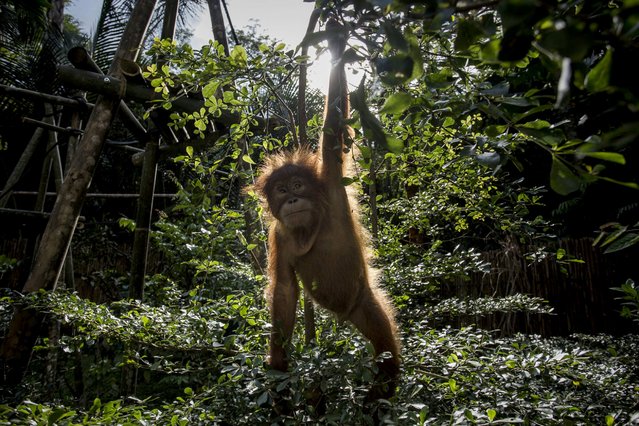
A Baby sumatran orangutan (Pongo abelii) plays around in a tree as they train at Sumatran Orangutan Conservation Programme's rehabilitation center on November 12, 2016 in Kuta Mbelin, North Sumatra, Indonesia. The Orangutans in Indonesia have been known to be on the verge of extinction as a result of deforestation and poaching. Found mostly in South-East Asia, where they live on the islands of Sumatra and Borneo, the endangered species continue to lose their habitat as a result of corporate expansion in a developing economy. Indonesia approved palm oil concessions on nearly 15 million acres of peatlands over the past years and thousands of square miles have been cleared for plantations, including the lowland areas that are the prime habitat for orangutans. (Photo by Ulet Ifansasti/Getty Images)
Details
16 Nov 2016 11:14:00
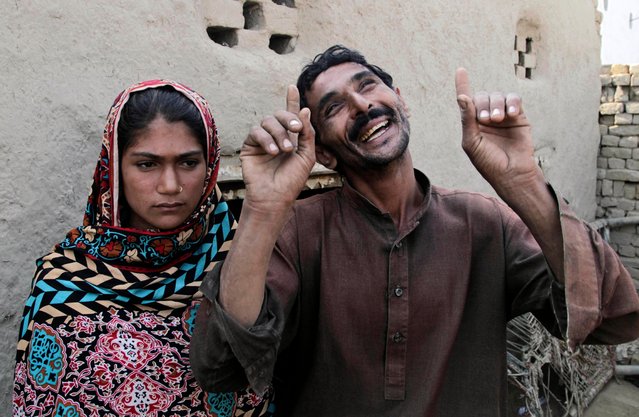
In this Tuesday, December 20, 2016 photo, Mohammad Ramzan, right, reacts while talking to The Associated Press with his young bride Saima in Jampur, Pakistan. Saima was given as a bride to the older man by her father so he could marry the groom’s sister, a practice of exchanging girls that is entrenched in conservative regions of Pakistan. It even has its own name in Urdu: Watta Satta, “give and take”. A mix of interests – family obligations, desire for sons, a wish to hand off a girl to a husband – can lead to a young teen in an a marriage she never sought. (Photo by K.M. Chaudhry/AP Photo)

In this Tuesday, December 20, 2016 photo, Mohammad Ramzan, right, reacts while talking to The Associated Press with his young bride Saima in Jampur, Pakistan. Saima was given as a bride to the older man by her father so he could marry the groom’s sister, a practice of exchanging girls that is entrenched in conservative regions of Pakistan. It even has its own name in Urdu: Watta Satta, “give and take”. A mix of interests – family obligations, desire for sons, a wish to hand off a girl to a husband – can lead to a young teen in an a marriage she never sought. (Photo by K.M. Chaudhry/AP Photo)
Details
31 Dec 2016 10:08:00
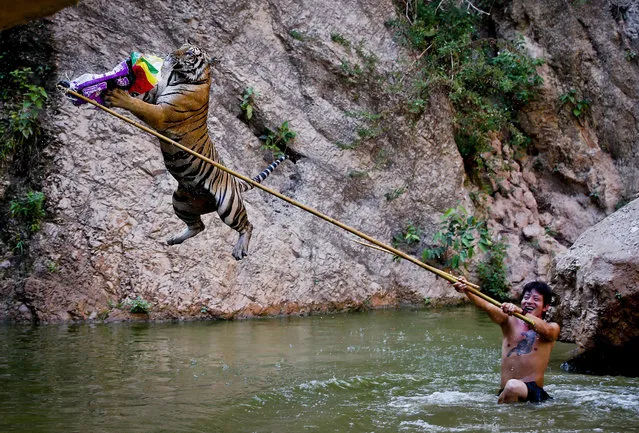
A picture made available 26 April 2016 shows a tiger playing in the water with a trainer nicknamed “Super Tiger Man” at the Tiger Temple in Kanchanaburi province, Thailand, 24 April 2016. The site known in Thai as “Wat Pa Luangta Maha Bua Yannasampanno” has been the focus of a dispute with the Department of National Parks, Wildlife and Plant Conservation (DNP) after the DNP asked in 2015 that the temple hands over its 147 tigers since it was not licensed to keep them. The temple has requested for a zoo license according to its managing director. (Photo by Diego Azubel/EPA)

A picture made available 26 April 2016 shows a tiger playing in the water with a trainer nicknamed “Super Tiger Man” at the Tiger Temple in Kanchanaburi province, Thailand, 24 April 2016. The site known in Thai as “Wat Pa Luangta Maha Bua Yannasampanno” has been the focus of a dispute with the Department of National Parks, Wildlife and Plant Conservation (DNP) after the DNP asked in 2015 that the temple hands over its 147 tigers since it was not licensed to keep them. The temple has requested for a zoo license according to its managing director. (Photo by Diego Azubel/EPA)
Details
01 Jun 2016 12:44:00
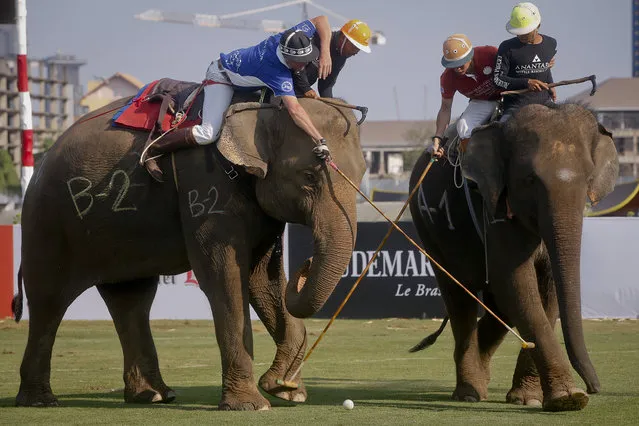
Elephant polo players in action during the King's Cup Elephant Polo event 2016 final between teams King Power (blue) and The Elephant Story, in Bangkok, Thailand, March 13, 2016. Team King Power won the annual charity event, which is now in its 14th edition. This year's edition involved 18 elephants brought from tourist trekking camps in Pattaya as well as some unemployed in Surin, and a total of 10 teams encompassing over 40 players, in this event directed at raising funds to improve the lives of elephants and elephant conservation. (Photo by Diego Azubel/EPA)

Elephant polo players in action during the King's Cup Elephant Polo event 2016 final between teams King Power (blue) and The Elephant Story, in Bangkok, Thailand, March 13, 2016. Team King Power won the annual charity event, which is now in its 14th edition. This year's edition involved 18 elephants brought from tourist trekking camps in Pattaya as well as some unemployed in Surin, and a total of 10 teams encompassing over 40 players, in this event directed at raising funds to improve the lives of elephants and elephant conservation. (Photo by Diego Azubel/EPA)
Details
14 Mar 2016 11:11:00
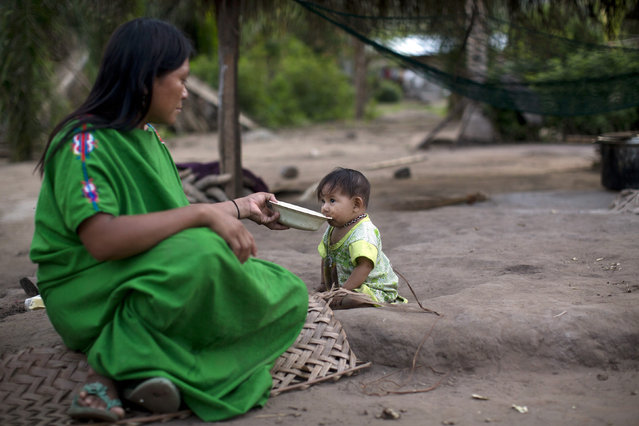
In this November 19, 2015 photo, Ester Melendez feeds banana porridge to her nine-month-old daughter Dina, in Pichiquia, an Ashaninka indigenous community in Peru's Junin region. Incursions and assaults by loggers, miners, colonists and leftist guerrillas have reduced the lands of the Ashaninka people in the Peruvian Amazon, leaving many of the 97,000 members of the group malnourished, despite efforts by the government and independent organizations to help. (Photo by Rodrigo Abd/AP Photo)

In this November 19, 2015 photo, Ester Melendez feeds banana porridge to her nine-month-old daughter Dina, in Pichiquia, an Ashaninka indigenous community in Peru's Junin region. Incursions and assaults by loggers, miners, colonists and leftist guerrillas have reduced the lands of the Ashaninka people in the Peruvian Amazon, leaving many of the 97,000 members of the group malnourished, despite efforts by the government and independent organizations to help. (Photo by Rodrigo Abd/AP Photo)
Details
10 Dec 2015 08:00:00
This is the hilarious moment a terrified baby hippo ran screaming for its mum when a flock of bird landed on its back in South Luangwa National Park in Zambia. The hippo was seen screaming, running and twisting from side to side in a desperate bid to shake off the red and yellow ox-pecker birds. (Photo by Marc Mol/Caters News/SIPA Press)

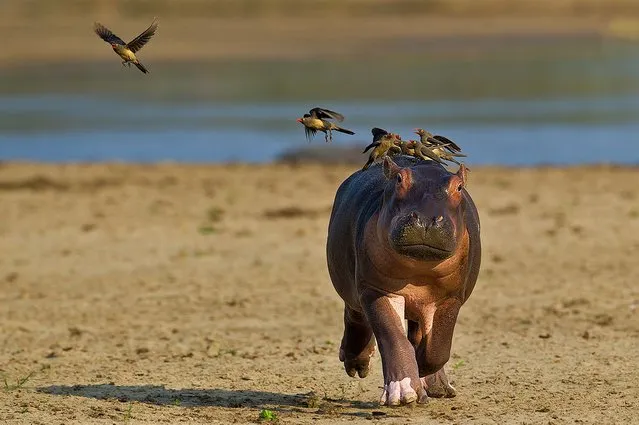
This is the hilarious moment a terrified baby hippo ran screaming for its mum when a flock of bird landed on its back in South Luangwa National Park in Zambia. The hippo was seen screaming, running and twisting from side to side in a desperate bid to shake off the red and yellow ox-pecker birds. Ox-peckers and hippos usually have a mutually beneficial relationship where the birds help free hippos of ticks and other parasites by feeding on them. (Photo by Marc Mol/Caters News/SIPA Press)
Details
16 Jan 2015 13:07:00
A general view shows solar panels to produce renewable energy at the photovoltaic park in Les Mees, in the department of Alpes-de-Haute-Provence, southern France March 31, 2015. The solar farm of the Colle des Mees, the biggest in France, consists of 112,780 solar modules covering an area of 200 hectares of land and representing 100 MW of power. (Photo by Jean-Paul Pelissier/Reuters)

A general view shows solar panels to produce renewable energy at the photovoltaic park in Les Mees, in the department of Alpes-de-Haute-Provence, southern France March 31, 2015. The solar farm of the Colle des Mees, the biggest in France, consists of 112,780 solar modules covering an area of 200 hectares of land and representing 100 MW of power. (Photo by Jean-Paul Pelissier/Reuters)
Details
01 Apr 2015 12:18:00
Cowboys Wyatt Williams (R) and David Thompson work to restrain a calf in order to give it medicine near Ignacio, Colorado June 12, 2014. The land where the cattle graze is leased from the Forest Service by third-generation rancher Steve Pargin. Several times a year, he and a crew led by his head cowboy, David Thompson, spend a week or more herding cattle from mountain range to mountain range to prevent them from causing damage to fragile ecosystems by staying in a single area too long. (Photo by Lucas Jackson/Reuters)

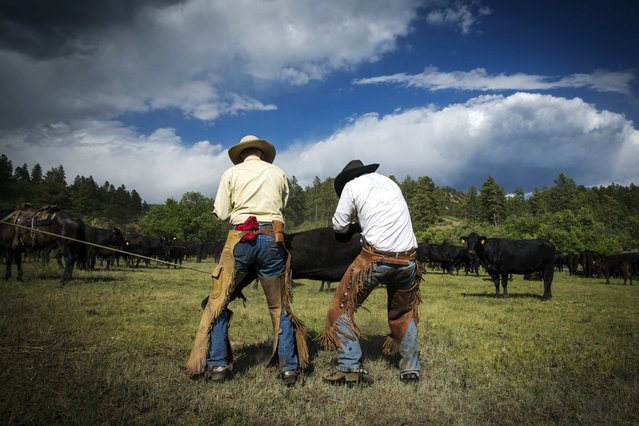
Cowboys Wyatt Williams (R) and David Thompson work to restrain a calf in order to give it medicine near Ignacio, Colorado June 12, 2014. The land where the cattle graze is leased from the Forest Service by third-generation rancher Steve Pargin. Several times a year, he and a crew led by his head cowboy, David Thompson, spend a week or more herding cattle from mountain range to mountain range to prevent them from causing damage to fragile ecosystems by staying in a single area too long. (Photo by Lucas Jackson/Reuters)
Details
15 Jul 2014 11:04:00