Loading...
Done
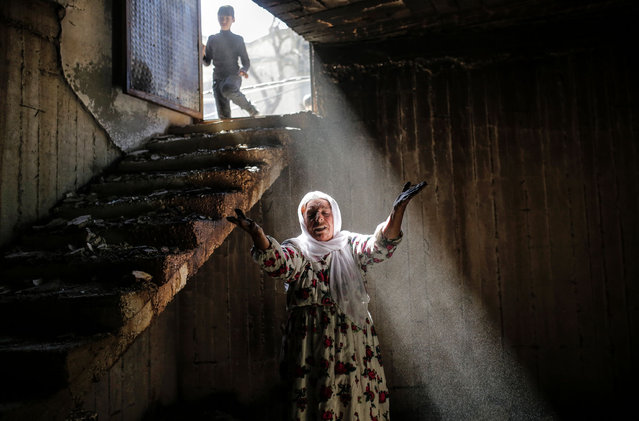
A woman reacts while walking among the ruins of damaged buildings following heavy fighting between government troops and Kurdish fighters, on March 2, 2016 in the southeastern Turkey Kurdish town of Cizre, near the border with Syria and Iraq. Thousands in Turkey's Kurdish-majority town of Cizre started returning to their homes today after authorities partially lifted a curfew in place since December for a controversial military operation to root out separatist rebels. (Photo by Yasin Akgül/AFP Photo)

A woman reacts while walking among the ruins of damaged buildings following heavy fighting between government troops and Kurdish fighters, on March 2, 2016 in the southeastern Turkey Kurdish town of Cizre, near the border with Syria and Iraq. Thousands in Turkey's Kurdish-majority town of Cizre started returning to their homes today after authorities partially lifted a curfew in place since December for a controversial military operation to root out separatist rebels. (Photo by Yasin Akgül/AFP Photo)
Details
03 Mar 2016 11:29:00
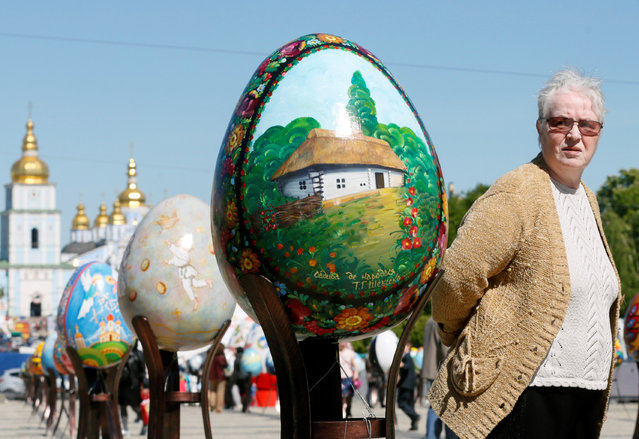
A woman looks at traditional Ukrainian Easter eggs “Pysanka”, installed as part of the upcoming celebrations of Easter, in central Kiev, Ukraine, April 29, 2016. A pysanka is a Ukrainian Easter egg, decorated with traditional Ukrainian folk designs using a wax-resist (batik) method. The word pysanka comes from the verb pysaty, “to write”, as the designs are not painted on, but written with beeswax. Many other eastern European ethnic groups decorate eggs using wax resist for Easter. These include the Belarusians, Bulgarians, Croats, Czechs, Hungarians, Lithuanians, Poles, Romanians, Serbs, Slovaks, Slovenes and Sorbs. (Photo by Valentyn Ogirenko/Reuters)

A woman looks at traditional Ukrainian Easter eggs “Pysanka”, installed as part of the upcoming celebrations of Easter, in central Kiev, Ukraine, April 29, 2016. A pysanka is a Ukrainian Easter egg, decorated with traditional Ukrainian folk designs using a wax-resist (batik) method. The word pysanka comes from the verb pysaty, “to write”, as the designs are not painted on, but written with beeswax. Many other eastern European ethnic groups decorate eggs using wax resist for Easter. These include the Belarusians, Bulgarians, Croats, Czechs, Hungarians, Lithuanians, Poles, Romanians, Serbs, Slovaks, Slovenes and Sorbs. (Photo by Valentyn Ogirenko/Reuters)
Details
30 Apr 2016 09:00:00
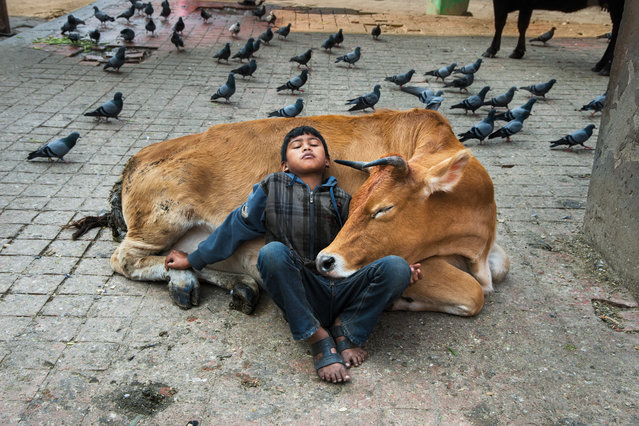
A boy rests against a cow, Kathmandu, Nepal, 2013. “Cows have been designated the national animal in Nepal. They roam freely, and are considered sacred by the 80% of Nepalis who are Hindu”. (Photo by Steve McCurry/The Guardian)

The legendary US photographer’s favourite shots of creatures and how they interact with humans feature in “Animals”, his latest book. Here: A boy rests against a cow, Kathmandu, Nepal, 2013. “Cows have been designated the national animal in Nepal. They roam freely, and are considered sacred by the 80% of Nepalis who are Hindu”. (Photo by Steve McCurry/The Guardian)
Details
07 Nov 2019 00:01:00
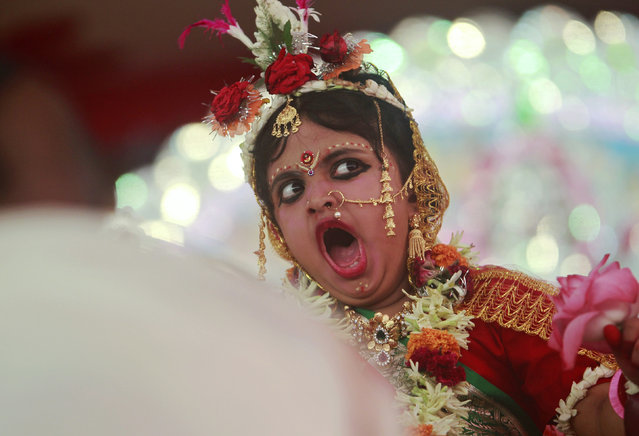
Satarupa Chakraborty, 5, dressed as a Kumari, yawns while she is worshipped by a Hindu priest during the religious festival of Durga Puja in Agartala October 2, 2014. (Photo by Jayanta Dey/Reuters)

Satarupa Chakraborty, 5, dressed as a Kumari, yawns while she is worshipped by a Hindu priest during the religious festival of Durga Puja in Agartala October 2, 2014. (Photo by Jayanta Dey/Reuters)
Details
19 Oct 2014 12:19:00
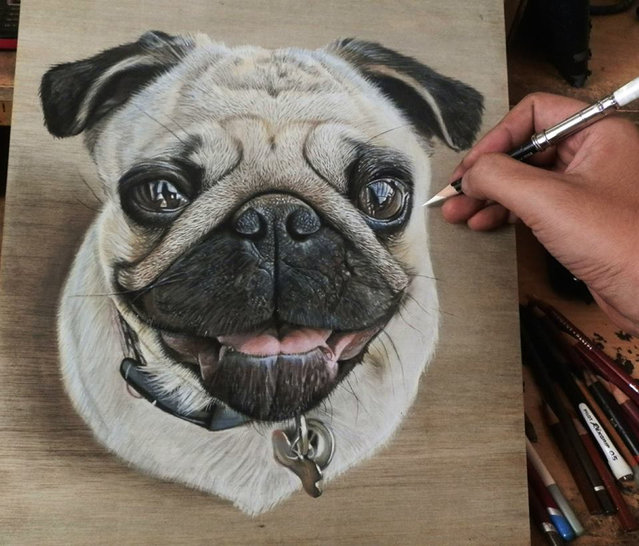
These hyper realistic drawings are so lifelike they could pass for photographs. The incredibly detailed works of art were created by self-taught artist Ivan Hoo, from Singapore, who earns a living from his realistic drawings and paintings. Here: Ivan Hoos drawing of a pug. (Photo by Ivan Hoo/Caters News)

These hyper realistic drawings are so lifelike they could pass for photographs. The incredibly detailed works of art were created by self-taught artist Ivan Hoo, from Singapore, who earns a living from his realistic drawings and paintings. The 31-year-old takes up to three days to complete the impressive pieces, which include animal portraits and still life drawings of everyday items such as a Starbucks cup. The A3 sketches are completed using a range of soft pastel pencils and are drawn from still life, or a photograph taken by Ivan himself. Here: Ivan Hoos drawing of a pug. (Photo by Ivan Hoo/Caters News)
Details
18 Nov 2014 11:42:00
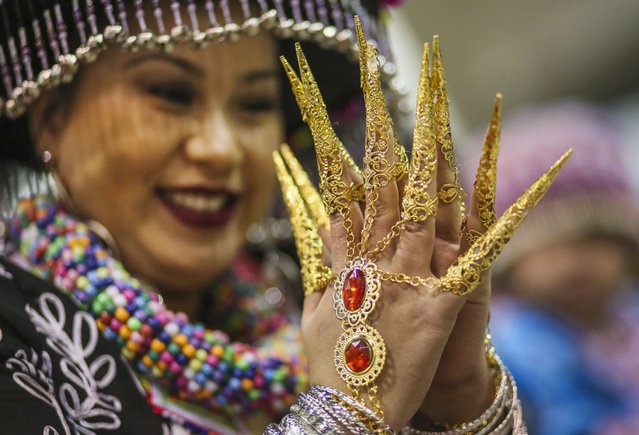
Kia Vue of St. Paul sports long nails at the Minnesota Hmong New Year celebration Saturday, November 29, 2014, at the Saint Paul RiverCentre in St. Paul, MN. (Photo by David Joles/Star Tribune)

Kia Vue of St. Paul sports long nails at the Minnesota Hmong New Year celebration Saturday, November 29, 2014, at the Saint Paul RiverCentre in St. Paul, MN. The annual Minnesota Hmong New Year celebration will be held at the Saint Paul RiverCentre November 28–30. Hmong New Year has a deep cultural significance to the Hmong community. It is a celebration of accomplishments during the past year and a time to welcome a new beginning. (Photo by David Joles/Star Tribune)
Details
30 Nov 2014 13:37:00
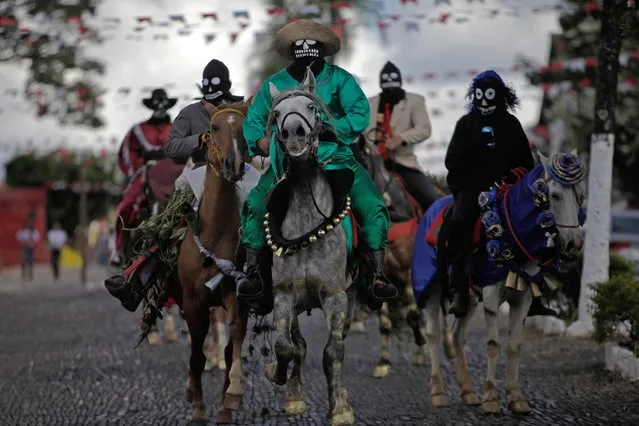
Masked men ride in a morning procession as part of the “Cavalhadas” festival in Pirenopolis, Brazil, Sunday, May 19, 2013. The popular festival is a tradition that was introduced in the 1800's by a Portuguese priest to mark the the ascension of Christ. The 3-day festival reenacts the Christian knights' medieval defeat of the Moors. (Photo by Eraldo Peres/AP Photo)

Masked men ride in a morning procession as part of the “Cavalhadas” festival in Pirenopolis, Brazil, Sunday, May 19, 2013. The popular festival is a tradition that was introduced in the 1800's by a Portuguese priest to mark the the ascension of Christ. The 3-day festival reenacts the Christian knights' medieval defeat of the Moors. (Photo by Eraldo Peres/AP Photo)
Details
22 May 2013 08:49:00
A young Balinese man tries to kiss a woman during the Kissing Festival known as “Omed-Omedan” at Sesetan village on April 1, 2014 in Denpasar, Bali, Indonesia. (Photo by Agung Parameswara/Getty Images)

A young Balinese man tries to kiss a woman during the Kissing Festival known as “Omed-Omedan” at Sesetan village on April 1, 2014 in Denpasar, Bali, Indonesia. (Photo by Agung Parameswara/Getty Images)
Details
02 Apr 2014 10:32:00