Loading...
Done
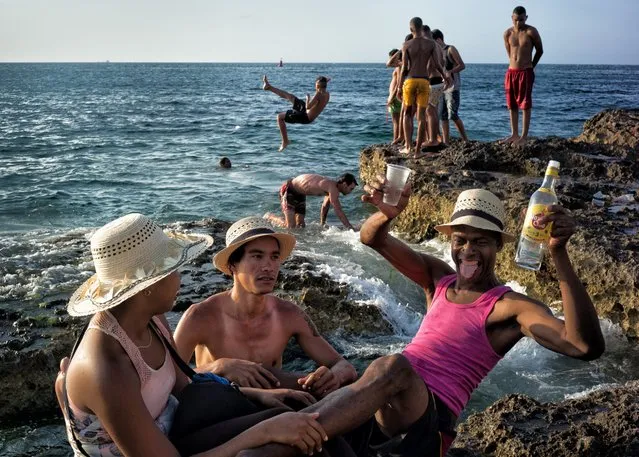
Saguy says that while portraits of Fidel Castro are still found everywhere, they coexist with plenty of foreign brands on subtle display: from Apple logo decals affixed to 1950s Chevys to young people wearing Adidas T-shirts and Converse shoes. Here: Several groups of locals relax on the Malecon in Old Havana, Cuba May 1, 2016. Some chat and drink rum while others dive into the warm Caribbean Sea. (Photo by Dotan Saguy)

Photographer Dotan Saguy visited Cuba expecting to find resentment toward Americans, but he says that, instead, “Every Cuban I met was warm and welcoming despite me being an American”. Here: Several groups of locals relax on the Malecon in Old Havana, Cuba May 1, 2016. Some chat and drink rum while others dive into the warm Caribbean Sea. (Photo by Dotan Saguy)
Details
27 May 2016 12:50:00
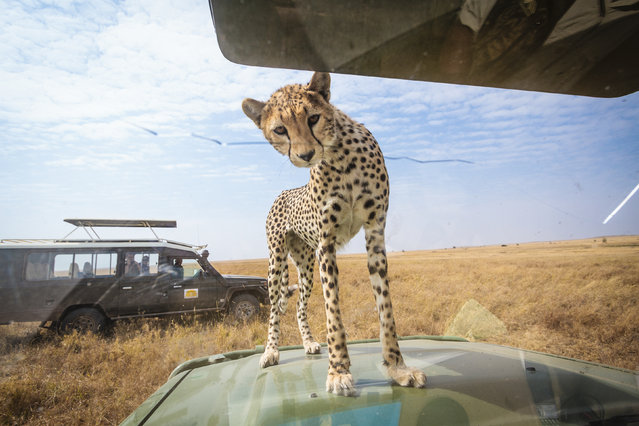
The cheetah peers inside the car to see who is inside. (Photo by Bobby-Jo Clow/Caters News)

“This is the heart-stopping moment a photographer came within inches of a young cheetah when it stuck its head through her sun roof. Australian Bobby-Jo Clow, 31, was on safari in Tanzania when the juvenile started heading towards her Landrover with his sibling. She snapped away as the young male dangled its paws in front of her face and smelt her hair before its mother called it away into the wilds of the Serengeti National Park. But not until Bobby-Jo, a full-time elephant keeper at a Tanzanian Zoo, had leaned forward enough to capture the perfect shot, causing the cheetah to hiss and bare its teeth”. – Caters News. (Photo by Bobby-Jo Clow/Caters News)
Details
16 Mar 2014 08:22:00
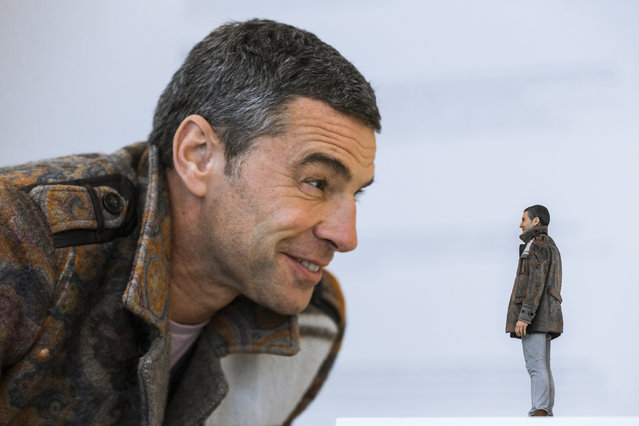
Customer Andreas Kroker looks at a 3D-printed figure of himself at the Twinkind 3D printing studio in Berlin, December 13, 2013. (Photo by Thomas Peter/Reuters)

Customer Andreas Kroker looks at a 3D-printed figure of himself at the Twinkind 3D printing studio in Berlin, December 13, 2013. A 3D-printed likeness is produced by taking a 360 degree photographic scan of a person, which is then rendered into a 3D digital model and retouched to meet the requirements for printing. The printing machine uses this digital model to produce a high-resolution solid figure. Twinkind co-founder Timo Schaedel said, people often come to the session well-groomed, with fresh hair-cuts and their best clothes, “just as they used to do in the past, when they had their portrait taken in a photo studio”. (Photo by Thomas Peter/Reuters)
Details
17 Jul 2014 11:22:00
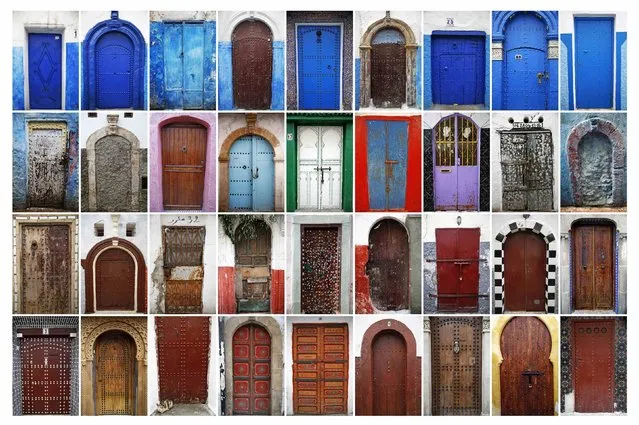
A combination photo shows some of the colourful doors seen in Rabat's Medina and Kasbah of the Udayas, September 2014. UNESCO made Rabat a World Heritage Site two years ago and media and tour operators call it a “must-see destination”. (Photo by Damir Sagolj/Reuters)

A combination photo shows some of the colourful doors seen in Rabat's Medina and Kasbah of the Udayas, September 2014. UNESCO made Rabat a World Heritage Site two years ago and media and tour operators call it a “must-see destination”. But it seems the tourist hordes have yet to find out. While visitors are getting squeezed through the better-known sites of Marrakesh and Fez, the old part of Rabat - with its beautiful Medina and Kasbah of the Udayas - remains an almost unspoiled oasis of calm. Smaller and more compact, its labyrinths of streets, passages and dead ends are a treasure trove of shapes and colours, of moments begging to be caught by the photographer's lens. (Photo by Damir Sagolj/Reuters)
Details
08 Oct 2014 12:08:00
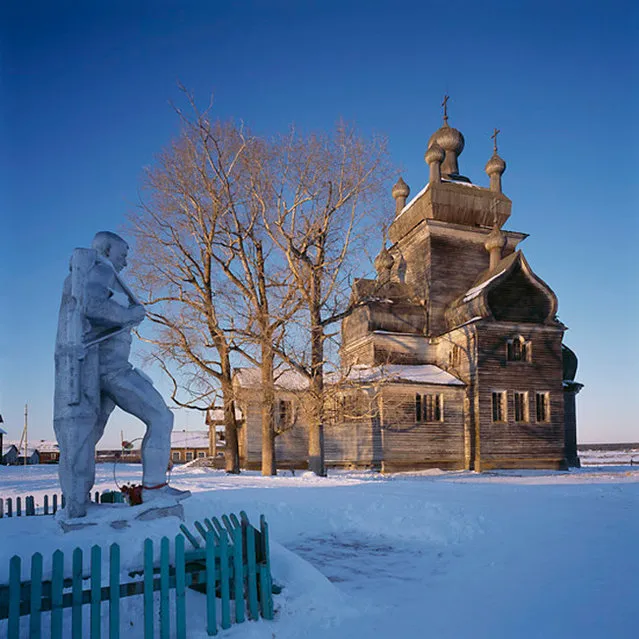
Wooden Churches - Travelling In The Russian North By Richard Davies Part 2

While communism, collectivism, worms, dry rot and casual looting failed to destroy the majestic wooden churches of Russia, it may be ordinary neglect that finally does them in. Dwindled now to several hundred remaining examples, these glories of vernacular architecture lie scattered amid the vastness of the world’s largest country. Just over a decade ago, Richard Davies, a British architectural photographer, struck out on a mission to record the fragile and poetic structures. Austerely beautiful and haunting, “Wooden Churches: Traveling in the Russian North” (White Sea Publishing; $132) is the result. Covering thousands of miles, Mr. Davies described how he and the writer Matilda Moreton tracked down the survivors from among the thousands of onion-domed structures built after Prince Vladimir converted to Christianity in 988.

See also: Wooden Churches Part1
Details
28 Nov 2013 12:13:00
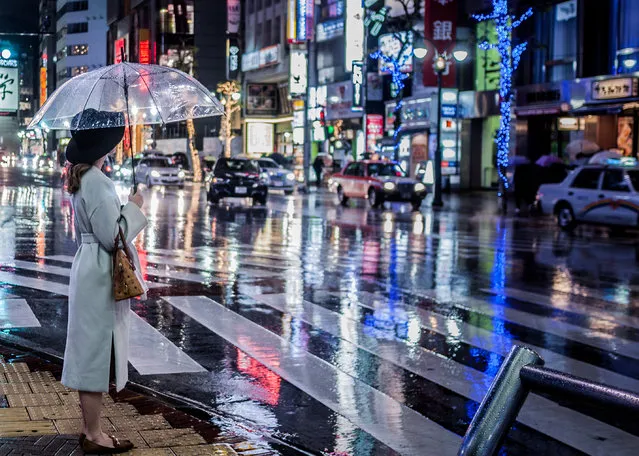
Runner-up. “The heavens opened and the streets around Shibuya, Tokyo, were suddenly drenched in even more colour and movement. I was taking photos (my friend was holding the umbrella) when I noticed this woman at the crossing. I’m pleased with the futuristic feel of the image”. MICK RYAN, JUDGE: “A rich spectrum of colour, neon lights, a glistening street and a woman with an umbrella all combine with great composition to make this a very appealing photograph. Quite nearly perfection, if it wasn’t for the slightly distracting objects top left and bottom right”. (Photo by Katherine Bridgestock/The Guardian)

Runner-up. “The heavens opened and the streets around Shibuya, Tokyo, were suddenly drenched in even more colour and movement. I was taking photos (my friend was holding the umbrella) when I noticed this woman at the crossing. I’m pleased with the futuristic feel of the image”. (Photo by Katherine Bridgestock/The Guardian)
Details
08 Mar 2018 00:01:00
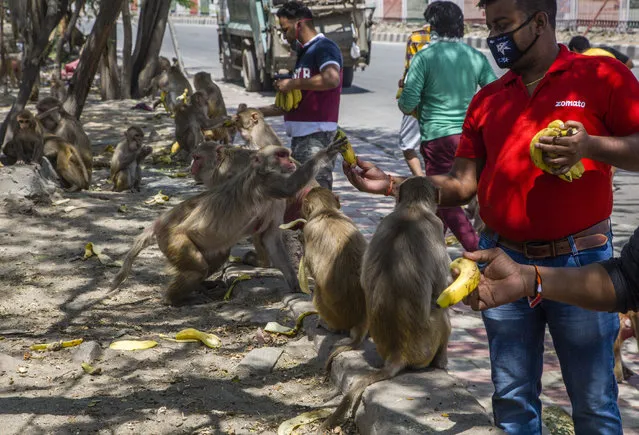
Men give bananas to monkeys gathered on the side of the road as India remains under an unprecedented lockdown over the highly contagious coronavirus (COVID-19) on April 08, 2020 in New Delhi, India. Wild animals, including monkeys, are roaming human settlements in India as people are staying indoors due to the 21-day lockdown. With India's 1.3 billion population and tens of millions of cars off the roads, wildlife is moving towards areas inhabited by humans. Wild animals in many countries have been seen roaming streets. A study says some 60 percent of the new diseases found around the globe every year are zoonotic, meaning they originate in animals and are passed on to humans. COVID-19 is a zoonotic disease that is suspected to have come from the wet markets of Wuhan, China. (Photo by Yawar Nazir/Getty Images)

Men give bananas to monkeys gathered on the side of the road as India remains under an unprecedented lockdown over the highly contagious coronavirus (COVID-19) on April 08, 2020 in New Delhi, India. Wild animals, including monkeys, are roaming human settlements in India as people are staying indoors due to the 21-day lockdown. (Photo by Yawar Nazir/Getty Images)
Details
12 Apr 2020 00:05:00
Ocean voyage

Do you think that history is a science? Well, not exactly. First, and foremost, history is the state's “legend of wars”, it’s official regalia. Of course, public historians are not interested in scientific truth – quite the opposite. In this respect, any attempt to present a state’s history as altruistic and benevolent as possible is welcomed and encouraged – as opposed to any revisionism attempts that may be more accurate. In this matter, Chinese have surpassed us all – they revised in highly creative manner (but rather shamelessly) the technology already invented by Europeans, a process that resulted in oldest state on the planet. Here is an interesting paradox: ask any sinologist about the Middle Kingdom during second century B.C., and he will describe it to you in such a vivid manner as if he has been living there all his life – but as soon as you will ask him to describe Chinese history in the 19-20th centuries… let's say, his eagerness will be greatly diminished. However, we will discuss China in a different article, and in the meantime we will try to understand how exactly historic “legend of wars” is formed and functions – based on a specific and well-known example. A great example is Ferdinand Magellan's first voyage around the world.

Details
14 Nov 2011 09:11:00