Cuban actor Ana de Armas seen attending Bond: No Time To Die – world film premiere afterparties on September 28, 2021 in London, England. (Photo by Backgrid USA)
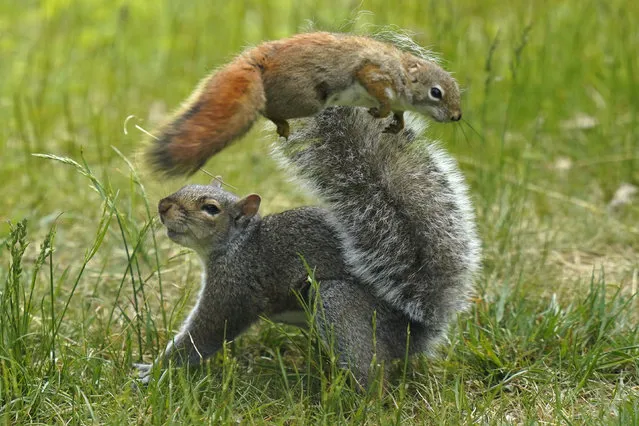
A red squirrel leaps over a gray squirrel after the larger squirrel became annoyed with its territory being encroached upon, Saturday, May 28, 2022, in Freeport, Maine. (Photo by Robert F. Bukaty/AP Photo)
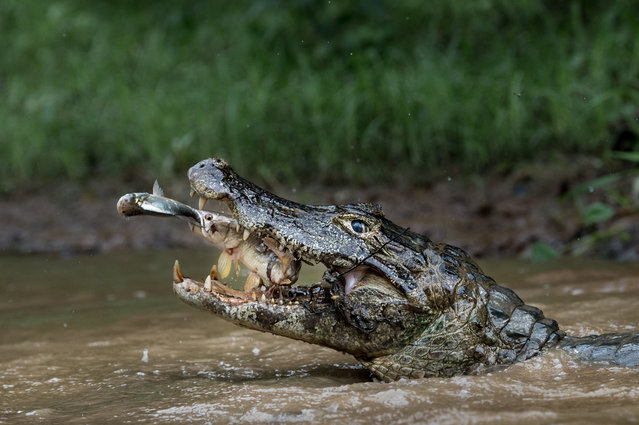
Second place, Nature: double trapping. Picture taken in the Brazilian Pantanal ... when I downloaded the CF did not want to believe it ... The nature knows we always give magnificent events but sometimes extraordinary. (Photo by Massimiliano Bencivenni/National Geographic Travel Photographer of the Year Contest)
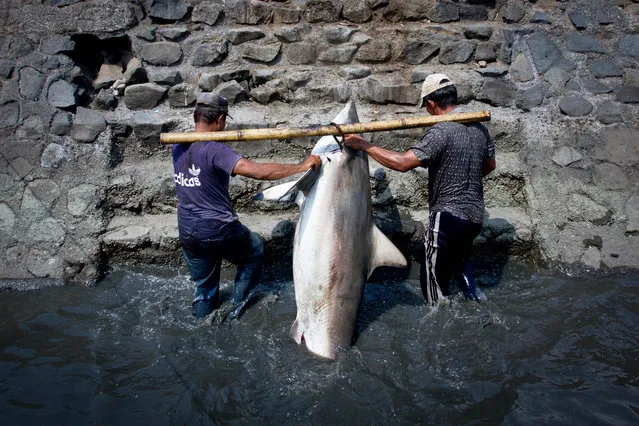
The Predator’s Fins: Atho Ullah, Indonesia. 3rd place, Portfolio category. A freshly caught shark is taken ashore. Efforts to regulate shark fishing in Indonesia are not effective enough. Lack of awareness of the role sharks play in the ocean’s ecosystem poses a major threat to marine life. (Photo by Atho Ullah/2020 Hamdan International Photography Award)
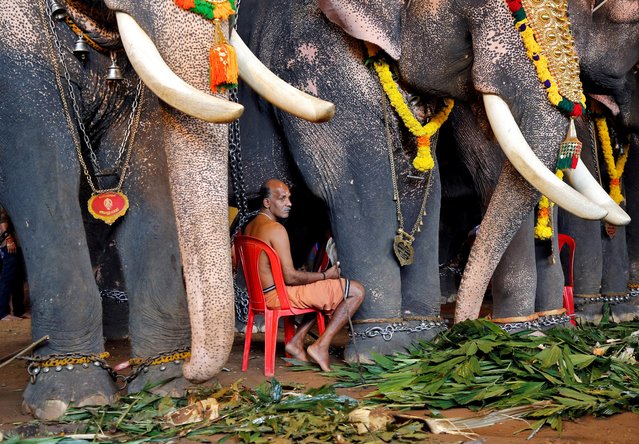
A mahout sits between elephants which are participating in festivities marking the annual harvest festival of Onam at a temple on the outskirts of Kochi, India, September 11, 2019. (Photo by Sivaram V/Reuters)
A woman holds a sign that reads in Spanish “Sеx education to decide, contraceptives to avoid abortion”, as she jumps with another woman as part of the Global Day of Action for access to legal, safe and free abortion, outside the parliament in Caracas, Venezuela, Tuesday, September 28, 2021. (Photo by Ariana Cubillos/AP Photo)
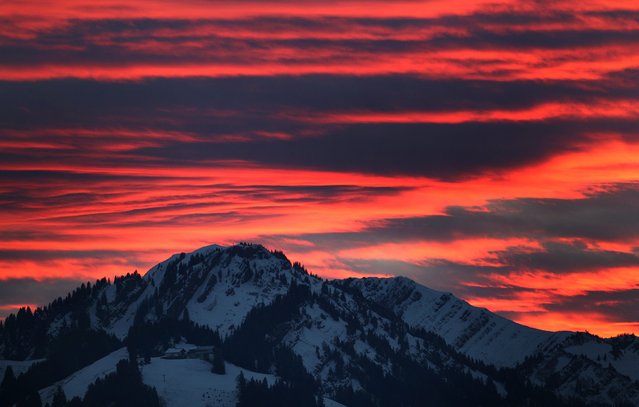
A colorful sky at sunset over the snowy mountains in Immenstadt, Bavaria, Germany, 20 November 2014. Cloudy weather is forecast in the region on 21 November. (Photo by Karl-Josef Hildenbrand/EPA)
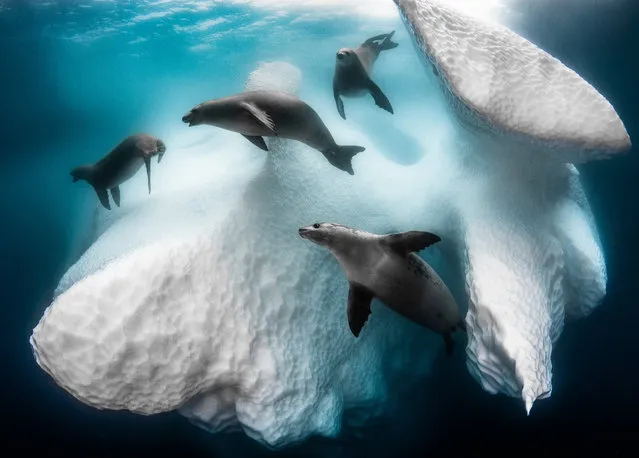
Underwater photographer of the year 2020 and wide angle category winner: Frozen Mobile Home by Greg Lecoeur (France) in the Antarctic peninsula, Antarctica. Crabeater seals swim around an iceberg. These massive and mysterious habitats are dynamic kingdoms that support marine life. As they swing and rotate slowly through polar currents, icebergs fertilise the oceans by carrying nutrients from land that spark blooms of phytoplankton, fundamental to the carbon cycle. (Photo by Greg Lecoeur/Underwater Photographer of the Year 2020)