Loading...
Done
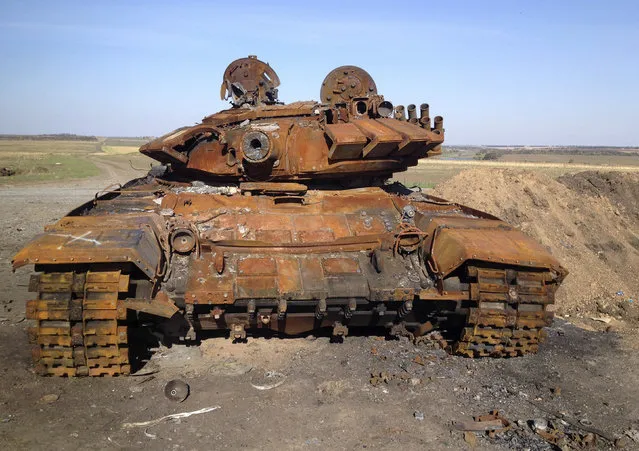
A destroyed T-72 tank, which presumably came from Russia, is seen on a battlefield near separatist-controlled Starobesheve, eastern Ukraine, October 2, 2014.(Photo by Maria Tsvetkova/Reuters)

A destroyed T-72 tank, which presumably came from Russia, is seen on a battlefield near separatist-controlled Starobesheve, eastern Ukraine, October 2, 2014. The burnt-out remains of dozens of tanks and armoured vehicles in fields near the small village of Horbatenko bear witness to the ferocity of a battle that turned the tide of the conflict in eastern Ukraine. Among the debris, Reuters found the blackened carcasses of what military experts have since identified as two Russian army tanks, supporting statements by Kiev and the West that the rebels were backed by troops and equipment sent by Moscow. (Photo by Maria Tsvetkova/Reuters)
Details
24 Oct 2014 12:14:00
Armin Bielefeldt of the U.S. poses with his beard art work before the Beard World Championship 2013 in Leinfelden-Echterdingen near Stuttgart November 2, 2013. Bielefeldt needs more than 6 hours for his art work. More than 300 people from around the world compete in different moustache and beard categories. (Photo by Michaela Rehle/Reuters)

Armin Bielefeldt of the U.S. poses with his beard art work before the Beard World Championship 2013 in Leinfelden-Echterdingen near Stuttgart November 2, 2013. Bielefeldt needs more than 6 hours for his art work. More than 300 people from around the world compete in different moustache and beard categories. (Photo by Michaela Rehle/Reuters)
Details
05 Nov 2013 14:00:00
Snakes are collected and rolled before putting into the oven on March 2, 2014 in the village of Kertasura, Cirebon, Indonesia. (Photo by Nurcholis Anhari Lubis/Getty Images)

Snakes are collected and rolled before putting into the oven on March 2, 2014 in the village of Kertasura, Cirebon, Indonesia. At slaughter house snake skins measuring in the hundreds of metres, are sold to bag factories in the West and Central Java provinces on a monthly basis. From snake skin was manufactured into bags, shoes, wallets and belts. The price of a bag made from snake skin costs between 150,000 rupiah ($15 USD) and 300,000 rupiah ($30 USD), depending on its size. When snake skins reach Western fashion houses their price can increase dramatically and sell for up to $4,000 USD. (Photo by Nurcholis Anhari Lubis/Getty Images)
Details
05 Mar 2014 07:31:00
Military helicopters fly in formation above a billboard with a picture of China's late Chairman Mao Zedong during a training session for the upcoming parade marking the 70th anniversary of the end of World War Two, on the outskirts of Beijing, July 2, 2015. (Photo by Jason Lee/Reuters)

Military helicopters fly in formation above a billboard with a picture of China's late Chairman Mao Zedong during a training session for the upcoming parade marking the 70th anniversary of the end of World War Two, on the outskirts of Beijing, July 2, 2015. Troops from Russia and Mongolia will march together with Chinese forces in a parade in Beijing in September to commemorate the end of World War Two, the government and state media said on Thursday, confirming the first two foreign participants. (Photo by Jason Lee/Reuters)
Details
03 Jul 2015 13:07:00
Autos sit on top of each other in a washed out section of Dog Track Road in the Millview community as Gulf Coast residents continue cleaning up from damage caused by torrential rains in Pensacola, Fla., Thursday, May 1, 2014. The National Weather Service, estimated 15-20 inches of rain has fallen in the Pensacola area in the past 2 days. (Photo by G. M. Andrews/AP Photo)

Autos sit on top of each other in a washed out section of Dog Track Road in the Millview community as Gulf Coast residents continue cleaning up from damage caused by torrential rains in Pensacola, Fla., Thursday, May 1, 2014. The National Weather Service, estimated 15-20 inches of rain has fallen in the Pensacola area in the past 2 days. (Photo by G. M. Andrews/AP Photo)
Details
03 May 2014 08:43:00
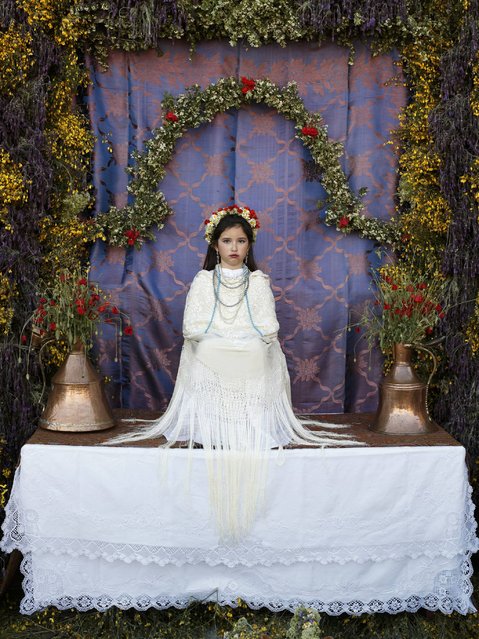
A “Maya” girl sits in an altar during the traditional celebration of “Las Mayas” on the streets in Colmenar Viejo, near Madrid, Spain, Friday, May 2, 2014. (Photo by Daniel Ochoa de Olza/AP Photo)

A “Maya” girl sits in an altar during the traditional celebration of “Las Mayas” on the streets in Colmenar Viejo, near Madrid, Spain, Friday, May 2, 2014. The festivity of the Maya comes from pagan rites and dates from the medieval age, appearing in ancient documents, it takes place every year in the beginning of May and celebrates the beginning off the spring. A girl between 7 and 11years is chosen as “Maya” and should sit still, serious, and quiet for a couple of hours in an altar on the street decorated with flowers and plants, afterwards they walk to the church with their family where they attend a ceremony. (Photo by Daniel Ochoa de Olza/AP Photo)
Details
13 May 2014 10:17:00
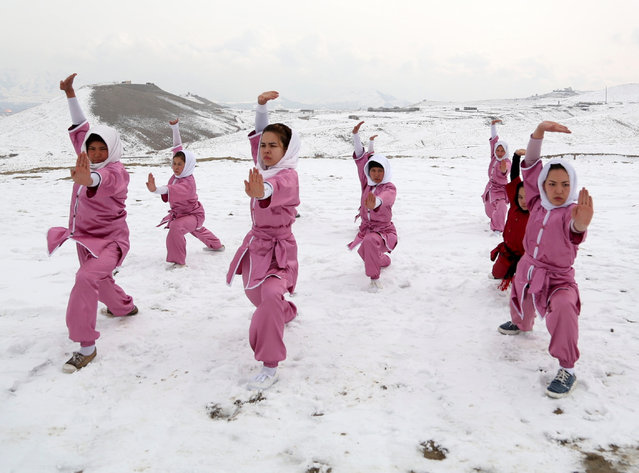
Afghan girl athletes perform Wushu on the top of a hill in Kabul, capital of Afghanistan, January 18, 2017. In the conservative Afghan society where people especially in the countryside deeply believe in the old traditions and don't allow their girls and female members of the family to go out of home, exercising sport in open is extremely risky, but a group of girls are broken the taboo and exercising Wushu on a hilltop where the temperature is minus 2 Celsius degrees. (Photo by Rahmat Alizadah/Xinhua/Barcroft Images)

Afghan girl athletes perform Wushu on the top of a hill in Kabul, capital of Afghanistan, January 18, 2017. In the conservative Afghan society where people especially in the countryside deeply believe in the old traditions and don't allow their girls and female members of the family to go out of home, exercising sport in open is extremely risky, but a group of girls are broken the taboo and exercising Wushu on a hilltop where the temperature is minus 2 Celsius degrees. (Photo by Rahmat Alizadah/Xinhua/Barcroft Images)
Details
21 Jan 2017 11:26:00
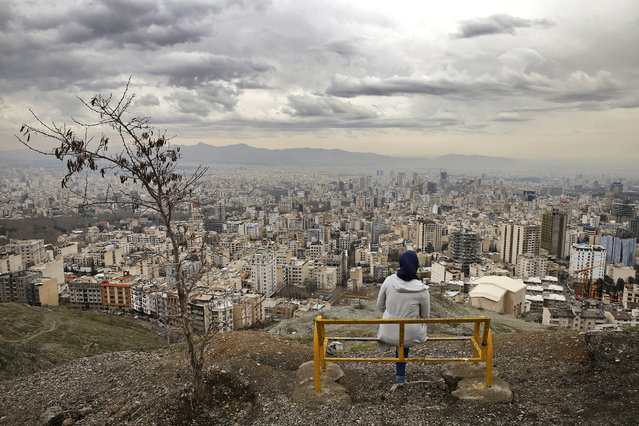
A woman spends her time outdoors to observe the ancient festival of Sizdeh Bedar, an annual public picnic day on the 13th day of the Iranian new year, at the Tochal mountainous area northern Tehran, Iran, Sunday, April, 2, 2017. Sizdeh Bedar, which comes from the Farsi words for “thirteen” and “day out”, is a legacy from Iran's pre-Islamic past that hard-liners in the Islamic Republic never managed to erase from calendars. (Photo by Ebrahim Noroozi/AP Photo)

A woman spends her time outdoors to observe the ancient festival of Sizdeh Bedar, an annual public picnic day on the 13th day of the Iranian new year, at the Tochal mountainous area northern Tehran, Iran, Sunday, April, 2, 2017. Sizdeh Bedar, which comes from the Farsi words for “thirteen” and “day out”, is a legacy from Iran's pre-Islamic past that hard-liners in the Islamic Republic never managed to erase from calendars. (Photo by Ebrahim Noroozi/AP Photo)
Details
21 Apr 2017 07:38:00