Loading...
Done
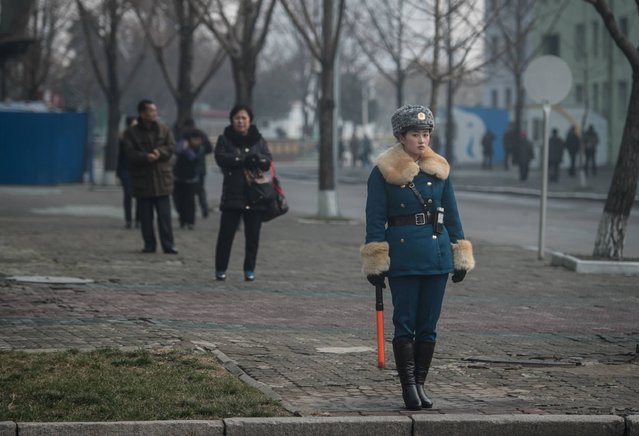
In a photo taken on November 27, 2016 a female traffic police officer directs traffic on a road in Pyongyang. Believed to be hand-picked for their looks, Pyongyang's female traffic police are a familiar sight at intersections around the capital, where traffic volumes have noticeably increased in recent years. (Photo by Ed Jones/AFP Photo)

In a photo taken on November 27, 2016 a female traffic police officer directs traffic on a road in Pyongyang. Believed to be hand-picked for their looks, Pyongyang's female traffic police are a familiar sight at intersections around the capital, where traffic volumes have noticeably increased in recent years. (Photo by Ed Jones/AFP Photo)
Details
12 Jan 2017 11:33:00
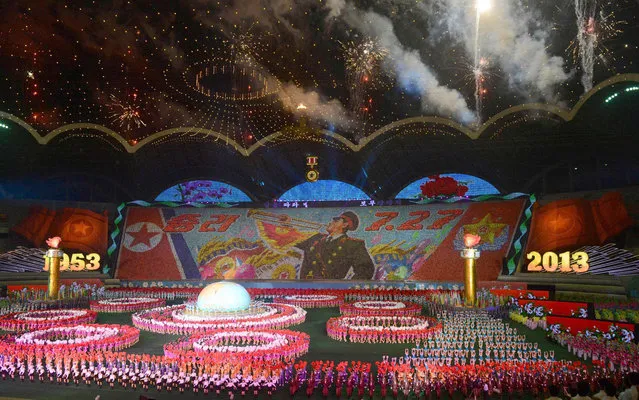
North Koreans perform during the Arirang Mass Games at the May Day Stadium in Pyongyang, as part of celebrations ahead of the 60th anniversary marking the end of the 1950-53 Korean War, in this photo taken by Kyodo July 22, 2013. (Photo by KYODO)

North Koreans perform during the “Arirang” Mass Games at the May Day Stadium in Pyongyang, as part of celebrations ahead of the 60th anniversary marking the end of the 1950-53 Korean War, in this photo taken by Kyodo July 22, 2013. (Photo by KYODO)
Details
24 Jul 2013 06:25:00
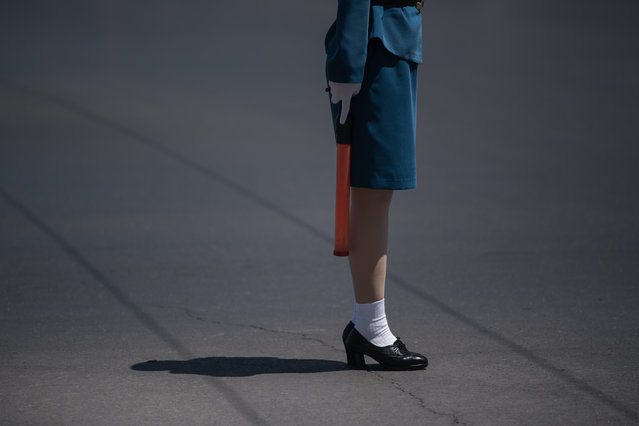
In a photo taken on June 5, 2017 a traffic security officer stands on duty at an intersection in Pyongyang. Officially known as traffic security officers but universally referred to as traffic ladies, they are chosen for their looks in a society that remains traditionalist in many respects. They must leave the role if they marry, and have a finite shelf-life, with compulsory retirement looming at just 26. The 300-odd ladies are unique to Pyongyang, which North Korean authorities are always keen to present in the best possible light despite their nuclear-armed country's impoverished status, and ensure a steady supply of photogenic young women who are the favourite subject of visiting tourists and journalists. (Photo by Ed Jones/AFP Photo)

In a photo taken on June 5, 2017 a traffic security officer stands on duty at an intersection in Pyongyang. Officially known as traffic security officers but universally referred to as traffic ladies, they are chosen for their looks in a society that remains traditionalist in many respects. They must leave the role if they marry, and have a finite shelf-life, with compulsory retirement looming at just 26. (Photo by Ed Jones/AFP Photo)
Details
21 May 2018 00:03:00
A guard secures gates of a catfish farm visited by a group of foreign reporters in Pyongyang, North Korea April 17, 2017. (Photo by Damir Sagolj/Reuters)

A guard secures gates of a catfish farm visited by a group of foreign reporters in Pyongyang, North Korea April 17, 2017. (Photo by Damir Sagolj/Reuters)
Details
16 May 2017 07:23:00
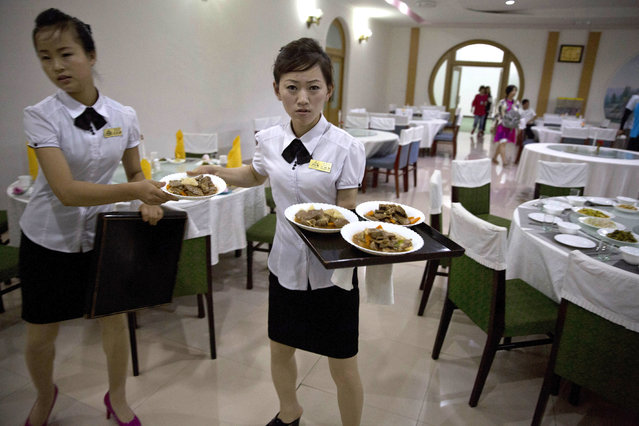
In this Friday, August. 17, 2018, photo, a North Korean waitress prepares to serve dinner to Chinese tourists at the Pegaebong hotel in Samjiyong in North Korea. Chinese businesspeople and tourists are once again flowing over the borders – several large tourist groups were in Samjiyon last week – and South Korean officials are seriously considering ways to help the North improve its roads and railways. (Photo by Ng Han Guan/AP Photo)

In this Friday, August. 17, 2018, photo, a North Korean waitress prepares to serve dinner to Chinese tourists at the Pegaebong hotel in Samjiyong in North Korea. Chinese businesspeople and tourists are once again flowing over the borders – several large tourist groups were in Samjiyon last week – and South Korean officials are seriously considering ways to help the North improve its roads and railways. (Photo by Ng Han Guan/AP Photo)
Details
07 Sep 2018 00:01:00
A student attending a winter military camp reacts during a training session in Ansan, south of Seoul January 3, 2013. Hundreds of students between 11 and 17 years old attend winter boot camp training courses every year. The winter courses range from 4 to 14 days at the Blue Dragon Camp run by retired marines, which also offers summer boot camp for students

A student attending a winter military camp reacts during a training session in Ansan, south of Seoul January 3, 2013. Hundreds of students between 11 and 17 years old attend winter boot camp training courses every year. The winter courses range from 4 to 14 days at the Blue Dragon Camp run by retired marines, which also offers summer boot camp for students. (Photo by Kim Hong-Ji/Reuters)
Details
03 Jan 2013 12:28:00
Kimchi

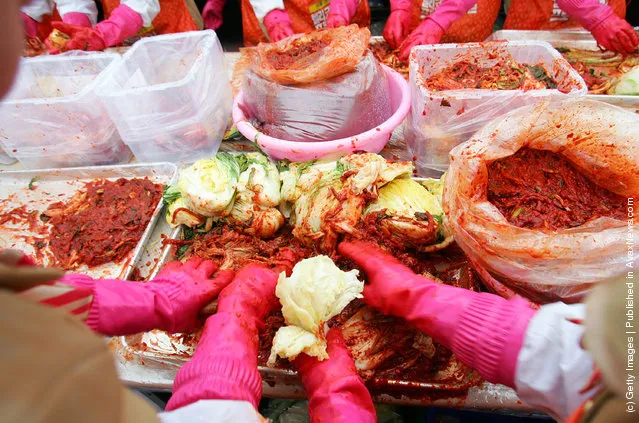
“Kimchi, also spelled gimchi, kimchee, or kim chee, is a traditional fermented Korean dish made of vegetables with varied seasonings. There are hundreds of varieties of kimchi made with a main vegetable ingredient such as napa cabbage, radish, green onions or cucumber. It is the most common banchan, or side dish, in Korean cuisine. Kimchi is also a main ingredient for many popular Korean dishes such as kimchi stew (kimchi jjigae), kimchi soup (kimchiguk), and kimchi fried rice (kimchi bokkeumbap)”. – Wikipedia

Photo: South Korean housewives, among more than two thousand who gathered for an event sponsored by state officials to help the needy, make kimchi, the traditional pungent vegetable dish on the grounds in front of Seoul City Hall on November 20 in Seoul, South Korea. (Photo by Chung Sung-Jun/Getty Images)

Details
21 Dec 2011 13:24:00
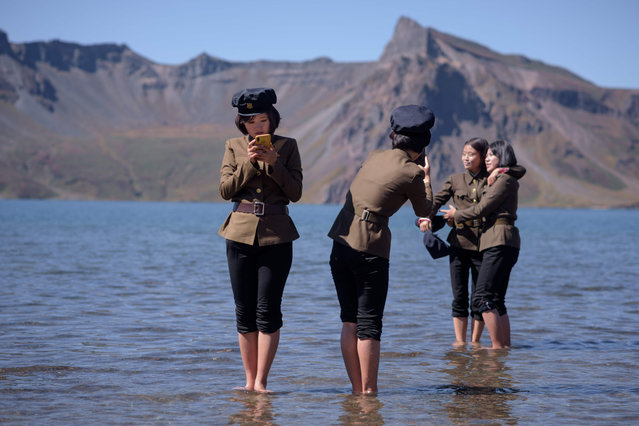
In a photo taken on September 11, 2019, North Korean students pose for photos in Chonji lake, or “Heaven lake”, as they visit the crater of Mount Paektu, near Samjiyon. Mount Paektu has long been considered the spiritual birthplace of the Korean nation and is a place of pilgrimage for tens of thousands of North Koreans every year, who are trained from birth to revere their leaders. Every year 100,000 North Koreans or more are taken on study tours to the camp, the mountain, and nearby revolutionary sites where relics of operations are preserved. Dressing in khaki uniforms said to resemble guerrillas' outfits and carrying red flags, they march to the summit of the volcano. (Photo by Ed Jones/AFP Photo)

In a photo taken on September 11, 2019, North Korean students pose for photos in Chonji lake, or “Heaven lake”, as they visit the crater of Mount Paektu, near Samjiyon. Mount Paektu has long been considered the spiritual birthplace of the Korean nation and is a place of pilgrimage for tens of thousands of North Koreans every year, who are trained from birth to revere their leaders. (Photo by Ed Jones/AFP Photo)
Details
09 Oct 2019 00:03:00