Loading...
Done
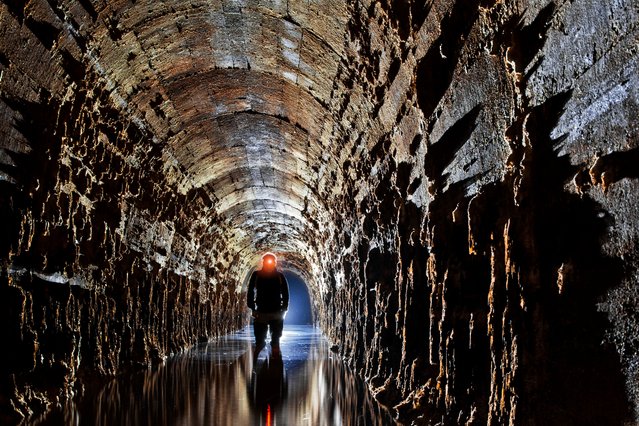
Regenwurmlager, Poland. The Regenwurmlager is an extensive underground fortification area constructed by Germany in 1920s-1940s, now in western Poland, near the city of Międzyrzecz. (Photo by Anna Arinova/Caters News)

Stunning silhouettes under European cities reveal the size and splendor of the continent’s urban foundations. Photographer and content-manager Anna Arinova, 28, from Moscow, captured the awe-inspiring labyrinths in Russia and Germany. Here: Regenwurmlager, Poland. The Regenwurmlager is an extensive underground fortification area constructed by Germany in 1920s-1940s, now in western Poland, near the city of Międzyrzecz. (Photo by Anna Arinova/Caters News)
Details
29 Dec 2016 07:53:00
When it opened in 1955, the Grande Hotel in the Indian Ocean city of Beira was one of the most luxurious in Africa. Photojournalist Fellipe Abreu documents the lives of the 3,500 people who now fill this long-closed hotel to capacity. (Photo by Fellipe Abreu/The Guardian)

When it opened in 1955, the Grande Hotel in the Indian Ocean city of Beira was one of the most luxurious in Africa. Photojournalist Fellipe Abreu documents the lives of the 3,500 people who now fill this long-closed hotel to capacity. (Photo by Fellipe Abreu/The Guardian)
Details
06 May 2016 13:45:00
Rani rides home with her father on the back of his bicycle on March 6, 2017 in Khulna division, Bangladesh. Rani, who is now 16, was under pressure to marry a boy when she was 14-years-old despite the reluctance of Rani and her father, Abdul. (Photo by Allison Joyce/Getty Images)

Rani rides home with her father on the back of his bicycle on March 6, 2017 in Khulna division, Bangladesh. Rani, who is now 16, was under pressure to marry a boy when she was 14-years-old despite the reluctance of Rani and her father, Abdul. (Photo by Allison Joyce/Getty Images)
Details
11 Mar 2017 00:00:00
An otter reaches for a snack from a customer at an otter cafe in Tokyo. Asian small-clawed otters are increasingly popular as novelty pets, particularly in Japan. Now international trade in the species may be banned. (Photo by Noriko Hayashi/The New York Times)

An otter reaches for a snack from a customer at an otter cafe in Tokyo. Asian small-clawed otters are increasingly popular as novelty pets, particularly in Japan. Now international trade in the species may be banned. (Photo by Noriko Hayashi/The New York Times)
Details
01 Jan 2020 00:05:00
A female soldier takes part in a training for women at the Tolemaida Military Air Base in Tolemaida, Colombia, on May 16, 2023. The last time the Colombian Army enlisted women in their ranks was in 1993. Now, 30 years on, more than 1,200 women voluntarily joined the military service in the country. (Photo by Raúl Arboleda/AFP Photo)

A female soldier takes part in a training for women at the Tolemaida Military Air Base in Tolemaida, Colombia, on May 16, 2023. The last time the Colombian Army enlisted women in their ranks was in 1993. Now, 30 years on, more than 1,200 women voluntarily joined the military service in the country. (Photo by Raúl Arboleda/AFP Photo)
Details
17 Dec 2023 05:41:00
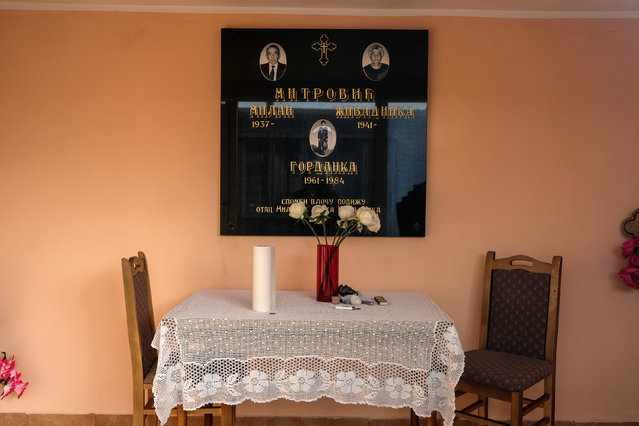
Pictures of deceased people are seen inside a chapel at a cemetery in the village of Smoljinac, Serbia, October 25, 2016. (Photo by Marko Djurica/Reuters)

Pictures of deceased people are seen inside a chapel at a cemetery in the village of Smoljinac, Serbia, October 25, 2016. From a distance, the cemetery in the eastern Serbian village of Smoljinac looks like a residential neighbourhood eerily placed among graves. But once inside the grounds, after passing a section with the usual stone slabs, visitors find rows of small bungalows painted in pastel colours. They have one or two rooms, large windows and ornate plaques – some inside, some outside – memorialising the deceased. These are the burial chapels of Smoljinac, cosy cabins with a furnished room inside, a storage place for wreaths and funeral paraphernalia, and the family crypt below. Some even have electric power inside. (Photo by Marko Djurica/Reuters)
Details
12 Nov 2016 10:37:00
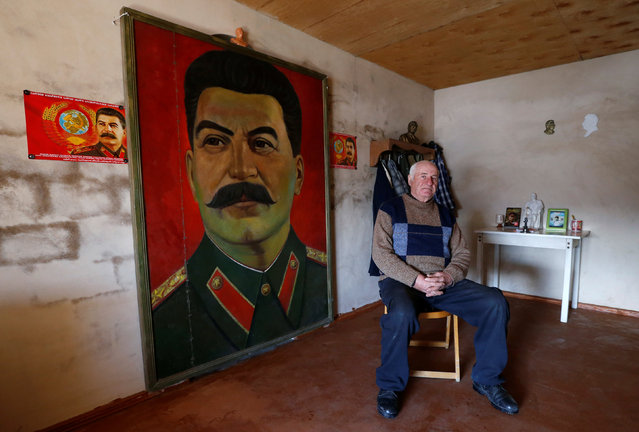
Retired builder Vasili Sidamonidze, 70, poses for a portrait at his home in Gori, Georgia, December 6, 2016. “Unfortunately, Stalin is not popular nowadays. Our people don't respect him. Only we, members of the (Communist) Party, respect him”, Sidamonidze said. “I always try to attend Stalin's birthday anniversaries in Gori. Unfortunately many people don't want to join us even if they live nearby. They look at us from their windows”. Stalin, who was born in Gori in 1878 and died in 1953, is largely reviled today in Georgia, which regained its independence during the 1991 collapse of the Soviet Union. Over the years, his memorials have been dismantled, most recently in 2010 when authorities removed a statue of the dictator from Gori's central square. But Stalin is still revered by a small group of mainly elderly supporters who stress his role in the industrialisation of the Soviet Union and in defeating Nazi Germany in World War Two. Each Dec. 21, a few dozen people mark his birthday by gathering outside a Gori museum dedicated to Stalin, where they make speeches and walk to the square where a 6-meter-high bronze statue of him once stood, calling for it to be reinstated. Opponents say it was a symbol of Moscow's still lingering shadow. In 2008, Russia fought a brief war with Georgia and recognised its breakaway regions of Abkhazia and South Ossetia as independent states. (Photo by David Mdzinarishvili/Reuters)

Retired builder Vasili Sidamonidze, 70, poses for a portrait at his home in Gori, Georgia, December 6, 2016. “Unfortunately, Stalin is not popular nowadays. Our people don't respect him. Only we, members of the (Communist) Party, respect him”, Sidamonidze said. “I always try to attend Stalin's birthday anniversaries in Gori. Unfortunately many people don't want to join us even if they live nearby. They look at us from their windows”. (Photo by David Mdzinarishvili/Reuters)
Details
17 Dec 2016 07:59:00
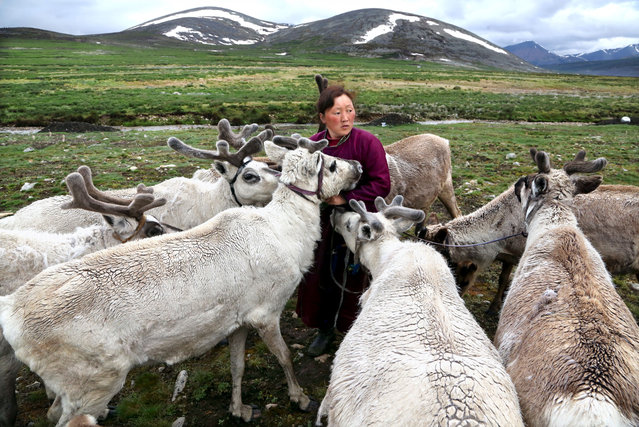
The Tsaatan people are one of the world’s last groups of nomadic reindeer herders and they live in Khövsgöl Aimag in northern Mongolia. They are originally from across the border in what is now the Tuva republic of Russia. (Photo by Pascal Mannaerts/Rex Feature/Shutterstock)

The Tsaatan people are one of the world’s last groups of nomadic reindeer herders and they live in Khövsgöl Aimag in northern Mongolia. They are originally from across the border in what is now the Tuva republic of Russia. (Photo by Pascal Mannaerts/Rex Feature/Shutterstock)
Details
04 Feb 2016 11:56:00