Loading...
Done
Pygmy Marmoset - The Smallest Monkey

The pygmy marmoset (Cebuella pygmaea) is a small New World monkey native to rainforests of the western Amazon Basin in South America. It is notable for being the smallest monkey in the world at just over 100 grams (3.5 oz). It is generally found in evergreen and river edge forests and is a gum-feeding specialist
Details
29 Jan 2014 12:59:00
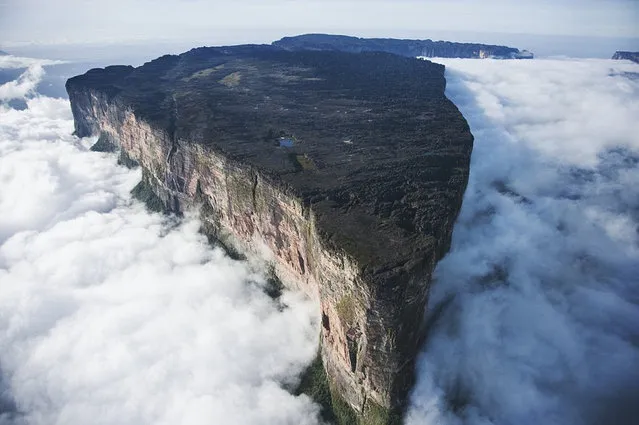
Mount Roraima

Mount Roraima (Spanish: Monte Roraima, also known as Tepuy Roraima and Cerro Roraima; Portuguese: Monte Roraima [ˈmõtʃi ʁoˈɾajmɐ]) is the highest of the Pakaraima chain of tepui plateau in South America. First described by the English explorer Sir Walter Raleigh in 1596, its 31 km2 summit area is defended by 400-metre-tall cliffs on all sides. The mountain includes the triple border point of Venezuela, Brazil and Guyana.
Details
11 Sep 2012 08:04:00


Women talk during a Slutwalk march for the right of women to wear what they want without harassment on May 28, 2011 in Melbourne, Australia. The Slutwalk began with a small protest in Toronto, Canada, when women marched against a policeman who claimed he was told women should “avoid dressing like sl*ts in order not to be victimized”. Slutwalks are scheduled for Adeleaide and Sydney as well as other cities in North America and Europe. (Photo by Scott Barbour/Getty Images)
Details
28 May 2011 07:53:00
Disney Apocalypse By Kasami-Sensei

DeviantART user Kasami-Sensei has re-envisioned the sweet and innocent protagonists of several Disney films in the style of zombie hunters (and a zombie) from AMC's “The Walking Dead”. We knew that these Disney princesses and princes were cool and tough, but now they really kick-butt. Check out several of Kasami-Sensei's illustrations below and head over to his DeviantART page for even more. Some of these illustrations are even accompanied by fan-fiction stories on Kasami-Sensei's page.
Details
29 Mar 2014 10:23:00
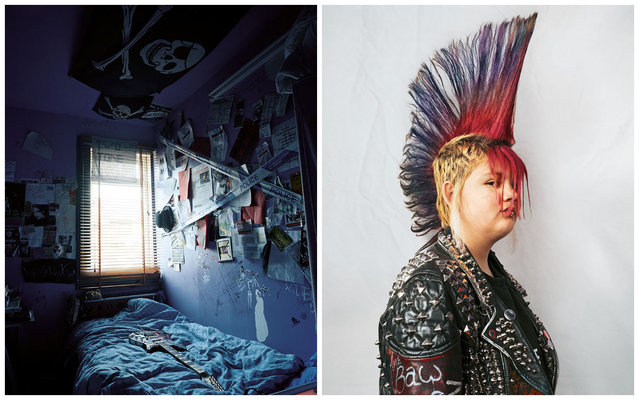
Where Children Sleep By James Mollison Part 1

Where Children Sleep – stories of diverse children around the world, told through portraits and pictures of their bedrooms by James Mollison. This is a selection from the 56 diptychs in the book (Chris Boot November 2010). The book is written and presented for an audience of 9-13 year olds ‘ intended to interest and engage children in the details of the lives of other children around the world, and the social issues affecting them, while also being a serious photographic essay for an adult audience.
Details
14 Apr 2014 13:37:00
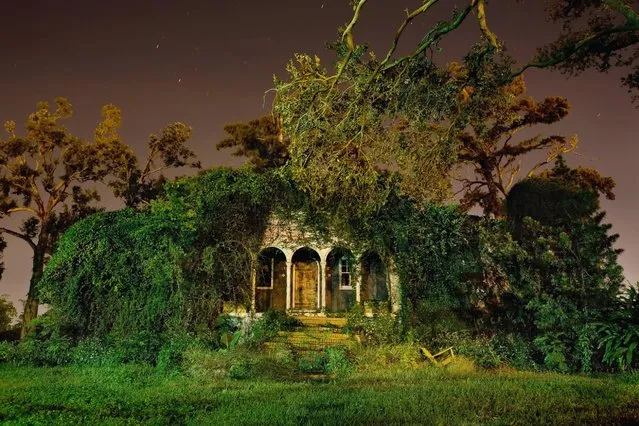
“Telemachus”. Farragut Street, New Orleans, La. Nov. 2006. (Photo by Frank Relle)

Photographer Frank Relle takes long-exposure images of houses in New Orleans. Says Relle, “The city at night comes alive for me. I imagine stories about the people’s lives inside the homes based on the evidence on the outside. My photographs become a portrait without the person. The night obscures details and the lack of information gives possibility”. Photo: “Telemachus”. Farragut Street, New Orleans, La. Nov. 2006. (Photo by Frank Relle)
Details
13 May 2014 08:59:00
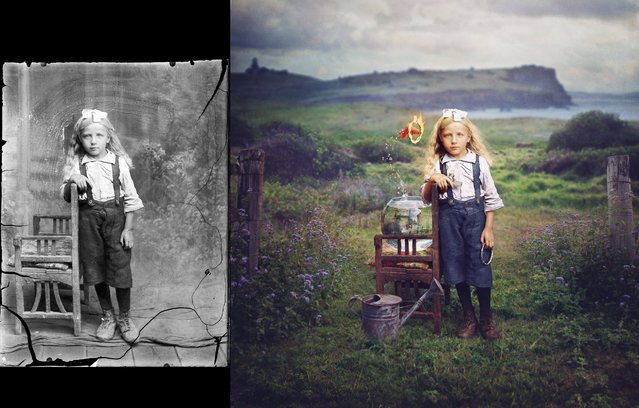
The Costica photo on the left inspired Australia-based photographer Jane Long to create her version, titled “Innocence”. (Photo by Costica Acsinte Archive/Jane Long)

The “Dancing With Costica” series began when Australia-based photographer Jane Long decided to brush up on her retouching skills. After finding the Costica Acsinte Archive on Flickr, she became fascinated with the images and their subjects, wanting to bring them to life and give them a story. Here: the Costica photo on the left inspired Jane Long to create her version, titled “Innocence”. (Photo by Costica Acsinte Archive/Jane Long)
Details
01 Sep 2014 09:48:00
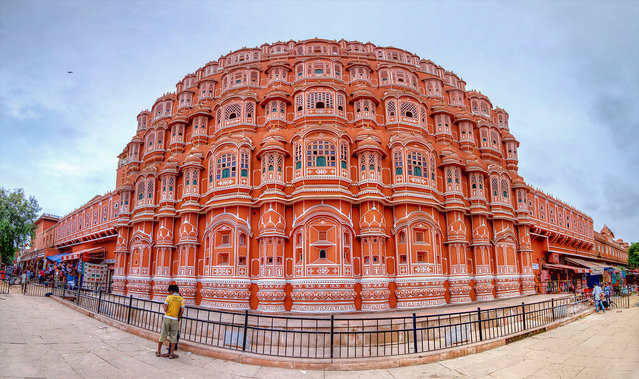
Hawa Mahal India

Hawa Mahal, which translates as the Palace of Winds, was built in 1799 by Maharaja Sawai Pratap Singh. The design of the palace was created by Shreyansh Jain to resemble the crown of Krishna. The design of this unique five-story building is akin to a honeycomb. The main purpose of this building was to allow royal ladies to watch the street below while remaining unseen, since during those times they had a strict code of dressing, which meant covering their faces. The palace was designed to produce the Venturi effect, which created natural air conditioning and kept the interior relatively cool during hot summers.
Details
22 Nov 2014 13:22:00