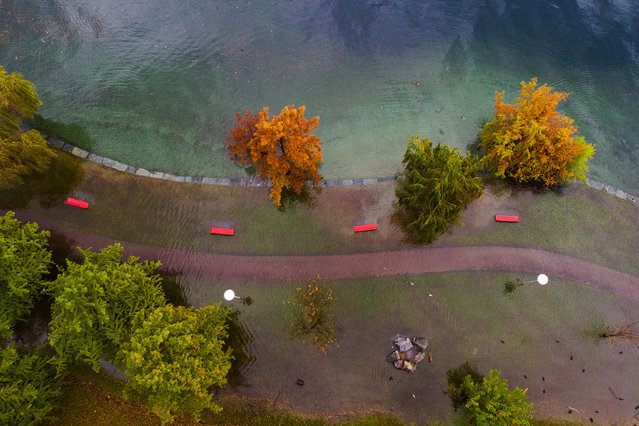
The pedestrian zone on the banks of the “Parco della Pace” at Lake Maggiore is flooded due to flooding, on Thursday, October 24, 2019 in Locarno, Switzerland. (Photo by Samuel Golay/Ti-Press/Keystoen)
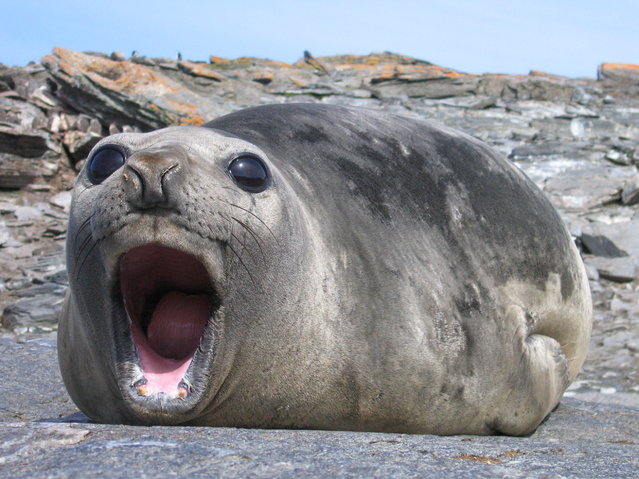
Weddell seal numbers in 2025 have declined sharply on Signy Island, part of the South Orkney Islands in the Southern Ocean, where British Antarctic Survey researchers have tracked seal populations for nearly 50 years to understand the impact of melting sea ice. (Photo by Michael Dunn/The Times)
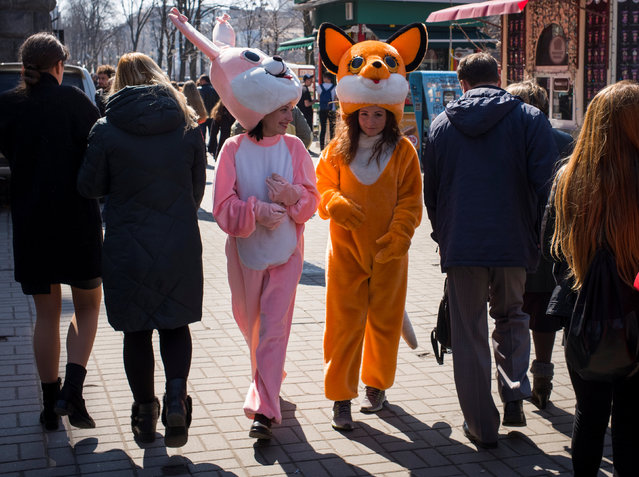
Women dressed as a rabbit and a fox, who pose for pictures with tourists, walk in central Kiev, Ukraine April 4, 2018. (Photo by Gleb Garanich/Reuters)
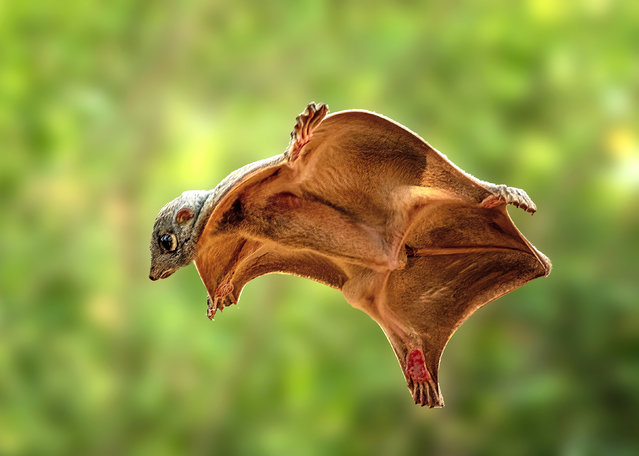
The Sunda lemur uses a special membrane to “fly” between trees while on the lookout for food in Java, Indonesia in the last decade of June 2024. (Photo by Dzulfikri/Solent News)
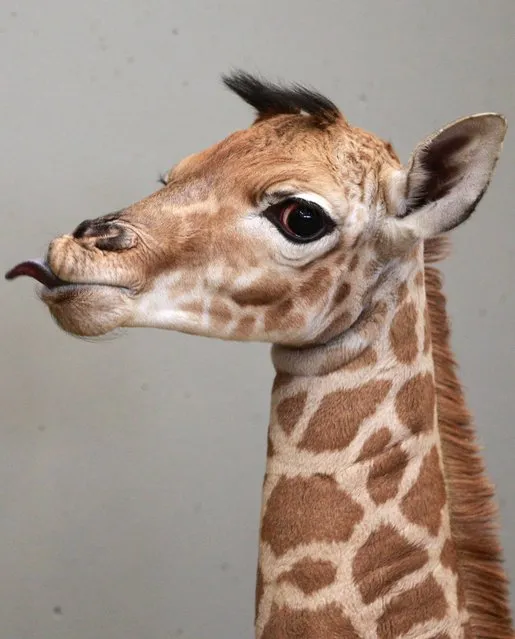
A newborn baby giraffe shows its tongue at the Planckendael zoo in Mechelen, 25 kilometers North of Brussels, Tuesday, February 18, 2014. The calf was born on Valentines day, February 14, and has a heart shaped spot on the hip. (Photo by Yves Logghe/AP Photo)
Breitling Wingwalkers aircrafts perform during an aerobatic display at an air show in Zhengzhou, Henan province, China, September 25, 201. (Photo by Reuters/Stringer)
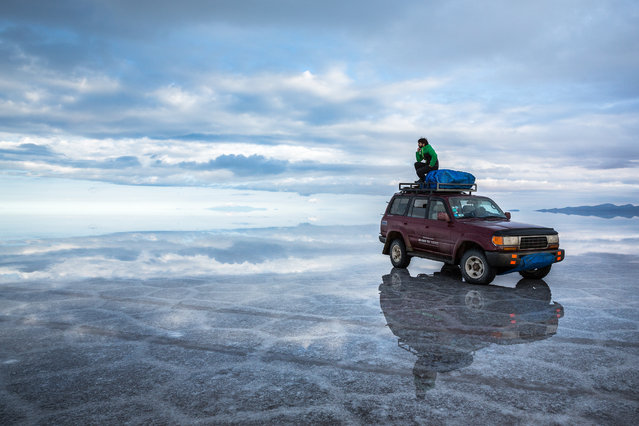
At 10,582 square kilometres, the Bolivian salt flats – otherwise known as Salar de Uyuni – are the largest on the planet and contain between 50 and 70% of the world’s lithium reserves. After exploring Chile and Argentina, photographer Joel Santos decided to travel to Bolivia in January 2017 to check the salt flats off his bucket list. With an electrical storm rolling in, Joel and his two travelling companions were the only souls left on the vast flats and captured the eerie flats without a person in sight. (Photo by Joel Santos/Barcroft Images)