Ten finalists capture the theme of “through young eyes” in this young photographers’ competition that aims to engage youth around the world in wildlife conservation. Here: Heavy bodied jumping spider by Md Rashuidul Rabby, age 23, from Bangladesh. (Photo by Md Rashuidul Rabby/WWD2017)
A devotee of the Hare Krishna faith poses for a photograph during the festival of Rathayatra on June 12, 2011 in London, England. Rathayatra, or Chariot festival, features three huge, wooden chariots pulled by hand across Central London accompanied by constant singing, chanting, drums, cymbals and dancing. (Photo by Matthew Lloyd/Getty Images)
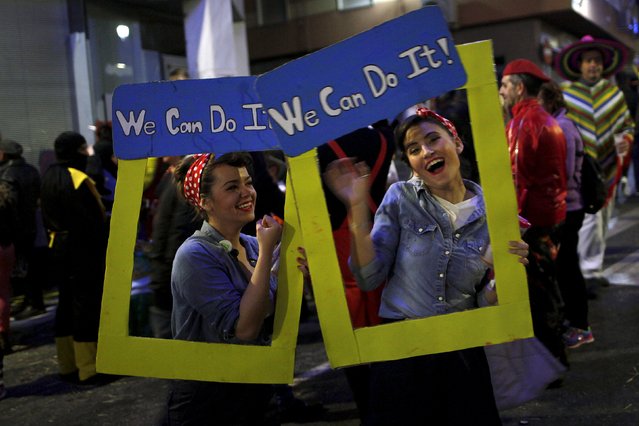
People dressed as Father Frost, the equivalent of Santa Claus, and Snow Maiden take part in the contest “Yolka-fest-2014” (Fir-festival-2014) in Minsk December 12, 2014. (Photo by Vasily Fedosenko/Reuters)
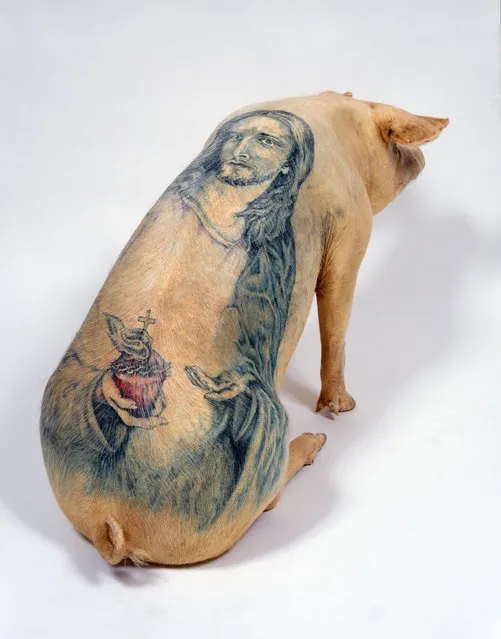
Wim Delvoye is a notorious tattoo artist, who became famous when he started tattooing live pigs. He first began in 1997 and after animal rights activists found out about what he was doing, he had to move to China to continue his business. There is nothing special about the tattoos that Wim Delvoye creates, they look mediocre at best, and the only reason why he’s famous is his acts of animal cruelty. Nevertheless, Wim states that the pigs feel just fine and are well fed and taken care off. Full anesthesia is used to ensure that the pig doesn’t feel pain during the course of the whole procedure. During this time three tattoo artists work on the tattoo simultaneously to complete it as quickly as possible. Skins of those pigs are then sold for as much as £50k a piece.
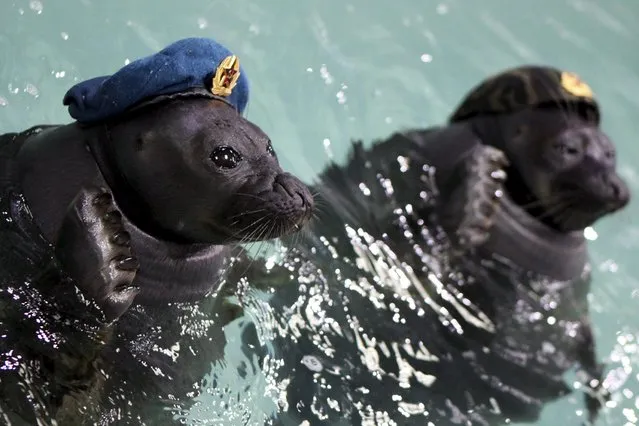
Seals dressed in military uniforms swim during a show marking the 70th anniversary of the end of World War Two, at an aquatic park in the Siberian city of Irkutsk, Russia, May 9, 2015. (Photo by Evgeny Kozyrev/Reuters)
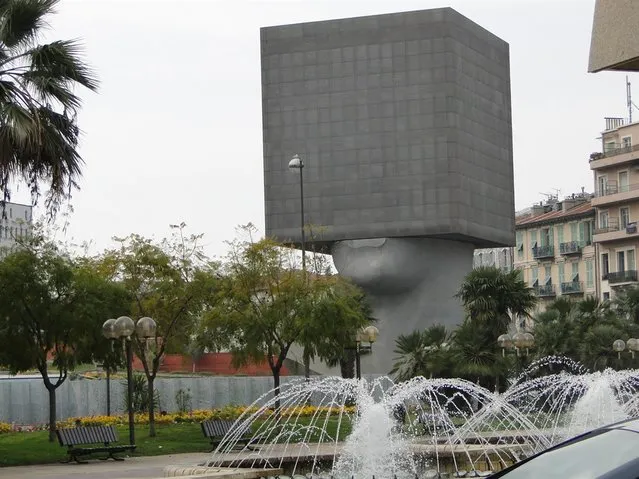
The "Square Head" is a sculpture by the french artist Sacha Sosno, and it is also the very first giant sculpture to have been transformed in a habitable building.
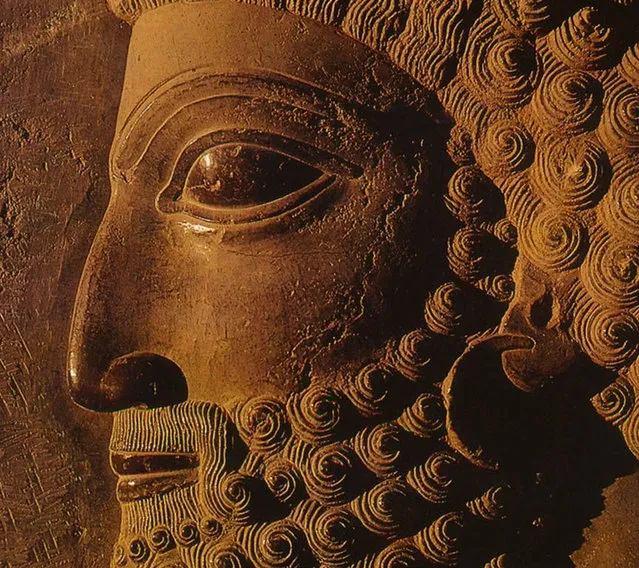
Few people haven’t heard about the ancient city of Persepolis, which lies at the foot of the Mountain of Mercy (Kuh-I-Rahmat). In ancient times, Persepolis was the capital of the Achaemenid Empire. Regretfully, it was burned by the Greeks in 330 BC after they looted the immense treasure of this city. It is said that Greeks needed 5,000 camels and 20,000 mules to carry all the treasures from Persepolis. The only thing of Persepolis that has survived the wear of time is the ginormous stone terrace 530 by 330 meters adorned by elaborate stone sculptures. It is amazing how intricately detailed some of the sculptures are, despite the fact that they were created many centuries ago.