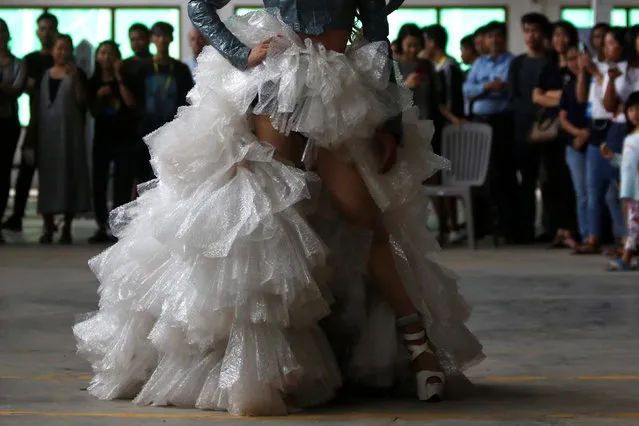
A model wears a dress made out of recycled material during a show organised by LGBT fashion designers to battles discrimination in Phnom Penh, Cambodia, October 24, 2018. (Photo by Samrang Pring/Reuters)
A model presents a creation by designer Alexis Mabille as part of his Haute Couture Spring/Summer 2020 collection show in Paris, France, January 21, 2020. (Photo by Francois Lenoir/Reuters)
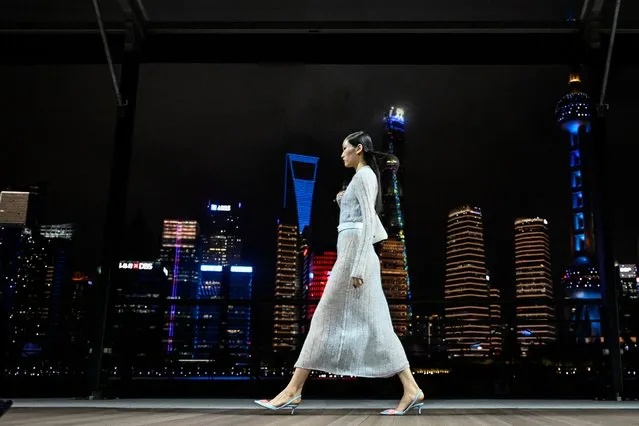
A model presents a creation for Kenzo by Japanese fashion designer Tomoaki Nagao aka Nigo during Kenzo fashion show at the North Bund Bay in Shanghai on July 28, 2023. (Photo by Jade Gao/AFP Photo)
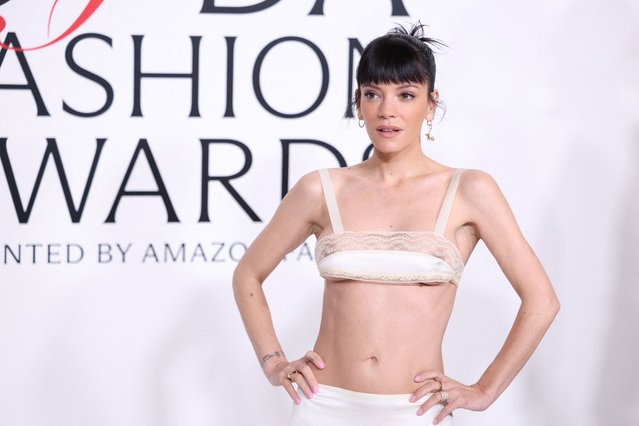
British singer and actress Lily Allen attends the CFDA (Council of Fashion Designers of America) Fashion Awards at the American Museum of Natural History in New York on November 3, 2025. (Photo by Charly Triballeau/AFP Photo)
A sculpture entitled “Powerless Structures, Fig.101” designed by Danish artist Michael Elmgreen and Norwegian artist Ingar Dragset is unveiled on the Fourth Plinth in Trafalgar Square on February 23, 2012 in London, England. (Photo by Oli Scarff/Getty Images)
A model presents a creation by German designer Karl Lagerfeld as part of his Haute Couture Spring Summer 2015 fashion show for French fashion house Chanel in Paris January 27, 2015. (Photo by Gonzalo Fuentes/Reuters)
A model presents a hairstyle during the 7th international festival of hairdressing art, fashion and design called “Crystal Angel” in Kiev, Ukraine, on April 18, 2013. (Photo by Gleb Garanich/Reuters)
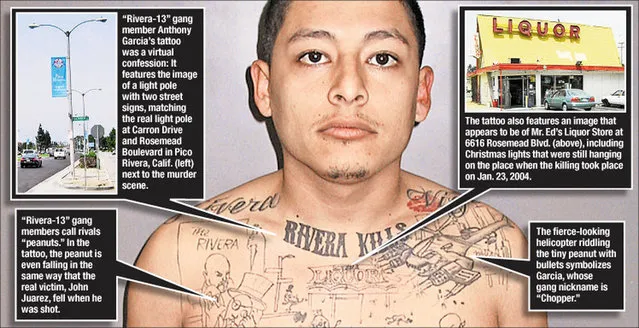
Tattoos are commonly used among criminals to show gang membership and record the wearer's personal history—such as his or her skills, specialties, accomplishments and convictions. They are also used as a means of personal expression. Certain designs have developed recognized coded meanings. The code systems can be quite complex and because of the nature of what they encode, the tattoo designs are not widely recognized.