General view of “Marie Claire” Magazine Film Exhibition at Oquendo street during 59th San Sebastian Film Festival on September 22, 2011 in San Sebastian, Spain. (Photo by Carlos Alvarez/Getty Images)
When Dutch photographer Marcel Heijnen moved to Hong Kong, the territory’s shop cats instantly caught his eye. While the “feline emperors” are the stars, his shots also offer insights into Hong Kong’s wares, from dried fish to paper. Here: Hong Kong Shop Cats #17. (Photo by Marcel Heijnen/Blue Lotus)
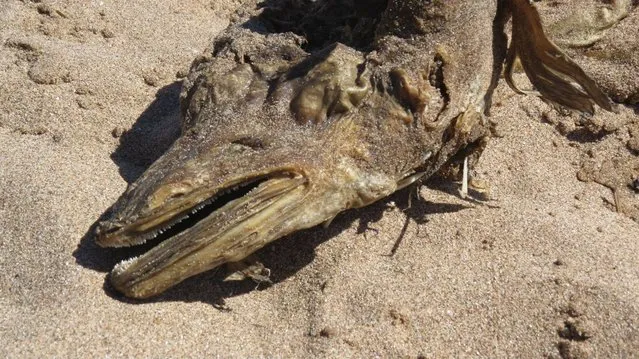
A mysterious sea creature with some frighteningly sharp teeth washed up on a beach in England last week, where David Mackland snapped these photos. A Grind TV story reports that Mackland estimated the creature to be about 4-5 feet in length. (Photo by David Mackland/OurCarnoustie)
In spring sunsunshine the “Out of Sync” art installation is unveiled on a grass meadow at Somerset House on March 15, 2012 in London, England. Chilean artist Fernando Casasempere hand crafted the 10,000 clay flowers that dominate the Edmond J. Safra Fountain Court. The installation is open to the public at Somerset House from March 16th to April 27th 2012. (Photo by Peter Macdiarmid/Getty Images for Somerset House Trust)
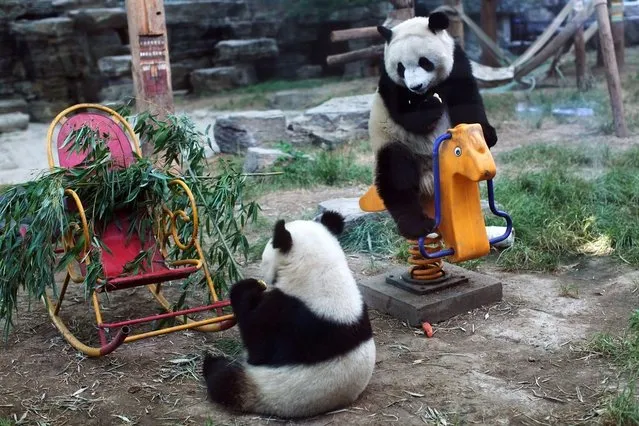
A pair of giant pandas play in their enclosure at the Beijing Zoo on June 5, 2012 in Beijing, China. With an estimated 1,600 living in the wild, the endangered giant panda dwell in a few mountain ranges in central China, in Sichuan, Shaanxi, and Gansu provinces. (Photo by Lintao Zhang)
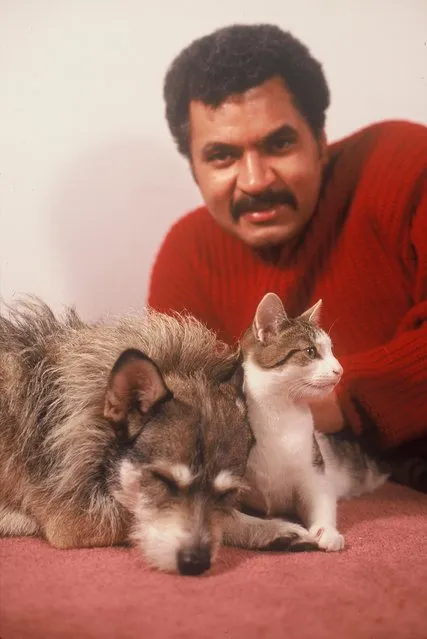
Ginny, a seventeen-year old schnauzer-husky mix from Long Beach, Long Island who was famous for rescuing cats, was killed off by her owner, Philip Gonzalez, on August 25th. At the time of her death she had stopped eating and was incontinent and arthritic.
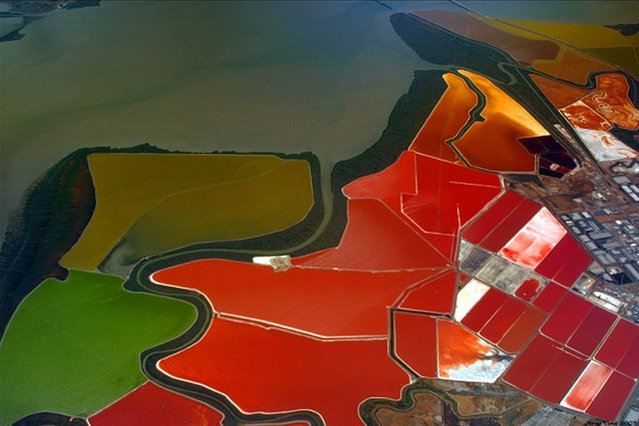
Salt evaporation ponds, also called salterns or salt pans, are shallow artificial ponds designed to produce salts from sea water or other brines. The seawater or brine is fed into large ponds and water is drawn out through natural evaporation which allows the salt to be subsequently harvested. The ponds also provide a productive resting and feeding ground for many species of waterbirds, which may include endangered species. The ponds are commonly separated by levees.