Loading...
Done
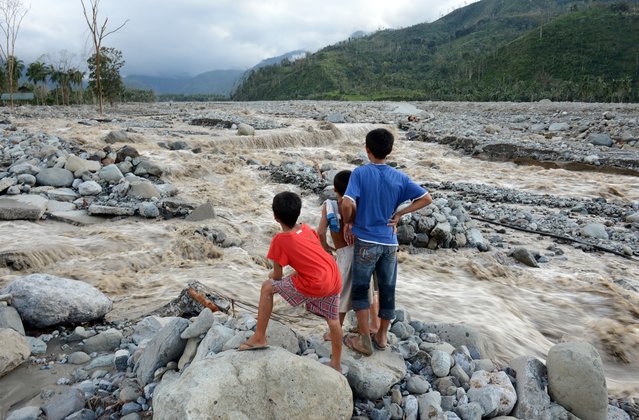
Children look at the a damaged road destroyed by flash floods at the height of Typhoon Bopha in the village of Andap, New Bataan town, Compostela Valley province, December 5, 2012. (Photo by Ted Aljibe)

“Rescuers were digging through mud and debris Friday to retrieve more bodies strewn across a farming valley in the southern Philippines by a powerful typhoon. The death toll from the storm has surpassed 500, with more than 400 people missing”. – Bullit Marquez via Associated Press

Photo: Children look at the a damaged road destroyed by flash floods at the height of Typhoon Bopha in the village of Andap, New Bataan town, Compostela Valley province, December 5, 2012. (Photo by Ted Aljibe)
Details
08 Dec 2012 09:51:00
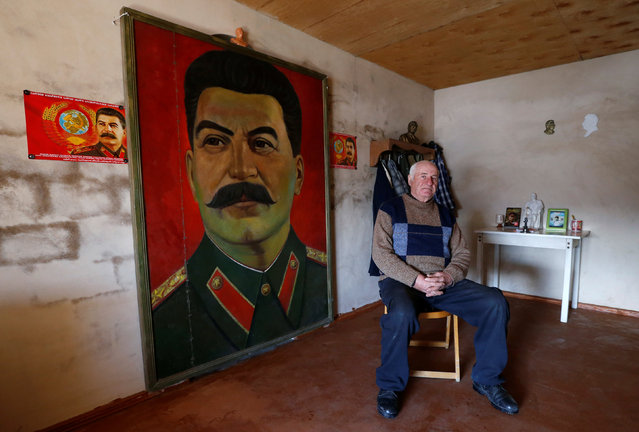
Retired builder Vasili Sidamonidze, 70, poses for a portrait at his home in Gori, Georgia, December 6, 2016. “Unfortunately, Stalin is not popular nowadays. Our people don't respect him. Only we, members of the (Communist) Party, respect him”, Sidamonidze said. “I always try to attend Stalin's birthday anniversaries in Gori. Unfortunately many people don't want to join us even if they live nearby. They look at us from their windows”. Stalin, who was born in Gori in 1878 and died in 1953, is largely reviled today in Georgia, which regained its independence during the 1991 collapse of the Soviet Union. Over the years, his memorials have been dismantled, most recently in 2010 when authorities removed a statue of the dictator from Gori's central square. But Stalin is still revered by a small group of mainly elderly supporters who stress his role in the industrialisation of the Soviet Union and in defeating Nazi Germany in World War Two. Each Dec. 21, a few dozen people mark his birthday by gathering outside a Gori museum dedicated to Stalin, where they make speeches and walk to the square where a 6-meter-high bronze statue of him once stood, calling for it to be reinstated. Opponents say it was a symbol of Moscow's still lingering shadow. In 2008, Russia fought a brief war with Georgia and recognised its breakaway regions of Abkhazia and South Ossetia as independent states. (Photo by David Mdzinarishvili/Reuters)

Retired builder Vasili Sidamonidze, 70, poses for a portrait at his home in Gori, Georgia, December 6, 2016. “Unfortunately, Stalin is not popular nowadays. Our people don't respect him. Only we, members of the (Communist) Party, respect him”, Sidamonidze said. “I always try to attend Stalin's birthday anniversaries in Gori. Unfortunately many people don't want to join us even if they live nearby. They look at us from their windows”. (Photo by David Mdzinarishvili/Reuters)
Details
17 Dec 2016 07:59:00
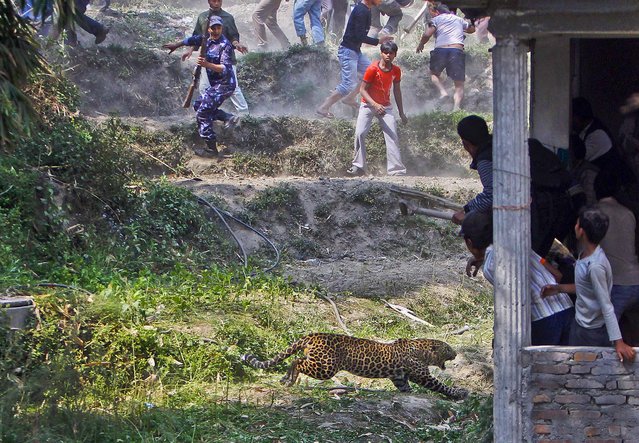
A leopard runs to at people as they run for cover in Katmandu, Nepal, on April 10, 2013. According to reports, 15 people were injured including three policemen and two officials from the Department of Forest. The leopard was later killed with the help of Nepalese policemen and local media. (Photo by Niranjan Shrestha/Associated Press)

A leopard runs to at people as they run for cover in Katmandu, Nepal, on April 10, 2013. According to reports, 15 people were injured including three policemen and two officials from the Department of Forest. The leopard was later killed with the help of Nepalese policemen and local media. (Photo by Niranjan Shrestha/Associated Press)

ATTENTION: VISUAL COVERAGE OF SCENES OF INJURY AND DEATH
Details
13 Apr 2013 15:20:00
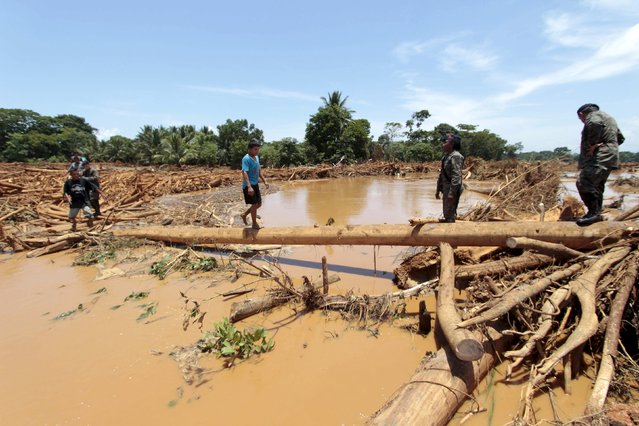
Villagers walk over a tree felled by rain in the village of Punta Caimanes, a place affected by heavy rains in the Izabal region, near Guatemala City, August 8, 2015. (Photo by Josue Decavele/Reuters)

Villagers walk over a tree felled by rain in the village of Punta Caimanes, a place affected by heavy rains in the Izabal region, near Guatemala City, August 8, 2015. Heavy rains have affected eight communities in the municipality of El Estor and five in Livingston, both located in the region of Izabal, with five deaths due to floods, according to local media. (Photo by Josue Decavele/Reuters)
Details
09 Aug 2015 10:50:00
Afghanistan: Dogs of War Part 2

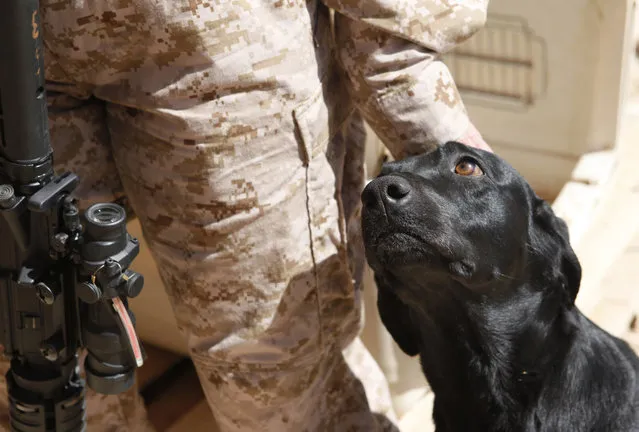
Throughout the course of the long war in Afghanistan, Coalition troops have relied on thousands of military working dogs to help keep them safe, and make their jobs easier. The dogs are trained to detect explosives, to find illegal drugs, to search for missing comrades, or target enemy combatants. Not only are they active on the front lines, but behind the lines they serve as therapy dogs, service dogs, and loyal companions. They also share the same risks as the ground troops, suffering injuries and sometimes death on the battlefields. Gathered here are images of these dogs and their handlers in Afghanistan and back home, from over the past several years, part of the ongoing series here on Afghanistan.
Details
05 Jun 2014 21:10:00
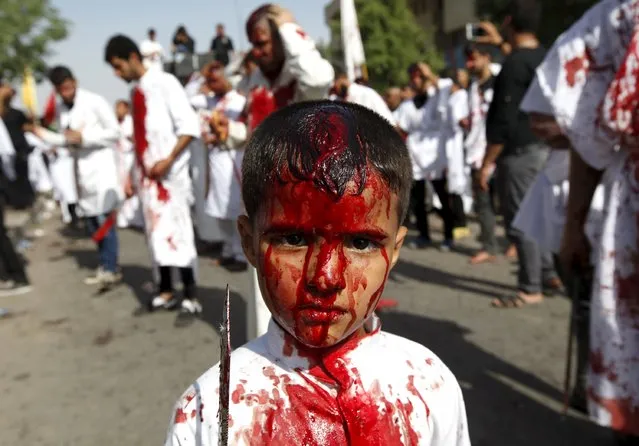
An Iraqi Shi'ite boy poses for a photograph as Iraq Shi'ite Muslims commemorate Ashura in Baghdad, October 24, 2015. (Photo by Ahmed Saad/Reuters)

An Iraqi Shi'ite boy poses for a photograph as Iraq Shi'ite Muslims commemorate Ashura in Baghdad, October 24, 2015. Ashura, which falls on the 10th day of the Islamic month of Muharram, commemorates the death of Imam Hussein, grandson of Prophet Mohammad, who was killed in the seventh century battle of Kerbala. (Photo by Ahmed Saad/Reuters)
Details
27 Oct 2015 08:00:00
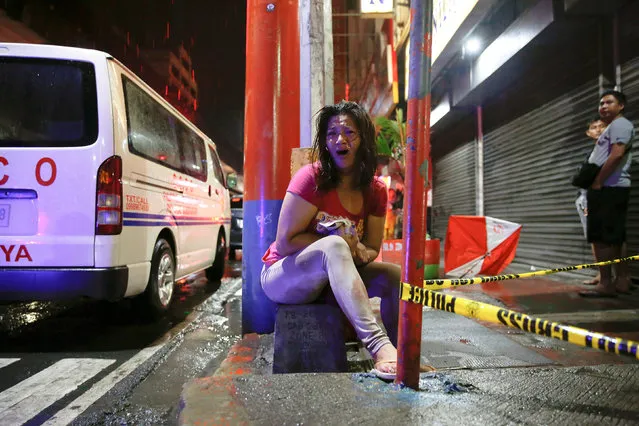
A woman cries after her husband was shot dead by unidentified gunmen riding motorcycles in Manila, Philippines late October 10, 2016. (Photo by Damir Sagolj/Reuters)

A woman cries after her husband was shot dead by unidentified gunmen riding motorcycles in Manila, Philippines late October 10, 2016. According to police reports, around 2,300 people have been killed in Philippine President Rodrigo Duterte's war against illegal drugs. The figure was revised by the police from an original tally of around 3,600 deaths. (Photo by Damir Sagolj/Reuters)
Details
26 Oct 2016 10:53:00
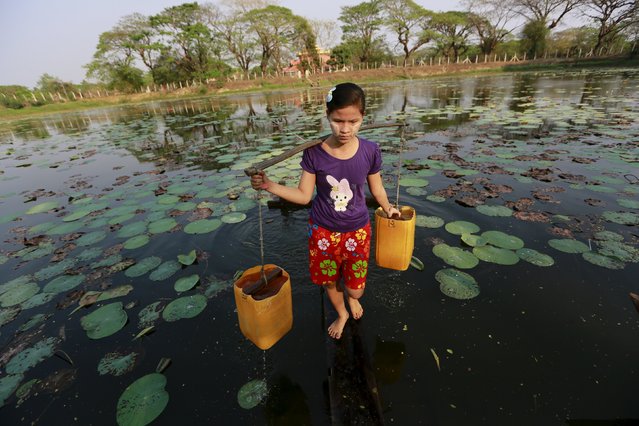
A girl collects drinking water at Dala river outside Yangon, Myanmar March 3, 2016. (Photo by Soe Zeya Tun/Reuters)

A girl collects drinking water at Dala river outside Yangon, Myanmar March 3, 2016. Some 650 million people, or one in 10 of the world's population, have no access to safe water, putting them at risk of infectious diseases and premature death. Dirty water and poor sanitation can cause severe diarrhoeal diseases in children, killing 900 under-five a day across the world, according to United Nations estimates. (Photo by Soe Zeya Tun/Reuters)
Details
18 Mar 2016 12:27:00