Loading...
Done
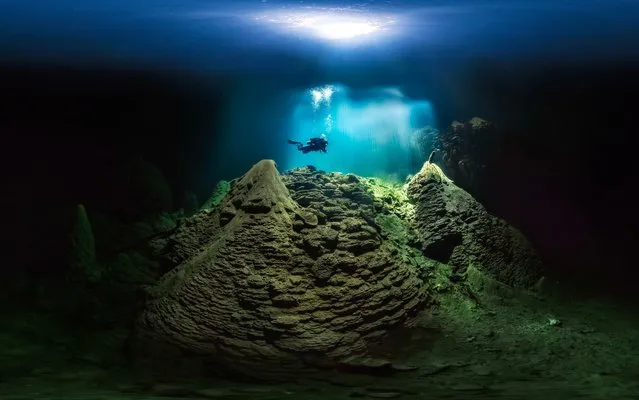
Cave Diver, Anhumas Abyss, Bonito, Brazil: The Anhumas Abyss is an underground cavern with a crystal-clear lake below, more than 260 feet (79 m) deep. A visitor must enter through a narrow opening at the top of the chamber and rappel into the cave. Snorkeling and scuba diving in the lake reveal amazing scenery. Distinctive, conical limestone stalagmites and stalactites occupy the lake and the surrounding area, some reaching 65 feet (20 m) high. “One must rappel about 235 feet (72 m) to get down into this deep lake. The photo was taken at a depth of 50 feet (15 m). It was a challenge to create the image because of the high contrast, plus the diver could not see into the darkness, making communication impossible”. (Photo by Marcio Cabral/Nature’s Best Photography Awards 2017)

Cave Diver, Anhumas Abyss, Bonito, Brazil: The Anhumas Abyss is an underground cavern with a crystal-clear lake below, more than 260 feet (79 m) deep. A visitor must enter through a narrow opening at the top of the chamber and rappel into the cave. Snorkeling and scuba diving in the lake reveal amazing scenery. Distinctive, conical limestone stalagmites and stalactites occupy the lake and the surrounding area, some reaching 65 feet (20 m) high. (Photo by Marcio Cabral/Nature’s Best Photography Awards 2017)
Details
26 Oct 2017 08:10:00
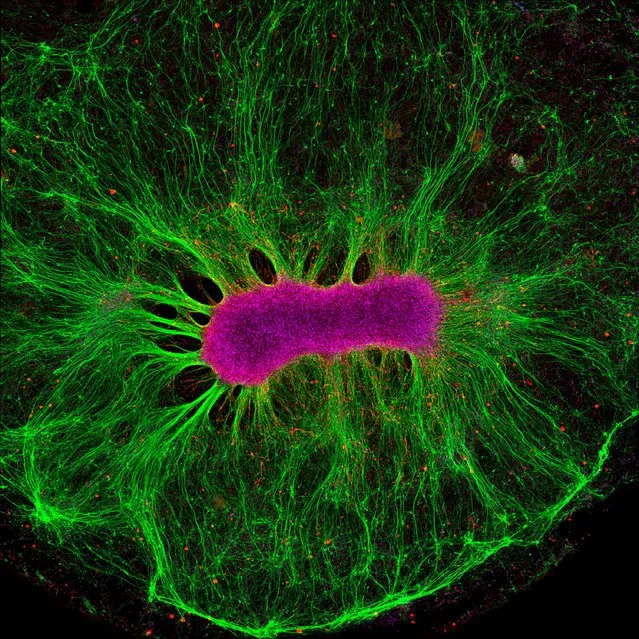
Brain-on-a-chip. Dazzling in green and magenta this image shows the nerve fibres (in green) produced by neural stem cells (in magenta) as they grow on a synthetic gel. Captured by a technique known as confocal microscopy, the image is part of research shedding light on how tinkering with the environment can affect the way in which nerve fibres grow. (Photo by Collin Edington and Iris Lee/Massachusetts Institute of Technology/Wellcome Images)

Brain-on-a-chip. Dazzling in green and magenta this image shows the nerve fibres (in green) produced by neural stem cells (in magenta) as they grow on a synthetic gel. Captured by a technique known as confocal microscopy, the image is part of research shedding light on how tinkering with the environment can affect the way in which nerve fibres grow. (Photo by Collin Edington and Iris Lee/Massachusetts Institute of Technology/Wellcome Images)
Details
17 Mar 2017 00:01:00
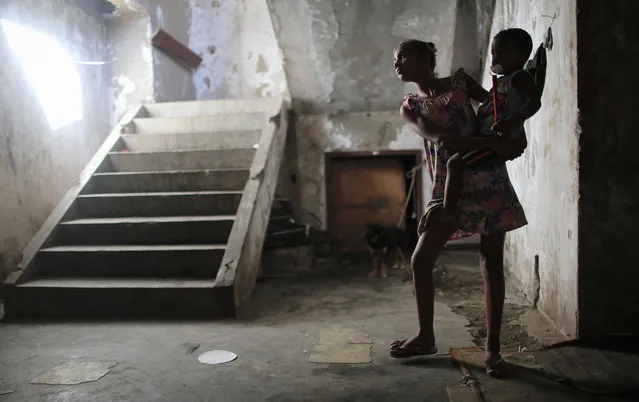
Resident Taina holds her brother Ysaque in the hallway outside their apartment in an occupied building in the Mangueira “favela” community on August 13, 2016 in Rio de Janeiro, Brazil. (Photo by Mario Tama/Getty Images,)

Resident Taina holds her brother Ysaque in the hallway outside their apartment in an occupied building in the Mangueira “favela” community on August 13, 2016 in Rio de Janeiro, Brazil. (Photo by Mario Tama/Getty Images)
Details
22 Aug 2016 12:18:00
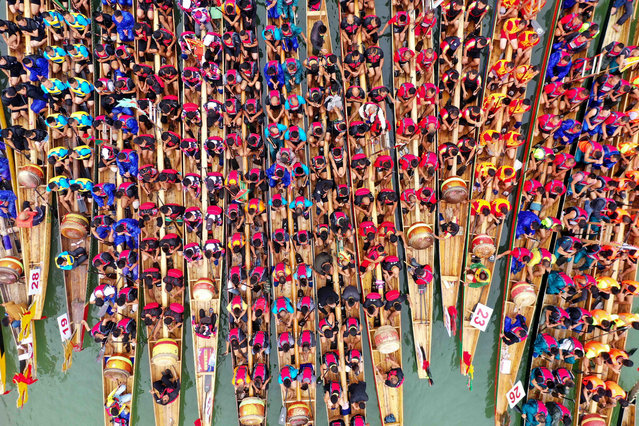
Aerial view of contestants attending the opening ceremony of a dragon boat race on the Rongjiang River at Rong'an County on October 10, 2020 in Liuzhou, Guangxi Zhuang Autonomous Region of China. (Photo by Tan Kaixing/VCG via Getty Images)

Aerial view of contestants attending the opening ceremony of a dragon boat race on the Rongjiang River at Rong'an County on October 10, 2020 in Liuzhou, Guangxi Zhuang Autonomous Region of China. (Photo by Tan Kaixing/VCG via Getty Images)
Details
12 Nov 2020 00:03:00
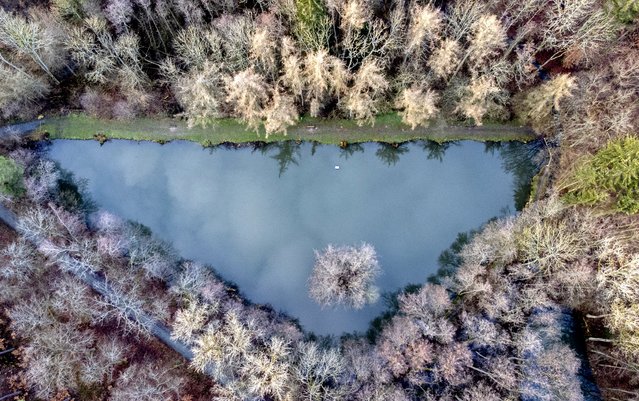
A tree stands in a lake in Usingen near Frankfurt, Germany, Wednesday, March 22, 2023, the World Water Day. World Water Day was established in 1992 by the United Nations to spread awareness about the water condition all over the world. (Photo by Michael Probst/AP Photo)

A tree stands in a lake in Usingen near Frankfurt, Germany, Wednesday, March 22, 2023, the World Water Day. World Water Day was established in 1992 by the United Nations to spread awareness about the water condition all over the world. (Photo by Michael Probst/AP Photo)
Details
24 Apr 2023 03:33:00
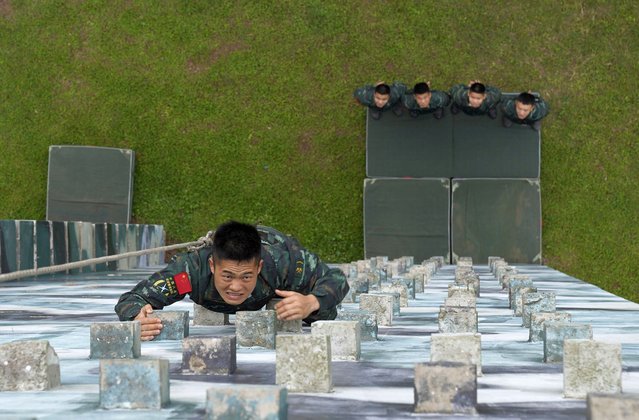
Members of the special operations team conduct a building climbing training in Qinzhou, south China's Guangxi Zhuang Autonomous Region, April 13, 2021. (Photo credit should read Costfoto/Barcroft Media via Getty Images)

Members of the special operations team conduct a building climbing training in Qinzhou, south China's Guangxi Zhuang Autonomous Region, April 13, 2021. (Photo credit should read Costfoto/Barcroft Media via Getty Images)
Details
30 Apr 2021 08:51:00
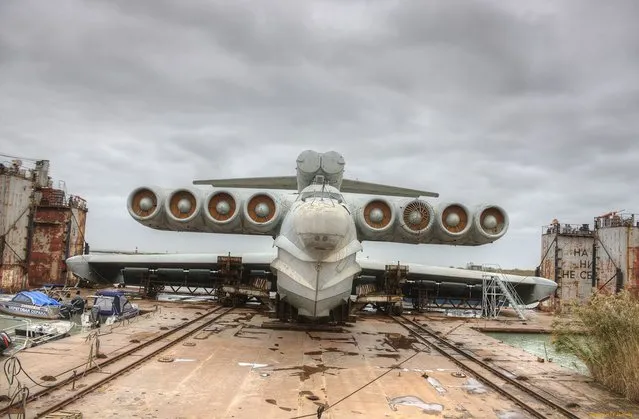
The Lun-class Ekranoplane was used by the Soviet Navy starting in 1987, and wasn't retired until the late 1990s, after the Soviet Union's fall. (Igor113)

“The Lun-class ekranoplan (NATO reporting name Duck) was a ground effect vehicle (GEV) designed by Rostislav Evgenievich Alexeev and used by the Soviet and Russian navies from 1987 until sometime in the late 1990s. It “flew” using the lift generated by the ground effect of its large wings when close to the surface of the water – about four metres or less. Although they might look similar and/or have related technical characteristics, ekranoplans like the Lun are not aircraft, seaplanes, hovercraft, or hydrofoils – ground effect is a separate technology altogether. The International Maritime Organization classifies these vehicles as maritime ships. The name Lun comes from the Russian for harrier”. – Wikipedia (Photo by Igor113)
Details
08 Aug 2014 10:51:00
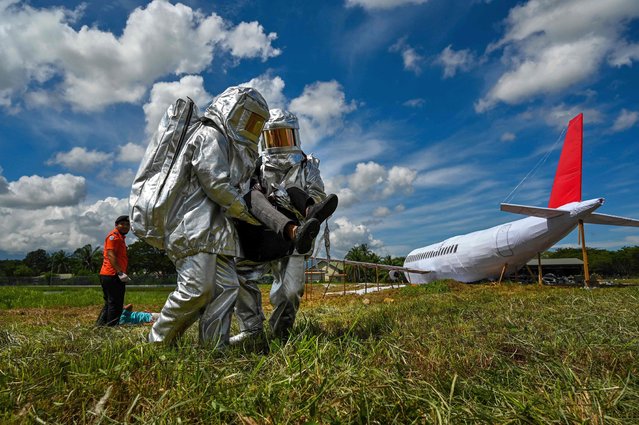
Firefighters take part in airport emergency exercise at the Sultan Iskandar Muda international airport in Blang Bintang, Indonesia's Aceh province on October 26, 2023. (Photo by Chaideer Mahyuddin/AFP Photo)

Firefighters take part in airport emergency exercise at the Sultan Iskandar Muda international airport in Blang Bintang, Indonesia's Aceh province on October 26, 2023. (Photo by Chaideer Mahyuddin/AFP Photo)
Details
25 Dec 2024 00:28:00