Loading...
Done
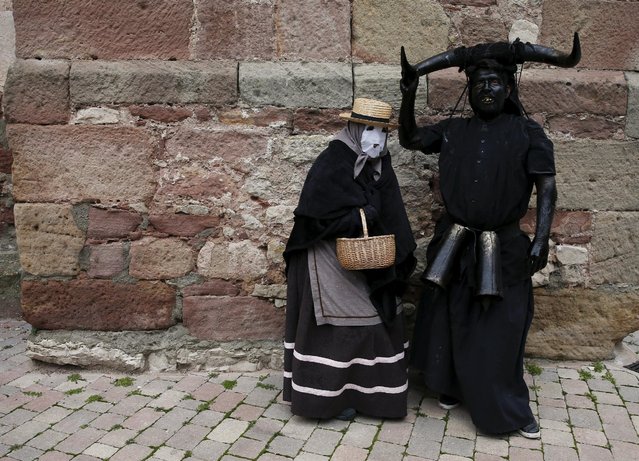
A reveller (R), dressed as “Diablos de Luzon” (Luzon Devils), stands next to a person dressed as a “Mascaritas” during carnival celebrations in the village of Luzon, Spain, February 6, 2016. (Photo by Sergio Perez/Reuters)

A reveller (R), dressed as “Diablos de Luzon” (Luzon Devils), stands next to a person dressed as a “Mascaritas” during carnival celebrations in the village of Luzon, Spain, February 6, 2016. The “Diablos” cover themselves in a mixture of soot and oil and adorn their heads with black-stained bull horns as they parade throughout the village with cowbells clanging around their waists to expel the evil spirits. (Photo by Sergio Perez/Reuters)
Details
08 Feb 2016 11:49:00
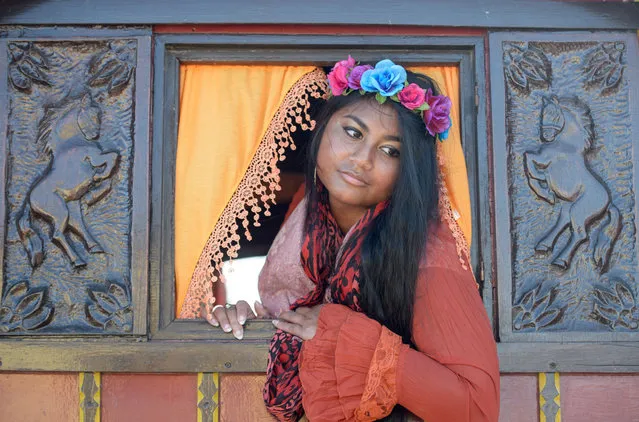
Marie Lou looks out of the window of gypsy folklore wagon on May 24, 2016 in Staintes Maries de la Mere near Arles, France. (Photo by Thomas Lohnes/Getty Images)

Marie Lou looks out of the window of gypsy folklore wagon on May 24, 2016 in Staintes Maries de la Mere near Arles, France. Gypsies from all over Europe worship “Sara the Black”, their Saint and patroness, for one week. Sara's statue is situated in the crypt of the church. She wears a multicoloured dress and will carried by the gypsies to the sea at this afternoon. (Photo by Thomas Lohnes/Getty Images)
Details
25 May 2016 13:06:00
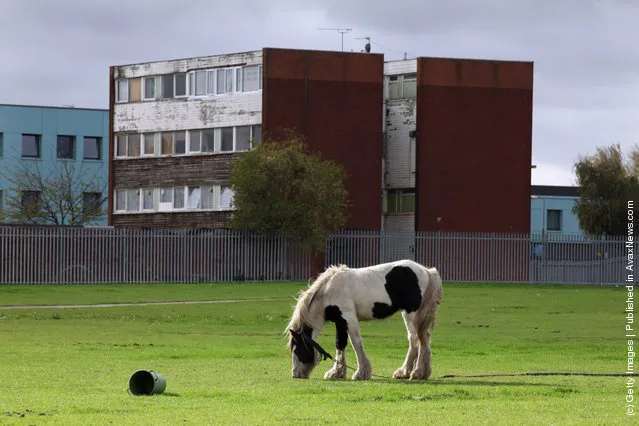
A pet horse

A pet horse tethered on land known as “The Cracker” in Tipton that may be seized by bailiffs on October 10, 2011 in Dudley, England. Horse lovers in Tipton are battling the local council over the tradition of keeping their horses tethered on public land near their homes. Locals say tradition that has been in existence for generations and believe it stems from the age of the canal when many local men used their horses to tow canal barges along the industrial Black Country canals. After a spate of horses running free Sandwell Council are now enforcing the law and impounding tethered horses. Locals are planning their next protest with a horse drive to the council headquarters to try and save their traditions. (Photo by Christopher Furlong/Getty Images)
Details
14 Oct 2011 09:10:00
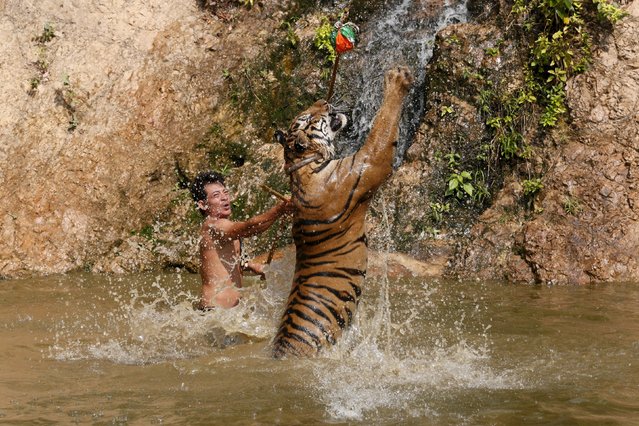
A tiger jumps while being trained at the Tiger Temple in Kanchanaburi province, west of Bangkok, Thailand, February 25, 2016. Thailand's controversial Tiger Temple, dogged for years by talk that it supplies the black market and mistreats its animals, is fighting to keep the big cats after wildlife authorities rejected a bid to extend a zoo licence that expired in 2013. (Photo by Chaiwat Subprasom/Reuters)

A tiger jumps while being trained at the Tiger Temple in Kanchanaburi province, west of Bangkok, Thailand, February 25, 2016. Thailand's controversial Tiger Temple, dogged for years by talk that it supplies the black market and mistreats its animals, is fighting to keep the big cats after wildlife authorities rejected a bid to extend a zoo licence that expired in 2013. The Buddhist temple, home to more than 100 tigers, has been investigated for suspected links to wildlife trafficking and wildlife activists have accused it of illegal breeding of the animals. Thai wildlife authorities have sent ten of the temple's tigers to a wildlife sanctuary. But the temple, which bills itself as a wildlife sanctuary, has denied links to illegal trafficking, and wants to hold on to its tigers. (Photo by Chaiwat Subprasom/Reuters)
Details
29 Feb 2016 11:56:00
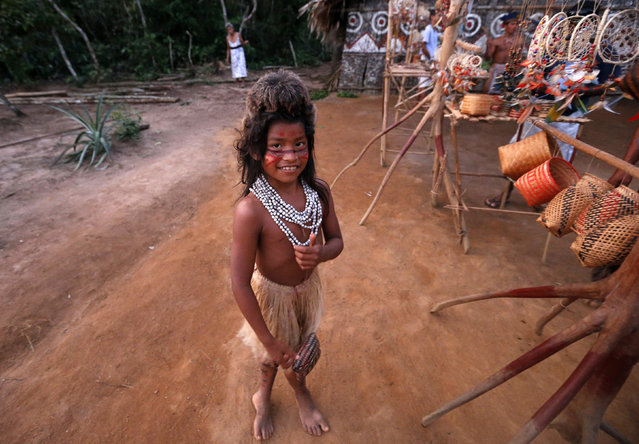
A girl of the Amazonian Tatuyo tribe poses while waiting to sell crafts to tourists in her village in the Rio Negro (Black River) near Manaus city, a World Cup host city, June 23, 2014. Because of their proximity to host city Manaus and their warm welcome, the Tatuyo have enjoyed three weeks of brisk business thanks to the World Cup. Usually, they host between 10 and 30 tourists a day. During the World Cup, this number has rocketed to 250 a day, They have become richer and other communities now come to them to sell them juices and fishes. (Photo by Andres Stapff/Reuters)

A girl of the Amazonian Tatuyo tribe poses while waiting to sell crafts to tourists in her village in the Rio Negro (Black River) near Manaus city, a World Cup host city, June 23, 2014. Because of their proximity to host city Manaus and their warm welcome, the Tatuyo have enjoyed three weeks of brisk business thanks to the World Cup. Usually, they host between 10 and 30 tourists a day. During the World Cup, this number has rocketed to 250 a day, They have become richer and other communities now come to them to sell them juices and fishes. (Photo by Andres Stapff/Reuters)
Details
27 Jun 2014 10:30:00
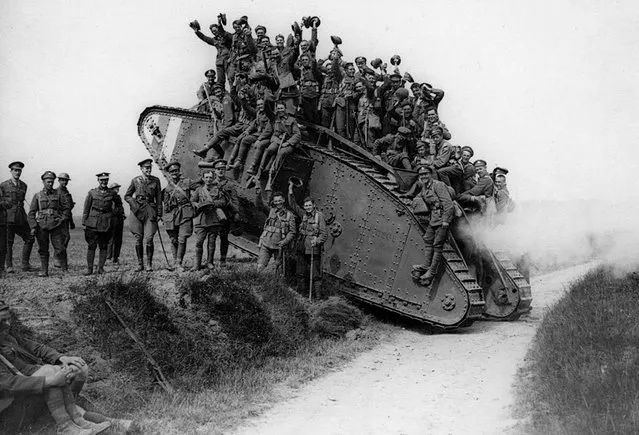
These black-and-white photos are taken from the new book “Armoured Warfare in the First World War 1916 – 1918” by Anthony Tucker-Jones and published by Pen & Sword Military. “Interestingly the British, French and Germans took completely different approaches with varying results”. The British military produced “Little Willie” in Autumn 1915 weighing 18 tonnes, which had a crew of two plus four gunners. “Inspired by a tracked artillery tractor “Little Willie” was referred to as a water tank – hence the name tank – to ensure secrecy”, said Anthony. “This led to the strange looking Mark I with its peculiar rhomboid shape, designed to cross trenches with guns in sponsons on either side. The Germans saw the tank as unchivalrous and were slow to grasp its utility. They favoured the Stormtrooper (specialist soldiers used to infiltrate enemy trenches) and artillery, not the tank”, said Anthony. “However, they didn’t hesitate to make use of captured British tanks. Although the tank helped secure victory and German soldiers dubbed it “Germany’s Downfall” the country was ultimately brought to its knees by the Allies blockade”. Here: British troops hitch a ride on a Mark IV after the massed tank fleet spearheading attack at Cambrai on November 20, 1917. (Photo by Anthony Tucker-Jones/Mediadrumworld.com)

These black-and-white photos are taken from the new book “Armoured Warfare in the First World War 1916 – 1918” by Anthony Tucker-Jones and published by Pen & Sword Military. Here: British troops hitch a ride on a Mark IV after the massed tank fleet spearheading attack at Cambrai on November 20, 1917. (Photo by Anthony Tucker-Jones/Mediadrumworld.com)
Details
23 Feb 2017 00:02:00
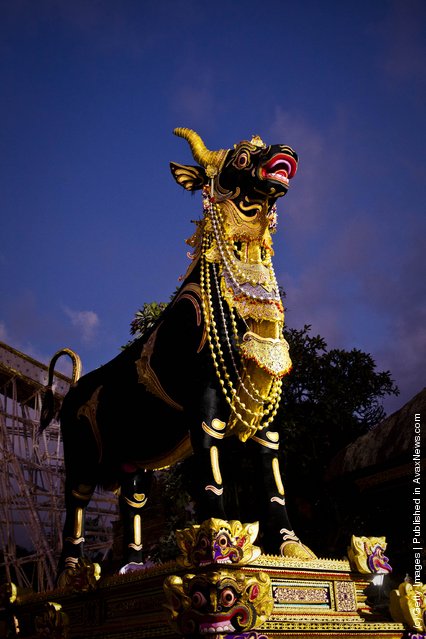
Royal Hindu Cremation Held In Bali

A black bull sarcophagus stands at Puri Ubud during the Hindu Royal cremation – also know as the Pengabenan – for the late Anak Agung Niang Rai, mother of Gianyar Regent, Tjokorda Oka Artha Ardana Sukawati, at Puri Ubud in Gianyar Bali on August 17, 2011 in Ubud, Bali, Indonesia. Niang Rai died in a Denpasar hospital in May; her actual cremation will take place on August 18 and will involve a nine level, 24m high 'bade' or body carring tower, made by upto 100 volunteers from 14 local villages. It will be carried to the cremation by 4500 Ubud residents. (Photo by Ulet Ifansasti/Getty Images)
Details
19 Aug 2011 09:30:00
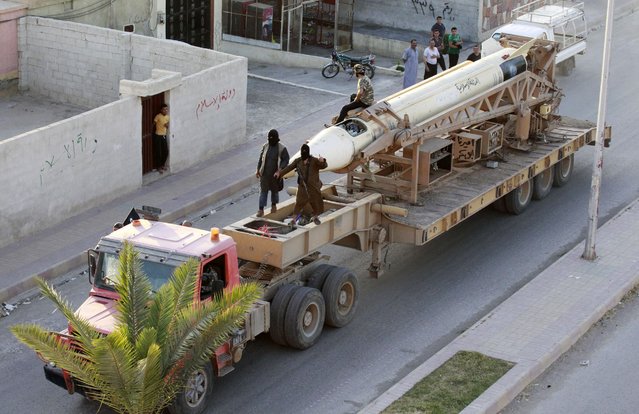
Militant Islamist fighters take part in a military parade along the streets of Syria's northern Raqqa province June 30, 2014. (Photo by Reuters/Stringer)

Militant Islamist fighters take part in a military parade along the streets of Syria's northern Raqqa province June 30, 2014. The fighters held the parade to celebrate their declaration of an Islamic “caliphate” after the group captured territory in neighbouring Iraq, a monitoring service said. The Islamic State, an al Qaeda offshoot previously known as Islamic State in Iraq and the Levant (ISIL), posted pictures online on Sunday of people waving black flags from cars and holding guns in the air, the SITE monitoring service said. (Photo by Reuters/Stringer)
Details
01 Jul 2014 12:41:00